

Last Updated on 8 months ago by Charbel Coorey
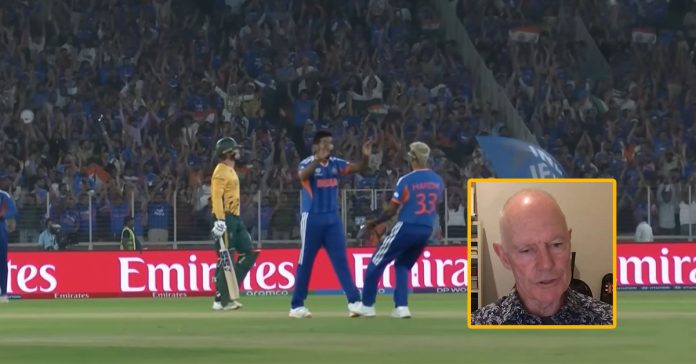
Greg Chappell believes India, despite their financial might, still need international cricket.
The former Australia batsman, who coached India from June 2005 to April 2007, revealed that an official told him just before the birth of the Indian Premier League (IPL) that India are strong enough to operate on their own. The IPL has since become a phenomenon and one of the richest leagues in the world.
Greg Chappell on why India needs international cricket
However, Chappell said a strong international game helps the IPL thrive, and the sport can have even greater financial power with Indians moving to different parts of the world.
“They need it [international cricket] more than they think they do,” Chappell said on The Grade Cricketer Podcast.
“I remember many years ago, when I was in India and IPL was just starting out, an Indian official told me that India don’t need the rest of the world. We can play, we can do it ourselves.
“I said well that might be so, but you’ll find that you’ll be needing players from all around the world to make this the competition you really want it to be.”
Overseas stars have lit up the IPL over the years, including Brendon McCullum who smashed 158* in the first-ever game in 2008. Each team can field up to four internationals in their XI.
Chappell then said India can’t play the game in a vacuum as they also have so many passionate fans around the world.
“India can’t play the game in a vacuum. I don’t think they want to in that sense,” he said.
“It is the Indian diaspora that are taking cricket around the world; making cricket one of the fastest-growing sports in the world because Indian people have moved to many parts of the world.
“I wasn’t joking when I said in 2050, the US will be one of the top three cricket countries in the world.”
India generates a huge portion of the ICC’s revenue – believed to be between 80-90%. The BCCI receives approximately 40% in the ICC’s revenue distribution per year between 2024 and 2027, with $533 million distributed between the 12 Full Member nations and $67 million between the Associates.

