

Last Updated on 2 months ago by Charbel Coorey
Indian cricket’s business environment has undergone significant transformation over the past two decades in particular, turning sporting teams into powerful corporations. The Indian Premier League (IPL) remains – and will continue to remain – financially resilient, as professional leagues around the world periodically struggle with stability.
According to statistics from the most recent Hurun India 500 survey, five elite cricket teams landed spots among the top 500 most valued non-state-owned businesses in the country. Royal Challengers Bengaluru, Chennai Super Kings, and Kolkata Knight Riders along with Rajasthan Royals and Punjab Kings, are part of the list.
This milestone shows that early stakeholders did more than just purchase sports teams. They envisioned and built a highly profitable, year-round commercial phenomenon.
Kolkata Knight Riders Rise to the Top with Global Brand
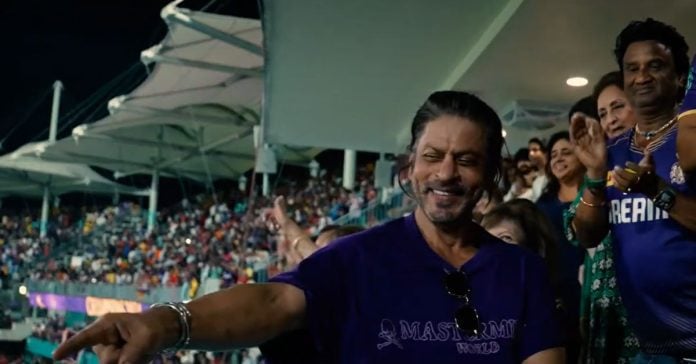
Kolkata Knight Riders (KKR) have achieved top spot on the corporate index among all cricket teams thanks to a substantial diversification strategy. KKR have a noteworthy ranking of 270 with an incredible valuation of ₹20,850 crore. The main factor driving this surge is Knight Riders Group’s international market expansion, which includes investments in leagues in North America, the Caribbean, and the United Arab Emirates. Additionally, co-owner Shah Rukh Khan’s enormous worldwide marketing appeal helps increase brand equity.
Chennai Super Kings trailed closely with a strong valuation of ₹19,550 crore despite a few lean seasons. At ₹16,700 crore, back-to-back champions Royal Challengers Bengaluru secured the third position, followed by Rajasthan Royals at ₹15,700 crore and Punjab Kings at ₹14,050 crore.
For an estimated ₹16,660 crore, the Birla Group purchased a significant portion of Royal Challengers Bengaluru. At the same time, the Rajasthan Royals underwent a significant ownership change, selling for more than ₹15,000 crore to a group led by Adar Poonawalla and Lakshmi Mittal. These enormous capital infusions demonstrate the significant return on investment on offer.
Separating Commercial Wealth from Trophies
According to financial data, a franchise’s trophy cabinet has no bearing whatsoever on its corporate value. An excellent example is Royal Challengers Bengaluru, who built an incredibly devoted, football-club-style community despite not winning any championships throughout the tournament’s first 17 years.
Massive sponsorship portfolios, year-round public presence, and ongoing digital contact all contribute significantly to long-term commercial value. Through clever player auctions, retention announcements, transfer windows, and worldwide goods distribution, media attention is continuously maintained, guaranteeing the brands’ continued high profitability throughout the year.
For more updates and news from around the cricket globe, check out CricBlog’s news hub.

