

Last Updated on 2 months ago by Charbel Coorey
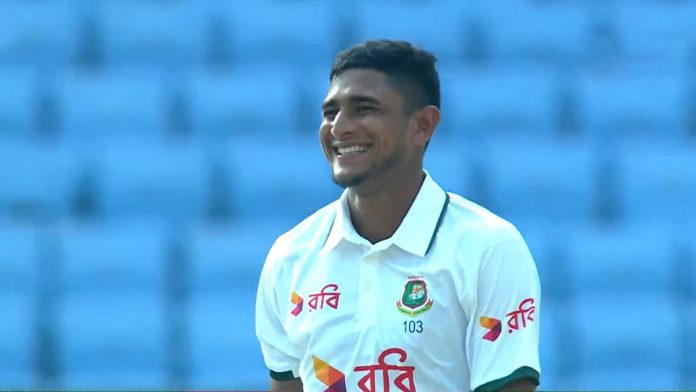
Bangladesh’s first Test tour of Australia since 2003 is nearly upon us, but they could be without star Nahid Rana. The fast bowler picked up a side strain during the second T20I against Zimbabwe in Bulawayo, and had to leave the field after bowling 2.3 overs.
“Nahid Rana reported a left-side strain during today’s match. We did not let him bowl again. He will remain under observation until tomorrow [Saturday 18 July],” Bangladesh team physio Bayjedul Islam said in a video message.
“At this stage, I think he has a side strain. We will decide tomorrow morning whether he needs a scan. How long it may take for him to return to the field will be announced later,” he added.
Rana did not play in the third T20I, which Bangladesh won by four wickets to seal the series 2-1.
Side strain trouble: Will Nahid Rana play in the two-match Test series against Australia?
Rana faces a race against time to be fit for the first Test against Australia in Darwin, which begins on August 13. Depending on the severity, recovery from a side strain can take anywhere between two to eight weeks.
According to reports, Rana’s injury is a two-three week proposition.
“We feel the side strain will take at least two to three weeks to recover. We are waiting for the scan report while we keep our fingers crossed, as we still have some time before the first Test against Australia,” a Bangladesh selector told cricbuzz.
“The way he is bowling at the moment, missing him in the Australia tour would be a big blow, so we are waiting to see the depth of his injury and actually how many days he will take to recover.”
Rana’s pace and wicket-taking ability is crucial for Bangladesh. He troubled the Australians during the ODI series in June, generating speeds of up to 150km/h.
In an exclusive interview with CricBlog earlier this year, former Bangladesh bowling coach Allan Donald said Rana caught his attention immediately. He said the fast bowler generates the kind of pace coaches cannot teach.
“I was immediately excited by this young man, I really was,” Donald said.
“I just thought his natural pace, effortless pace, his ability to get bounce because he’s quite tall. And when when you see bowlers getting pace off the surface, it’s a very exciting thing to watch when they can generate pace off the actual pitch and that is a kind of pace that you cannot teach, it comes naturally.”

