

Last Updated on 2 months ago by Charbel Coorey
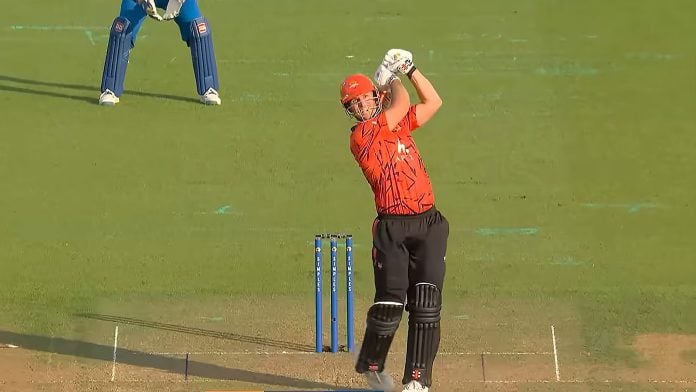
Mitch Marsh sits third on the run-scoring charts in this year’s Hundred, behind only Jos Buttler and Ben Duckett. But strike rate is where he stands apart: at 198.85, only Nicholas Pooran, at 200, has been harder to bowl to. This isn’t a purple patch. It’s the visible return on two distinct technical corrections that have finally unlocked potential that sat dormant for the better part of a decade.
Mitch Marsh – looking at his improvement in T20 cricket
Fixing the powerplay against pace
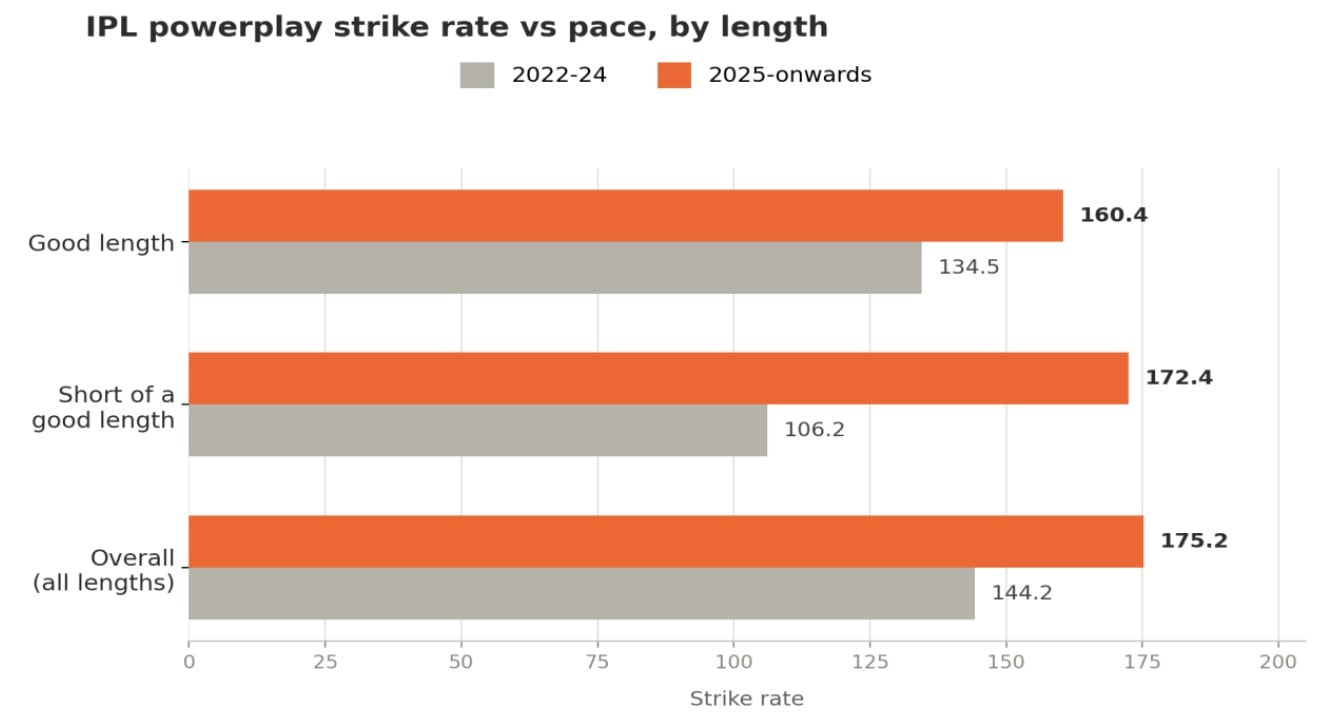
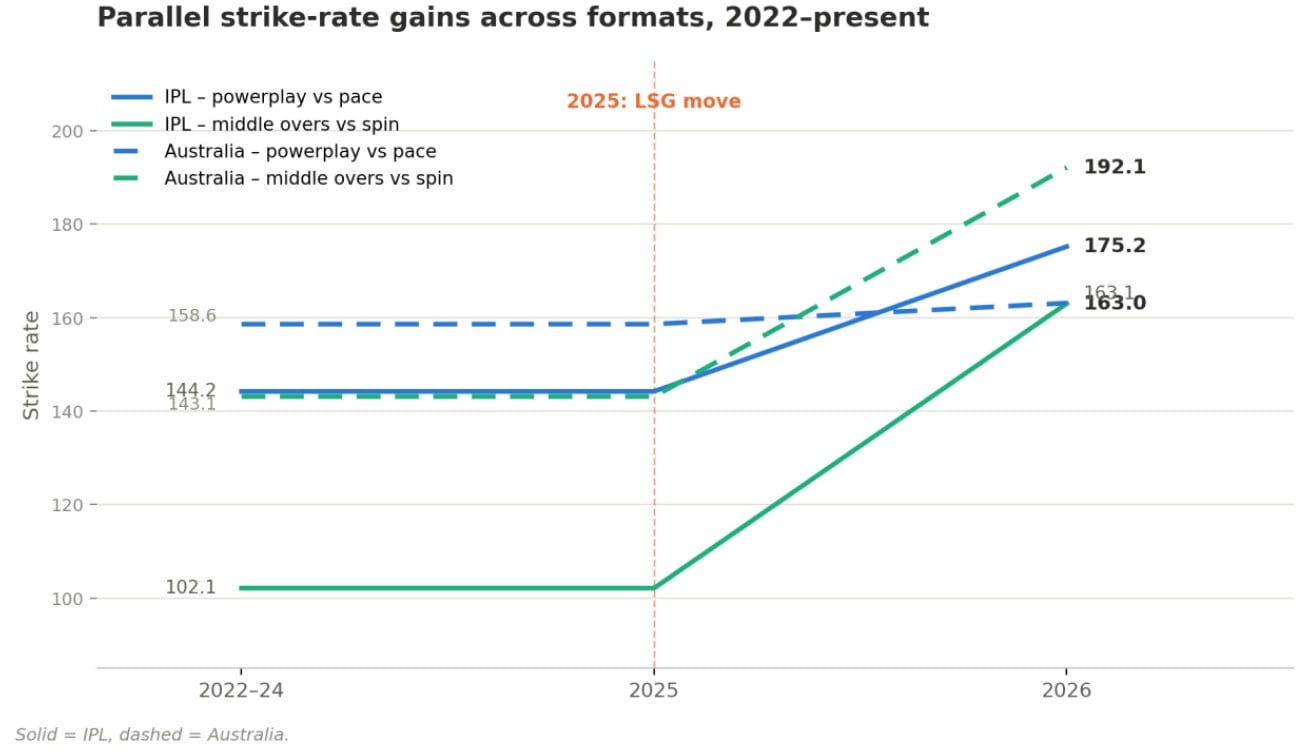
The first correction shows up in the powerplay against pace. In the IPL, his strike rate in the first six overs against pace has jumped from 144.2 (2022-24) to 175.2 (2025 onwards); his average has more than tripled, from 19.9 to 66.1.
Australia’s numbers move the same way, if less dramatically — strike rate up from 158.6 to 163.1. Crucially, the gains aren’t generic. They’re concentrated exactly where it matters: against good-length pace, his IPL powerplay strike rate has climbed from 134.5 to 160.4; against short-of-a-good-length, it has gone from 106.2 to 172.4.
The same pattern holds on both the stumps line and outside off. Marsh has learned to take the game to the new ball while the fielding restrictions are still in place.
Solving the middle overs against spin
The second transformation sits in the middle overs against spin. Between overs 7 and 16 in the IPL, his strike rate against spin has climbed from 102.1 to 163.0. The average has also climbed from 19.6 to 44.0.
For Australia the shift is sharper still — strike rate from 143.1 to 192.1, average from 18.6 to 48.7.
This is traditionally the phase where good spinners strangle an innings, particularly for overseas batters. Marsh now meets them with consistent intent, and the ball-by-ball data shows it isn’t confined to one area of the pitch.
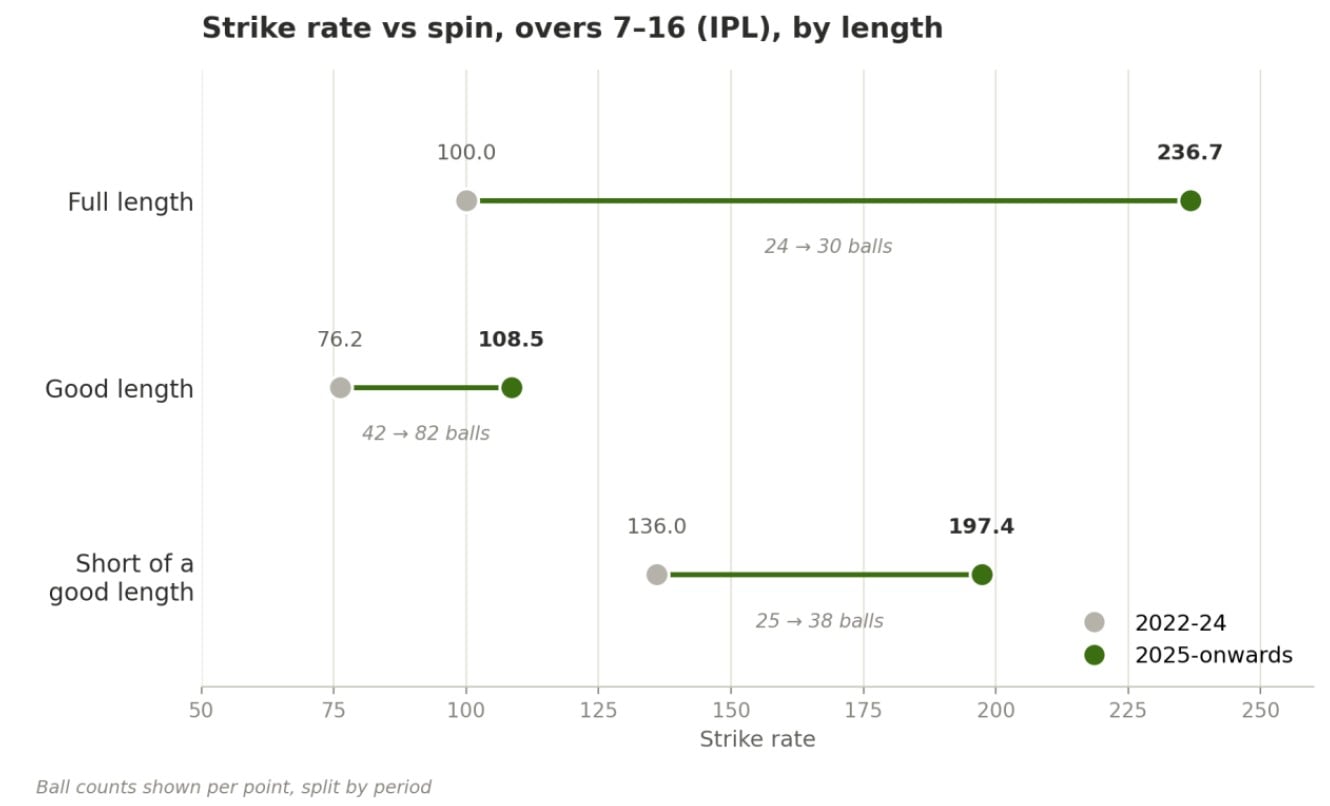
Against full-length spin in overs 7-16, his strike rate has gone from 100.0 to 236.7 (24 and 30 balls); against good length — the type spinners actually want to bowl — from 76.2 to 108.5 (42 and 82 balls, both well sampled); against short-of-a-good-length, from 136.0 to 197.4 (25 and 38 balls). The improvement is broad-based, not built on exploiting a single length or line.
What makes this pattern compelling is its precision. These aren’t two overlapping waves of general improvement — one change targets the new ball inside the first six overs, the other targets spin through the middle of the innings. Both show up independently in the IPL and in international cricket. Marsh hasn’t simply become more aggressive across the board; he has removed two specific constraints that had quietly capped his ceiling for years.
His move to Lucknow Super Giants in 2025 gave him a platform and an opener’s role, but the underlying shifts predate that switch — they show up in national colours just as clearly as in league cricket. Now, playing the Hundred for Sunrisers Leeds, the same two-pronged evolution appears to be carrying into a third format.
The result is a more complete T20 batter, working at a rare level of efficiency. Marsh hasn’t reinvented himself overnight — he has simply stopped leaking value at both ends of the innings. The numbers show exactly where, and how.

