Home Blog Page 313

3 players who can turn the WTC Final in their team’s favour

3 players who can turn the WTC Final in their team’s favour | 3 players who can influence the WTC Final and lead their team to victory

The final of the first ICC World Test Championship (2019-2021) will be played between India and New Zealand. India topped the WTC group stage while New Zealand finished in second spot. The final will be played in Southampton, England, and a neutral venue will be challenging for both sides.

India and New Zealand both have some of the best players of the current times and it will be a great contest to watch for us as viewers. The likes of Virat Kohli and Kane Williamson will be very important for their respective teams, but both teams have players other than these two who can turn the game in their teams’ favour, which makes for a cracking contest.

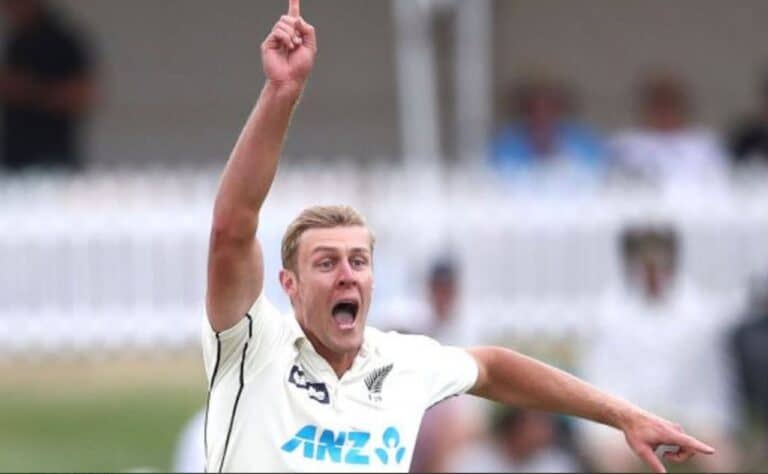
3. Kyle Jamieson

Kyle Jamieson has bursted into the International arena, especially in the Test format. He has 36 wickets in just 6 games at an average of 13.28 and a strike rate of 33.39. He already has four 5-fors and has once picked 10 wickets in a test.

Jamieson is very tall and will be very effective in the English conditions with the Duke ball. He made life hard for the Indian batters when they last played in New Zealand and can turn the game in the favour of the Kiwis if he gets going in the WTC final. Watch out for his ability to shape the ball sharply into the right-handers and generate extra bounce because of his height.

2. Ravindra Jadeja

Ravindra jadeja is in the form of his life. He is one of those rare players who can win games through his batting, bowling or fielding. Jadeja is going through a purple patch at the moment especially with the bat.

He was hitting sixes, picking wickets, and taking catches for fun in the IPL. We saw how he single-handedly defeated RCB. With Hardik Pandya out, Jadeja is very crucial for India with his all-round abilities in the WTC final. His batting has improved a lot in recent times, and is certainly most capable enough to turn the table on its head.

1. Rishabh Pant

Rishabh Pant has achieved a lot in the last 12 months. He took India to an amazing series win against Australia in the 2020-21 Border Gavaskar Trophy. He was exceptional against England when they toured India a few months back. Pant Became the captain of the Delhi Capitals in the IPL after Shreyas Iyer got ruled out due to injury and the team did well under his leadership.

Pant’s style is very unorthodox and the special thing about him is that he never tries to change that even in the longest format. He will play his shots irrespective of the situation. He has climbed to rank 6th in the ICC Test Match Rankings for the batsmen. Pant is a genuine match winner and can be unstoppable once he is in the mood, and watch out for him as he looks to take the Kiwi bowlers on.

These were the three players who can turn the World Test Championship finals in their team’s favour. Do any other X-Factor players come to mind? Have your say.

Written by Robin Rounder. Follow Robin on Twitter today.
Australia tour of Bangladesh: 2 extra T20Is in August

Australia tour of Bangladesh confirmed for August | Australia confirms tour of Bangladesh for August, which will contain 5 T20Is.

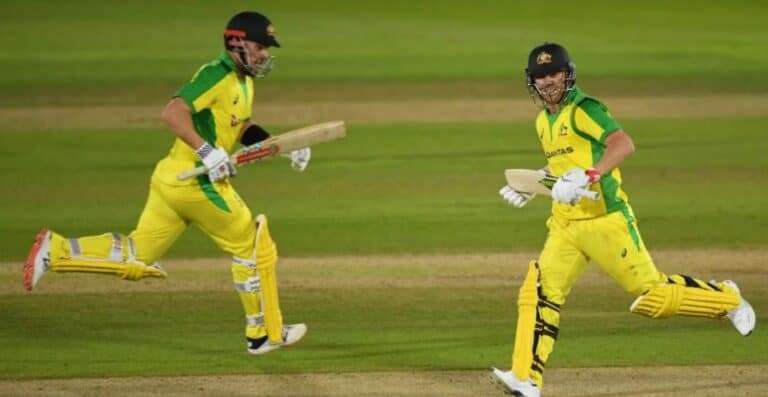
Australia will tour Bangladesh for the first time since 2017 for five T20Is ahead of the T20 World Cup. These T20Is, in addition to the five in West Indies, serve as preparation in Australia’s quest to win the coveted T20 trophy for the first time.

According to chairman of BCB cricket operations Akram Khan, Australia agreed to add an extra two T20Is to the three they were originally scheduled to play in Bangladesh.

“As you may have known, Australia have agreed to increase their T20I series from three to five matches,” Khan said on Tuesday. “It will be held over eight or nine days. We are trying to be well prepared for the World Cup T20.”

While Australia are busy in preparing for the T20 World Cup, so too are Bangladesh. The Tigers are scheduled to play in Zimbabwe in June, and according to Khan, they replaced one of the Test matches with an additional T20I. Also, Bangladesh are slated to host both New Zealand and England ahead of the T20 World Cup.

“There were also two Tests against Zimbabwe, so we reduced it and added a T20I in its place. I am however not aware about how long the quarantine (in Zimbabwe) is going to be, but it won’t be too tough,” said Khan.

Bangladesh’s packed schedule has prompted Khan to think about the welfare of the players, especially given the demands of the bio-secure bubbles. The Tigers are currently playing Sri Lanka in an ODI series, where Mushfiqur Rahim has been the star man.

“We have a pretty packed scheduled. We will have club cricket after this (Sri Lanka) series. We will go to Zimbabwe, and afterwards we have Australia and New Zealand coming up. We also have to keep the cricketers’ bio-bubble and quarantine in mind. It is not always good to play a lot of cricket, so we have to think about our schedule after this series.”

The dates for Bangladesh-Australia series are yet to be finalised.

Twitter reactions to classy 125 by Mushfiqur Rahim in 2nd ODI

Twitter reactions to classy 125 by Mushfiqur Rahim in 2nd ODI | Fans full of praise for Mushfiqur Rahim after his 125 vs Sri Lanka

For the second time in Bangladesh’s ODI series against Sri Lanka, Bangladeshi stalwart Mushfiqur Rahim made it as if he was batting on a different pitch to everybody else.

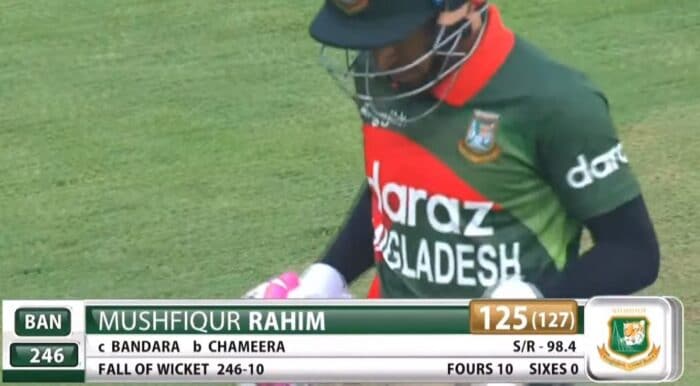
On two slow, sluggish surfaces, and faced with difficult situations, Rahim scored 84 (87) in the first ODI, followed by a superb 127-ball 125 to propel Bangladesh to 246 in the second ODI. He anchored the innings after the early fall of Tamim Iqbal and Shakib Al Hasan, and kept his nerves as wickets fell regularly. By the time Mahmudullah was dismissed, Bangladesh were five down with 17 overs to play with just 161 on the board.

But, the classy batsman then used all his experience to guide Bangladesh to a defendable score. He remained calm but ensured his strike rate stayed healthy. He manipulated the gaps to keep the strike rotating, and then pounced with key runs at the backend of the innings, with the rain delay not hampering his concentration. In the end, he celebrated his eighth ODI hundred, which is the third-most by any Bangladeshi player.

In a remarkable stat courtesy of The CricViz Analyst, only Virat Kohli has a higher total batting impact in ODIs since the start of 2018. Also, he averages 51.43 batting four or lower in ODIs since 2015. Incredible stuff.

Here are some of the Twitter reactions:

The case of Moeen Ali in T20s: Top order or don’t pick at all?

The case of Moeen Ali in T20s: Top order or don’t pick at all? | A look at why Moeen Ali performs so much better up the order in T20s

Teams always emphasise on the versatility factor in T20 cricket. Batters need to be flexible with their positions in the batting order but then there are some exceptions like Moeen Ali who seem to find their comfort zone when given a specific role.

Moeen is one of those strokemakers who has always liked to bat higher up the order; that’s where he has played his best cricket in the shortest version of the game. Numbers too suggest the same story.

There’s a big difference when Moeen bats in the top 4 and when he bats below that number. Ali is a very specific sort of player who likes taking responsibility in his own way at a particular position in the batting line-up. The clarity of role becomes very important for a player like Moeen as players like him are hugely undervalued in the current T20 environment. So let’s get into the finer details to understand why Moeen enjoys batting at the top.

Note- Only franchise cricket data has been included and the analysis has been done only based on that.

Comparative study of Moeen’s game:

If you check his numbers in the top 4 while playing in the different T20 leagues around the globe, Moeen’s game goes to another level. An average of close to 32 is not bad considering his strike rate of 158. The format weighs more on the impact which is in correlation with the strike rate of the batsman. The sample size is considerable with over 50 innings played at the top.

On the other hand, when he bats below 5, the sample size is small and that’s because he has played most of the T20 games for Worcestershire in the top 4. In 16 innings, his average drops from 31.8 to 13.6.

The case of Moeen Ali in T20s: Top order or don't pick at all? | A look at why Moeen Ali performs so much better up the order in T20s

Why is there a difference?

Moeen Ali is one of those batsmen who takes a bit of time before launching himself on the opposition. He can do this only when he gets in early. When coming in at 5, 6 or 7, he has to play that finisher kind of role which he’s not comfortable doing in this form of the game.

Innings progression of Moeen Ali when he bats in top 4:

As a top-order player, batsmen always want to maximize the field restrictions to the fullest in the powerplay overs. Moeen’s strike rate of 140 in the powerplay with an average of 33.8 is decent for any batter. The boundary-runs percentage is quite high (73.3) which says he makes full use of the field restrictions in the first six overs. Whenever he gets a ball in his zone, he doesn’t hesitate a bit to go after it, which is one quality of him that makes him a dangerous player at the top.

While the strike rate is high, there’s something he’ll need to work on and that’s the number of dot balls he plays at the start. But that’s the nature of his game, he first assesses the conditions and then he starts playing his shots. This is a key reason why he is much more comfortable batting at the top.

  • Boundary % by balls in PP batting at top 4: 22.9%
  • Dot ball % in PP while batting at top 4: 44.2%
  • Boundary runs % in PP batting at top 4: 73.3%
The case of Moeen Ali in T20s: Top order or don't pick at all? | A look at why Moeen Ali performs so much better up the order in T20s

When he gets through the first six overs, he’s the middle order enforcer any T20 team in the world would want to have. A strike rate of 172.9 is ridiculously good in a phase where the bowling team looks to dry up the runs. For that very purpose, spinners come into the act. This happens when he bats in the top 4. Every team nowadays has at least one ace spinner in their eleven as a controlling option or wicket-taking option. Moeen inarguably is one of the best players of spin in the form of the game. He hits spin, and he hits it hard. Players like him can really set the ideal platform for the designated finishers to come and launch from the very first ball.

The case of Moeen Ali in T20s: Top order or don't pick at all? | A look at why Moeen Ali performs so much better up the order in T20s

Innings progression of Moeen Ali when dropped below 4:

Now when you push him below 4 and if he comes early in the powerplay then the sample size is very small to make anything out of that with only 1 innings he batted in. In the middle overs, he has faced only 49 deliveries, scoring at 153.1, but there’s a striking difference in the average which comes down to 12.5.

The case of Moeen Ali in T20s: Top order or don't pick at all? | A look at why Moeen Ali performs so much better up the order in T20s

Death Overs comparison (Top 4 vs Below 4):

In the slog overs Moeen’s strike rate goes up to above 250, although he has hardly batted in this phase of the game with experience of only 38 deliveries. This stat tells us that once Moeen bats for a longer period of time he has that gear to strike big at the end.

Below five, in the last few overs, Moeen’s numbers are pretty ordinary to say the least, with the strike rate going down from 260 to 150 while batting below number 4.

Batting PositionRunsBallsAverageStrike Rate
Top 41003833.3263.2
Below 4453015150

Why Moeen shouldn’t be dropped below number 4 in T20 cricket

Generally whenever a batsman bats in 5, 6 or 7 he prepares himself to play a fewer number of balls and create a bigger impact. With the help of the innings progression chart, one can see that Moeen is a slow starter who takes his own time to get going. His style of play won’t give him the desired results in the lower middle order.

It’s been proven how strong a player Moeen is against the slower bowlers, but in the death overs rarely do spinners come on to bowl. Fast bowlers take charge and that’s where Moeen’s weakness against the short pitch bowling might get exposed.

Pacers now have formulated a number of plans to counter him. Two plans which work well against him are the use of the short ball and bowling the balls in the blockhole. Against bouncers his struggle is inevitable. Too regularly he turns his head and eyes away from the ball at impact, retaining little control over the shot, hence the ball regularly flies off the edge off his bat into no man’s land.

Also, the high back-lift makes it harder for Moeen to jam his bat down on the full delivery. Bowling a full one after a short one is a classic fast bowler one-two, and it is not at all unusual for batsmen to struggle against it. So it concludes that if teams are looking at Moeen as their finisher then probably he’s not the best choice for that role whereas if given a chance in the top order Moeen certainly would be more impactful.

Written by Vaibhav Tripathi. Follow Vaibhav on Twitter today.

BAN vs SL 2nd ODI Dream11 Prediction Possible Playing 11 Pitch Report

BAN vs SL 2nd ODI Dream11 Prediction Possible Playing 11 Pitch Report | BAN vs SL 2nd ODI Dream11 Prediction Today | Bangladesh vs Sri Lanka 2nd ODI Key Players | Mirpur Pitch Report

Bangladesh’s experienced core leading the way with the bat? Check. Sri Lanka’s inconsistency coming back to haunt them? Check. The slow nature of the Mirpur track rewarding a middling score by today’s batting standards? Check.

Sunday’s first ODI, where Bangladesh took a 1-0 series lead, had a familiar tale. Before the BCB President slammed the shot selection of their batsmen, Tamim Iqbal, Mushfiqur Rahim and Mahmudullah, three of Bangladesh’s linchpins in ODI cricket, led the way to get Bangladesh to 257 after falling to 99/4. The inconsistent performances of players such as Liton Das and Mohammad Mithun remains a worry, but the finishing of Afif Hossain gives Bangladesh extra positives from a batting point of view.

Sri Lanka had their moments on Sunday, but as has been the case over the past few years, they produced too many periods of poor cricket. Only Wanindu Hasaranga’s excellent batting saved Sri Lanka from a heavier defeat, and they will now be looking to avoid their fifth straight ODI loss in 2021. To do that, their batsmen in particular must take responsibility.

Key Players to Watch/Key Stats

Bangladesh:

  • Shakib Al Hasan had a quiet game last time out, which included a poor dismissal (15 off 34 balls and 1/44). He will be looking to fire in this game at number three; a batting position that he enjoys in ODIs (24 inns, 1,192 runs, avg. 56.76, SR 87.64).
  • Shakib simply loves this ground. He averages nearly 40 with the bat in 83 ODIs (2,549 runs, avg. 39.21), along with 120 wickets. No other player has 100 scalps at the Shere-Bangla Stadium.
  • Tamim Iqbal is looking in good touch. He had a fine Test series in Sri Lanka recently (90, 74*, 92, 24), and is coming off a half-century in the first ODI. That was Tamim’s 24th 50+ score in 81 ODIs on this ground, with an overall average of 35.44.
  • Mushfiqur Rahim was deservedly player of the match in the first ODI (84 off 87 balls). The keeper-batsman looked to be batting on a different surface to everyone else. He has the most runs of any current player in BAN-SL ODIs (867, avg. 30.96), and averages 35.18 in 89 matches on this ground.
  • Mahmudullah’s 54 in the first ODI was just his 2nd fifty in 25 ODI innings vs Sri Lanka. Can he back it up with another?
  • Mehidy Hasan Miraz ripped through Sri Lanka on Sunday. He took 4/30, and now has 13 scalps in nine ODIs vs the Lions at an average of 31.69. He will be looking to bring that average down further.
  • Mustafizur Rahman simply loves bowling on this ground. He has taken 44 wickets in just 19 ODIs at the Shere-Bangla National Stadium, after taking 3/34 on Sunday.
  • Mohammad Saifuddin (13* off 9 balls and 2/49) can offer value with both bat and ball.

Sri Lanka:

  • Wanindu Hasaranga has just one wicket in four ODIs this year, but he has been simply brilliant with the bat in recent times. His last three ODI scores read: 47 (31), 80* (60) and 74 (60).
  • Danushka Gunathilaka was looking good in the first ODI before chipping one back to Mehidy (21 off 19 balls). He enjoyed an excellent series against West Indies earlier this year. He made scores of 55, 96 and 36. Key player.
  • Kusal Perera (13 inns, 475 runs, avg. 39.58) and Kusal Mendis (10 inns, 369 runs, avg. 41.00) both have good records against Bangladesh. So, they will be looking to bounce back after poor dismissals on Sunday.
  • Dhananjaya de Silva’s all-round ability will be key for Sri Lanka. He took 3/45 in the first ODI, and will be looking to score runs in the second.
  • Dushmantha Chameera’s yorkers were terrific at the death. So, the fact he bowled just eight overs was poor from Sri Lanka. Expect him to bowl more in the death overs, which provides wicket-taking potential.
  • Will Sri Lanka stick with Isuru Udana? He was poor in the opening ODI, going for 64 in a lower-scoring match. If he plays, he will again have a key role to play in the death overs.

Stats and Facts

  • Bangladesh’s win in the first ODI was just their 8th in 47 completed ODIs against Sri Lanka. Also, it broke a run of 10 consecutive matches without a win in internationals.
  • Bangladesh have never won a bilateral ODI series against Sri Lanka. Their best result was a 1-1 draw in both 2013 and 2017.
  • Sri Lanka have lost all four ODIs so far in 2021, after losing 3-0 to West Indies.

Possible Playing 11

BCB President Nazmul Hossain said that Liton Das is better suited for the middle order in ODI cricket. It remains to be seen if the thinktank chooses this option. If they do, Soumya Sarkar could be brought in to open, with either Liton or Mohammad Mithun taking a middle order spot.

Bangladesh: 1. Tamim Iqbal (c), 2. Soumya Sarkar, 3. Shakib Al Hasan, 4. Mushfiqur Rahim (wk), 5. Liton Das, 6. Mahmudullah, 7. Afif Hossain, 8. Mohammad Saifuddin, 9. Mehidy Hasan Miraz, 10. Taskin Ahmed, 11. Mustafizur Rahman

Sri Lanka were poor with the bat in the first ODI. Ashen Bandara struggled most, batting 24 balls for 3 before taking an ugly swipe out of desperation. He may be replaced.

Sri Lanka: 1. Danushka Gunathilaka, 2. Kusal Perera (c & wk), 3. Pathum Nissanka, 4. Kusal Mendis, 5. Dhananjaya de Silva, 6. Ashen Bandara/Niroshan Dickwella, 7. Dasun Shanaka, 8. Wanindu Hasaranga, 9. Isuru Udana, 10. Lakshan Sandakan, 11. Dushmantha Chameera

Shere-Bangla National Stadium Pitch Report and Weather

Rain and a thunderstorm is likely for Tuesday morning in what will be another very hot and humid day in Mirpur. Given that the match starts in the early afternoon, there is hope that the match will avoid any significant delays.

Bangladesh’s win in the first ODI was the first time in five games that the team batting first won on this ground. Expect another slow track, with batting first the way to go. A score in the region of 260-270 will be very competitive once again.

Dream11 Prediction

Option 1:

BAN vs SL 2nd ODI Dream11 Prediction Possible Playing 11 Pitch Report | BAN vs SL 2nd ODI Dream11 Prediction Today | Bangladesh vs Sri Lanka 2nd ODI Key Players | Mirpur Pitch Report
BAN vs SL 2nd ODI Dream11 Prediction

Option 2:

BAN vs SL 2nd ODI Dream11 Prediction Possible Playing 11 Pitch Report | BAN vs SL 2nd ODI Dream11 Prediction Today | Bangladesh vs Sri Lanka 2nd ODI Key Players | Mirpur Pitch Report
BAN vs SL 2nd ODI Dream11 Prediction

Match Prediction

Batting first could prove to be key once again. Bangladesh’s competitive score in the first ODI showed that a score in the region of 260 can be hard to chase on a slowish pitch.

BAN vs SL 1st ODI Dream11 Prediction Possible Playing 11 Pitch Report

BAN vs SL 1st ODI Dream11 Prediction Possible Playing 11 Pitch Report | BAN vs SL 1st ODI Dream11 Prediction Today | Bangladesh vs Sri Lanka 1st ODI Key Players | Mirpur Dhaka Pitch Report

After cricket came to a halt in March 2020 due to the COVID-19 pandemic, ODI cricket has taken a back seat behind Test and T20I cricket. Test cricket’s World Championship Final is weeks away, and the T20 World Cup is on the mind of all participants. However, there is an ODI Super League to be played, and both Bangladesh and Sri Lanka will be looking to pick up important points in this three-match series.

Bangladesh, who have now gone 10 straight matches without a win across formats, welcome back star all-rounder Shakib Al Hasan. Their greatest ever cricketer was originally unavailable for this series, but the postponement of IPL 2021 benefits Bangladesh here. The Tigers also welcome Mustafizur Rahman, who will be looking to make a difference in what shapes up to be an even battle.

Sri Lanka will play their first ODI against a team other than West Indies since their tour of Pakistan in October 2019. Earlier this year, the Lions were swept 3-0 against a sharp Windies side, so Kusal Perera, who will lead here, will be hoping his side make a good start to the series. Despite a number of changes to their squad, there is talent in the Sri Lankan ranks, particularly in the spin department, so it will be interesting to see if they can make an impact right away.

Key Players to Watch/Key Stats

Bangladesh:

  • Welcome back, Shakib Al Hasan. The all-rounder is the king of the Shere-Bangla National Stadium, with the second-most runs (2,534, avg. 39.59) and most wickets (119, avg. 24).
  • However, his record against Sri Lanka isn’t the most flash. He has taken just 15 wickets in 22 ODIs at an average of 52, along with 617 runs at 33.72. But, it should be noted that Sri Lanka aren’t as strong as they were in the late 2000’s and early 2010’s.
  • Mushfiqur Rahim has the most runs in BAN-SL ODIs of any current player (783, avg. 29). Also, Rahim enjoys batting on this ground, with 2,379 runs at an average of 34.47.
  • Skipper Tamim Iqbal has the most runs of any player on this ground (2,713, avg. 35.23). However, like Shakib and Mushfiq, Tamim will be keen to improve his record vs Sri Lanka (666 runs, avg. 30.27).
  • It’s a big series for Liton Das. He is having a poor 2021 in ODIs (6 matches, 76 runs, avg. 12.66), so will need to perform well here to cement his place (if picked).
  • Mustafizur Rahman has taken 15 wickets in nine ODIs vs Sri Lanka (avg. 25). In even better news for Bangladesh fans, the Fizz has a remarkable 41 wickets in 18 ODIs at an average of 13.82 on this ground.
  • Mehidy Hasan Miraz has taken 11 wickets in six matches on this ground at an average of 20.
  • Taskin Ahmed has taken 22 wickets in 12 matches at an average of 18.18 at the Shere-Bangla National Stadium.

Sri Lanka:

  • Kusal Perera is set to captain Sri Lanka. He has a fine record vs Bangladesh (12 inns, 445 runs, avg. 40.45, SR 91.75).
  • Danushka Gunathilaka enjoyed an excellent series against West Indies earlier this year. He made scores of 55, 96 and 36.
  • Niroshan Dickwella strikes at 96.51 with an average of 34 batting at 1 in ODIs.
  • Kusal Mendis enjoys batting against Bangladesh. In nine ODI knocks against them, Mendis has compiled 345 runs at an average of 43.12, with three 50+ scores.
  • We all know of Wanindu Hasaranga’s bowling ability in white-ball cricket. However, it was his batting that was super impressive in the ODI series in West Indies earlier this year, where he scored 47 (31) and 80* (60) in the last two ODIs.
  • Suranga Lakmal has taken 17 scalps in 12 ODIs vs Bangladesh. He will be key in the powerplay overs. Watch out also for Dushmantha Chameera (who was in wicket-taking form in T20s vs WI earlier this year) and Isuru Udana in the death overs.

Possible Playing 11

Ahead of the match, skipper Tamim Iqbal said he has “complete trust” in Mushfiqur Rahim the wicketkeeper. “I have complete trust in him and give him my full support. I think he should continue to keep wickets for Bangladesh,” said Tamim. So, Rahim is expected to take the gloves, with Soumya Sarkar, Mosaddek Hossain and Mohammad Mithun to compete for a chance in the middle order.

Bangladesh: 1. Tamim Iqbal (c), 2. Liton Das, 3. Shakib Al Hasan, 4. Mushfiqur Rahim (wk), 5. Mosaddek Hossain/Mohammad Mithun, 6. Mahmudullah, 7. Soumya Sarkar, 8. Mehidy Hasan Miraz, 9. Mohammad Saifuddin, 10. Taskin Ahmed, 11. Mustafizur Rahman

Sri Lanka have a call to make with regards to their opening combination. Skipper Kusal Perera averages 54.80 in eight knocks at number four, so he could bat there.

This will be SL’s first ODI since the retirement of Thisara Perera.

Sri Lanka: 1. Niroshan Dickwella (wk), 2. Danushka Gunathilaka, 3. Kusal Mendis, 4. Kusal Perera (c), 5. Dhananjaya de Silva, 6. Dasun Shanaka, 7. Wanindu Hasaranga, 8. Isuru Udana, 9. Suranga Lakmal/Akila Dananjaya, 10. Lakshan Sandakan, 11. Dushmantha Chameera

Shere-Bangla National Stadium Mirpur Dhaka Pitch Report

Very hot conditions are forecast for Dhaka on Sunday, with a top of about 39 degrees. It remains to be seen whether dew will be a factor, but the hot conditions can bake out the surface in the first innings, which can bring the spinners in the game.

The chasing team has won the last four ODIs on this ground, including Bangladesh winning all three matches against a weakaned West Indies earlier this year.

Dream11 Prediction

Option 1:

BAN vs SL 1st ODI Dream11 Prediction Possible Playing 11 Pitch Report | BAN vs SL 1st ODI Dream11 Prediction Today | Bangladesh vs Sri Lanka 1st ODI Key Players | Mirpur Dhaka Pitch Report
BAN vs SL 1st ODI Dream11 Prediction

Option 2:

BAN vs SL 1st ODI Dream11 Prediction Possible Playing 11 Pitch Report | BAN vs SL 1st ODI Dream11 Prediction Today | Bangladesh vs Sri Lanka 1st ODI Key Players | Mirpur Dhaka Pitch Report
BAN vs SL 1st ODI Dream11 Prediction

Match Prediction

A tough, tight contest on the cards here between two closely-matched teams. Bangladesh at home start as favourites, but this could come down to a good score of 270+ batting first.

3 players who were unlucky to miss the Australian squad for West Indies

3 players who were unlucky to miss the Australian squad for West Indies | A look at 3 players who were unlucky to miss the T20I and ODI squad for West Indies tour

Cricket Australia on Tuesday named an extended 23-man squad for the T20I and ODI tour of the West Indies, to take place in July. The Australians’ first assignment since the five-match tour of New Zealand in March will be another five T20Is against the Windies, followed by three ODIs.

The T20Is will serve as further preparation for the T20 World Cup to be held either in India or UAE, as Australia look to win the trophy for the first time. In the squad were three leg-spinners, as well as a number of top order players that rendered some middle order players unlucky to miss out on selection.

In this article, we’ll focus on three players who were unlucky to miss selection to the Australian squad for West Indies.

Squad: Aaron Finch (c), Ashton Agar, Jason Behrendorff, Alex Carey, Pat Cummins, Josh Hazlewood, Moises Henriques, Mitchell Marsh, Glenn Maxwell, Riley Meredith, Josh Philippe, Jhye Richardson, Kane Richardson, Tanveer Sangha, D’Arcy Short, Steven Smith, Mitchell Starc, Marcus Stoinis, Mitchell Swepson, Andrew Tye, Matthew Wade, David Warner, Adam Zampa

Ben McDermott

Australia’s T20I side is crying out for specialist middle order players. Someone who can negotiate a top order collapse or keep the momentum going throughout the middle and death overs. So, leaving someone like Ben McDermott out of the squad was an opportunity missed.

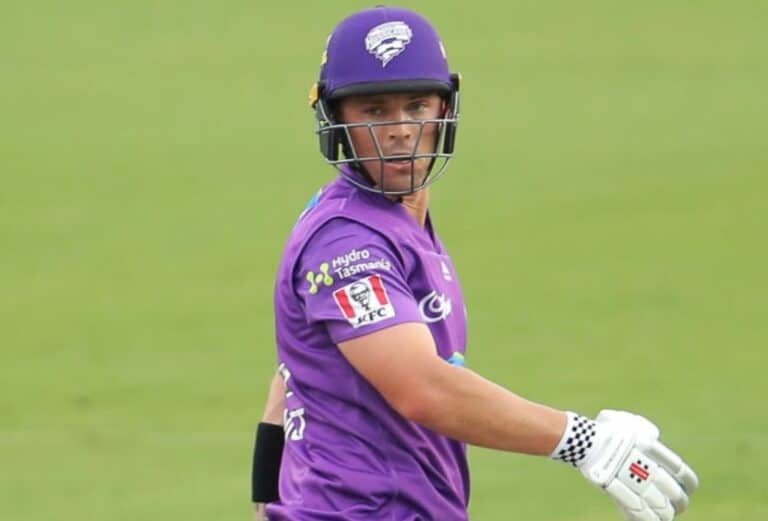
McDermott, who often bats in the middle order for Hobart Hurricanes – arguably the toughest batting positions in T20 cricket – enjoyed an excellent BBL 10 campaign (12 inns, 402 runs, avg. 36.54, SR 139.58). Sure, many of his big scores came up the order, but McDermott possesses plenty of T20 experience at numbers four and five, and would potentially offer more value than the tried-and-tested D’Arcy Short.

38 of McDermott’s 68 career T20 knocks have come at either numbers four or five. In these positions, he possesses an overall record of 926 runs at an average of 33.07 and strike rate of 127. In fact, in his 10 knocks at number five, McDermott strikes at nearly 140. He could have a good foil for the likes of Maxwell in the middle, given the experience he holds.

Josh Inglis

3 players who were unlucky to miss the Australian squad for West Indies |  A look at 3 players who were unlucky to miss the T20I and ODI squad for West Indies tour
3 players who were unlucky to miss the Australian squad for West Indies: Josh Inglis

Josh Inglis, the nuggety keeper-batsman from Western Australia, is another player Australia could have opted for on this tour. Sure, Australia has an embarrassment of riches at the top of the order, which is where Inglis typically bats in T20s, but he too has shown fine form down the order in white-ball cricket.

In BBL 10, Inglis batted at four in nine of his 16 innings for Perth Scorchers. In these matches, he struck scores of 44* (31), 72* (41), 58 (35) and 69* (41). Later in the season, he smashed 91 off 57 balls batting at five in a one day game against Victoria, which was part of his excellent finish to the campaign across white and red-ball cricket.

Inglis’ ability to shift gears and manipulate the field can be a great asset for Australia in the lower batting positions. Inglis is an asset Australia should look to use, and this tour may have been a fine opportunity to do just that.

Nathan Ellis

3 players who were unlucky to miss the Australian squad for West Indies |  A look at 3 players who were unlucky to miss the T20I and ODI squad for West Indies tour
3 players who were unlucky to miss the Australian squad for West Indies: Nathan Ellis.

Death bowling is an area of concern for Australia. It is a surprise that Nathan Ellis wasn’t given a chance in New Zealand, and now here for the West Indies. Instead, Australia have opted to persist with the likes of Kane Richardson to deliver the goods.

Ellis has been outstanding in the death overs in BBL cricket. His ability to nail yorkers has caught the eye of pundits and fans alike. His economy rate of 8.31 in BBL 10 is completely acceptable given how often he bowls at the death, and his career economy rate is even lower at 8.17. A series such as this against the power-hitters of the West Indies could have been a great opportunity to give Ellis a taste of international cricket and see what he is made of.


Marnus Labuschagne will remain in the UK for the County Championship. Cameron Green has specified that he would like to work more on his bowling back home. This 23-man Australia squad will be trimmed to 18, so it will be interesting to see who gets the final nod.

Analysis: The rise of Prithvi Shaw from 2020 to 2021

2020 vs 2021: What has underpinned the rise of Prithvi Shaw? | Prithvi Shaw is having a superb 2021, compared to 2020: We look at why this is the case

The great performance of some of the Indian players was one of the best things to have happened in IPL 2021. Prithvi Shaw was one of those players as he played some breathtaking knocks and played a very crucial role for DC to be placed at the top of the table.

His performance was extremely good this time unlike last year, where he struggled badly. So, let’s have a look at how different he was in IPL 2021 from IPL 2020; i.e. the areas he has improved on and the reasons for his improvement.

Comparison of Overall Numbers:

Let’s first compare his overall stats of this year with that of 2020. Below is a graph depicting the same.

2020 vs 2021: What has underpinned the rise of Prithvi Shaw? | Prithvi Shaw is having a superb 2021, compared to 2020: We look at why this is the case
Prithvi Shaw 2020 vs 2021

We can clearly see the contrasting difference between the respective runs scored, average and SR between 2020 and 2021. Now let’s go to the depth to find out what went wrong with him in 2020 and the reason for his rise in 2021.

PRITHVI SHAW VS PACE AND SPIN IN IPL 2020 AND 2021:

Let’s first see what Prithvi Shaw did against pace in both IPL 2020 and 2021. Below is a table where I have mentioned his stats against pace bowling in both of these seasons.

 BALLSRUNSAVGSRBPBDOT 0/0
202011514812.33128.694.7948.69
202111919138.2160.503.6037.81

Now we have to see whether he struggled against spin bowling in both these seasons or not. For this purpose, I have mentioned his numbers against spin bowling in the respective seasons.

 BALLSRUNSAVGSRBPBDOT 0/0
2020528080153.844.7226.92
20216611758.5177.274.12519.69

From the above tables, it is clear that Prithvi Shaw didn’t struggle against spin in both IPL 2020 and 2021; rather he struggled a lot against seam bowling in 2020. But as we can see, he has done extremely well against seamers in IPL 2021.

Specifically, he was dismissed 9 out of 13 times by right arm seamers in IPL 2020. So, let’s first compare his numbers against right arm fast bowlers in IPL 2020 to those in IPL 2021.

PRITHVI SHAW v/s RIGHT ARM SEAMERS IN IPL 2020 and 2021:-

 BALLSRUNSAVGSRBPBDOT 0/o
20207910211.33129.115.6444.30
20218915652175.283.0639.32

What were his issues against right-arm seam and how has he overcome them?

Upon investigating his modes of dismissals against right arm fast bowlers in IPL 2020, I found that he was caught most of the times (5 out of 9 dismissals) while trying to whack the ball pitched on either back of the length or short length somehow over the infield. The reason behind these dismissals was his poor footwork. His feet were going nowhere; he was reaching towards the ball by his hands. So, whenever he got room much outside the off stump, he got a chance to free his arms and play his shots.

Similarly, when he got deliveries on the leg stump line, he wasn’t bothered as he could easily play those using his wrists without moving his feet much. But, he tried to execute the pull shot against the deliveries pitched short of a good length around the off and middle stump line somehow without moving his backfoot. Sometimes the ball wasn’t even the ideal one to play a pull shot. That’s why he couldn’t connect those properly and was caught mostly inside the 30-yard circle.

The other 4 dismissals against right arm fast bowlers included 2 bowled, 1 caught behind and 1 caught and bowled. All the deliveries were pitched on fuller side of the good length area on or around the off stump and had movement. As his feet were planted, so he was bound to struggle against movement. He used to take guard on the leg stump and play this type of a delivery without moving his feet much. So, there was a big gap created between his bat and pad and he was either bowled or caught upon mistiming those. Below I have inserted an image which depicts the same.

2020 vs 2021: What has underpinned the rise of Prithvi Shaw? | Prithvi Shaw is having a superb 2021, compared to 2020: We look at why this is the case

This technical deficiency was well exploited in Australia and Shaw soon found himself out of the national side. He had a huge challenge to overcome in this IPL as his weakness was pretty evident. Of course, as always in the IPL, he was set to face world-class fast bowlers who could easily exploit this area.

But, he was high on confidence on the back of some extraordinary performances in the Vijay Hazare trophy prior to the IPL. In IPL 2021, he was seen shuffling to counter the deliveries targeting his stumps after pitching on or around the off stump channel. As a result, he was able to get much closer to the ball than he used to in IPL 2020. The gap between his bat and pad was reduced drastically and he was playing those deliveries with a straighter bat face right under his eyes, which resulted in better execution of his shots. Below I have inserted an image of his improved approach in IPL 2021.

2020 vs 2021: What has underpinned the rise of Prithvi Shaw? | Prithvi Shaw is having a superb 2021, compared to 2020: We look at why this is the case

Now let’s see his numbers against left arm seamers in IPL 2020 and 2021.

PRITHVI SHAW V/S LEFT ARM SEAMERS IN IPL 2020 AND 2021:

 BALLSRUNSAVGSRBPBDOT 0/0
2020364615.33127.783.658.34
2021303517.5116.677.533.34

As we can see, he doesn’t have great numbers against the left arm seamers in both these seasons. But in 2020, Trent Boult dismissed him all three times by exploiting his poor footwork (twice by letting him play the moving ball away from his body and once with a well directed bouncer), which is not the case in 2021. In IPL 2021, he was dismissed once by Jaydev Unadkat with a slower delivery, which he couldn’t pick and played the shot earlier than he should have played. The other dismissal came against Arshdeep Singh while he was trying to take him on and miscued an aerial shot. Although he had a lesser SR and higher bpb this time, the significant reduction in the dot ball percentage indicates that he concentrated on rotating the strike against the left arm seamers and mostly attacked the right arm seamers (with his improved technique) and the spinners.

FURTHER CHALLENGES:

In IPL 2020 as well as 2021, Prithvi Shaw didn’t look very comfortable against well directed short balls. In IPL 2021, he mistimed a few pulls at times and left some short balls as well. So, I feel his game against short balls is something he needs to work on. In this era of highly improved data and video analysis, you always need to be alert and work on your weaknesses quickly; otherwise you can be found out by the opposition within no time.

Concluding the article, I praise the way he has tackled the right arm fast bowlers in IPL 2021 with his improved technique. He looked determined, spent much more time in the middle (faced 10.285 more deliveries per innings than he did in 2020) and batted as per his strengths which was commendable. Also, I am eager to see him further against the left arm fast bowlers and I hope for some improvement in his game against short deliveries.

Thanks for reading and share your thoughts!

Written by Debashish Sarangi. Follow Debashish on Twitter today. 

COVID-19 India: Fan paints story of an IPL like no other

COVID-19 India: Fan paints story of an IPL like no other | A look back at a timeline of IPL 2021, impacted by severe wave of COVID-19 in India

After 24 days and 29 matches played, the 14th edition of the Indian Premier League was postponed due to the Covid-19 pandemic cases in bio-bubble and the rising cases in India.

It is well-known that the situation here in India is really bad at the moment. However, it is also important to know that the situation wasn’t under control when the IPL started on April 9.

Mumbai was one of the two venues of the first leg of this season, and there were 100,000 cases every day when the tournament started. Concerns started to grow even more about whether playing cricket in such an environment is a safe proposition, and the situation kept getting worse with time. By the time the league was postponed, India was reporting more than 350,000 cases a day. The need for air travel from one venue to another in the second leg of the league worsened things even more, especially when you consider that Delhi, one of the worst-impacted regions in India, was to host matches.

This photo of Kane Williamson and David Warner said it all.

Players Started Leaving

On 26th April Royal Challengers, Bangalore’s official handle tweeted that Adam Zampa and Kane Richardson will be leaving the tournament due to “personal reasons”. Andrew Tye had flown back home to Australia a day before this due to “personal reasons” as well.

The constant rise in the covid cases in India despite the bio-bubble concerned them, which is understandable, and the possibility of the Australian government restricting flights from India, which eventually they did, was another area of concern for them. However, the tournament continued to go on, and the BCCI provided reassurance that the bubble was safe. However, even the most ardent of cricket fans were fearing that the bubble could be breached.

Later, Zampa in an interview stated that the bio-bubble of IPL 2021 was the most vulnerable out of all the bio-bubbles he was part of. He said that the bubble in IPL 2020 in UAE felt extremely safe. This statement started a lot of discussions that time but who would’ve thought that this will be the case in the coming days?

COVID-19 India: Fan paints story of an IPL like no other | A look back at a timeline of IPL 2021, impacted by severe wave of COVID-19 in India
COVID-19 India: AJ Tye left the tournament early, soon before the Australian border was closed to India.

Situation Worsened at the IPL

On Monday, May 3rd, the bubble was breached. KKR players Varun Chakravarthy and Sandeep Warrier tested positive for COVID-19, sending the BCCI and cricket fans into chaos. The KKR vs RCB game scheduled on that day was rescheduled, with the BCCI desperately turning to their pre-tournament SOPs to try and keep this tournament alive. On the same day, CSK’s bowling coach L Balaji and one of their staff members tested COVID positive but none of their players tested positive.

While the reason for Balaji and CSK’s staff member testing positive is unknown, it was reported that Varun Chakravarthy of KKR went for a shoulder scan on May 1st outside the bio-bubble and is suspected to have got infected during that time. He also sat for a meal with Sandeep Warrier who probably got infected during that time.

The next day on May 4th, DC’s Amit Mishra tested positive. He had met Warrier during the practice session when KKR’s and DC’s practice sessions were scheduled simultaneously at Ahmedabad. SRH wicket-keeper Wriddhiman Saha too tested positive on the same day and as a result, the tournament was indefinitely postponed.

Later CSK’s batting coach Michael Hussey tested positive. He now has been tested negative and CSK is looking after him. KKR’s Prasidh Krishna and Tim Seifert were reported to be tested covid positive on Saturday, May 8th. Australian players have been isolated in the Maldives awaiting the flight restriction uplift in Australia, and flights are set to resume to Australia from India after May 15. All the other overseas players will be safely dropped home by their respective franchises.

How it Should’ve Been Avoided

COVID-19 India: Fan paints story of an IPL like no other | A look back at a timeline of IPL 2021, impacted by severe wave of COVID-19 in India
COVID-19 India: IPL 2020 was successfully held in the UAE.

It’s clear that the situation is bad currently in India and it wasn’t a good idea to have organized the IPL here. Even beforehand, India’s population size and density makes the risk of a huge second wave all-the-more great. IPL 2020 went smoothly without any issues in the UAE and it would’ve been the best thing to have one more season of the Indian Premier League there, to be safe.

And if they were so determined to play the IPL in India they should’ve selected only one or maybe two venues, closer to each other, minimizing or even completely avoiding travelling during these times. Only one venue like Mumbai, Ahmedabad, or any other with strict bio-bubble restrictions would’ve been better than the current schedule where players needed to travel via air.

The BCCI is will lose Rs.2500 crores or $270 Million if the IPL is not completed. However, there is more to the situation than just money. Amid all this, all the safety of the players and everyone involved is most important, and postponing the league was the only logical decision.

The BCCI is looking for a window in September before the T20 World Cup to complete the remaining games of IPL 2021. There is a possibility that it can be shifted overseas like in 2020. County clubs in England have offered to host the IPL.

Whatever happens, the league should be completed in a safe environment as it is very important for many involved in it and it brings joy for us as viewers too during these tough times.

Thank you for reading and Stay Safe.

Written by Robin Rounder. Follow Robin on Twitter today.
Time for Matt Parkinson in the England Test side?

Time for Matt Parkinson in the England Test side? | Is it time for the England selectors to pick Matt Parkinson in the England Test team

“Sack it, I’m going to try and rip it.”

That was Matt Parkinson’s take on his “ball-of-the-century” – which drew praise from the original proprieter of that accolade, Shane Warne – to dismiss Northamptonshire’s Adam Rossington.

Parkinson started the 2021 English domestic season wanting to “prove a point”. However, with snow showers sweeping across the ground, early April Old Trafford looked about as uninviting as it comes for a young leg spinner hoping to re-establish his credentials. But if his experience over the winter is anything to go by, you suspect he would have been raring at the opportunity to pull on the whites and tweak a few in glacial Manchester conditions.

Picked as a reserve for the test tours of Sri Lanka and India, as well as the T20I series against Virat Kohli’s men, Parkinson was then called up to the main squad for the tour-ending ODI series against India. This didn’t bring a change in fortune for the Lancashire leggie as England opted for the tried and tested “spin twins” of Moeen Ali and Adil Rashid in all three matches. Parkinson’s only appearance of the winter was in Team Root v Team Buttler, an intra-squad friendly at the start of the Sri Lanka tour. In an England team environment keen to manage the pressures on mental health in bubble life, Parkinson was one of the few all-format squad members to remain on tour throughout the winter.

Back now in the chilly climes of county cricket in April, Parkinson has tried to take the positives from what must have been a frustrating winter, “I’d like to think I improved as a cricketer over the winter and spending three months in the England squad is obviously amazing, as is being surrounded by the likes of Joe Root and Ben Stokes,” said Parkinson.

Already established as number three in the limited overs pecking order – behind the “spin twins” – it is Test match consideration that Parkinson has the opportunity to push for this summer. Jack Leach, one of the few England players to emerge from the India tour in credit, is indisputably England’s number one Test spinner for the foreseeable future. However, with Dom Bess’ confidence deserting him and Moeen Ali’s Test career having stalled since 2019, Parkinson could be well placed to stake a claim as England’s second spinner.

His first class numbers are good. 77 wickets at an average of 24 and, perhaps surprisingly for a young wrist spinner, an economy rate under three runs per over. As a bowler who gives the ball plenty of flight, albeit at a slower pace than most spinners, and looks for prodigious turn, Parkinson can’t be expected to provide such control against international batsmen. However, in Jack Leach, England have, perhaps for the first time since the retirement of Graeme Swann, a spinner capable of performing a containing role. His ability to restrict batsmen to three runs per over or less in the first innings gives England the luxury of considering Parkinson, and giving him the license to toss the ball up above the eyeline and extract copious turn.

With three Tests in Pakistan next year, a Leach/Parkinson combination could be an alluring one for England. Parkinson would certainly benefit from having a reliable performer in the shape of the Somerset finger spinner. Ever since the retirement of Swann, and Monty Panesar’s fall from favour, England’s spin attack has always carried wicket taking threat – both Moeen Ali and Adil Rashid’s strike rates are good – but economy rates of 3.62 and 3.75 mean containment was absent from either end.

If England are to groom Parkinson for future overseas tours, they need to do so smartly. English leg spinners in red ball cricket are rare, and the ability to manage them is even rarer. Twice before – at the end of chastening Ashes tours – England have thrown young leg spinners to the wolves with the series gone and more than half an eye on the plane home.

In Sydney on the 2013/14 tour, England selected Scott Borthwick. The 23-year-old leggie picked up four wickets, but went in excess of 6 rpo as a rampant Australia stormed to a series whitewash. In Sydney again on the 2017/18 tour, England, finding themselves 3-0 down having surrendered the Ashes in Perth, chose to throw in another young leg spinner for the final test, this time in the form of 20-year-old Mason Crane. Crane bowled better than his figures of 1-193 suggest, however he looked powerless in an England team devoid of ideas to prevent three Australian batsmen reaching triple figures in a mammoth score of 649/7. Neither Borthwick nor Crane have added to their solitary Test caps.

England owe it to Matt Parkinson to use him wisely. There’s no room to be carried or hidden in Test cricket, but nor do young spinners have to be thrown in as a last resort when the wheels are off. Parkinson meanwhile is doing his bit. 19 wickets, including a 7fer, at an average of 19 represents an almost unheard of start to a County Championship season for a spinner.

If Parkinson can sustain the form he’s shown at the start of his red ball career, and the England management utilise him sensibly, he could form part of an exciting spin attack that can pose real challenges to subcontinental batting line ups.

Written by Adam Sutherland. Follow Adam on Twitter today.