“Quietly confident” about Australia tour of England – Ashley Giles | Ashley Giles confident that Australia’s limited overs tour of England will go ahead
Ashley Giles, managing director of the England men’s cricket team, is confident about Australia’s white-ball tour of England going ahead in September.
As quoted by ESPNCricinfo, Giles, via a video call, hailed Australia as one of England cricket’s important partners. “We had a really good conference call with them last week”, said Giles. “They’ve been one of our strongest partners for years, Australia, and that continues that way.”
Giles pointed that it is understandable if any Australian player or support staff member had some concerns given the COVID-19 situation in the UK. However, Giles provided reassurance that protocols are put in place to ensure all involved remain as safe as possible.
“Quietly confident” about Australia tour of England – Ashley Giles
“Clearly, if you are an Australian cricketer or member of staff, outward looking in at the moment, there would be some nervousness. But, we are doing everything to allay as many of those fears as we possibly can to get them to the country. September is a long way right now, and a lot could change in that time.
Are we confident? Quietly confident, but there is still a lot of water to pass under the bridge.”
According to some reports, the ECB is planning to create an “extravagant COVID-19 bubble” for Australian cricketers. The goal of this is to ensure all members of the touring party are as satisfied as possible in isolation, as the ODI and T20I series are both of great importance to England after the impact of the COVID-19 pandemic.
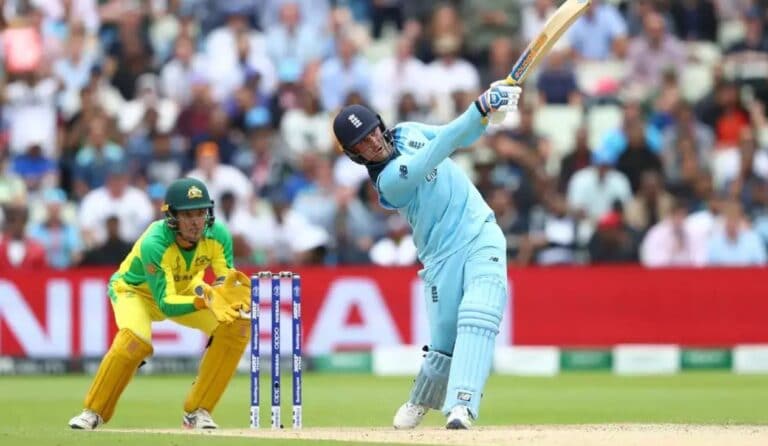
Australia were last in England for the 50-over World Cup and memorable Ashes series in 2019. Before that, Australia had a forgetful visit in 2018, losing all five ODIs and the lone T20I. This included being on the wrong end of a world-record 481/6, where England hammered Australia’s bowlers to all parts.
Should the tour go ahead as planned, Australia will be out for redemption in what should be an exciting tour.
5 key reasons why MI and CSK are so successful in the IPL | MI and CSK rivalry | Why are Mumbai Indians and Chennai Super Kings so successful?
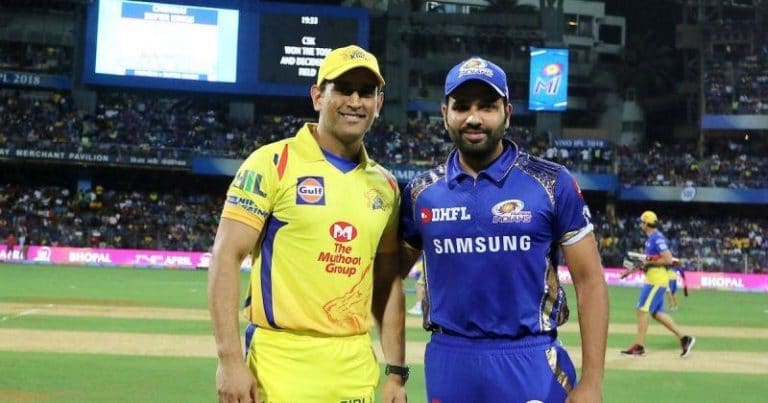
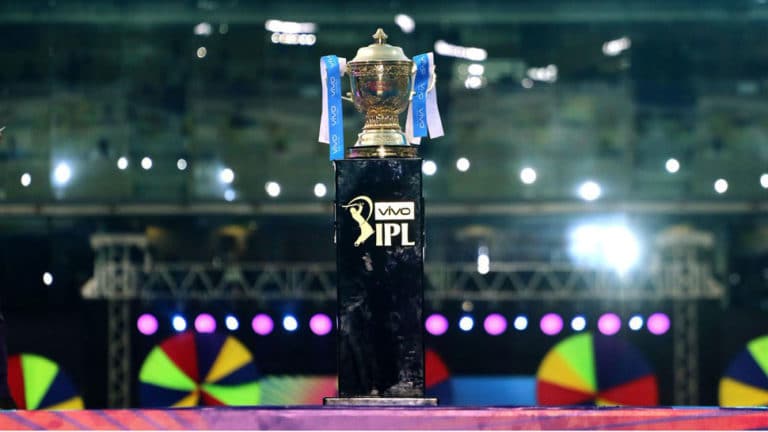
The IPL was born 12 years ago, and 12 teams (taking SRH and Deccan as one) have played in the competition. Mumbai Indians (4 times) and Chennai Super Kings (3 times) have been the two-most dominant teams, winning the title seven times between them.
MI and CSK are the two most successful teams in IPL history
They are the two most successful and consistent sides in the league, but the way both teams operate is very different from one another. However, despite having a very different approach, one thing common between the arch-rivals is success.
So, why are these teams successful? What are they doing differently compared to the other sides? What makes them the Chennai Super Kings and the Mumbai Indians that we love seeing playing? Let’s get into it:
CSK and MI have two great leaders in MS Dhoni and Rohit Sharma respectively. Both have played a vital role in what their teams have achieved until now.
MI had never won the title until Rohit Sharma was appointed the skipper mid-season in 2013, after Ponting stepped down. Not only that, Rohit won three more titles in the span of six years, making him the most successful captain in the IPL.
MS Dhoni, on the other hand, has been doing what he’s known for as a captain for a period of 10 seasons. CSK have qualified for the play-offs in all the 10 seasons they’ve played, with eight finals, winning three under Dhoni. He also has the best winning percentage in the league.
Both captains know how to get the best out of any player and are very calm in crunch situations. Indeed, Dhoni and Rohit are one of the biggest reasons why Mumbai Indians and Chennai Super Kings are the top teams in franchise cricket.
The leadership of Rohit Sharma and MS Dhoni has been crucial to the success of MI and CSK
2. Management
Along with the captains, the team management also plays a very important role in a team’s success. From the auction table to scouting players, management is a very essential part of any franchise.
Here again, both team’s managements have their own ways, which, as mentioned, are very different from each other.
At MI, everything gets done very systematically. They analyse the strengths and weaknesses of the opponents, makes plans, and play according to them. They have a great scout team which has proved to be very important for them.
CSK, on the other hand, is all about Dhoni along with Fleming. The team management has given full control to him. Dhoni is the scout and the management, he does the management’s job with coach Fleming. Their team meetings hardly last for two minutes as and they don’t really think about the match before the game day. They back their abilities, knowing full well how to take advantage of player strengths.
CSK and MI have maintained a strong core of Indian players, along with a few overseas stars over the years. After all, it’s the “Indian” Premier League and you have to have seven good domestic players in the XI. Both franchises have understood this quite well.
Rohit Sharma, Kieron Pollard, Hardik and Krunal Pandya, Jasprit Bumrah, Ishan Kishan, Lasith Malinga, etc. for MI and MS Dhoni, Suresh Raina, Ravindra Jadeja, Shane Watson, Ambati Rayudu, DJ Bravo, etc. form that core for CSK.
Teams like RCB and KXIP have lacked that core of players over the years and that reflects in their overall performances. Both the MI and CSK managements have been spot on the with their picks in the auction. They picked players according to their strengths and weaknesses and that is the most important thing if you have to build a successful team.
Be it Jasprit Bumrah and the Pandya brothers for MI or Shane Watson and Imran Tahir for CSK, they are very smart with their buys and this is another aspect that makes them different from the other franchises. Also, MI picking Chris Lynn for his base price and CSK picking Sam Curran and Josh Hazlewood shows how smart they are in picking the players.
Hardik Pandya has been superb for Mumbai Indians
4. Exploiting Home Advantage
Another thing that these two teams have done over the years is exploit the home advantage.
Both these teams have the perfect squad for their home grounds. Mumbai have players like Chris Lynn, Quinton de Kock, Pollard, Bumrah, Malinga etc. for the hard Wankhede track. CSK has an army of spinners like Tahir, Harbhajan, Jadeja, Karn Sharma, Sai Kishore, Chawla etc. to bowl on the dustbowl of Chepauk.
However, it is not like that the two sides are solely dependent on their home grounds for winning games. But, doing well at home helps in building momentum, which stems from a good auction strategy.
5. Trusting and Backing Players
MI and CSK both stay calm after losing a game or two. They don’t panic and make a lot of changes in their playing XI. They have a tried and tested playing XIs and they avoid making changes frequently. Also, they back their players until they perform, which again, is a sign of excellent leadership.
Picking Shane Watson after his below-average performance for RCB in 2017 was very surprising itself and CSK backed him in his bad phase. Eventually, he performed and helped them win the 2018 title and almost again in 2019.
Similarly, Mumbai backed and gave chanced to young players like Jasprit Bumrah, Pandya brothers, Rahul Chahar, etc and now they are the permanent members of their side.
Both sides are very different in their approach, but it has given them the desired results. Their tried-and-tested methods are the key reasons, along with a great team environment, that makes these two sides the top two teams; not only in IPL but amongst all the franchises around the globe.
Thanks for reading!
Written by Robin Rounder. Follow Robin on Twitter today
Chris Gayle opts out of 2020 Caribbean Premier League | Chris Gayle opts out of the CPL 2020 | Gayle out of CPL 2020 due to personal reasons
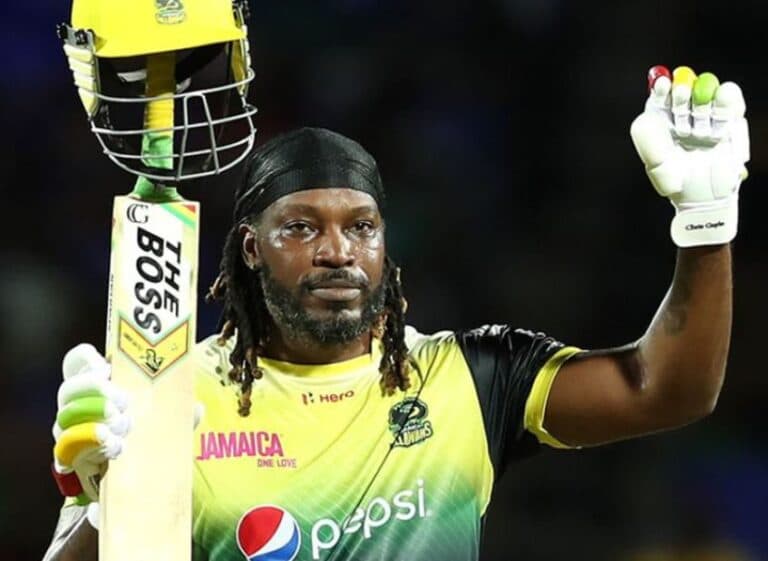
Chris Gayle has opted out of the Carribean Premier League 2020, owing to personal reasons. The tournament is scheduled to be hosted solely in Trinidad and Tobago from 18th August to 10th September, although it is pending government approval. Gayle conveyed his decision to St Lucia Zouks, the team he was supposed to play for in this edition of the CPL.
Gayle had previously decided to play for the St Lucia Zouks after a disagreement with his previous franchise, Jamaica Tallawahs.
With over 2,500 runs in the tournament, the ‘Universe Boss’, as the Jamaican refers himself to, is the leading run-getter in the Carribean Premier League.
Chris Gayle has opted out of CPL 2020 due to family reasons
A CPL spokesperson told ESPNCricinfo that he understood Gayle’s decision. “We understand that Chris has decided to not take part in CPL personal reasons. We wish Chris all the best for the rest of 2020 and hope to see him back at CPL in 2021.”
The Carribean Premier League draft is supposed to be held virtually amid the coronavirus pandemic as there are travel restrictions all over the world.
Top 5 Best South Africa Tests since 2000 | Best South Africa Test matches since 2000 | SA Cricket best Test matches
South African cricket has been blessed with wonderful teams over the past two decades. Reaching the peak of their powers in the mid-2000s through to the late 2010s, the Proteas had a batting lineup and pace attack that was the envy of many sides around the globe.
So, when the Proteas came up against other superb teams, you knew that it was going to make for a wonderful contest. Here, we look at South Africa’s best Tests since 2000; matches that saw great achievements or recoveries from positions of distress.
5. England vs South Africa, 3rd Test, Edgbaston 2008
The ‘sight screen’ Test.
In 2008, South Africa locked horns with a formidable England side. This England side was tough to beat, with the likes of Andrew Strauss, Alastair Cook, Michael Vaughan, Kevin Pietersen, Ian Bell, Andrew Flintoff and Jimmy Anderson.
With England 1-0 down after two Tests, skipper Michael Vaughan happily won the toss and opted to bat first at Edgbaston in the absence of Dale Steyn. However, Jacques Kallis and Andre Nel led the way, knocking England over for just 231.
But, the biggest challenge was yet to come. The challenge of Freddie Flintoff.
Freddie bowled with a lot of aggression. The ball moving in both directions in the air and off the wicket. Plus, he had the support of 25,000 Englishmen. There can be no doubt about the quality of Flintoff as a fast bowler, but what the scorecards won’t tell you was the ‘dark patch’ of seating above the sightscreen at the Pavilion End.
The likes of McKenzie, Kallis and Boucher ducked or turned away from full length deliveries having not seen the ball out of Freddie’s hand. Life was difficult, particularly given that nothing was done about it.
Top 5 Best South Africa Tests since 2000: Andrew Flintoff was tough to face
In the end, some decent contributions from a handful of players saw the Proteas wriggle their way to 314 – a lead of 83. England’s top order then struggled, but Kevin Pietersen (94) and Paul Collingwood (135) put England in with a great chance of winning, setting a target of 281.
The tough ask
Such a target in the final innings of a Test match is always a tough ask, regardless of the opposition.
Scores of 150+ had only twice previously been successfully chased down at Edgbaston.
Highest successful run chase at Headingley up until that game was 211.
Flintoff and Anderson were in fine touch, with the added obstacle of the ‘dark area’.
So, someone would have to play ‘that innings’. Optimism grew as South Africa got off to the perfect start; 65-0, with many fans and pundits upset that Flintoff hadn’t been given the new ball. But, when he got his chance, he made an immediate impact. Neil Mackenzie was plumb LBW after struggling to sight the ball. Hashim Amla then copped a tough LBW decision from Aleem Dar.
78/2, the stadium was rocking and England were right back in the Test.
As the entire atmosphere seemed to have descended on Freddie and Kallis, the Test match and series almost seemed irrelevant. Could Kallis survive? After facing six deliveries, Freddie steamed in and delivered a knee-high full toss, something that Kallis (under normal circumstances) would dispatch to the boundary in his sleep. He, like McKenzie, did not pick it up, ducking the delivery taking the ball to his body. Another plumb LBW as a result of the ‘dark area’. So, surely the English were well on their way to a famous victory.
Or were they?
Cometh the hour cometh the man. Graeme Smith played what I believe was the innings of his career, finishing on 154* off 246 deliveries. Mark Boucher, with 45*, provided great support. The Proteas won by five wickets, but it far closer than that as only Morkel, Harris, Nel and Ntini were left to bat.
This effort remains the highest successful run chase at Edgbaston to this day. South Africa went on to win the series 2-1. What a Test match.
4. India vs South Africa – 1st Test, Wankhede Stadium Mumbai 2000
Success in India.
A lot is spoken about the Proteas side from 2008 through to 2018, and rightly so. Having said that, I don’t think the Proteas side from the late 90’s and early 2000’s really get the credit they deserve. They remain the only South African side to win a Test series in India – a feat that not many have accomplished.
It was in February of 2000 that the South Aficans took off to take on mighty India.
The South Africans were led by the gritty Hansie Cronje. Senior players Gary Kirsten, Lance Klusener and Allan Donald were key.
At the time, the likes of Gibbs (25), Kallis (24), Pollock (26) and Boucher (23) were not the players we know them to be today.
They undoubtedly had plenty of talent, but were not necessarily regarded as elites just yet.
South Africa restricted India to 225 in the opening Test, with Tendulkar striking 97 on a deteriorating wicket. The Proteas, after feeling good at the innings break, were all of a sudden 100-7 in 45 overs. South Africa finished all out for 176. India led by 50 runs on a crumbling wicket against a South African middle order that couldn’t face spin. Trouble.
Going into the 3rd innings of the game, I believe Sachin would have told his troops that a lead of 200 would be sufficient to win the game. On that notion, India simply needed 150 runs in their 2nd innings to ensure probable victory.
Proteas then storm back
What happened next was something that no one could have really predicted. Cronje stuck to what he knew best. The seamers bowled all the overs, and obliterated the Indian batsmen. Shaun Pollock, with 4-24, changed the game. Cronje (3-23) and Donald (2-23) also delivered. South Africa were set 163 with plenty of time left, after India were out for 113 in about half a day.
With the draw out of the picture, Kirsten and Gibbs then gave the Proteas a promising start. But, it didn’t take Tendulkar too long to toss the ball to Kumble, who would then effectively bowl half of India’s overs. He was effective immediately, dismissing Kirsten and Gibbs.
However, South Africa were 2-76 and still in control. With Kallis and Cronje at the crease, I think it would be fair to assume that the South Africans were quietly confident. However, Cronje was run out in the 4th innings – a cardinal sin in Test cricket.
It went pear-shaped for a period thereafter, with the Indian spinners making light work of Pieter Strydom, Lance Klusener, and Shaun Pollock. South Arica were 128-6, still 35 runs behind with a 23-year old Boucher and 24-year old Kallis at the crease facing Anil Kumble and Murali Kartik. Problems.
The game plan clearly became for Kallis to ‘survive’ while Boucher knocked off the last 30 odd runs. Kallis, as he has always been, remained rock solid from his end, finishing the innings on 36* off 129 deliveries. Boucher scored a quickfire 27 off 32 balls to share in South Africa’s most important 36-run partnership in recent history.
South Africa went on to win the Test series 2-0. A superb achievement.
3. South Africa vs Australia – 1st Test, Newlands Cape Town 2011
The quick turnaround.
The rivalry between South Africa and Australia since readmission up until 2011 had been ‘asymmetrical’ to put it lightly. In the previous 10 series, South Africa managed just the one win (2008/09), while Australia won seven, with two draws. In the last 30 test matches played up until this series, the Proteas had beaten Australia in just seven.
However, 2011 was different. There was a sense that the tide could finally turn in the Proteas’ favour.
The Aussies had said goodbye to the likes of Hayden, Langer, Martyn, Gilchrist, Warne, McGrath, Gillespie and Lee.
New era beginning under the leadership of Michael Clarke.
The South Africans on the other hand had players like Dale Steyn, Morne Morke, Hashim Amla and AB de Villiers who had really ‘come of age’ under the leadership and guidance of key figureheads like Smith, Kallis and Boucher.
However, the South African side was not without holes. Graeme Smith was still looking for an opening partner, a number six, an opening bowler and a frontline spinner. Jacques Rudolph and Ashwell Prince would open and bat at six respectively. Also, debuts were awarded to Vernon Philander and Imran Tahir to occupy the new ball and front-line spinner positions.
Smith, against expectations, chose to bowl. He tossed Dale Steyn the new cherry and Dale did what he does best. He bowled with venom, and Australia found themselves 6 down with 163 on the board. Three for Steyn, two for Morne and one for Big Vern. But, in true Australian fashion, Mr Captain Fantastic Michael Clarke hit a run-a-ball 150, seemingly batting on a different wicket to everyone else.
It was truly magnificent to watch two evenly sides having a go at one another and the ebb-and-flow between the sides gave it an almost Hollywood drama-like appeal. Australia were eventually bundled out for 284 before lunch on day two, and although there was something in the wicket for the quicks, I believe that Smith would have been the happier of the two skippers at that point.
Unimaginable drama for South Africa and Australia
However, after a decent start by the openers, the next three hours brought unimaginable drama from a Proteas perspective. Ryan Harris took 3-44 and Shane Watson claimed five wickets in as many overs to bundle South Africa for 96, with the last seven wickets falling for 23 runs. In a two-game series, did this mean that South Africa’s chances of a series victory were over?
But true to the rivalry that exists between these two sports-loving nations, the game was far from over. What happened next was then unthinkable from an Australian perspective. 11 overs into Australia’s second innings, Australia were on the brink of achieving the lowest ever Test score, sitting at 9-21. Vernon Philander, on his debut, had obliterated the Australians with his beautiful movement. The ball moved away, then in, and then back away. Watson, Clarke, Ponting, and Hussey dropped like flies and thanks to a handy 14 runs from Nathan Lyon, Australia were bowled out for 47, their 4th lowest total in over 120 years of Test cricket.
An interesting dynamic was at play at this point. Australia had been humiliated but at the same time were still a good chance of winning heading into the final innings. South Africa needed 235 to win, which might not be a world record chase, but after the 2nd and 3rd innings totals of 96 and 47 respectively, it must have seemed like a mountain of runs to the South Africans.
I remember thinking ‘if they can just survive 100 overs, they should get the required 236 runs, they need to bat for just over 3 sessions and they can win’. I had the wrong mindset. It was not the time to sit back and allow the Aussies to bowl at the South Africans. The best defense is a good offense, and Graeme Smith and Hashim Amla proved so throughout the final innings. Smith finished on 101* (140) and Hashim Amla on 112* (134), taking a liking to Mitchell Johnson and Ryan Harris, Australia’s best quicks at the time.
South Africa reached the required 236 runs in just 50 overs, batting at 4.68 to the over with eight wickets in hand. A comfortable victory in the end to complete a remarkable turnaround.
Enjoying Daniel Orsmond’s content? Check out his other articles on CricBlog!
2. Australia vs South Africa – 2nd Test, Adelaide Oval, Adelaide 2012
Mission impossible
The last three series between South Africa and Australia leading into this one had yielded an away win for South Africa, an away win for Australia and a 1-1 draw in South Africa. The scene was set for another thrilling series and it did not disappoint.
The 1st Test was a draw, but the Aussies were the far more convincing side in the game. The South African bowlers lacked any real potency, having opted to go with four right arm fast bowlers in Steyn, Philander, Morkel and Kleinveldt at the expense of the Imran Tahir.
Leading into the 2nd Test, Philander had injured his back in and Kleinveldt retained his place in the side. Tahir joined the playing XI, but had a shocker, returning match figures of 0-260 in 37 overs. An economy rate of 7.03 in a Test match. Carnage.
Clarke had been magnificent all series and the Aussies were all out for 550 (in just 107 overs) in Adelaide. South Africa then batted bravely. Greame Smith came to the party when he was most needed with a spectacular 122 with Petersen, Kallis and the debutant Faf du Plessis (in for the injured JP Duminy) all contributing with 50s.
However, the deficit stood at 162 at Tea on day three with the Aussies smelling blood.
With the memory of the 2008/09 series in the back of their minds, there was no way the Australians would set the South Africans a target of anything less than 400. With their lead of 162 from their 1st innings, I expected the Aussies to come out guns blazing looking to put on another 250 fairly quickly. Their 2nd innings was more patient and technically precise than their 1st, as the Aussies made their way to a total of 267/8 in 70 overs by the 2nd session on day 4 leaving the Proteas a target of 430 and with about a day and a half to get it.
Quest to keep the series alive
The South Africans would have backed themselves going into the final innings but with an injured Jacques Kallis, and young debutant Faf du Plessis, the draw seemed a more realistic option. South Africa would need to bat for 150 overs to draw the Test match.
By over 20, it was pretty much all over. South Africa had lost its top four (Smith, Petersen, Amla and Rudolph) for just 45 runs. The Aussies needed just six wickets in 130 overs with AB de Villiers at the crease, partnered by Faf du Plessis with only an injured Kallis to come.
But, de Villiers and du Plessis had other ideas, facing a whopping 596 deliveries between them. AB de Villiers played out 220 balls for 33 runs, showcasing his incredible ability to switch focus across situations and formats. After de Villiers was out, Australia had a big sniff, but Faf du Plessis held firm on his way to an unbeaten 376-ball 110 to guide his country to their most famous draw in recent memory.
South Africa went on to win the final test by 309 runs and recorded their 2nd consecutive test series win in Australia. A special effort.
1. Australia vs South Africa – 1st Test, WACA, Perth 2008
400+? No worries.
South Africa did not have a good time of things in Australia in the few decades preceding this series. However, this Proteas side was full of talent, and were enjoying a strong year in 2008.
But, the series couldn’t have got off to a worse start for South Africa, with Ashwell Prince going down injured during the warmup. So, the South Africans were forced to introduce a 24-year-old JP Duminy into their middle order; not quite the conditions you’d like to be making your debut in.
Things quickly improved with Makhaya Ntini striking early, claiming the wickets of Hayden and Ponting. Steyn assisted with the massive scalp of Michael Hussey to leave the Australians battered and bruised ay 3-15. But, in typical Australian fashion, they not only recovered, but really took the attack to the South African change bowlers with Kallis and Morkel being uncharacteristically expensive. Clarke and Katich hit a 150-run parternship, before the deadlock was broken by Morkel. Haddin, along with the ever-frustrating Australian tail really added salt to the wound as the Australians saw themselves to an above-par 375-all out.
The South African response was exceptionally positive to begin with. Smith, Kallis and Amla and de Villiers all getting good starts without kicking on to the 3 figure mark but at 234-3, the South Africa would have felt that they were on top. In steps a young Mitchell Johnson, still relatively new to test cricket, who went on to bowl one of the most hostile spells of fast bowling I have ever seen. He intimated and bullied the South Africans with fast aggressive short pitched bowling. He claimed 8-61 that innings, including the scalps of Smith, Kallis, de Villiers, and JP Duminy.
South Africa lost their last seven wickets for 47 runs, and all hope seemed lost. They were around 100 runs behind the Aussies on the morning of the 3rd day knowing full well that they would need to chase the Aussies on day five against Mitchell Johnson on a wicket that clearly had something in it for the quicks. South Africa needed to bowl Australia out cheaply second time around, but a score of 319 meant that the South Africans were required to score 414 runs in five sessions to claim an improbable win.
The unthinkable
Everyone in the cricketing world expected the South Africans to bat for the draw given that it was only the 1st Test of the series, as well as the fact that 400+ had only been chased down three times in cricketing history (2003, 1976, 1948).
Graeme Smith, AB de Villiers and co. had other ideas.
The next 120 overs consisted of some of, if not the best batting I’ve ever seen from a South Africa top order as five of the top six went past 50. Graeme Smith and AB de Villiers scored absolutely brilliant centuries. Mitchell Johnson threw everything he had at a young de Villiers and Duminy (50 not out), but the pair managed him with a level of maturity and technical ability not seen in players with 100 test matches behind them.
Graeme Smith always said that batting partnerships of 100 or more is what wins Test matches. He and Amla shared a stand of 153. Amla and AB shared in a stand of 124, and AB and Duminy shared an unbroken stand of 111. The South Africans had done the impossible and chased down 414 against the mighty Aussies in their own back yard.
This was the turning point for South African cricket and they would enjoy a period of around 7/8 years of dominance going forward. Smith earnt his stripes as a captain. Amla, de Villiers and Dale Steyn became known around the world. It was the best match of Test cricket I’ve ever seen.
Written by Daniel Orsmond. Follow Daniel on Twitter today.
Enjoying Daniel Orsmond’s content? Check out his other articles on CricBlog!
Another Bangladesh series postponed due to COVID-19; this time Sri Lanka | Bangladesh postpone tour of Sri Lanka amid COVID-19 pandemic
Bangladesh’s search for cricket will continue, as they have postponed their tour of Sri Lanka.
Scheduled for July-August, the Tigers were due to play three Tests in the island nation, as part of the World Test Championship. The news comes soon after New Zealand’s tour of Bangladesh was postponed due to the pandemic, leaving Bangladesh uncertain as to when their next series – home or away – will happen.
The BCB let SLC know of their lack of preparation. In fact, preparation has been nil, as Bangladesh haven’t begun any form of training since cricket came to a halt in March. The BCB’s headquarters, Shere-Bangla Stadium in Mirpur, is within a coronavirus “red zone”, which makes any form of cricket a risk. In addition, cricketers Mashrafe Mortaza and Nazmul Islam, as well as former batsman Nafees Iqbal, recently tested positive.
Another Bangladesh series postponed; this time Sri Lanka
Some of Bangladesh’s greatest Test moments have come in Sri Lanka. In 2013, Bangladesh hit 638 in a drawn Test at Galle. Four years later, they won their 100th Test, which happened to be in Colombo, beating Sri Lanka by four wickets.
While Sri Lanka has fared better than Bangladesh in terms of COVID-19 cases and deaths, the island nation too has experienced their fair share of postponements. Their series against India was recently postponed, as was South Africa’s visit, after England returned home after two practice matches in March.
Make match-fixing a criminal offence, says ICC’s ACU Coordinator | Steve Richardson says match-fixing should be a criminal offence in India
Betting is illegal in India. However, it remains is single highest source of sporting corruption, as cricket continues its fight against match-fixing.
Steve Richardson, Coordinator of Investigations at the ICC’s Anti-Corruption Unit (ACU), is pushing for the move to make match-fixing a criminal offence in India. He believes that this would be a “game-changer” and the “single-most-effective thing” to protect not only cricket, but sport in India.
Follow Sri Lanka’s lead
Richardson wants India to follow Sri Lanka’s lead. In 2019, Sri Lanka criminalised match-fixing, introducing 10-year sentences for those found guilty. The ICC’s ACU currently has just under 50 match-fixing investigations on its plate. Most of those are connected back to corruption in India, which Richardson believes is a huge problem as the nation is set to host two huge tournaments in the next three years.
“India has got two ICC global events coming up: the T20 World Cup [in 2021] and the World Cup in 2023,” Richardson said. “At the moment with no legislation in place, we’ll have good relations with Indian police, but they are operating with one hand tied behind their back. We will do everything we can to disrupt the corruptors. And we do, we make life very, very difficult for them as far and as much as we can to stop them from operating freely.
But the legislation would be a game-changer in India. We have currently just under 50 investigations. The majority of those have links back to corruptors in India. So it would be the single-most-effective thing to happen in terms of protecting sport if India introduces match-fixing legislation.”
ICC and BCCI ACU members say that corruption should be criminalised to protect cricket in India.
Worryingly, Richardson, speaking in a panel discussion on the subject ‘Does India need a match-fixing legislation?‘, on June 20, said that he could name at least eight corrupters whom he would class as serial offenders. At the moment, corrupters move around too freely, as there is no legislation in place to deter them from unethical behaviours.
“I could actually deliver to the Indian police or the Indian government now at least eight names of people who are what I would term serial offenders, constantly approaching players to try and get them to fix matches,” said Richardson.
“So the reason that there is an imperative for legislation specific to match-fixing – yes, it is about the players, but more importantly it is about those outside the sport who actually corrupt the players and are organising and pulling the strings of these networks. Those are the people I would like to see dealt with under match-fixing law.”
Head of BCCI’s ACU in agreeance
Ajit Singh, head of the BCCI’s ACU and former police officer, agrees. He believes that India requires a “very strong law” to stamp out corruption, which will see cricket in India benefit greatly.
“So definitely there is a requirement for a law which criminalises match-fixing,” Singh said. Also, Singh said that the roots of match-fixing is betting, which he termed as a “malaise” in India.
“Just to make windfall gains illegally in an illegal way through betting they [corruptors] approach the participants – it could be a player, it could be a curator, it could be a match official, whoever. And the amounts of the money involved are unimaginable.”
The IPL is a target for many corrupters, which the ACU is looking to stamp out.
Also, worryingly, corrupters approach up-and-coming players, particularly in rural areas. They then act as a “godfather” to these players, sponsoring them until they become more high-profile, which is when they would then pounce on an opportunity to fix a game of cricket.
“Cricket is played in rural areas and mofussil towns and there are certain godfathers have come to finance them. They see a promising player, finance the player, become his patron, and ultimately what happens is when he is at a level where his games are televised, where he has made it to a certain league, then they extract the pound of flesh. So it needs to be curbed heavily, both at the match-fixing and betting level,” said Singh.
The solution
Both Richardson and Singh believe that 1867 Public Gambling Act needs total reform. Singh referred to the current governance of gambling as “laughable”. Specifically, “right now the law that exists is totally archaic and the punishments in it are laughable. You impose a fine of INR 200 or 500 and that’s the end of it,” said Singh.
Richardson agreed, stating that “it’s quite an anomaly that you can bet INR 500 on the outcome of a match for a side to win/lose in India and that would be illegal. However, if you offer US$30,000 to a player to underperform in that match then there is nothing illegal in that.”
The push to criminalise match-fixing comes as the BCCI is working on all options to stage the IPL in 2020, even if it means staging it outside India.
I don’t see any series happening over next 2-3 months: Pujara | Cheteshwar Pujara not optimistic about cricket in India over next few months
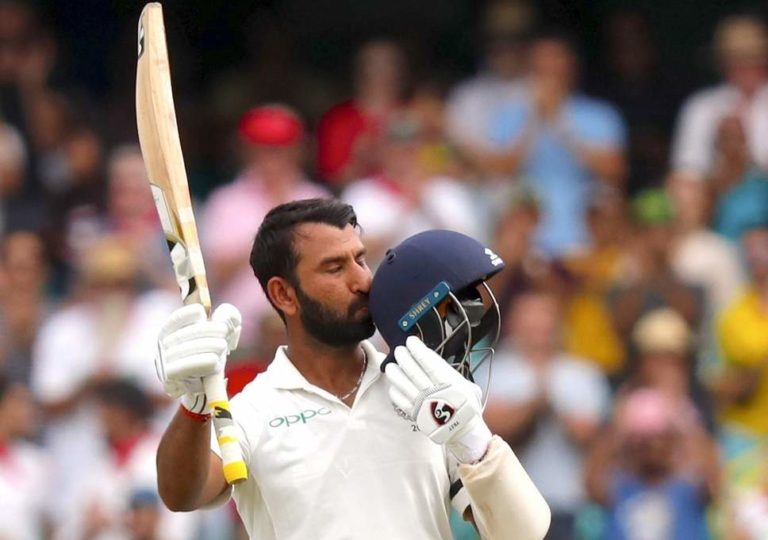
India’s Test specialist, Cheteshwar Pujara has begun training in Rajkot. This is despite the uncertainty in India’s immediate future and no clarity over the comeback dates of the Indian Cricket team.
The No. 7 ranked Test batsman last played competitive cricket in March when he was part of Saurashtra’s triumph in the Ranji Trophy, India’s premier domestic competition. He believes that there is a difference in outdoor training and indoor training as there is a lot of change, although he tried to keep himself fit during the lockdown.
“You have to start at some point and it is important. If you are going to the ground, you are getting used to the sun and outdoor environment. Most players have been indoors for such a long time” Pujara told the Press Trust of India (PTI).
“Once you are outdoors it is a different feeling altogether. Training here is obviously not the same as you get in a team environment, but at least you are doing something to get yourself going.” he added. “Obviously, it feels a little different when you are holding a bat after a long time but because I worked on my fitness, it is helping now that I am playing again.”
Cricket will be different post the COVID-19 break and Pujara believes that it is important to respect the rules and regulations.
“Your body will start moving a bit once you have a routine. As a cricketer, it is important to start whenever possible and adhere to the government guidelines (on social distancing) at the same time,” he said.
Pujara likened this absence from the field to the injury enforced breaks although he reiterated that he remained active indoors. “Getting back from an injury is much tougher than this. When I was injured in the past (2008 and 2011), I resumed training after a long time; longer than this but lockdown was different. I was still active when I was indoors.”
The Saurashtra batsman believes that, as a Test specialist, he is used to such long breaks from international cricket and coming back won’t be an issue. Pujara, however, doesn’t think that there will be any form of cricket in the country in the next 2-3 months.
“If you are mentally tough, you can take a long break comfortably. Test matches don’t happen frequently so one has to play domestic cricket. It was not such a big thing for me and to come back from it, I will be fresh and more eager to play. The mental challenge is not an issue for me. I don’t see any series happening for the next two-three months, so one has to take things gradually” he concluded.
England vs West Indies Test series: Key players to watch & schedule | England vs West Indies Test series preview | ENG vs WI Test series
International cricket. Glorious international cricket. Its return, set for July 8, is nearly upon us.
England and West Indies will do battle in the first taste of international cricket in more than three months due to the ongoing COVID-19 pandemic. On paper, England look to have all bases covered, but one must remember the significant test West Indies provided back in 2017, where they leveled the series in terrific fashion before believing for a little while that they could take out the series in the third Test.
So, what challenge can West Indies provide this time? Can they do to England what they did to them in the West Indies last year? How will England respond to their beloved supporters not being present with them at the ground?
West Indies coach Phil Simmons believes this could give the visitors an edge, as they aim to defend their trophy. In this article, we will highlight six key players – three from either side – who have a big role to play in deciding which way this series will go.
England vs West Indies Test series: key players to watch
1. Shai Hope
Shai Hope was West Indies’ star in 2017. His 375 runs at 75.00, headlined by a superb century to seal a stunning chase of 322 at Headingley, makes him a crucial player if West Indies are to compete this time around.
Since then, Hope has been particularly prolific in limited overs cricket, displaying excellent consistency at the top of the order. However, his Test form has dipped, averaging just 20.23 and 19.75 in 2018 and 2019 respectively, which should motivate him to perform well in this series.
⚪ Shai Hope in ODIs: ? 3289 runs at 52.20 ? Nine centuries
? Shai Hope in Tests: ? 1498 runs at 27.23 ? Two centuries
The West Indies batsman is looking to translate his white-ball success into runs against England next month ?
Joe Root, considered part of the “big four” in Test cricket, has had a decent-yet-frustrating last couple of years. Root often starts his innings confidently, strolling into the 20s and 30s seemingly in an instant. However, when he crosses 50, a dismissal always looks to be around the corner.
And the numbers tell the story. Root’s 50-100 conversion rate of 26.15% is too low for a player of his class. Since the beginning of 2017, he has struck 27 50+ scores, with just six converted into century. So, will this be the series where he converts at the rate worthy of his ability? If he does, England will go a long way to winning the series.
England vs West Indies Test series: Joe Root is a key player to watch.
3. Jason Holder
Jason Holder’s batting average of 17 and bowling average of 39 wasn’t much home to write about the last time he toured England for a Test series. However, since the 2017 tour, Holder has transformed himself into one of the finest all-rounders in world cricket right now.
In fact, since the 2017 tour of England, he has taken 57 Test wickets at an average of 17.58. In addition, he plundered a superb double century against England in the West Indies last year, which puts England on high alert regarding the threat that Holder possesses with both bat and ball.
England vs West Indies: Jason Holder will be vital for West Indies
4. Ben Stokes
Ben Stokes. Need we say more?
Cricket’s hiatus due to COVID-19 was the only thing that could stop Stokes, because cricketers couldn’t. The world’s premier Test all-rounder had the most memorable of years in 2019, single-handedly keeping the Ashes alive, along with the small matter of leading England to a World Cup win. His superb form in Test cricket continued into 2020, helping England get back into the series in South Africa with a superb all-round performance.
England’s batting has been prone to collapses over the last five years, with their 77-all out in 2019, led by the destructive Roach, an example. More, he has taken 71 wickets at an average of 21.28 since August 2017, which is better than the likes of James Anderson and Trent Boult over the same period. If he can get the ball in the right areas at good pace, there will be enough assistance to trouble the England batsmen.
England vs West Indies: What impact can Kemar Roach have on the series?
6. James Anderson
Usually, it doesn’t need to be stated that James Anderson is a key man in a Test series. It is always assumed that he is.
However, Anderson, who will soon turn 38, is set to return after a long-standing calf problem. Whether he can hit his straps straight away will be interesting to see, as he nears the magical 600-wicket mark; a mark where no other fast bowler has ventured into in Test history.
The last time West Indies toured England, Anderson was irresistible. His 19 wickets at an average of 14.10 saw him win England’s man of the series award, and if he can produce similar this time around, England will be on their way to victory.
England vs West Indies: Eyes will be on James Anderson
Darren Gough claims current England attack their best since 2005 | Former fast bowler Gough thinks current England attack best since 2005
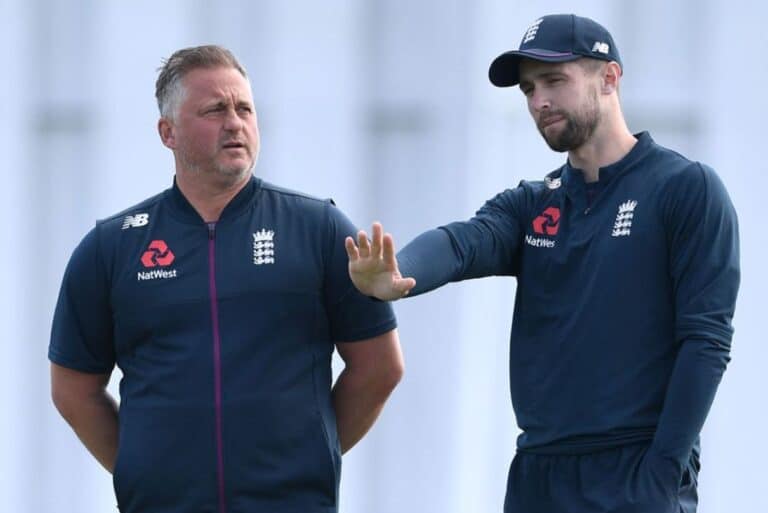
Former England fast bowler Darren Gough believes that England’s current crop of bowlers is the country’s best since the triumphant Ashes series of 2005.
Speaking to ESPNCricinfo ahead of England’s Test series vs West Indies, Gough said that the attack has everything needed to succeed in the demanding environment that is Test cricket.
“It’s as good as they’ve had since 2005. It’s got everything. They’ve got a great chance of winning in Australia [in 2021-22], they really have,” said Gough.
In terms of the pace attack, the two stalwarts, James Anderson and Stuart Broad, enter the backend of their careers. However, Gough remains optimistic about England’s prospects, and has singled out Chris Woakes as the next leader of the attack.
Gough, who was bowling consultant for England during their tour of New Zealand in late 2019, was particularly impressed with Woakes’ commitment and desire to improve overseas. It is well-known that the difference between Woakes home and away bowling averages is significant (23.45 vs 51.68), but Gough sees something in Woakes, so much so that he sat him down for a one-on-one chat.
“I sat him down in New Zealand and I said to him: ‘Do you want to be known as a bowler that’s good in England? Or do you want to be in the team all year round? And how much do you want it?’ And he wants it, he really does.”
Darren Gough backs Chris Woakes to be the “figurehead” in the next 18 months
Gough noticed Woakes’ speeds were up. “I was impressed. In New Zealand and in South Africa, he bowled quicker. He can afford to bowl at 90% in England on most pitches, because they’ll always do a bit and every bowler will be in the game.”
“But when they go abroad, they try and do the same thing and they wonder why they’re not in the game. For Woakes, he can bowl quickly. I’d like to think it’s clicked now with him. This summer, now he’s in England, he’ll be able to step off the pedal and rest the body.”
Gough is also optimistic about England’s pace stocks, which comprises of Jofra Archer, Olly Stone, Mark Wood and Saqib Mahmood. Also, with Jack Leach and Dom Bess showing some good signs so far in Test cricket, he believes the spinner(s) chosen in the Test side will complement the seamers well. This is particularly important as use of saliva has been banned.
“They’ll look to play a spinner, because good ones will play a part. [England] have got options in spin now too: they’ve got Moeen Ali – he’s not a world-class spinner, but he’s a performer and he bowls oppositions out. You’ve got Jack Leach as the left-arm option, you’ve got Dom Bess, the youngster.”
England’s Test series against West Indies begins on July 8.
7 Australian cricketers to watch out for in the next decade | Tim Paine praises Cameron Green | Tim Paine says Australia can get very excited about Cameron Green
Australian captain Tim Paine believes Australia can “get excited” about all-rounder Cameron Green.
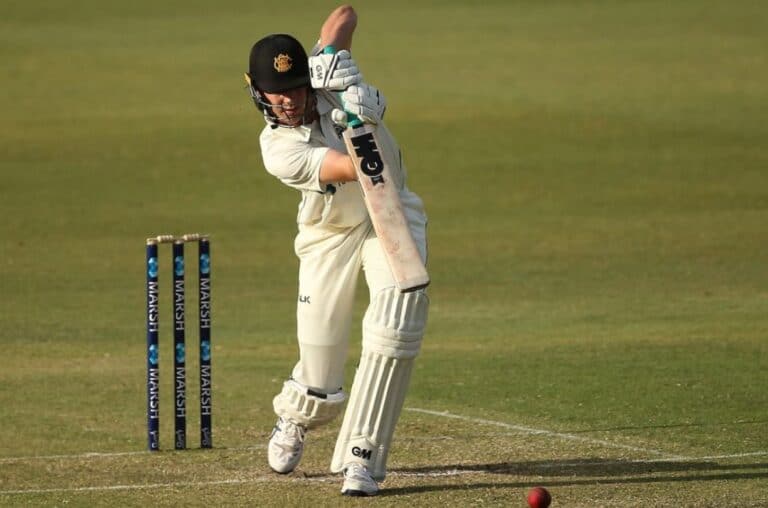
21-year old Western Australian Green has eye-catching First Class numbers so far. He averages 43.84 with the bat and 21.53 with the ball after 15 matches, and skipper Paine is understandably excited.
“I don’t want to put too much pressure on him, but I think all Australian cricket fans can get very excited about the prospect of Cam Green,” said Paine.
“I’ve played a few Shield games against him and the first one all the senior guys noticed him bowling first and we thought ‘geez he’s a bit quicker and a bit better than I thought he’d be’ and all the young blokes are saying ‘just wait until you see him bat’, and we thought ‘there’s no way he’s going to be able to bat like he bowls’ and then he came out and hit a hundred.”
So, with this in mind, I will go through my seven Australian cricketers to keep a close eye on in the next decade.
1. Cameron Green
Cameron Green, of course. However, the opening wasn’t enough to describe just how talented he is.
Sure, his batting average is double that of his bowling, but the manner in which he scored his runs during the 2019/20 season was most pleasing. He scored three centuries, often rescuing Western Australia from positions of distress. A stress fracture in his back limited the amount of bowling he could do last season, but he can deliver with the bat when needed. After all, 699 runs at 63.54 last season is some return.
Green has the potential to be the dream all-rounder Australia have been looking for in Test cricket for some time. Indeed, with three hundreds and two five-wicket hauls before the age of 21 (just the second player after Doug Walter to achieve this feat), Green has what it takes to live up to his potential.
5 Australian cricketers to watch out for in the next decade: Cameron Green has all the makings to be a great cricketer for Australia.
2. Jake Fraser-McGurk
Displaying maturity beyond his young years, Jake Fraser-McGurk’s debut fifties on both List A and FC debut as a 17-year old looks to be the start of a very special career.
Having recently turned 18, Fraser-McGurk has a huge season and future ahead of him. His strokeplay is audacious yet pleasing on the eye in equal manner, and has already shown in his very brief state career so far that he is one to rely on to give his team a chance in close matches.
McGurk’s authoritative and confident approach has caught the eye of pundits and fans. His dream is to play Test cricket for Australia, and if he can build on such a promising start, there is little doubt he’ll get there.
23-year old Josh Philippe, who very closely resembled Steve Smith when he burst onto the scene in 2017, is living his dream.
Philippe was brought up in a cricketing family, as his mother played for Western Australia and his father for the 2nd XI. He fell in love with the game at a young age, and is now going from strength-to-strength, particularly in white-ball cricket. The most recent BBL season (2019/20) was Philippe’s best, and won him an IPL contract with Royal Challengers Bangalore.
With all the shots in the book, he has what it takes to become Australia’s mainstay in white-ball cricket over the next decade. However, experts believe he also has potential in red-ball cricket, and while an average of 28.22 after 19 FC games isn’t much to write home about, Philippe has the talent and belief to bump this up significantly over the next few years.
5 Australian cricketers to watch out for in decade 2020-2029: Josh Philippe is one to watch
4. Jack Edwards
20-year old Jack Edwards has been on the state scene for a couple of years, and has made an impression.
In 2018, he became the youngest player to score an Australian domestic one-day century, hitting a classy 116 off 112 balls vs Queensland. He also has a FC century to his name, and given the time and talent on his side, he is more than capable of improving on his current average of 26.63 after 13 matches. One to watch as Australia seek to build their batting stocks over the next 5-10 years.
5. Nathan Ellis
Nathan Ellis’ story is quite remarkable. Despite a superb run of form over four years in grade cricket in New South Wales (160 wickets at 22), Ellis felt that a move south to Tasmania would provide him with more opportunities. So, he ditched his commerce degree and focused on cricket, and started working as a labourer to ensure he would have enough money to get by.
Then, when he got his crack in the Australian 2019/2020 season, he made it count. He took 12 wickets in seven matches in the Marsh Cup (domestic one-day competition), became Hobart Hurricanes’ go to man at the death in the BBL and took 18 wickets in his first two FC matches, showcasing his ability to take the ball away from the right-hander.
However, his biggest highlight was his five-for on Marsh Cup debut. He outbowled a New South Wales side featuring Pat Cummins, Mitchell Starc and Josh Hazlewood, who took four wickets between them. One to watch.
Nathan Ellis is all effort, with skill to boot.
6. Riley Meredith
Riley Meredith has sent waves throughout domestic one-day cricket over the past couple of years, impressing the likes of Shane Warne, Mitchell Johnson and Brett Lee.
Meredith’s pace, which exceeds 140km/h, is his most obvious attribute, but his terrific slower ball and understanding of a match situation has him touted as a future white-ball cricketer for Australia. If he can continue to develop his skills and execute when it matters, he will be challenging for a green and gold shirt soon.
7. Liam Hatcher
23-year old Liam Hatcher is part of Australia’s next line of fast bowlers.
Australia have been blessed with magnificent fast bowlers over the years, and Hatcher has all the attributes to have a successful career. With a rythmical run-up and pace exceeding 140km/h, Hatcher has made a very promising start to his FC career, with 11 wickets in four matches at an average under 30.
He has proven to be a very capable player for New South Wales when the likes of Mitchell Starc and Josh Hazlewood are on national duty. So, his development will be one to keep an eye on as he plays more top level cricket.