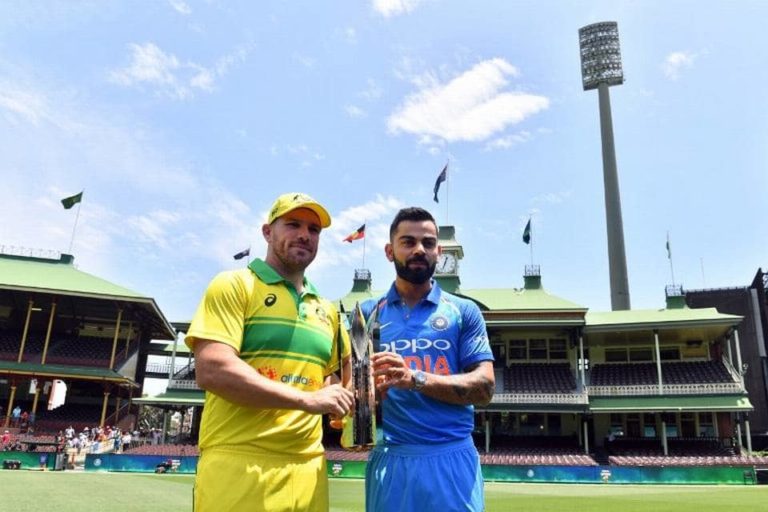
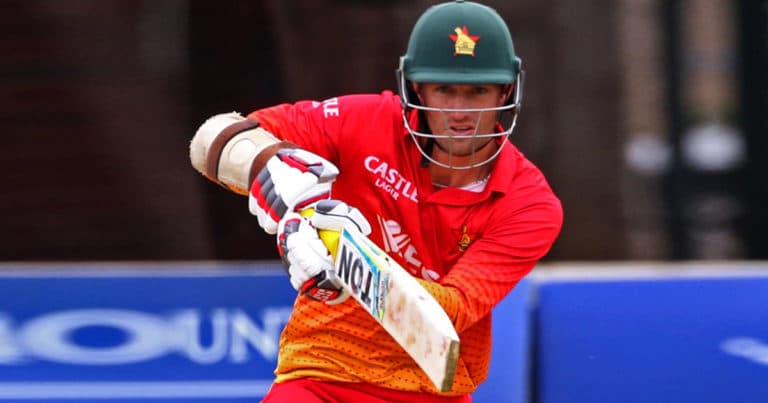
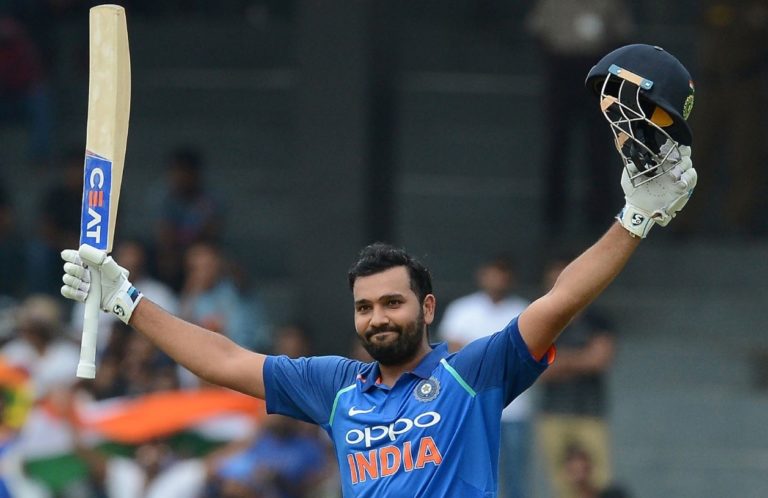
Australian ODI captain Aaron Finch says that India-Australia ODI rivalry is no less than the one in Tests. The skipper also talked about the planning for international cricket in the post-COVID-19 world and players being “ultra-flexible” post the break, among many other things.
“It’s hard to compare,” said Finch. “One is the traditional game and the grind of the five days wherever it is, India or in Australia, that mental battle day-to-day. I think the one-day game is a little bit more skill-based just on the day obviously. If a couple of players in your team have a day out, that goes a long way in winning the game. The rivalry is definitely there 100 per cent. It’s not a case of that being any less important or taken any less lightly because it’s a one-dayer or T20I or a Test match.”
India-Australia ODI rivalry at par with Tests: Finch
As the series between Australia and Zimbabwe got postponed, Finch hinted that Australia’s ODI series against England may well be their first series post the coronavirus break. Ashley Giles, managing director of the England men’s team, is “quietly confident” the series will go ahead in September.
“In our minds we were planning for Zimbabwe, we’re planning for England. All going well that England tour I think – I think that was our next game wasn’t it? That’s what we’re planning for. As a player I know in my mind I’m preparing to go to England to play; whether that happens we’ll wait and see,” he said.
“We just have to be really conscious of being ultra-flexible – and there might be a tour that comes up on relatively short notice. Because we could get that and that’d be brilliant, whatever it takes, I know all the players are in the same boat. I know all of Cricket Australia, the ACA – whatever we have to do to get a game up and going, is in the best interests of world cricket, we’ll be looking to do that,” the 33-year-old said talking about how cricketers should behave in the coming months.
“It just comes down to doing whatever’s needed for world cricket to be back up and running and for all countries to be thriving and having the best opportunity to be successful. I think if you start looking at it as ‘we need to play against a certain opposition’ or something like that for your own betterment, that’s when a lot of things can fall down,” he said.
Australia’s domestic season isn’t affected due to the coronavirus pandemic, but Australia’s series in Bangladesh was also postponed.
“In the really short term, we just having to be focused on making sure that world cricket is back up and running and as many countries as possible are in a great state to be competing. I don’t think that right the be-all and end-all is where you finish in rankings for a World Cup or anything like that, I just think the health of world cricket is important, and whatever that looks like. And there’ll be some teams that probably have a tougher challenge to get where they need to be, but I think say over the next 10 years, that will all even itself out,” he added.
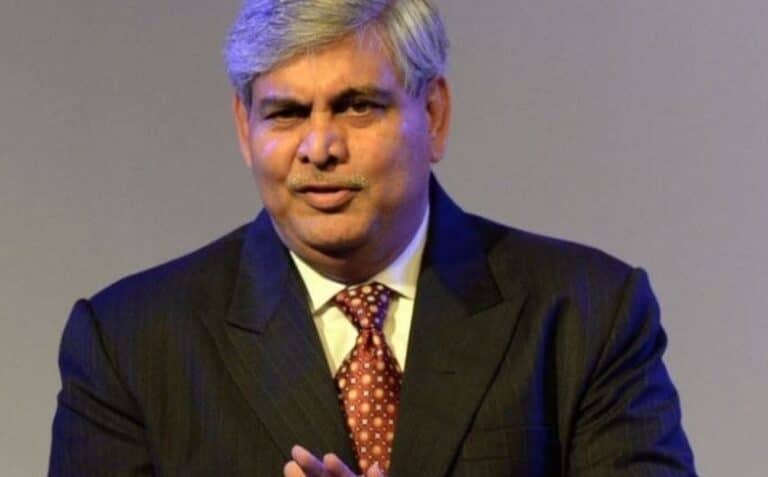
Shashank Manohar, ICC Chairman, stepped down from the post as his tenure ended. The veteran administrator was in charge of the post for four years. He was elected unopposed in 2016 for two years. In 2018, he was re-elected in a similar fashion.
ICC Deputy Chairman Imran Khwaja added: “Everyone on the ICC Board extends their wholehearted thanks to Shashank for the commitment he has shown to our sport. There is no doubt that cricket owes Shashank a debt of gratitude for all he has done for the sport. He has left cricket and the ICC in a better place than he found it.”
The deputy chairman Imran Khwaja will take over for the interim period until the new chairman is elected. The process for the Chairperson election is expected to be approved by the ICC Board within the next week.
Shashank Manohar steps down as ICC Chairman
ICC Chief Executive Manu Sawhney said “On behalf of the ICC Board and staff and the whole cricket family, I would like to thank Shashank for his leadership and everything he has done for the sport as ICC Chairman. We wish him and his family all the very best for the future.”
Manohar changed the governing model of the ICC and also halted the dominance of the “Big 3” in cricket administration. These changes, especially the financial ones related to the revenue distribution, were strongly opposed by the BCCI.
One of the current directors in the board or a former director, who has not occupied the position for six or more years, will be eligible to fight the elections for the post of chairperson if proposed by any of the Member Nations.
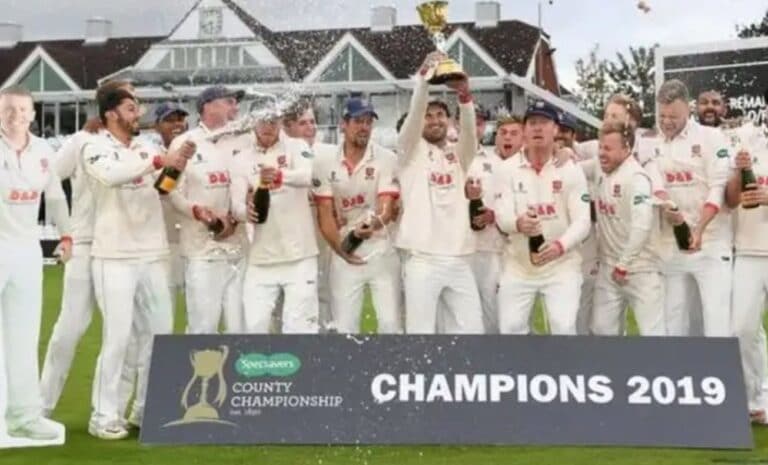
The England Cricket Board (ECB) have given a green signal to start the domestic cricket season from the 1st of August.
The decision was taken after consulting the Professional Cricket Association and 18 first-class counties. Detailed fixtures will be announced in early July, but the domestic season will most likely be a truncated one, although the board has plans for white-ball as well as red-ball tournaments.
The ECB has permitted first-class players to begin training from July 1.
The CEO of the England Cricket Board, Tom Harrison said that it is a significant step that the domestic season will begin next month.
“It is a significant step for our game that we are able to approve the start of the men’s domestic season for 1 August and one which will be welcomed by everyone connected with County Cricket. It follows extensive consultation between the 18 First-Class Counties, the Professionals Cricketers’ Association and ECB and has only been achievable thanks to the significant hard work that continues to occur as we prepare for a domestic season unlike any the game has faced before.” Harrison said.
“It must be stressed that the safety of our players, staff and officials has been the first priority through all discussions and Government guidance will continue to shape our planning and preparation. Planning for the return of the women’s domestic game remains ongoing, but our commitment to women’s domestic cricket is unwavering and we look forward to sharing further news shortly. Our strong preference is that the women’s new elite domestic structure starts this summer and we will work hard to ensure that happens. For this to be achieved, brand new infrastructure still needs to be rolled out, alongside imperatives we need in place when playing competitive cricket during a pandemic.” Harrison added indicating the public safety is of utmost priority to the board.
The ECB last week permitted 25 women’s players to train individually at their nearby venues. Harrison said that they will aim that women’s cricket also restarts professionally as soon as possible.
“Our first choice remains to do everything we can to start this year and build on the fantastic momentum in the women’s game. In the event that proves impossible, we will explore other options for play to enable our women’s players to enjoy competitive domestic cricket in 2020. We will continue to work closely with both the men’s and women’s domestic game to ensure necessary safety measures are in place to protect the wellbeing of everyone involved,” Harrison added.
“The commitment to play women’s domestic cricket this summer is also very positive. We need to continue the momentum of the women’s game so to have an assurance this summer will not be completely lost to domestic players is another step in the right direction,” PCA chairman Daryll Mitchell said while talking about women’s cricket.
England’s domestic season was badly hit by the coronavirus pandemic. It was due to start on April 12 but was postponed multiple times.
If players are not comfortable returning to cricket, the ECB has a opt-in process.
“The health of our membership remains our number one priority and no player should be required to return to work if they do not feel comfortable due to any underlying health issues or other factors such as living with vulnerable people. We have pushed for an ‘opt in’ process with ECB and the counties so players can totally understand the protocols in place to mitigate risks and those who are not yet able to return feel comfortable in not opting in,” Mitchell added.
6 players to join Pakistan team after negative COVID-19 test | Pakistan tour of England looking brighter as players test negative for COVID-19
Six cricketers from the Pakistan cricket team will join the team in Worcester after testing negative for COVID-19 the second time in three days.
Shadab Khan, Mohammad Hafeez, Wahab Riaz, Fakhar Zaman, Mohammad Hasnain and Mohammad Rizwan tested negative on 29th June. They were earlier tested negative on 26th June.
Pakistan’s 20-member squad have already reached in England and started training. The six players will start training after they test negative for the coronavirus as per the ECB regulations.
Hafeez and Riaz tested negative for COVID-19 after they took up a test privately, but to get the nod for travelling to England, the experienced duo had to get tested by the PCB-authorised testing team. They tested negative for the second time.
Mohammad Hafeez is one of the players to return a negative COVID-19 test
The Pakistan team were badly hit as 10 members of the initial squad tested positive for the virus. They had to rework on their squad and added Rohail Nazir and Musa Khan to leave for England in the first batch. Out of the 10 members that were detected with COVID-19, Haider Ali, Haris Rauf, Imran Khan and Kashif Bhatti are yet to be tested negative.
The first batch will later shift to Derbyshire’s The Incora County Ground on July 13. There will be two internal four-day warmup matches before the first Test.
The Pakistan cricket team will play 3 Tests and 3 T20Is against England.
Australian ODI captain Aaron Finch has heaped praised on three youngsters, who he believes will be crucial to Australia’s 2023 ODI World Cup campaign.
Finch has pinpointed Cameron Green, Josh Philippe and Jhye Richardson as young players high on Australia’s radar, as the Aussies look to have better preparations than they did for the 2019 World Cup.
“We probably left it a little bit too late last time” said Finch. “So, we’re really determined to make sure we’re well planned this time and make sure we leave no stone unturned.”
With cricket coming to a halt amid the COVID-19 pandemic, Aaron Finch and the Australian management team see this as an opportunity to map out their strategies for the 2023 showpiece event, to be held in India.
“That’s what we’re going to work out over the next month or so,” said the ODI captain. “We’ll sit down and really drill into numbers and how we feel the game is going to head over the next couple of years and what we need to do as a team.
There’s obviously a lot of youngsters who have performed really well.”
Finch then went on to highlight three youngsters whom he feels will be key for Australia in 2023. Cameron Green, Josh Philippe and Jhye Richardson, all from Western Australia, are in Finch’s sights.
“Look at Cameron Green. Painey was talking about him last week and his rise and dominance he’s had in state cricket in the past 12 months in particular. He’s such a young guy and I think that potential is huge,” said the 33-year old.
“Then you’ve got young batters, Josh Philippe and these guys. I think what’s really important about them and Josh in particular is he dominated a Big Bash Final. I think it’s great when young players perform well in big games, it shows there’s a real something about them. As well as the natural flair and talent he’s got.
“But then you’ve got other guys who I can’t wait to see back up and fire. Jhye Richardson; he’s as exciting a young fast bowler as there is going around when he’s firing. Having his shoulder redone again I think will be a good thing for him in the long run. It probably doesn’t feel like it when he’s going through his rehab again.
“There’s guys like that who just bring the excitement factor to the game. You turn on the TV to watch guys take the game on, bowl fast and swing it.”
Image Credit: Getty Images. Aaron Finch says Josh Philippe is one to watch.
When Australia’s next ODI assignment will take place remains unclear. Zimbabwe’s visit, scheduled for August, has been postponed due to the COVID-19 pandemic. However, Australia could tour England in September; a series that Ashley Giles, managing director of the men’s cricket team, is “quietly confident” about.
If the series indeed goes ahead, there will be no tougher assignment for Australia to kickstart their 2023 plans than world champions England.
“There’s a lot of players we’ll talk about and go through and map out our plans for 2023,” said Finch.
Also, Finch said Australia will learn from the mistakes made leading up to the 2019 World Cup. Australia endured a terrible run of form in the two years leading into the tournament, winning just four of 26 matches at one stage.
“I think it’s tough if you just go in there and wing it,” he said.
“I think you have to do a lot of planning and preparation… into how you’re going to play, what the trend of the game is going to be for you to be successful in two-and-a-half years.
“It’s really important to have a clear structure and a blueprint that you can fall back on. And that helps a lot with how you pick your team.”
SA players permitted to return to training, No immediate date for 3TC Cricket | Will 3TC Cricket go ahead? | South Africa cricketers set to return to training
The return to play plan of the South African cricket team has been given a green signal by the country’s sports and health ministers. Cricket South Africa’s plans were approved as they aim to get the national men’s and women’s team to action, as reported by ESPNCricinfo. The board meeting is scheduled on Thursday, 2nd July where they will discuss the way forward.
At the moment, only the national teams, both men and women, will return to training. The franchise and province players have to wait further to hear about their pre-season training camps.
The CSA’s training sessions have to follow the hygiene and safety protocols laid down by the board’s COVID-19 steering committee.
“Our prevention programme, besides the regular testing of players and support staff, is predicated on personal hygiene measures and creating a sanitised ecosystem. COVID-19 compliance managers at each venue have assumed responsibility to ensure all the elements of the protocol are implemented,” Dr Shuaib Manjra, CSA’s chief medical officer, said in a release.
Heinrich Klaasen was in superb form before COVID-19 forced a stop to cricket
The South African men’s cricket team were in India in March, as they were scheduled to play an ODI series. However, the team left for home after the first match was called off due to rain. The subsequent series against Sri Lanka and West Indies were postponed as well. The women’s team tour to the West Indies has also been postponed, after the visit by Australia suffered the same fate.
CSA scheduled to host 3TC (3 Team Cricket), a unique format to mark the return to cricket post the coronavirus pandemic break. But, that wasn’t possible as the government didn’t give clearance. The venue for the match, SuperSport Park Centurion, is a hotspot of the COVID-19 virus. As a result, CSA is considering a change in the venue of the match.
The training squad consists of all the high-profile players except for Dale Steyn, who is reportedly carrying a back injury. AB De Villiers, who was rumoured to make a comeback to the South African team, doesn’t make the list, putting his comeback on hold for time being.
South Africa’s high performance training squad: Quinton de Kock, Dean Elgar, Lungi Ngidi, Aiden Markram, Junior Dala, Theunis de Bruyn, Rassie van der Dussen, Shaun von Berg, Dwaine Pretorius, Heinrich Klaasen, Temba Bavuma, Reeza Hendricks, Kagiso Rabada, Tabraiz Shamsi, Wiaan Mulder, Bjorn Fortuin, Andile Phehlukwayo, David Miller, Sarel Erwee, Khaya Zondo, Daryn Dupavillon, Keshav Maharaj, Senuran Muthusamy, Keagan Petersen, Imran Tahir, Lutho Sipamla, Edward Moore, Anrich Nortje, Sisanda Magala, Glenton Stuurman, Jon-Jon Smuts, Rudi Second, Pite van Biljon, Raynaard van Tonder, Gerald Coetzee, Pieter Malan, Zubayr Hamza, Janneman Malan, Faf du Plessis, Tony de Zorzi, Beuran Hendricks, Nandre Burger, George Linde, Kyle Verreynne, Marques Ackerman.
Does Ajinkya Rahane get the appreciation he deserves? | How Ajinkya Rahane performs admirably for Team India | Comparing India’s no.5 to Kohli and Pujara
Whenever a conversation about great Indian Test batsmen of the ongoing generation commences, Ajinkya Rahane is someone who is slyly sidelined from the discussion. Players often run the risk of being overshadowed in the company of an all-time great. It happened with several of them when Sachin Tendulkar was at his very peak and it seems to be happening in Rahane’s case too.
The 32-year-old endured a rough patch in his career a couple of years ago. Ultimately, the instinctive nature Indian fans arose and the general perception about him has never been the same since. There have been numerous calls to bench him in the favour of the supposedly more formidable younger talents.
Yet, staying true to his behaviour, Rahane has kept his head down and worked on what he does best, i.e. take his game several notches upwards when the team required him the most. In this article, we attempt to delve deeper into Rahane’s Test career and formulate a concrete, evidential opinion about his importance in the current setup.
Records-Basic Milestones:
Unlike the shorter formats of the game where parameters such as the BASRA and runs per innings vs balls faced per innings are considered, the credentials of a batsman could be judged pretty much with the general statistical measures in Test cricket. For an uninitiated time, it appears to be that Rahane is quite an impactful cricketer. The number where he bats at in the longest format of the game isn’t the most convenient one of the lot.
The likes of Cheteshwar Pujara and Virat Kohli arrive to the crease at a time when they can set the tone for the match. Conversely, Rahane tends to get into partnerships with the lower-middle order batsmen and has to improvise his approach in order to reach a suitable target. That is regardless of the innings that he bats in.
On many occasions, he is capitalizing on the base set up by the aforementioned two names and hence the situation might not always be ripe to pile up runs in abundance. Yet, here we look at the number of half-centuries and tons notched up by India’s three-middle order pillars and particularly we look to stress on the difficulty of the moments in which they acclaimed these milestones.
Comparing total half-centuries between Kolhi, Pujara and Rahane
Rahane bags a half-century at a rate of one 50+ score every 4.95 innings, which is a significantly better than 6.59 of Kohli and 5.12 of Pujara. However, that is not an area that distinguishes him from the other two individuals. The most important facet over is here is the fact that 72.72% of his half-centuries have come whilst batting away from home. When you compare that to Kohli, the Indian skipper has scored 54.54% of half-centuries outside India. Pujara has done so on 28% of the occasions.
Of course, there is certain similarity in batting conditions when an Indian batsman bats outside the country but in Asia. So while break that down even further, Rahane still manages to topple his teammates in this regard. The vice-captain has notched 13 half-centuries away from Asia. These include the SENA countries along with West Indies.
An interesting observation that could be noticed is that followers often tend to undermine the potency of the West Indian bowling attack in the Caribbean conditions. The Duke’s ball tends to aid the pacers tremendously, and hence tackling the home team’s fast bowlers is no mean task.
They generate incredible incisiveness, boast of raw pace and are relentless in their pursuit over there. So, this specific study considers batting in West Indies in the same breath as that of the SENA nations.
Anyways, racing towards a 50+ score is certainly more challenging in SENA+WI for Indian batsmen than in Asian conditions on most instances. Rahane stands apart in this parameter, as he has scored 13 out of his 22 career 50+ scores outside Asia.
This translates to a rate of 59.09% of his half-centuries coming when batting in quite alien scenarios. The RCB skipper has done it on 50% of his overall Test career half centuries, whereas the seven times that Pujara crossed the 50 run mark outside home-all of have been beyond the Asian subcontinent too (28%).
However, bagging the big century carries a significantly different value when the Indian team is on a tour away. Their inability to seamlessly adapt to different conditions in multiple countries has been detrimental to the team’s eventual performance. Even in India, the key to success has been to out-bat the opposition, i.e. to accumulate a total that would intimidate the adversary right from the offset.
In terms of scoring those crucial tons, Virat Kohli easily surpasses the rest of the lot. He has added 27 of them to his kitty already, whereas Pujara has 18 to his name. Rahane falls behind over here, with 11 centuries in his entire Test career to his name. Yet, if one were to determine the condition in which he crossed those 100 run marks on multiple occasions, it simply leaves the individual astounded.
Seven out of Rahane’s 11 centuries have been in overseas matches. Moreover, five of them were when the Indian team played away from Asia. His international century record is 63.63% as compared to 51.85% and 44.44% for Kohli and Pujara respectively.
Though the Mumbai-born batsman’s overall sample space of centuries is lower when compared to the other two players over here, it had become prevalent even in the parameter considered before this that Rahane has superseded the others when it came to achieving milestones in tougher conditions away from India. Then, one tries to further dissect it to pick out the 100+ scores that were scored in SENA+WI. Here too, Rahane has an overall rate of 45.45% of centuries scored outside Asia. Virat has done it 44.44% of times whereas the Saurashtra batter registers a stat of 27.77% in this aspect.
There’s another catch in this respect though. Out of the four centuries that Rahane has scored at home, three of them should have a distinct place too. That is because; they weren’t notched in encounters where every batsman had a feast due to favorable batting conditions.
Take for instance the twin tones that he scored in the Arun Jaitley Stadium against South Africa in December, 2015. That was a much-maligned series due to the rank-turners that the Indian side created on a consistent basis. Hence, the games tended to end soon. Batsmen often struggled to get going and it is showcased from the fact that none of the batsmen except Rahane managed to score a single century throughout the four-match long series.
There were players like AB de Villiers, Virat Kohli and Dean Elgar involved who failed to pile up the big totals. In contrast, Ajinkya Rahane managed to score two centuries in a single game!
Next, we would look at his latest century that was scored in Ranchi, again against the Proteas. In the first day of the match on a quick and seaming track, Kagiso Rabada breathed fire with an enthralling opening spell and picked up three quick wickets dismissing Mayank Agarwal, Pujara and Kohli very cheaply.
At 39/3, Rahane joined Rohit Sharma on the crease. He weathered the initial storm and made his way to a graceful knock of 115 runs from 192 deliveries. The pitch made the likes of Rabada, Lungi Ngidi and Anrich Nortje a formidable force to reckon with but the former Rajasthan Royals player maintained his composure to score yet another crucial knock in a precarious moment for his team.
One of the aspects where Ajinkya Rahane has been short in upping his game is the converting his half-centuries into centuries. At first, Rahane had a record of eight centuries to nine 50+ scores. However, the efficiency with which he could capitalize on the base set up initially has reduced over the years.
The 32-year-old has fallen prey to certain poor shot-selection at times, or just ran out of luck through a sudden dismissal after looking well in control of the proceedings. However, the inability to build onto his half-centuries has carved an impact; a reprehensible mark on his overall record.
Ajinkya Rahane’s conversion rate is lower than that of Virat Kohli and Cheteshwar Pujara
Kohli easily triumphs his teammates over here. In fact, the Indian skipper has more centuries (27) than half-centuries (22) in his tally in Test cricket and that is an indicator of his supreme command and proficiency once he gets his eye in the game. Cheteshwar Pujara isn’t far behind either. With a conversion rate of 41.86%, he converts approximately 2.5 of his half-centuries into a 100+ score.
However, Rahane has a meagre figure of 33.33% to his name. It is often said that batsmen do not always come across good batting days, and hence it should be a strong-willed determination built within them to make their promising innings’ count into bigger scores. Maybe, it is also a major factor that makes some very good batsmen into excellent or all-time greats.
Regardless of your contribution on several crucial junctures of your career, when the team was desperately in need, it is the players who bagged those bigger scores who will be ranked a spot higher on many occasions. Whether it is fair or not is up for debate, but it doesn’t excuse Rahane from his inability to pounce on his 50+ scores and pile more substantial individual scores.
Perhaps the Mumbai-based batsman requires more of the ‘khadoos’ attitude that is so much prevalent in the men who hail from the metropolis city!
This segment does not look to undermine the importance of playing big knocks in home conditions. To counter the opposition, combat the turning tracks and bat for a very long period of time in India is not an easy task, and requires significant amount of determination and concentration.
However, the Indian top-order more often than not does not disappoint when at home. They are well-versed and acclimatized to drain out the overseas pacers and spinners in India. Hence, the middle-order, more often than not dons a supporting role as they arrive at the crease in situations that are quite convenient with a formidable total on the board already.
When travelling outside Asia though, one would often come across the Indian team losing a few wickets upfront. Here is where the quality and depth of the middle-order comes into play.
The men in the middle have to step up, take the mantle and guide the team towards a respectable score; not merely follow the tone set by the batsmen from the top of the order. The craft of rejigging the broken momentum of the innings is a tough one to master, and the real test of the same is glaringly visible when the Indian team bats in countries not in the subcontinent.
So, we decided to compare the home averages of these three players with the records that they have stacked up in the same parameter in SENA+WI countries. We would try and look at the difference in both these statistics of the batsmen concerned, and try to draw a parallel upon the individuals who are able to replicable or even better his form and record across different conditions.
Ajinkya Rahane fares well in SENA+WI
An interesting result that we discovered during the process of the writing was that Ajinkya Rahane is the only one amongst these three batsmen to have a better average outside Asia than he has whilst playing in Indian pitches. It could be partly because of the fact that Kohli and Pujara have such magnanimous records in India that it is difficult to replicate elsewhere.
The captain averages 68.42 in India, whereas the number three batsman has racked up a figure of 59.84. On the other hand, Rahane’s average is a slightly disappointing 39.29.
It stressed upon two points. Firstly, when the Indian top-order fires with all cylinders, there is very little significant work to be done for the others. Secondly, when the situation arises to uplift your game due to severely testing scenarios, there are very few people who have that feel of the magnitude of the game and hence manage to better their own selves.
It needs to be noted that it is not a direct comparison amongst the three considered batsmen. Rahane is not a run-machine like Kohli or Pujara, yet his importance and overall tendency to rise to the occasion should not be diminished. And, it could be deciphered clearly only when we bring into picture the statistics of these players where we compare them to their own records in different conditions and not with that of the other individuals.
Rahane has an average of 44.10 in SENA+WI, which is a net +4.81 than his numbers at home. He is the only one who has been able to register a positive net rate in this component. Whereas, when you implement the (SENA+WI average – Home Average) formula to Kohli and Pujara, the figures turn out to be -23.58 and -26.25 respectively. Hence, the lower line in the graph plummets down gradually thus signifying the vast difference in the numbers considered over here.
Numbers from the Second & Fourth Innings (Combined) in SENA+WI:
For India to win a match away from Asia, the hope is arguably mostly pinned on winning the toss and opting to bat first.
It puts the side in a commanding position right from the offset and over the years, they have been found suspect in chasing fourth inning targets in such conditions. Hence, the true mettle of an Indian batsman when operating in such perilous scenarios could be observed through his exploits in the second and the last innings of a Test match in SENA+WI.
Hence, we try to put forward a graphical representation of the same.
Just to make it clear, the uppermost curve in this graph is that of the average that Rahane, Kohli and Pujara have obtained in the second and fourth innings of matches in SENA+WI. Virat’s image as that of a master-chaser is further evident in this area of the game. He averages a massive 64.13 in the 16 matches that he has batted in the two aforementioned innings away from the continent.
In addition to that, he has scored nine brilliant centuries and four half centuries, further asserting his rather incomparable tendency to make his good innings count and convert them into tons regularly. He has by a sizeable margin been India’s most formidable bet when the team is chasing a target, or looking to take a first-inning lead.
Rahane doesn’t fall far behind either. In fact, his numbers shine apart over here. The vice-captain has an impressive average of 51.82 in the second and fourth innings of matches held in SENA+WI. Furthermore, he has scored three centuries and five half-centuries.
Despite a very solid record, even over here Rahane’s conversion rate is a tad bit disappointing. The initial part of an innings is always the most testing one in SENA+WI, and he has bagged five half-centuries by weathering that storm. If he would have managed to stay on the crease and build upon even a couple of them into centuries, his overall figures would have been even more remarkable.
Nevertheless, an average of almost 52 with multiple centuries and 50+ scores in arguably the toughest phase of a match in SENA+WI is definitely a very important accomplishment for a batsman from the team’s perspective.
Regardless of the innings of the match, eventually the most important aspect is to secure a victory in tougher playing conditions.
The character of a team becomes resplendent through the same. Though the bowlers are often said to be the most important factor in notching a victory in SENA+WI, the previous cycle of away tours must have proven that an enthralling pace unit couldn’t do much without the support of an equally august batting unit.
Moreover, the value that a player carries in his team is his contributions in some of the most significant victories that the team pulled off i.e. in this case, Test wins outside Asia. Here, we would be analyzing the performances of India’s middle-order trinity in the victories away from the subcontinent in which they have been a part of.
Ajinkya Rahane is miles ahead of the others in the race over here and rather surprisingly so. His average of 53.26 is absolutely fantastic, and incredibly proves his worth in India’s remarkable wins in the past seven years or so.
Furthermore, leaving the rest behind by such a considerable margin couldn’t have been possible by only a solitary high-scoring innings. It rakes of consistency, a sense or feel of the big occasion and the repetitive tendency to rise up those scenarios and help in molding the team’s fortunes.
As for the others, the trio has scored a couple of centuries each in these wins, which is quite laudable. Rahane and Kohli have an equal number of half-centuries, whereas Pujara leaves a bit to be desired for over here.
Nevertheless, the Indian number five’s relentless ability to pitch in with impactful performances in such striking victories has been long overshadowed by his more-followed teammates, and hence a breakdown of this sort had to be done over here to solely highlight his achievements.
Records in matches won and drawn in SENA+WI:
However, the Indian team hasn’t always been fortunate enough to win Test matches on a regular basis beyond Asia. In certain instances, it has been crucial to opt for a draw rather than succumb to an embarrassing defeat, or even to sustain a lead that was gained earlier on in the series.
Hence, we believed that taking records only from the matches won in SENA+WI wasn’t appropriate for this study. Instead, we decided to look at the broader picture and also include in the matches where no result could be obtained at the end of the game that were held in the countries barring the Asian ones.
Here, the numbers of these three players shoot up by a very fine margin, thus indicating that all of them have had important roles to play in securing a draw in these countries.
Even here, Rahane’s average is 58.62 as opposite to 51.75 and 43.10 of his peers. Without striking a comparison of sorts, it could in some ways be concluded that Ajinkya Rahane has had a very integral role to play in these crucial results that have been bagged by the Indian team in recent times; for which, he has been tremendously maligned and underappreciated.
Kohli has scored six centuries and seven half-centuries, the most in this list. Rahane has notched five tons whereas Pujara has done so four times. Virat has played six more innings (34) than the rest of the two individuals (28).
Ajinkya Rahane has always boasted of temperament that has helped the team sail through certain very tricky situations. Even in the games where he hasn’t scored those big runs, the half-centuries here and there have had a major role to play in the eventual outcome of the series.
His knock of 52 runs in the second innings of the second Test in the Border-Gavaskar Trophy in February 2017 comes to mind. The Indian team had managed a slender lead of 33 runs after losing four wickets at 120 runs at a time when the Australian bowling unit left nothing to spare. Setting up a massive total seemed to be a distant task, and the Virat Kohli-led unit ran the risk of suffering consecutive defeats at home and also foregoing the opportunity of a series victory against Australia.
That could have been a major embarrassment. But, Pujara and Rahane stepped up to form an absolutely steely partnership of 118 runs span across 46.3 overs to drive the Aussies out of the game and stamp their authority yet again. Such innings often get overshadowed because Rahane had bagged 52 runs and not a major century.
Yet, the situation in which he had arrived to bat and the value that his runs led that day was simply much more than many of the other centuries garnered by his counterparts on different occasions. That single partnership shifted the momentum in India’s favor and eventually aided the team in claiming a 2-1 victory in an absolutely challenging series of Test cricket.
Or consider his counter-attacking innings of 48 runs scored at a strike rate of 70.58 in the second innings of the third Test in Johannesburg in January 2018. After having been unfairly benched in the initial two Test matches, Rahane returned to play an absolute blinder to create a mark over the series and thus accordingly provide India an edge that the other batsmen possibly couldn’t in that all-important second inning.
That victory aided India in avoiding a whitewash and further magnified the indispensability of Ajinkya Rahane to this Indian Test unit. He might not have scored runs in heaps. His overall aggregate might not look as imposing as that of others. But, his willow has worked remarkably well when the need of the team was at its zenith, when the others had fallen short in chipping it.
When encountered with problematic and dicey moments, Rahane has made sure that he stepped up take the mantle and counter the opposition in his own way; sometimes by a tactical retreat, by a pragmatic approach or by an expansive, classy demonstration of his array of shots. More often than not, his approaches have presented productive results for the team and therein lies Rahane’s notability and eminence for the team.
He might not be the man for all situations, but he is definitely a man for the situations that are not suited for all.
Written by Tarkesh Jha. Follow Tarkesh on Twitter today.
Ben Stokes says it will be a “huge honour” to captain England | Joe Root set to miss the first England vs West Indies Test due to birth of second child
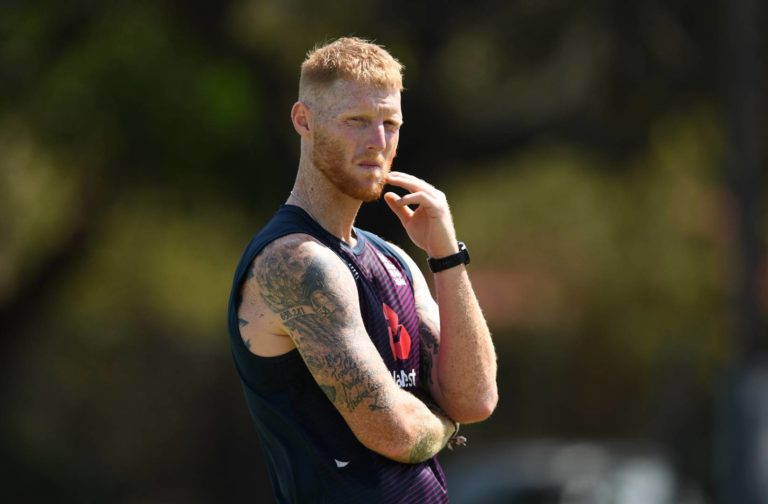
Ben Stokes is set to captain England for the first time in his career. Joe Root, England’s permanent Test captain is set to miss England’s upcoming Test against West Indies, due to the birth of his second daughter.
Stokes has said that it would be a huge honour to captain England, even though he hasn’t given it too much thought. “I’ve given it a little thought but not really dived into it yet,” said Stokes.
“I mean, it’s not like it’s not a big deal. Getting the opportunity to captain England is a huge honour. Even if it’s only the once, you can say you captained England.
“So it’s something that I’m looking forward to if the opportunity presents itself. But also I know I’m only stepping in to take over the reins because of Joe’s personal situation,” said the 29-year old England vice-captain.
Ben Stokes celebrates an unforgettable England victory in the 2019 Ashes
Stokes admitted that captaincy was never a career goal, but will look forward to the opportunity should it present itself.
“I never set a goal to want to be a captain,” Stokes said. “If you look at Alastair Cook he was destined to be captain after Andrew Strauss and Joe Root was destined to be captain after Alastair Cook, you know who the next one will be when one is coming towards the end of his career.
“If I’m being honest, I’m not one of those who people would necessarily associate with being next England captain. But I am looking forward to the opportunity of doing it.”
The captaincy, even though it will be brief, is part of Stokes’ incredible rise over the past couple of years. His 2019 in particular was outstanding, leading England to World Cup glory and keeping their Ashes hopes alive with the most memorable of knocks at Headingley. So, it comes of little surprise that Stokes will be out to do what works best for him, even with the captaincy tag.
“I always try to set the example in terms of commitment and attitude,” Stokes said. “When it comes down to what to do in a situation it will always be a positive route.”
“It’s as good as they’ve had since 2005. It’s got everything. They’ve got a great chance of winning in Australia [in 2021-22], they really have,” said Gough.
Australia-Zimbabwe ODI series postponed due to COVID-19 pandemic | Australia-Zimbabwe ODI series won’t go ahead as planned due to coronavirus pandemic
Zimbabwe’s tour of Australia, comprising of three ODIs, has been postponed due to the COVID-19 pandemic. The tour was scheduled to take place in August in Northern Australia for the first time in 12 years, with Townsville and potentially Darwin to host the matches.
However, this will no longer be the case. Justin Langer’s comments earlier in June created further doubt about this series going ahead, and it has proven to be the case.
Cricket Australia put out a statement stating that the logistics and bio-security measures associated with a short series is not feasible. However, interim CEO Nick Hockley, who replaced Kevin Roberts earlier this month, is still committed to hosting Zimbabwe in the future.
“While we are disappointed to postpone the series, CA and Zimbabwe Cricket agree that in the best interest of players, match officials, volunteers as well as our fans, that this is the most practical and sensible decision,” CA’s interim chief executive Nick Hockley said in a statement.
“We are committed to working with Zimbabwe Cricket on alternative dates to reschedule.”
Image credit: Zimbabwe Cricket
This news is a blow to Zimbabwe, after their ODI series at home to India was also postponed due to the pandemic. The last time they toured Australia was in 2003-04 – a tour that is most remembered by Matthew Hayden achieving the then highest ever Test score of 380.
“We were excited about facing Australia but, given the circumstances, deferring the tour was the only possible option,” said Givemore Makoni, Zimbabwe Cricket’s acting managing director.
“We are, however, looking forward to the rescheduling of the series as soon as practically possible.”
This news comes as further doubt continues to surround the upcoming T20 World Cup. And, with Victoria now experiencing a sharp upturn in COVID-19 cases, a decision regarding the tournament’s fate will surely be made sooner rather than later.
Rohit Sharma in top 3 ODI openers of all-time: Irfan Pathan & Kris Srikkanth | Irfan Pathan says that Rohit Sharma is among the top three ODI openers in the history of the game
Former Indian seamer Irfan Pathan has heaped praise on Rohit Sharma, claiming he is among the top three ODI openers of all-time. Speaking on Star Sports Cricket Connected along with former Indian captain Kris Srikkanth, Pathan spoke about who Rohit’s biggest competitors are in his mind.
“Definitely top three for sure,” Pathan said. “Everybody has seen Sachin paaji, the biggest legend in world cricket not only Indian cricket. He will always be No. 1. No.2, I think Sehwag has had a big impact as an opener in one-day cricket. And No.3 is definitely Rohit, and he hasn’t finished yet.”
Rohit Sharma had a slow start to his ODI career, failing to average 30 in a calendar year in each of his first three years as an ODI cricketer. However, MS Dhoni’s backing, as well as a move to opener in 2013 reaped great results.
Rohit Sharma has been a wonderful ODI player for India.
In 138 innings as an ODI opener, Rohit has hit 7,148 runs at an average of 58.11, with 27 centuries. Those numbers are fantastic, but it is his ability to score really big centuries – including three double-centuries – that most impresses former Indian captain Srikkanth.
“What is the greatest quality in Rohit is that he goes for those big hundreds and double hundreds,” said Srikkanth. “That is something amazing. In a one-day match, going for 150, 180, 200, imagine where you are going to take your team to. That is the greatness of Rohit Sharma. He is definitely in the top three or five all-time openers as far as one-day cricket is concerned,” Srikkanth said.
Uncertainty remains as to when cricket will return in India given the COVID-19. So, fans may get to catch a glimpse of Rohit in white-ball cricket if the T20 World Cup does go ahead (albeit unlikely) or if the IPL is confirmed to go ahead.