IPL vs T20 World Cup: What do fans want to see? | Fans have their say on whether they want to see the IPL or T20 World Cup later in September-November 2020
One of the key talking points in the cricketing world right now is which major tournament we will see come September-November 2020.
IPL 2020, originally scheduled to start on March 29, has not gone ahead as planned due to the COVID-19 pandemic. The BCCI and IPL are committed to ensuring the tournament goes ahead this year, and they are looking at the September-October window as a possibility to stage the tournament, even overseas.
The T20 World Cup is scheduled 18 October and 15 November in Australia, which creates some uncertainty as to what cricket fans will see later in the year. However, both the chairmans of Cricket Australia and Pakistan Cricket Board have indicated that the T20 World Cup is “unfeasible” and “unlikely” to go ahead this year, given the logistical challenges of hosting 16 teams during these times.
However, what do the fans want to see? CricBlog ran a poll on its Twitter page, asking fans from all over the globe what they would prefer to see in the September-November window. It was a neck-and-neck battle right the way through, and after 977 votes, it finished quite close.
The IPL, backed by its huge and passionate fanfare, finished on top with 54% of the votes. However, the different views of fans indicated that love for the international game remains.
International matches are way better than any country's league!#Cricket
So, what would you prefer to see in the September-November window in a cricket-starved 2020? Would you like to see the T20 World Cup go ahead even without international fans travelling, or would you prefer to see the IPL, even if staged outside India?
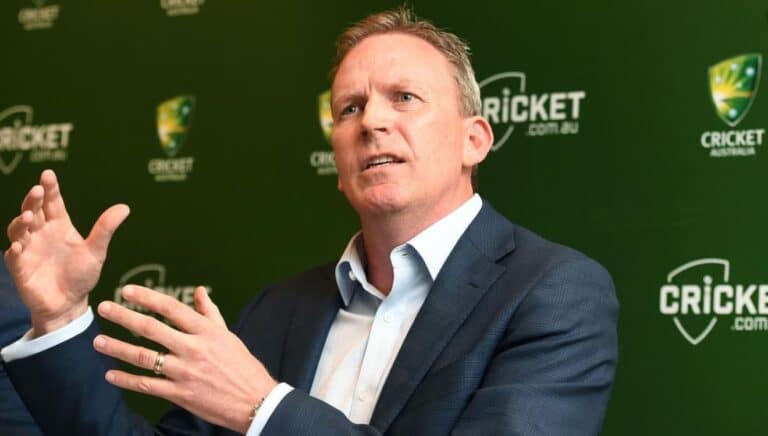
T20 World Cup “unrealistic” and “very, very difficult” this year – CA chairman | CA chairman Earl Eddings believes the T20 World Cup is unlikely to go ahead this year
Earl Eddings, the chairman of Cricket Australia, believes it is unlikely that the T20 World Cup will be going ahead this year. The global event, scheduled to be hosted by Cricket Australia between 18th October and 15th November, has dark clouds over its future amid the coronavirus pandemic.
Eddings believes that it is very difficult to get players from 16 countries into Australia as the COVID-19 peak has come or is yet to come in some countries. The chairman of Cricket Australia, who is part of the ICC, believes that time is running out. He also stated that CA had given ICC various options to move the tournament out of Australia.
“I sit on the ICC and we’re having meetings as we speak,” Eddings said as reported to ESPNCricinfo. “It’s a bit of a moving feast at the moment. I’d say it’s unlikely, while it hasn’t been formally called off this year or postponed, trying to get 16 countries into Australia in the current world where most countries are still going through COVID-19 spiking, I think it’s unrealistic or would be very, very difficult. We’ve put forward a number of different options to the ICC we’re working through at the moment.”
The ICC was expected to officially postpone the tournament on 10th June, but deferred it until July as it plays the waiting game.
ICC Chief Manu Sawhney believes that the right decision will be taken after consulting all the stakeholders surrounding the event.
Since May, Eddings has asked the ICC to consider postponing the T20 World Cup for the second time. He addressed an email to the ICC’s Finance & Commercial Affairs Committee, proposing India and Australia swap hosting the tournament over the next two years. Eddings was of the opinion that the 2021 edition of the T20 World Cup to be held in India and the 2022 tournament will be hosted by Australia. This will financially help all countries.
Kevin Roberts, who was sacked by Cricket Australia earlier this week, said last month that hosting the tournament was of very high risk. The ICC however was looking at alternative windows over the next 12 months to host the T20 World Cup. According to ESPNCricinfo, the ICC was eyeing to host the tournament in February-March, by preponing the Women’s World Cup, hosted in New Zealand, to January.
Kevin Roberts previously said the staging the T20 World Cup is a “high risk” option.
Robert’s temporary replacement, Nick Hockley, who is also chief of the local organising committee, believes that CA is ready for any situation.”There’s a huge amount of work going on around [T20 World Cup] contingency planning,” Hockley said on Tuesday. “I think there’s meetings coming up next month at ICC level where some decisions will be made, and we’ve got a fantastic local organising committee who are busy preparing for every eventuality and the decision that will come forth.”
PCB chairman Ehsan Mani, who also sits on the ICC board, also agrees that staging the tournament in 2020 is “unfeasible”. Mani believes that a decision will be made in the next three-to-four weeks.
“The biggest challenge in Australia – although Australia and New Zealand they have controlled COVID-19 – their governments are very cautious,” Mani said on Wednesday. “If it is played this year they will likely insist it happens in a bio-bubble. Like with the Pakistan team in England, teams come, stay in a hotel, with no crowds. This is okay for one or two teams but when 12-16 teams play in a T20 tournament, it becomes an impossible thing. I don’t think it is feasible today that there is any ICC event in 2020.”
3 reasons why IPL will go ahead in 2020 | Why the IPL happen this year? | Will the Indian Premier League go ahead in 2020?
2020 has been a unique year in more ways than one. From a cricketing perspective, it is the first year since 2008 that the IPL hasn’t taken the world by storm. The COVID-19 pandemic put a stop to all cricket back in March, which resulted in the indefinite postponement of the showpiece domestic T20 tournament, despite originally moving it from March 29 to April 15 in the attempt to get it started.
However, there is every chance that the IPL will still go ahead in 2020. BCCI President Sourav Ganguly has stated that Indian cricket is working on all options to stage the tournament, and circumstances may very well allow for cricket fans to see the IPL this year.
Here, we will go through three key reasons why the IPL will go ahead in 2020.
According to Cricket Australia chairman Earl Eddings, the T20 World Cup is “unlikely” to go ahead this year. Eddings, speaking soon after CA sacked CEO Kevin Roberts, was confident in delivering the message that expecting the T20 World Cup to go ahead this year is “unrealistic”.
“I sit on the ICC and we’re having meetings as we speak,” Eddings said. “It’s a bit of a moving feast at the moment. I’d say it’s unlikely, while it hasn’t been formally called off this year or postponed, trying to get 16 countries into Australia in the current world where most countries are still going through COVID-19 spiking, I think it’s unrealistic or would be very, very difficult. We’ve put forward a number of different options to the ICC we’re working through at the moment.”
With the IPL looking at the September-November window, during which the T20 World Cup is scheduled to be staged, this increases the chances of the tournament going ahead.
The IPL chairman, Brijesh Patel, has stated that staging the IPL outside India is a real possibility.
Given that India is fighting hard to contain COVID-19, hosting the tournament overseas is the safest option. The fact that the IPL is willing to do so, with the experience of overseas tournaments in the past (South Africa & UAE), increases the chances of the tournament going ahead.
Also, countries around the globe, such as Australia, New Zealand and Sri Lanka, have had success in reducing the impact of COVID-19. In fact, New Zealand had full crowds for rugby matches last week, and Australia is set to welcome crowds at certain grounds by July.
Will fans get to see MS Dhoni lead CSK once again?
3. Financial loss is too much to withstand
The BCCI is estimated to lose a whopping Rs. 4,000 crore (US$529.6M) if the IPL doesn’t go ahead in 2020. Given that India generates a significant percentage of the ICC’s revenue (approximately 80%), organisers will do everything they can to ensure the tournament goes ahead.
This is particularly the case if the T20 World Cup doesn’t go ahead. Which is looking more likely with each passing day.
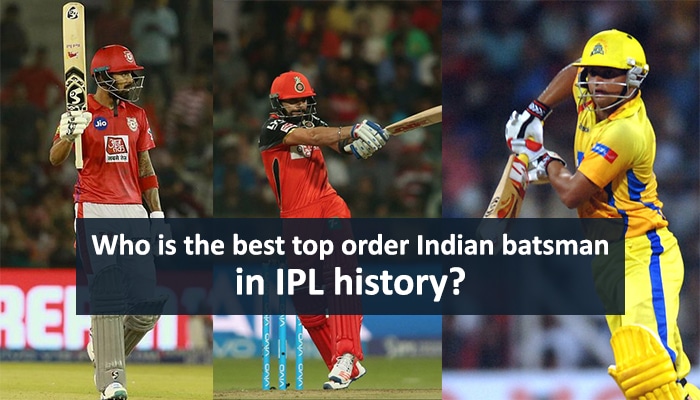
Who is the best Indian top order batsman in IPL history? IPL Analysis: Breaking down the numbers: who is the best Indian top order batsman in IPL?
The Indian Premier League has never failed to present some splendid domestic talents. Cricketers have launched and rediscovered their careers in this tournament. When it comes to the dynamics of T20 cricket, an opener is certainly one of the most vital components of the team.
David Warner and Chris Gayle have stamped their authority upon being the most formidable opening batsmen in the last twelve years of the league. However, who takes that claim amongst the Indian lot of players? It was a dilemma that was a bit too complex to work out, considering there have been a lot of them who have racked up decent performances at the top of the batting order.
Some others surpass them for having played commendably over a consistent period of time. On the other hand, there are others who have only just arrived to the arena but have taken the whole scene to cleaners with their supreme efficiency and profound skill-set whilst dealing with the new ball. How do we figure out who amongst these are the best then?
We undertook a task to break down the statistics garnered and impact carved by these individuals in different parameters over the years. In this article, the same would be presented in an extremely comprehensive way.
Note:
a) The statistics of batsmen are only taken from the innings in which they have batted in the No. 1, 2, 3 batting positions, i.e. the top-order.
This segregation was done as certain players like Rohit Sharma and Robin Uthappa have played in the middle order for a considerable number of matches. Hence, their stats from those matches couldn’t be used to beef up their top-order credentials.
b) Only individuals who have scored more than 1,500 runs whilst batting in the top three positions have been taken into consideration.
Accordingly, our calculation paints the picture that 16 Indian batsmen have notched more than 1,500 runs from the top-order in the IPL. They are: Rohit Sharma, Virat Kohli, Suresh Raina, Virender Sehwag, KL Rahul, Gautam Gambhir, Robin Uthappa, Sachin Tendulkar, Murali Vijay, Shikhar Dhawan, Ajinkya Rahane, Ambati Rayudu, Manish Pandey, Parthiv Patel, Sanju Samson and Rahul Dravid.
Let’s analyse them on several frameworks.
Where does Virender Sehwag rank among the best Indian top order batsmen in IPL history?
Runs per innings vs Balls faced per innings:
On occasions, there are certain openers who undertake a radical approach and steadily pile up the runs from the start of the innings. However, they might also be prone to lengthening their stay on the crease without creating a substantial impact on the overall course of the game.
Suppose a batsman scores a steady 50 runs from 40 deliveries and lasts until the 15th over. It looks great for his personal batting average, but that innings could be detrimental for his team. Contrastingly, a quick 15 runs from six deliveries shoots up a strike rate.
However, an inability to create a solid foundation for the team could hamper the batting lineup’s chances to put up a challenging total on the board. Hence, a fine balance must be struck wherein the batsmen must be scoring higher runs whilst taking up lesser balls to do so.
So, how do our concerned individuals stack up with respect to this?
Who is the best Indian top order batsman in IPL history? Runs per inning vs balls per inning
Note: The missing name in the middle is that of Manish Pandey.
This is a graph that we have come up with to portray this aspect of the game. Clearly, KL Rahul ranks way ahead of several other openers over here. In 42 innings in the top three, KL averages 42.94 and faces 26.83 deliveries in each outing.
However, Virat Kohli’s sample space is much more expansive, as the RCB skipper has played 133 innings with an average of 41.01 and 26.22 balls in each innings. The duo of KL and Virat are well ahead of the others in this battle for the title of best Indian top order batsman in IPL history.
Third on this list could surprisingly be Sachin Tendulkar, who had an average of 34.89 and took up 25.14 balls for the same. Suresh Raina isn’t far behind either, as he records a tad bit less than 34 runs, but does so in only 21.07 deliveries.
Virender Sehwag played a high stakes game as he had an average of 27.87, but he took only 16.96 deliveries for that. Ajinkya Rahane was steady in his approach, as he had a decent runs to show for, but 24.38 balls raked of a cautious approach of sorts.
The cluster in the middle includes the likes of Rohit Sharma, Gautam Gambhir, Sanju Samson and others; all of whom had relatively reasonable but not overtly impressive numbers in this aspect. Parthiv Patel falls short in both areas whereas Rahul Dravid struck runs at a rate of only just above 100.
BASRA: Batting Average + Strike Rate:
An interesting facet through which the credentials of a batsman in a T20 game is judged is by adding his overall batting average and the strike rate with which he notches those runs. Like the previous parameter, even here it is important to maintain a fine balance in both these areas of the game.
In some ways, batting average + strike rate is an extension of the ‘runs per innings vs balls faced per innings’. ‘BASRA’, as the term is coined, aids one to identify the most suitable batsmen in the shortest version of the game. These top-order players strike runs at a quick pace, and continue to do so for a considerable span of time in the innings.
As aforementioned, only the innings in which these batsmen batted in the top three batting slots are considered.
Who is the best Indian top order batsman in IPL history? BASRA
Virender Sehwag actually boasts of the best strike rate amongst the players being analysed here. He struck runs at a rate of 156.21, but a relatively lower average of 27.87 arguably makes the addition of these two parameters lopsided in his case. KL Rahul is rather unsurprisingly way ahead of his peers, with a BASRA of 183.98, with an average of 42.94 in 42 matches.
Virat Kohli and Suresh Raina combat each in a neck-to-neck battle here, though the former edges out just slightly to record an average of 41.01 and a strike rate of 131.70. Sanju Samson has played 58 such innings and his BASRA of 165.09 is surprisingly encouraging; not to forget, quite better than some of his senior counterparts.
Ambati Rayudu and Ajinkya Rahane had endured almost similar experiences, with their aggregates totaling to a tad bit more than 156. In some ways, Gautam Gambhir could be categorised in the same bracket too. Rohit Sharma has been able to shoot up his BASRA to 160.57.
However, Rahul Dravid along with Manish Pandey and Murali Vijay haven’t had fruitful results over here. Parthiv Patel lags quite behind in this list too. The similar stats are portrayed in the graph below to provide a clearer, more accurate representation of these numbers.
Who is the best Indian top order batsman in IPL history? BASRA
How important are half-centuries for top-order batsmen?
An increasing trend that could be noticed whilst analysing T20 cricket these days is the minimal importance given to certain records and feats. Apparently, every player needs to be judged on the impact that he creates and hence the benchmarks such as half-centuries and centuries are given lesser importance.
From our understanding, it could be said that these ideal set of judgements that are reserved for players would be applicable in the quintessential batting lineups where each position has players best suited for that role.
However, the dynamics of the game is such that managements aren’t always able to meet their targets in the auction table and hence specific batsmen have to take several responsibilities that might not be defined from funkier statistical measures as we see prevalent these days.
For example, someone like a KL Rahul has had a feeble middle order in KXIP for the past couple of years. This scenario requires him to stay in the middle, notching those half-centuries at a regular rate and batting deeper in the innings. The same case might be apt for someone like a Shikhar Dhawan when he played for Sunrisers Hyderabad earlier in his career.
Gautam Gambhir had a tricky Eden Gardens pitch to play on for a sizeable part of his career with KKR. Hence, he usually looked to stay around, knock the ball cautiously and steer his team to targets, thus achieving his half-centuries in this process.
Thus, traditional statistical standards aren’t as outdated as being perceived these days. Here, we look at the frequency with which our concerned batsmen scored half-centuries when they batted in the top three slots.
Who is the best Indian top order batsman in IPL history? Innings to score 50+
Suresh Raina and Gautam Gambhir’s numbers stand out here, considering the bulk of the matches that they have played and yet scored those 50s with such regularity. Not to forget, Shikhar Dhawan has batted in the top order in 151 encounters and yet bagged a half-century in every 4.19 innings, which is the third-best in this list.
Sanju Samson’s occasional bursts have hidden his lasting inconsistency and that could be seen in a relatively poor record of a 50+ score in every 5.8 innings despite having played only 58 innings in the top three spots.
Virender Sehwag’s tally is at 6.73 in 101 innings; further solidifying our previous claim that he was a swashbuckler in the start with a tendency to not occupy the crease for longer though. Virat Kohli has played 133 matches in the top-order and has acquired a half-century at a rate of one per 4.15 outings, which just magnifies the massive efficiency that the man has instilled in his gameplay. Parthiv Patel has played 130 innings, mostly whilst opening the batting, but has scored only 13 half-centuries.
Dhawan’s longevity and consistency needs to be lauded, otherwise his T20 abilities have often been a subject of conjecture.
Most importantly, KL Rahul puts forth a mystery yet again. He is far ahead in this race, just like every race that we have analyzed so far. The 27-year old scores a half-century in every three innings! But, his sample space is of 42 innings, which is quite lesser than the others like Kohli, Dhawan, Gambhir and Raina.
However, as the minimum criteria we have taken is of 1,500 runs; and KL surpasses that barrier by amassing 1,589 runs. So, should his achievements be given a lower status due to the lesser number of innings? That’s quite something to ponder upon.
Who is the best Indian top order batsman in IPL history? KL Rahul’s innings-per-50 ratio is superb.
The ability to stay undisturbed on the crease…and take your side home
One of the more underrated and overlooked aspects in T20 batting is the importance of players carrying their bat right throughout the innings. Along with guiding their team to victory, of course.
The modern-day analysts have harped upon the need to go berserk or get out if one is unable to get their mojo properly in a T20 innings. But guess what? The shortest format of the game isn’t as much about blitzkrieg as one makes it out to be. There is scope to apply your brains to the game and tackle the tougher moments to lead your side to the win whilst remaining unbeaten at the crease.
It comes with a sense of authority to ensure the greater good of the team; to literally issue some command over the proceedings and deter any weaknesses later down the order through your own prowess of batting as deep into the innings as possible and crossing past the target mark.
Unfortunately we have delved so deep into invigorating numbers that the significance of conventional statistics has reduced. Here, we look at the importance of remaining unbeaten (not out) for a top-order batsman in T20s.
A question for you: What is one of the foremost factors through which the match-winning abilities or capability of a cricketer could be judged? Barring the other fringe statistical techniques, the most straightforward one is to count the number of times that a particular batsman has won the ‘Man of the Match’ award.
It equates to the notion that the performance delivered by that particular player in that match was arguably the best amongst the 22 people who participated in the game.
Now, we set out on a task to analyse the number of times the batsmen, whom we have taken into consideration, manage to stay unbeaten and win ‘Man of the Match’ too. The results were quite glaring:
Out of the 16 batsmen who are being analysed, they had combined won 117 ‘Man of the Matches’ whilst batting in the top three positions in the IPL.
These batsmen had remained not out on 50 occasions amongst these 117 encounters, which translates to the fact that the players have been unbeaten at the crease in 42.73% of times that they were the ‘MOM’.
Regardless of any rebuttal, this tells a fact that that a batsman is unbeaten once out of each 2.34 innings that he wins the game for his team. Such an observation should arguably not be ruled out whilst stating the importance of being ‘not out’ for a top-order batsman in the T20 game.
Who is the best Indian top order batsman in IPL history? MOM Awards
The above graph is an attempt to look at the players who are most prone to carry their bat and trigger a victory for their side simultaneously. It paints a curious picture, and one that must be popular but without much numerical evidence by now. The duo of Virat Kohli and Ajinkya Rahane have been ‘not out’ the most number of times when they have been the ‘MOM’.
It is well-known that Kohli believes in not dropping his guards until he reaches the destination. Rahane often has a more conservative approach but still has a sensible, composed demeanor and would often steer his team to the target very responsibly.
Who is the best Indian top order batsman in IPL history? Virat Kohli’s desire to remain unbeaten is incredible
Rohit Sharma, Gautam Gambhir and Suresh Raina have been unbeaten on six occasions when they have been conferred with the ‘Player of the Match’. It is interesting to note that three of the aforementioned five players have been captains of their sides for a considerable period of time.
Whereas, Raina and Rahane have donned the role of being the most important batsmen in their teams, and hence they look to be undeterred if they have gotten set in that innings.
Most importantly, Shikhar Dhawan has been unbeaten on five out of the six instances, which is an astounding 83.33% of times that he has won the game for his team. Top Indian batsmen have cultivated an incredible sense of duty and hold themselves liable for the fortunes of the team.
Hence, remaining ‘not out’ is important for them whilst being in a situation to win the game, irrespective of the beliefs spread across by many analysts. Sachin Tendulkar did so four out of eight times, which represents startling consistency too. KL Rahul has managed to remain ‘not out’ only once in four occasions though, but with a greater number of matches to come, he can surpass others on this parameter.
The likes of Manish Pandey, Sanju Samson, Murali Vijay, Ambati Rayudu and Rahul Dravid haven’t really been impressive over here.
However, it is not something unremarkable, but rather an indication of a different approach towards the game; just that the route undertaken by the other lot of players has been more efficient. We have put the same data through another graph to allow the reader to a better comparative analysis.
Who is the best Indian top order batsman in IPL history? MOM Awards
Note: The missing name here is that of Sanju Samson.
Best Indian Top Order Batsman in IPL History – Verdict:
One of the interesting facets that we derived from this analysis was that Rohit Sharma has been lagging behind on different frameworks when his numbers from the top-order are taken. His rather indifferent form in the last few IPL seasons, coupled with more proficient statistics whilst batting in the number four position, makes for an interesting case that would be looked into later on.
Secondly, Suresh Raina has been hailed as the ‘Mr IPL’ by many, and rightfully so. However, his overall contributions have reduced in the previous couple of campaigns or so and that is reflected in the overall study.
Who is the best Indian top order batsman in IPL history? Suresh Raina has had a superb IPL career
Thirdly, Sachin Tendulkar had some fantastic statistics in the IPL considered he only played until 2013 and the demands and the dynamics of the T20 game were different then. From the older lot of players, his numbers stand apart and are quite remarkable. In some ways, it is also a bit unfair that we are putting statistics from almost a decade next to each other in comparison.
Virender Sehwag could have been ahead in this competition of sorts if only his average was a tad bit better, because an overall strike rate of 156.21 is extremely remarkable.
The ones who have been unable to catch up in almost all of the graphs are quite visible and there is relatively less to say about them.
However, the vital conclusion to draw over here is who triumphs between KL Rahul and Virat Kohli?
KL surpasses Kohli in almost every variable over here, barring the ‘not out when MOM’ criterion. His ‘BASRA’ of 183.93 is notably better than Virat’s 172.71. The Indian captain doesn’t match up to Rahul’s consistency whilst scoring half-centuries either.
It needs to be noted that the current KXIP skipper has transitioned to play in the top-order in the IPL on a consistent basis only in the past two years. Kohli, on the other hand, has been doing so majorly since the last decade or so. His sample space is also much larger than that of Rahul, as reiterated earlier too.
Virat has played 91 more innings than KL and still more or less matches him on all of these specifications. The latter has won the ‘Man of the Match’ every 10.5 innings, whereas Kohli has done so in each of his 11.08 outings.
Moreover, due to Virat’s exemplary form in the 2016 IPL campaign, almost 21.17% (i.e more than one-fifth of his runs in the top order) were scored in that single season itself. That accumulated to only 12.03% of his overall innings whilst batting the first three positions. KL has delivered fantastic perfomances in the last two years but he never had a ground-breaking series of outings like Virat did back then. His progression has been more stable, constant and hence he deserves credit for racking up those numbers sans a massive, outwardly successful campaign like Kohli’s run in 2016.
Naturally, there is little to separate between the two of them. However, KL is widely regarded as India’s most indispensable asset in T20 internationals currently. Moreover, it is important to stay honest to the minimum criterion that was considered for this analysis, i.e. for having scored a minimum of 1500 runs in the top three batting positions.
Thus a larger sample space would be laudable to prove Virat’s credentials, but as of today, KL Rahul could certainly claim for having arguably been India’s best top-order batsman in the history of the IPL.
Written by Tarkesh Jha. Follow Tarkesh on Twitter today.
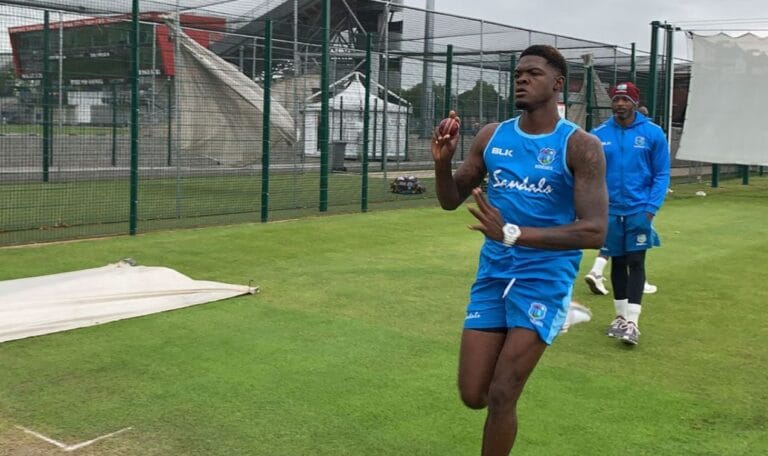
West Indies coach Phil Simmons says both England & West Indies are under the same umbrella | England vs West Indies Test series | Can West Indies compete in England?
As international cricket resumes post the coronavirus pandemic in England next month, West Indies coach Phil Simmons feels that West Indies have an edge over the hosts as the matches are played behind closed doors.
The Test series between England and West Indies, which starts on July 8, marks the return of International cricket which has been suspended since March due to the coronavirus pandemic.
“I don’t know if it will increase our chances, because both teams are under the same umbrella – for want of a better word. The nice part for us is that 20,000 Englishmen raving for England, and that crowd support, it’s not there for them. So that in a way will help us, so it’s good from that point of view, ” said Simmons.
Simmons also believes that lack of quality cricket could also hurt England.
“England hasn’t come from a tour recently, and we’ve just been playing cricket at home. Because in a normal situation we would have been coming from camps and England would have been halfway through their season and the series would have been going on right now. So, I think that is a plus for us, because it evens out things a little bit, with the fact they haven’t been playing competitive cricket for a while also,” added Simmons.
The head coach of West Indies opinionated that the Men in Maroon will miss the services of three key players – Keemo Paul, Shimron Hetmyer and Darren Bravo, as they pulled out of the tour due to concerns surrounding the coronavirus.
“Unfortunately a few guys decided not to come but we are here with the best squad that we can have here. And from the way we’ve started our work, the guys have been putting in, I think we’ll be ready and looking to defend our trophy. We know what we’ll be missing. But in situations like this, we have to work hard with the guys who are here and make sure that what we’re doing is putting them in a position to fill those two shoes for the series. Hopefully whoever fills the shoes can go on and be as great as they want to be.” he concluded.
Cricket Australia CEO Kevin Roberts axed, replaced by Nick Hockley | T20 World Cup local organising chief, Nick Hockley, steps into CA CEO role on interim basis
Cricket Australia (CA) CEO Kevin Roberts has been axed, replaced by T20 World Cup local organising chief, Nick Hockley, as Australia search for their next long-term leader.
Roberts’ axing caps off a challenging stint as CA CEO, headlined by ongoing disputes between CA, state associations the Australian Cricketers Association regarding cost-cutting during the COVID-19 pandemic crisis. Roberts, along with his team, mapped out a plan in March to cope with a forecasted 50% loss in revenue for next summer, which included significant cuts to state grants, standing down staff and player payment cuts.
Unfortunately, the relationship between Roberts and key stakeholers, particularly the state associations, deteriorated during the crisis. In fact, New South Wales and Queensland have yet to agree on the cuts implemented by Roberts and his team.
CA Chairman Earl Eddings broke the news to staff via live stream on the morning of June 16th. According to Eddings, CA requires a new approach to move on from what has been a challenging few months.
“Cricket, like all national sports, has been going through a period of significant change and – in recent months we have had the added uncertainty delivered by COVID-19,” Eddings said.
“The entire cricket community has been affected and difficult decisions have been – and will continue to be necessary – to ensure that cricket at every level is in the best shape it can be now and in the future.
“It is essential that Cricket Australia continues to provide strong leadership and works constructively with everyone who has an interest in the future of the game – the players, all employees, the state associations, commercial partners and supporters.”
Kevin Roberts stepped into the role at a challenging time post the sandpaper scandal in 2018, replacing James Sutherland, who spent 18 years in the role. Despite a rocky journey, Roberts wishes CA all the best.
“It’s been a privilege to lead and serve the sport I love as CEO of Cricket Australia. Our team of staff and players are outstanding people who contribute so much to the game and I’m proud of what we’ve achieved together.
“I’d like to thank the army of volunteers in communities across the country who are the lifeblood of our sport, enabling kids to experience the game and to dream about emulating their heroes in our national teams. As a lifelong and passionate member of the cricket community, I look forward to seeing the game thrive into the future,” Roberts said.
Hockley steps in
Nick Hockley, the local organising chief for the T20 World Cup, has been announced as interim CEO as CA look for a long-term option.
Hockley has had a strong track record in the sporting field. He was CA’s head of commercial projects between 2015 and 2017, before taking on the T20 World Cup role. Before that, he worked on the successful 2015 World Cup in Australia and New Zealand, after he spent six years with the London Olympics organising committee.
His most recent success was his handling of the Women’s T20 World Cup earlier this year, which was headlined by the terrific Final that saw 86,000 spectators at the MCG.
As a result, Hockley is considered an excellent interim option as Cricket Australia look to move forward.
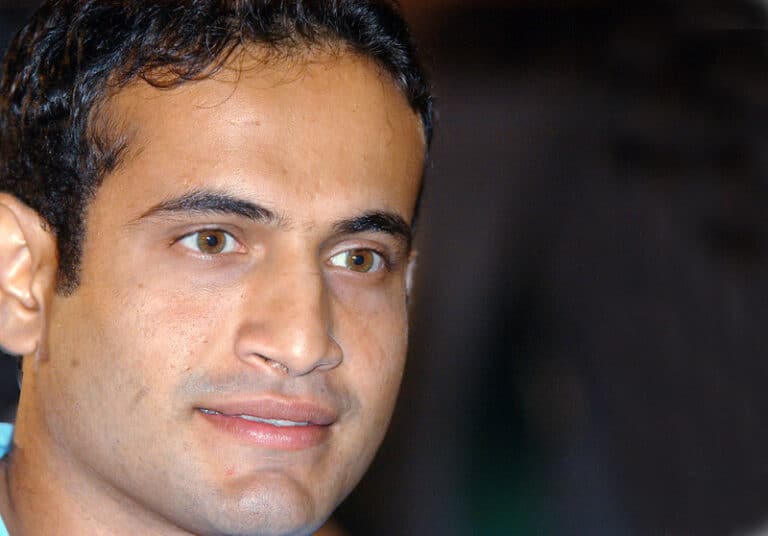
India have all the resources to be champion: Irfan Pathan | Former cricketer Irfan Pathanbelieves India have the resources to become world champion
2007 World T20 champion Irfan Pathan said that India have to plan better for ICC events in the future as they have all the resources. The former left-arm pacer blamed the middle order confusion for India’s exit from the ICC Cricket World Cup 2019.
“We need to make sure that we have better planning going into the ICC trophies, going into the World Cup. If we have better planning, we have all the resources to be a champion,” Pathan said on Star Sports show Cricket Connected.
India last won an ICC event in 2013, when they won the ICC Champions Trophy under MS Dhoni’s captaincy. Since then, India has made atleast the Semi Final of all the five ICC events, but failed to win any of the tournaments.
“The only thing lacking is that we did not have a number four batsman just before the World Cup as well. We were struggling with having a proper eleven,” the former Baroda all-rounder said.
“If you look at the recent 2019 tournament, it was bad planning. We have resources, we have players, we have fitness, we have everything to be a world champion,” added the 35-year old.
“If you look at all the semi-finals and finals, it just shows when playing really well in the league stage and you don’t play well in the semi-finals or knockouts, it’s probably your mental toughness as well,” Gambhir said.
Adam Zampa to return to New South Wales | Adam Zampa set to return to the state where he began his First Class career in 2012
Australian leg spinner Adam Zampa has decided to move back to New South Wales, after playing for South Australia for the last seven years. Zampa, who made his first class debut for New South Wales way back in 2012 has signed for them with an eye on the Test team call-up.
The 28-year old, who has already played 108 limited overs internationals for Australia, has not yet made his debut in Test Cricket. The move to New South Wales is because of the vacancy in the dressing room due to the retirement of Steve O’Keefe. He will also rub shoulders with Test stars David Warner, Pat Cummins, Mitchell Starc, Steve Smith and Josh Hazlewood in the dressing room.
“The prospect of moving back home and being able to play for the state I started with and where I played my junior cricket means a lot to me,” Zampa said. “I’m looking forward to testing myself in Shield cricket with a team of this calibre and I’m hoping to get the opportunity of playing with Nathan Lyon down the track.”
Zampa took 95 first class wickets for the Redbacks after moving from New South Wales, for whom he had played three Sheffield Shield matches at the start of his career.
“The thing I’m looking forward to the most is playing with some guys that I was really close with when I was a rookie at NSW. The likes of Sean Abbott, Dan Hughes and Harry Conway. I love pushing guys around me to get better and I think NSW cricket teams have always been a great environment for this,” the wrist spinner added.
NSW coach Phil Jacques said that his experience will be a great addition for the state side. “I’m really excited to have Adam back home in NSW. Adam brings a wealth of experience and knowledge and he will be a great addition to our team. He is a world class performer and I’m personally excited to be working with him and welcome him into our group,” the coach said.
Sri Lanka players resume training after COVID-19 lockdown | Sri Lanka cricketers back in training after COVID-19 break
Sri Lankan players are slowly but steadily returning back to normalcy, as they completed their first training session post lockdown. The head coach Mickey Arthur oversaw the residential training for the 13 players who were a part of the program.
“We have done a lot of conditioning and every day we have upped their bowling. So they are almost ready. In the next month, they will be ready to play cricket,” Arthur said.
The Sri Lankan team’s future schedule is uncertain as India’s tour to the island nation was postponed due to the coronavirus pandemic. Sri Lanka last played International cricket against West Indies in the T20I series which concluded on March 6. They had a Test series scheduled against England, but the visitors pulled out of the contest as the fear of the COVID-19 virus grew all over the world.
Dimuth Karunaratne, the skipper of the national team, said that it was tough getting back to training post the 24-hour curfew in the island nation.
“Even when we are training in the first day it was really hard, but now I am shaping and I am getting my fitness back. We are trying to bounce back and play good international cricket,” the 32-year old said.
Earlier this week, Sri Lanka Cricket (SLC) and Pakistan Cricket Board (PCB) swapped the hosting rights of the Asia Cup. If the six-nation tournament goes ahead this year then it will be held in the island nation.
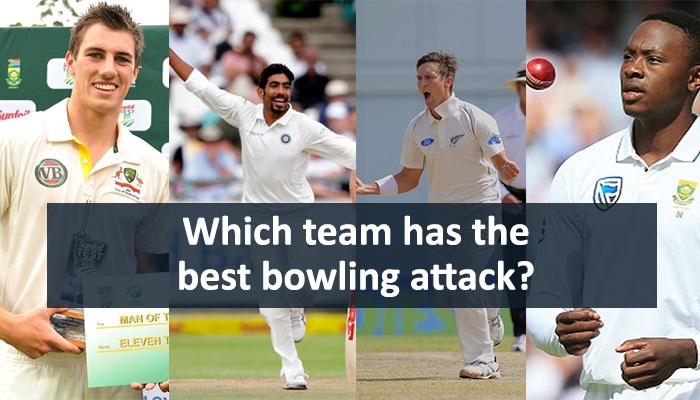
Which team has the best bowling attack in Test cricket? | Which nation boasts the best Test bowling attack?
It is almost impossible to win a Test match without taking 20 wickets.
Yet, we as fans tend to hurl our admiration to the Virat Kohli’s of the world. Don’t get me wrong, the importance of runs cannot be overstated, but I do believe that given the way the game has developed over the years, we have lost sight of the ‘art’ that is bowling in Test cricket.
It wasn’t too long ago that the dynamics of Test cricket; or rather the contest between bat and ball, was vastly different. A string of fast bowling Caribbean giants from the late 60’s though to the early 2000’s made sure of it. The ‘fearsome foursome’ of Andy Roberts, the towering Joel Garner, Colin Croft and Michael Holding (AKA ‘whispering death’) were particularly devastating throughout the 70’s and 80’s, with 835 wickets between them at an average of just over 23!
Any team in world cricket would be happy to have had just one of the of the ‘fearsome foursome’ at their disposal, which gives some context as to just how destructive it was to have all four together. By the mid-to-late 80’s, many would have thought that the era of fast bowling may have ended with the careers of the Roberts, Garner, Croft and Holding.
A young Malcolm Marshall burst onto the scene in the late 70’s and became, in my opinion, the greatest fast bowler to ever play the game. His career overlapped with the likes of Curtly Ambrose, Courtney Walsh and Ian Bishop, who, between the four of them, boast a record of 1461 test wickets and 22.57 a piece.
Courtney Walsh retired in 2001; the last of the West Indies fast bowling giants. Since then, we have seen many world class bowlers come and go with a number of partnerships that we won’t forget in a hurry. The likes of Glenn McGrath and Shane Warne come to mind, greatly assisted by Brett Lee and the underappreciated Jason Gillespie. Zaheer Khan and the spinning duet of Kumble and Harbhajan. Shaun Pollock and Allan Donald, followed soon after by the likes of Ntini, Steyn, and Philander.
But, which country boasts the most impressive attack today?
Enjoying Dan’s content so far? Check out some of his other work:
We’re all very aware of the ‘fab four’; Virat Kohli, Steve Smith, Joe Root and Kane Williamson. However, who are the best bowlers at present? Who are the elites?
Having a glance at the latest ICC test bowling rankings, I am relatively surprised. I see just one Englishman, one South African, one Indian, and one West Indian. The remaining six positions are occupied by three Aussies and three New Zealanders. Without looking at the rankings, I would have said that it is a toss up between the Australians and the Indians, with New Zealand and England in close pursuit.
This gives us a good point of reference, but it does not paint the full picture at all. Much like batting, bowlers form partnerships and work off one another to form a bowling unit. They operate as a pack.
So, which country offers the most devastating pack at present time? There were a number of variables that I looked at, including their:
Career records
Records away from home
Records against quality opposition; and
Performances in high pressure situations
With all this in mind, I find the case for Australia the strongest.
Why do Australia possess the best bowling attack?
Starting at the summit of the ICC test rankings, Australia’s bowling ‘unit’ consists of Pat Cummins, the number one ranked bowler in world cricket, left arm speedster Mitchell Starc (6th), Josh Hazlewood (10th) and last but most definitely not least, Nathan ‘Gary’ Lyon (16th).
Many would disagree, but I believe Nathan Lyon to be the most pivotal member of the Aussie pack. The role of the spinner in Test cricket is something that is overlooked all too often. Fast bowlers, and particularly the Aussie quicks, operate at ‘optimum efficiency’ when rotated in short spells, where they are able to bowl at full tilt for six or so overs before having a breather and coming back for more.
Nathan Lyon gifts Tim Paine the ability to rotate his trio of quicks from one end, while he operates from the other. What makes Lyon quite remarkable is not necessarily his ability to keep an end quiet, but also his ability to take wickets. Many aren’t aware that Lyon is thethird-highest wicket taker (390) in Australian Test cricket history, with only the legendary Glenn McGrath and Shane Warne ahead of him.
Which team has the best bowling attack? Nathan Lyon has been a superb bowler for Australia
Moving on, as I mentioned earlier, these bowlers operate as a pack and variation within that pack is a crucial aspect to their success. Pat Cummins, the spearhead of the attack (at the tender age of 27), is the full package as a fast bowler. He can not only operate at 150 clicks, but can do so while taking the ball away from the right hander, and doing so consistently over three spells in a day of cricket. His effectiveness doesn’t diminish with the shine of the kookaburra given his ability to get the ball to reverse swing in most conditions. He is hostile, aggressive and intimidating and has rightly earned the title of the worlds best. Furthermore, Cummins appears to have been successful on the road as well, averaging 21.86 with the ball away from home with an almost unprecedented strike rate of 45.89 deliveries per wicket!
Mitchell Starc is one of the fastest bowlers in the world. In fact, he is one of only a few bowlers to ever reach the 160km/h mark. He adds natural variety as a left armer, and like Cummins, posses the ability to generate both conventional and reverse swing; not to mention the most lethal yorker in Test cricket which comes in handy against the tail. Starc is often criticised for being a tad on the expensive side for Test cricket, going at roughly 3.4 to the over. But, with a career strike rate of 48.17, I can’t imagine Tim Paine being too bothered about it.
Josh Hazlewood is one of the more underrated or unappreciated fast bowlers in Test cricket. He is the McGrath of this bowling attack in the sense that he has the ability to put the ball in that corridor of uncertainty all day. He doesn’t have the pace of Cummins or Starc, but relies on movement off the wicket and through the air. If need be, I believe that he is perfectly capable of bowling longer spells than the likes of Cummins and Starc, and I’ve found him to be particularly dangerous against the left handers.
All in all, I believe that we are blessed to have a number of quality bowers at the moment. The partnership formed between Jimmy Anderson and Stuart Broad has been exceptional for many years for England. A young Jofra Archer and Mark Wood are more than capable to lead that attack going forward.
Jaspit Bumrah, Mohammed Shami, Ishant Sharma and Umesh Yadav have done exceptional work for India, and often don’t get the recognition they deserve given the magic that is so often produced by their spinners Ashwin and Jadeja.
Trent Boult, Neil Wagner and Tim Southee (all of whom are in the ICC top 10 rankings), have made New Zealand one of the toughest places to visit in Test cricket. Wagner in particular is arguably the most underrated Test bowler in the world.
With Dale Steyn and Vernon Philander having moved on for South Africa, Kagiso Rabada will need to find two quicks to share the load with. I’m excited by Anrich Nortje and Lungi Ngidi, and the prospect of having a young seam attack that can work together for the next 7-10 years.
Having said that, the Aussies attack of present is the best that Test cricket has to offer. The unit as a whole checks all the boxes necessary – variety, pace, consistency, aggression, and patience. The Aussies have reached the summit of Test cricket, and I believe that their bowlers are largely responsible.
And, with a number of youngsters already in the side and more on the fringes, they will occupy that top spot for quite some time.
Written by Dan Orsmond. Follow Dan on Twitter today.