The decider, which I must say I didn’t expect before the series began, is here.
Both teams have traded 6-wicket wins in the opening two ODIs, but after seeing how the 2nd ODI panned out, it seems New Zealand are more up against the wall than India.
India’s bowlers, led by Bhuvneshwar Kumar and Jasprit Bumrah, were irresistible. It was a masterclass in keeping your opposition fighting just to keep their head above water. New Zealand were in recovery mode for nearly the entire 50 overs of their innings, and never looked like threatening with the ball either. India will be looking for more of the same in the deciding ODI.
New Zealand would have rued the fact that eight batsmen reached double figures in the 2nd ODI, but no one made a 50. They need to see this from a positive point of view, believing that this game could be the day they convert their starts, and produce a score that can deliver them a fantastic series win away from home.
Key to an India series win:
India’s bowlers set up the victory in Pune. Bhuvneshwar Kumar was so good that he should have received the Man of the Match award, but that’s a discussion for a different forum, perhaps. He was well supported by all of India’s bowlers, who contributed to restricting New Zealand to just 230/9 on a good batting pitch.
More of the same will be expected, and if they can deliver it, they’ll be on their way to seven straight ODI series victories.
Key to a New Zealand series win
Desperately need more from their top order.
New Zealand’s top order was their strength during a difficult Champions Trophy campaign, but in this series, they’ve been disappointing.
In the 2nd ODI, New Zealand’s middle order was placed under too much pressure, and couldn’t recover well enough to reach a competitive total. New Zealand need more from Kane Williamson, who has picked up two low scores in a row. Martin Guptill and Colin Munro, who has looked all at sea against the slower ball, need to start well at the top.
For New Zealand to win, their top order has to better deal with Bhuvneshwar Kumar and Jasprit Bumrah.
Predicted line ups:
India’s combinations worked in the 2nd ODI, including Dinesh Karthik at number 4 and Axar Patel in the bowling line up, who helped keep Tom Latham quiet.
For New Zealand, they should stick with the same side knowing that lots of their batsmen got starts in previous games, but need to go on this time.
New Zealand: 1 Martin Guptill, 2 Colin Munro, 3 Kane Williamson (c), 4 Ross Taylor, 5 Tom Latham (wk), 6 Henry Nicholls, 7 Colin de Grandhomme, 8 Mitchell Santner, 9 Adam Milne, 10 Tim Southee, 11 Trent Boult
Stats & Facts:
Virat Kohli needs just 83 runs to reach 9,000 ODI runs.
This is the second time in two years that these two teams will be facing off in a decider. India won the previous series.
Kane Williamson this series: 9 runs, average 4.50, strike rate: 32.14
India have won six ODI series in a row, and haven’t lost an ODI series at home since 2015.
New Zealand have never won a deciding ODI match in India – they lost in 1995, 1999 and 2016. Fourth time lucky?
Prediction
A series which many predicted would be 3-0 to India has a decider.
India’s bowlers were too strong in the 2nd ODI, and have settled quite nicely after a 1st up defeat. I believe Virat Kohli will score 83+ to reach 9,000 ODI runs and take India to a 2-1 series win.
Thank you for taking the time to read this piece. Follow CricBlog on Twitter and Instagram at @cric_blog and Subscribe to join the CricBlog family!
So many unexpected twists and turns, and in the end, Pakistan snuck home to take out the T20I series, before the third game in beloved Pakistan.
I love stats, so here are some of my favourite from the 2nd T20I:
1st hat-trick ever for Pakistan in T20Is
Faheem Ashraf became the 1st Pakistan bowler to take a T20I hat-trick. After pinning Dasun Shanaka LBW, he was greeted by a big hug from skipper Sarfraz Ahmed.
The commentary from Danny Morrison made it all the more enjoyable. A great moment.
Second-worst 8 wicket collapse in T20I history
Sri Lanka’s lost 8/14 towards the end of the innings, and is one of the worst collapses ever.
Well placed at 106/1 with 3.5 overs to go, Sri Lanka would have believed they could reach 140+, which could have very well been enough. Instead, they went into free-fall, losing 8/14 in their last few overs.
7 straight limited-over losses
Sri Lanka lost their seventh straight game in the UAE.
After the 5-0 defeat in the ODIs, the Lions would have been hoping for a change in the T20Is. Their young, inexperience team have come close, but to no avail.
Two huge contributions
Shadab Khan has announced himself as a vital player for Pakistan.
With the ball, he bowled 4 great overs for 1/14 and saw Pakistan home with the bat, scoring 16* off 8 balls in a very tight finish. The 19 year old has a huge future.
102 v 18
Sri Lanka’s top three contributed 102 runs. The remaining eight batsmen contributed just 18.
Considering how well Sri Lanka bowled, this extraordinary collapse cost them the series.
All the attention now moves to Lahore. It’s fantastic to have international cricket in Pakistan, and should be a great occasion.
If Pakistan win the third game, they will move to within one point of first placed New Zealand in the rankings.
Thank you for taking time to read this piece. Follow CricBlog on Twitter and Instagram at @Cric_Blog or Subscribe to join the CricBlog family!
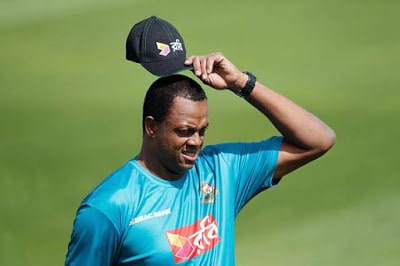
Courtney Walsh’s appointment about a year ago was met with so much excitement and optimism. After all, how could a Bangladesh fan not be excited? This is a man who sits in an exclusive list of bowlers with over 500 Test Wickets, and showed an incredible level of spirit right throughout his career.
Fast forward a year, and it’s hard to see how Courtney Walsh has left a positive mark on Bangladesh bowlers, and this has Bangladesh fans questioning his impact.
This piece will be a comparison of how Bangladesh performed under Heath Streak, versus how they have performed under Courtney Walsh so far. The numbers really speak for themselves.
Behind the numbers are some really worrying signs. Why does Taskin Ahmed all of a sudden look so toothless and struggle to get his pace up? What has happened to Mustafizur Rahman’s ability to swing the ball back into the right hander? What about Rubel Hossain’s reverse swing?
It’s something that really needs to be looked at.
However, before I go into more detail on that, I want to shed light on Bangladesh’s performances with the ball away from the subcontinent since the beginning of the New Zealand tour at the end of 2016.
Bangladesh’s bowling performances in 2016-17 away from the subcontinent
In 14 ODIs away from the subcontinent since December 26 last year, Bangladesh have won 3 of 14 games. What’s most worrying is the bowling returns.
In these matches, Bangladesh have taken 67 wickets at a high average of 51.72.
Even worse, if you remove games against New Zealand and Ireland, which make up all of Bangladesh’s wins in this period outside Asia (2 v NZ and 1 v Ire), Bangladesh have taken just 16 wickets in 6 matches at an average of 103.75.
Surely, when Courtney Walsh was brought in as bowling coach, no one could have possibly imagined Bangladesh’s fast bowlers looking so toothless. What’s most concerning is the drop in pace of their main bowlers (namely Taskin, Mustafizur and Rubel) and their inability to move the ball.
Bangladesh under Heath Streak vs Courtney Walsh
Under Heath Streak, Bangladesh had a bowling attack capable of winning matches.
Heath Streak was appointed in May 2014, during one of Bangladesh’s toughest years. His influence really began to shine through to the team right away, with Taskin Ahmed and Mustafizur Rahman bursting onto the scene, displaying amazing skill and pace. Both bowlers took 5-wicket hauls on their ODI debuts, and both times it was vs India.
During the ICC Cricket World Cup in Australia and New Zealand, Bangladesh’s bowling held up quite well in foreign conditions. Then what happened afterward was perhaps the best period in Bangladesh history, winning series v Pakistan, India and South Africa at home. Their seamers had a massive influence in unfriendly conditions for fast bowling.
The team looked far more likely to take wickets back then than they are now.
Also, Bangladesh’s bowlers gave South Africa a tough time in a Test match in Chittagong in 2015. Mustafizur Rahman took 4/37 on debut, and Mohammad Shahid was absolutely superb despite going wicketless.
Bangladesh’s bowlers, especially seamers, have gone backwards under Courtney Walsh. The wickets and confidence levels are down, with the bowlers struggling to produce the pace, movement and threat they were showing under Heath Streak.
The numbers back this up, especially in ODIs:
Even away from the subcontinent, Bangladesh fared much better under Heath Streak than Courtney Walsh, and you need to consider that Bangladesh had no Mustafizur Rahman under Heath Streak’s watch during ODIs away from the subcontinent.
In Tests, the figures are similar. It must be noted though that Bangladesh’s figures were boosted by a home series against Zimbabwe during Heath Streak’s tenure. However, you could say the same about Courtney Walsh’s tenure, as the pitches prepared by Bangladesh in Bangladesh have been a lot more bowler/spinner friendly.
In Tests, it must be remembered that Bangladesh have a very defensive captain in Mushfiqur Rahim. However, it worries me that the likes of Taskin and Mustafizur are struggling for pace and impact. Bowlers who come into the side like Subashis Roy and Kamrul Islam Rabbi are only able to bowl well for short periods. This is improvement Courtney Walsh must ask for in domestic cricket.
In T20Is, all of Bangladesh’s matches under Courtney Walsh were away from home, whereas matches under Heath Streak were mostly at home, so it makes it unfair to compare.
What about the performances of Mustafizur Rahman, Taskin Ahmed and Rubel Hossain?
These three are considered Bangladesh’s main weapons in ODI cricket especially. They seem to be struggling since Heath Streak left, but what do the numbers say about their ODI performances?
Under Heath Streak
Under Courtney Walsh
Mustafizur Rahman
Matches: 9
Wickets: 26
Average: 12.34
Economy Rate: 4.26
Matches: 13
Wickets: 18
Average: 30.56
Economy Rate: 5.38
Taskin Ahmed
Matches: 11
Wickets: 21
Average: 26.86
Economy Rate: 5.53
Matches: 18
Wickets: 24
Average: 34.86
Economy Rate: 6.27
Rubel Hossain
Matches: 18
Wickets: 22
Average: 32.95
Economy Rate: 5.44
Matches: 13
Wickets: 11
Average: 54.63
Economy Rate: 6.26
It’s clear to see that under Courtney Walsh, their numbers are much worse.
Why hasn’t Courtney Walsh been able to get the best out of the Bangladesh seamers, like Heath Streak was able to?
Was Courtney Walsh too good as a bowler, that the Bangladesh bowlers are unable to buy into what he wants from them?
This is cause for concern for the Bangladesh board, as Walsh is contracted with the Tigers until the 2019 World Cup. There has to be significant improvement, starting with the T20I against South Africa on Sunday 29th October.
After Sri Lanka surprisingly won the Test series 2-0, Pakistan responded with a thumping 5-0 ODI series win that left Sri Lanka on the brink of equaling their worst ever ODI run.
This series is important for both sides, for different reasons.
For Sri Lanka, they’ll want to quickly forget the nightmare that was the ODI series. Also, 2017 has been full of ODI troubles for the Lions, winning just 4 of 26 ODIs. The T20Is is an opportunity for respite, especially considering they have won five of nine matches, including series wins in South Africa and Australia.
For Pakistan, they find themselves in the opposite situation. They’ll want to build on their ODI successes, and maybe even have the series won before the 3rd T20I in Pakistan – beloved home territory.
How this one pans out will be interesting to see, with ranking ramifications as well.
Key to a Pakistan victory
Expose Sri Lanka’s inexperience.
Sri Lanka will be without Upul Tharanga, Dinesh Chandimal, Niroshan Dickwella and Akila Dananjaya. Looking at how Pakistan’s attack performed in the ODIs, they’ll all be big losses for Sri Lanka.
If Pakistan’s impressive set of bowlers can get it in the right areas, they can rip through the Sri Lankan lineup.
Deal with Usman Khan, then you have Hasan Ali to face, then the impressive Shadab Khan and so on…
Key to a Sri Lanka victory
Stick to what has worked for them in T20Is this year.
Yes, it has been a little while since their last T20I, but if Sri Lanka can stick to what worked in those games, it can help them here. Aggressive, confident cricket was the name of the game.
Sri Lanka’s team looks very thin on experience, so the experience of Thisara Perera is vital. The stand-in skipper must stand up.
Predicted lineups:
Pakistan: 1 Ahmed Shehzad, 2 Fakhar Zaman, 3 Babar Azam, 4 Mohammad Hafeez, 5 Shoaib Malik, 6 Sarfraz Ahmed (c, wk), 7 Imad Wasim, 8 Faheem Ashraf, 9 Shadab Khan, 10 Hasan Ali, 11 Usman Khan
Thisara Perera has played more matches (60) than the rest of the 16-man Sri Lanka squad combined (47).
Thisara Perera is the 7th captain Sri Lanka have had in all formats in 2017, after Angelo Mathews, Dinesh Chandimal, Upul Tharanga, Rangana Herath, Chamara Kapugedara and Lasith Malinga.
If Pakistan win this series 3-0, they will move within one point of first-placed New Zealand.
Babar Azam averages 54.00 in 11 T20Is, with a strike rate of 125.94
Sri Lanka have won five of nine T20Is this year, including wins in Australia and South Africa.
Prediction:
I’ll admit that I have never heard of some of these Sri Lanka players that will line up to play today.
That is not to say they are without talent, though. However, Pakistan boast significant experience, and are in good shape to keep the juggernaut going with Sri Lanka missing key players. Pakistan to win.
This is how the South Africa v Bangladesh storyline has gone so far:
Before the tour began, there was great hope:
1. Can Bangladesh prove to the world they can compete in Tests away from home?
After that went poorly:
2. Can Bangladesh find respite in the ODIs?
Never mind. Then:
3. What about the T20Is?
Could you ever remember a TOUR so one-sided? It’s been thoroughly disappointing, especially as an ardent Bangladesh fan.
In the ongoing Pakistan v Sri Lanka series, Pakistan thoroughly outplayed Sri Lanka in the ODIs 5-0, but that was after Sri Lanka swept the Test series. Australia were punished in the ODIs in India 4-1, but at least won a game, and drew the T20 series.
Can’t say the same about Bangladesh’s very disappointing tour of South Africa. South Africa, though, have been very good, and more importantly, ruthless. They have just been too strong.
The attention now turns to the T20I series, where Bangladesh will be hoping for some sort of respite, after being thrashed in all matches so far, across the Tests and ODIs. South Africa will be looking to show no mercy again.
Shakib Al Hasan now leads Bangladesh, and is coming off a solid 63 in the 3rd ODI. South Africa are resting a few key players, and that might give Bangladesh hope. However, while an opportunity presents itself for Bangladesh, South Africa’s fringe players, as they showed in the 3rd ODI, will be hungry to impress.
Key to a South Africa win:
What more can I say than “keep doing what you’re doing?”
South Africa’s batsmen have just been far too strong for Bangladesh, whose bowling is looking more and more timid under Courtney Walsh.
South Africa’s predicted top 3 – Quinton De Kock, Hashim Amla, AB De Villiers were all in the runs in the ODIs, and the key to another victory for South Africa would be these three players taking it to Bangladesh.
Key to a Bangladesh win:
Shakib Al Hasan.
Without Tamim Iqbal, Bangladesh’s top order looks frail. Without Mashrafe Mortaza, Bangladesh lacks even more bowling confidence and experience. Shakib is arguably the world’s best allrounder, and has to show it here.
The skipper needs to bat at 3, and play a big innings if Bangladesh are to be any chance. With the ball, he not only needs to be economical, but take wickets, too.
If Shakib has a quiet game, I just can’t see Bangladesh winning.
Predicted line ups:
For South Africa, Faf du Plessis has been ruled out for six weeks with injury, and David Miller is in doubt. Kagiso Rabada and Imran Tahir have been rested, so that might be some respite for Bangladesh. However, South Africa’s fringe players will be itching to get going.
Predicted South Africa lineup: 1 Quinton de Kock (wk), 2 Hashim Amla, 3 AB de Villiers, 4 JP Duminy (c), 5 David Miller, 6 Mangaliso Mosehle, 7 Andile Phehlukwayo, 8 Robbie Frylinck, 9 Dane Paterson, 10 Beuran Hendricks, 11 Tabraiz Shamsi
For Bangladesh, they are without Tamim Iqbal, Mossadek Hossain, Mashrafe Mortaza and Mustafizur Rahman. Who will step up?
Predicted Bangladesh lineup: 1 Soumya Sarkar, 2 Imrul Kayes, 3 Shakib Al Hasan (c), 4 Mushfiqur Rahim (wk), 5 Mahmudullah, 6 Sabbir Rahman, 7 Nasir Hossain, 8 Mehidy Hasan Miraz, 9 Mohammad Saifuddin, 10 Shafiul Islam, 11 Rubel Hossain
Stats & Facts:
South Africa’s batsmen have hammered 2,320 runs at an average of 100.87 across the Tests & ODIs.
Bangladesh are coming off conceding 1000+ runs in a three match ODI series for the first time in their history.
South Africa & Bangladesh have played each other in four T20Is, with South Africa winning all four.
Both sides will be looking for a bit of a form-reversal. South Africa have lost 3 of their last 5 T20Is, and Bangladesh have lost 4 of their last 5.
AB De Villiers has a lower strike rate against Bangladesh (113.58) than he has against India (131.64), England (160.49), New Zealand (119.46), Pakistan (122.03) and Sri Lanka (144.82)
Prediction:
The shorter format always means the underdog has a greater chance of winning. For Bangladesh to compete, everyone must contribute, but Shakib has to be the player to get them over the line.
Still a very tough ask though, with South Africa just looking too strong, especially for Bangladesh’s bowling. South Africa to go 1-0 up.
Thank you for reading my Preview. Be sure to follow CricBlog at @cricblog on Twitter and Instagram!
India did what they’ve done so often – bounce back from a first up defeat.
On the back of six straight ODI series wins, the Indians were not going to go down without a fight. There was no way back for New Zealand, after India put on a clinic with the ball to have the Black Caps in recovery mode for nearly the entire 50 overs.
New Zealand finished with 230/9, and it was never going to be enough. Led by Shikhar Dhawan, who was surprisingly Man of the Match (should have been Bhuvneshwar Kumar), India then made pretty light work of the run chase, winning with four overs and six wickets to spare.
Here are the statistics that I found interesting in India’s series-levelling win:
India’s fast bowlers took 7 wickets between them. Not since 2014 have India had fast bowlers take 6 or more wickets in an ODI at home.
Virat Kohli has instilled a focus in Indian cricket around the important role that seam bowlers play, even at home, and can hold them in good stead for the tour of South Africa a little further down the track.
8
New Zealand had 8 batsmen reach double figures, yet only managed 230/9 off 50 overs. Out of these 8, none managed to reach a half-century.
Henry Nicholls top scored for New Zealand, scoring 42. This came at a strike-rate of 67.74.
4.82
Bhuvneshwar Kumar’s economy rate in 20 matches this year.
Out of the top 15 wickets takers in ODIs in 2017, Bhuvneshwar has the second-best economy rate for seamers, only behind Kagiso Rabada (4.80). Safe to say Kagiso Rabada has been helped out by playing a listless Bangladesh recently, enjoying an economy rate of just 4.30.
38 v 35
Tom Latham’s score vs. the combined score of Martin Guptill, Kane Williamson and Ross Taylor.
New Zealand’s “quartet” failed to fire in this match, and was a big reason why they lost.
26.75
Kedar Yadhav’s bowling average after 18 innings, with an economy rate of just 5.04.
Seemingly innocuous, Yadhav makes it very difficult for batsmen to get him away, and was key in keeping Tom Latham quiet, especially on the sweep.
Pretty dominant win from India, and sets us up nicely for the decider on Sunday.
I’ll admit that I didn’t expect New Zealand to get a victory in the 1st ODI, and with good reason…
New Zealand are not used to the heat and humidity of Mumbai. They even had a player, Colin de Grandhomme, throw up on the field.
India have been strong in ODIs since the Champions Trophy and especially strong at home.
New Zealand had to chase down the highest total to win at the Wankhede.
It was Virat Kohli’s 200th ODI, with a huge Mumbai crowd behind him and Team India.
However, New Zealand came out on top in a 1st ODI filled with records. Can they repeat it?
Tom Latham and Ross Taylor followed up Trent Boult’s brilliant effort with a record-breaking 200 stand that took the game away from India. That would’ve hurt the Indians, and it will be interesting to see how they bounce back from that.
They would want more from their top order (except Kohli) this time around, as much of their innings was spent rebuilding. Trent Boult was superb with 4/35 in nightmare conditions for fast bowlers. Still, 280 was a fair total, and New Zealand chased it expertly.
Tom Latham showcased how good he is against spin. If the spinners were a touch too full, he would be strong on the sweep. Once the length was brought back, he was quick to get on the back foot and work the ball into gaps. Expert innings from a talented cricketer, and a masterstroke by New Zealand to put him in the middle order, where they’ve really struggled in 2017. He was well supported by Ross Taylor (95) who showed his experience, and finally stepped up in India.
So which way will the 2nd ODI go? Can New Zealand pull off an unlikely series win?
Key to an India win
Overcoming the quartet of Martin Guptill, Kane Williamson, Ross Taylor and Tom Latham. Guptill and Williamson had quieter outings, but India still must realise how dangerous these two players are.
What adjustments in line and length will the Indian spinners make in the 2nd ODI?
India usually bounce back really well after losing the first ODI of a series at home, and will still be confident of putting the New Zealand batting line up under stress.
Key to a New Zealand win
This seemed near impossible when writing the preview of the 1st ODI.
The Black Caps really stood up, and for them to take the series, it’s their bowlers that need to keep India relatively quiet for the second game in a row.
Out of New Zealand’s star quartet, you can expect at least two will score well. If the likes of Trent Boult and Mitchell Santner can repeat their heroics, it will go a long way to securing a famous New Zealand win.
Who needs to step up?
For India, Rohit Sharma. His problems against left-arm seam has been well documented, and he will be put to the test once against by Boult.
For New Zealand, Kane Williamson. Kane’s had a solid year with the bat in ODIs, but will be keen to avoid to failures in a row. He needs to lead from the front, with a great opportunity presenting New Zealand.
New Zealand: 1 Colin Munro, 2 Martin Guptill, 3 Kane Williamson (c), 4 Ross Taylor, 5 Tom Latham (wk), 6 Henry Nicholls, 7 Colin De Grandhomme, 8 Mitchell Santner, 9 Adam Milne, 10 Tim Southee, 11 Trent Boult
Stats & Facts
India’s last loss in a home ODI series was in 2015 v South Africa.
India have won their last six ODI series, home and away.
Virat Kohli needs 112 runs to reach 9,000 ODI runs. He is well on track to be the fastest to the mark. AB de Villiers reached this milestone after 205 innings. Kohli has 8,888 runs in 192 innings.
Tom Latham’s last four scores in ODIs: 54, 104, 84, 103*
Ross Taylor in ODIs in 2017: 755 runs, avg. 58.07, SR 83.33
Since the January 2013 series against England, India have lost the first ODI in a bilateral series at home on five occasions. On all but one occasion, they won the series.
Can New Zealand do the unthinkable and get a win no one was expecting? Or can India bounce back, as they have done regularly at home since January 2013?
New Zealand overcame the heat, humidity and huge crowd to upset India in Virat Kohli’s 200th ODI in Mumbai.
Here are some great stats to come out of New Zealand’s awesome win:
5
This is the 5th time India have lost the first match of a bilateral ODI series at home, since 2013. However, in this period, India haven’t lost an ODI series at home, so New Zealand still have plenty to do.
3
This was India’s 3rd loss in their last 15 completed ODIs.
8,888
The most runs scored by any player in ODI history at the 200 game mark. Virat Kohli went past AB De Villiers as the highest run-getter after 200 matches. Kohli also has the best average (55.55) and most centuries (31) out of any player at 200 games.
200
The highest ever partnership in a chase against India, in India.
Ross Taylor and Tom Latham were superb in dealing with India’s spinners, Latham in particular really strong on the sweep.
Taylor and Latham went past 189* by Graeme Smith and Andrew Hall for South Africa in 2005, and 188 by Dilshan and Tharanga for Sri Lanka in 2009.
3rd highest partnership for New Zealand when chasing
Not only did Ross Taylor and Tom Latham achieve the highest ever stand whilst chasing in India, they scored the third highest partnership for New Zealand when chasing.
Latham is involved in the highest ever partnership – 236* with Martin Guptill v Zimbabwe in 2015. Taylor is involved in the second highest partnership – 206 with Kane Williamson v England, also in 2015.
31
Virat Kohli has now gone to outright second for most ODI hundreds by any batsman. His 121 in Mumbai saw him overtake Ricky Ponting. Only Sachin Tendulkar (49) is ahead of Virat Kohli.
4 years
It has been 4 years since India last failed to defend a total at home. Their last such instance was against West Indies in 2013. India had successfully defended 10 scores at home before the 1st ODI.
4/35
Trent Boult’s 4/35 was his best ever bowling performance v India. A brilliant effort considering the conditions. In 5 ODIs in India, Boult has taken 10 wickets at 23.30, with an economy rate of just 4.69. A great return.
1
Tom Latham scored just one run through mid-off against India’s wristspinners. Latham was really strong on the sweep – a really excellent player of spin.
Highest chase ever at the Wankhede
New Zealand’s chase was the highest ever total achieved in a chase at the Wankhede. The previous highest was 275 which delivered India the World Cup against Sri Lanka in 2015.
This was a superb effort by New Zealand in tough conditions, against a good ODI side at home. They’re in with a chance of an unlikely series win.
Expect the Wankhede in Mumbai to be packed for such a momentous occasion – one of their best ever ODI batsmen reaches a huge milestone!
India captain and World No. 2 ODI batsman Virat Kohli plays his 200th ODI, as India reach their next assignment, vs New Zealand.
While this series has been hastily arranged, and might not mean a lot to the neutral, both teams will be motivated to get going.
For India, they would not only want to mark Virat Kohli’s 200th ODI with a win, but also build on their great run since the Champions Trophy. Since the tournament, India have won 12 out of 15 ODIs, against West Indies, Sri Lanka and Australia. It is an opportunity to continue experimenting with their side, despite the 2019 World Cup being played in vastly different conditions in England.
For New Zealand, their ODI performances in 2017 have been a little disappointing, highlighted by missing the semi-finals of the Champions Trophy. Brendon McCullum has been a huge loss for them, and their middle order just doesn’t seem to ever click. However, they’ll have hope that they can do well in these conditions in the limited-overs format. Remember what their spinners did to India in the World T20 last year? They’d love to spoil the Virat Kohli party.
Key to an India win
It’s easy to say “keep doing what you’re doing”, but India have been getting many things right lately.
You expect India’s batting to do well, but it will be the ability of their bowlers to test New Zealand which holds the key. India’s late innings bowling was brilliant against Australia – there were times you thought Australia would reach 380+, but India held things back.
India possess great variety in their attack and will be a handful for the New Zealand batsmen. Hardik Pandya has added so much to this side, and will have a role to play again. Bhuvneshwar Kumar and Jasprit Bumrah are excellent ODI bowlers, and will be complimented very well by Kuldeep Yadav and Yuzvendra Chahal. Add the sneaky low arm off spin of Kedar Yadav, and New Zealand have a big challenge on their hands.
Key to a New Zealand win
A lot will have to go right for the Black Caps to win this.
Namely, their middle order has to finish off the work from their top order. However, the top order needs to perform first. In the Champions, the top four for New Zealand contributed very well, but were let down by the middle-late order. Will the shift of Colin Munro to opener and Tom Latham to 5 work?
Also, the Black Caps need Ish Sodhi and Mitchell Santner to deliver, and get regular breakthroughs in the middle overs. In the World T20 last year, these two took 7/29 between them in 8 overs. It won’t be as extreme this time, but they need to keep India in check.
New Zealand: 1 Martin Guptill, 2 Colin Munro, 3 Kane Williamson (c), 4 Ross Taylor, 5 Tom Latham (wk), 6 Glenn Phillips, 7 Colin de Grandhomme, 8 Mitchell Santner, 9 Ish Sodhi, 10 Tim Southee, 11 Trent Boult
Stats & Facts:
Virat Kohli, playing his 200th game, is the fastest ever to reach 30 ODI Hundreds, 81 innings quicker than Sachin Tendulkar and 163 quicker than Ricky Ponting.
A big series for Virat Kohli could see him reach 9,000 ODI runs. He is 233 runs away. AB De Villiers is currently the quickest to the mark (205 innings). Kohli has 13 innings to score 233 and break this record.
In 2017, Kane Williamson has highlighted his class in ODIs. He has scored 480 runs at 48.80 and strike rate of nearly 90.
Since the Champions Trophy, India have won 12 of 14 completed ODIs.
In the Champions Trophy, New Zealand’s top four batsmen contributed 559 runs at an average of 46.58. The remaining batsmen contributed 191 runs at 10.61.
Prediction
New Zealand seem to have too many holes to plug in their middle order. India look to have the complete ODI side for these conditions, and look good to go 1-0 in the series. India to win in Virat Kohli’s 200th ODI.
The ICC recently agreed in principle a plan to introduce a Test League after the 2019 World Cup, and an ODI league in 2020-21.
In the Test League will comprise of the top nine nations, where each team will play six series, three home and three away, over a period of two years.
The ODI League will comprise of top 13 teams, where the 13th team will be the winner of the ICC Cricket League Championship. The top 10 teams gain automatic entry into the World Cup.
It all sounds exciting, but is it likely to work? Here are three burning questions I have about how successful these leagues can be, in an attempt to keep Test & ODI Cricket alive in the face of T20.
In the Test League, will all teams still get a fair chance?
Will teams play the same amount of matches? No. Will some teams play more games against higher ranked opponents? Yes. Some teams might not even play each other at all – e.g. Pakistan and India.
So how will the points system & ranking work? All series will be a minimum of two Test matches, but up to five Test matches are possible, to cater for series like the Ashes.
What does this mean for teams such as West Indies, Sri Lanka, Pakistan, Bangladesh and Zimbabwe who rarely play series above 2-3 matches?
If a team has plays their minimum of 12 Test matches across two years, what is their way of competing in the table against a team like Australia, India and England who might play 20+ Tests? Also, teams like India, Australia and England will likely play more games against higher ranked opponents, so what is their way of competing with teams who play less games against high ranked teams?
For example, Bangladesh might win 5 Tests across three two-match home series against West Indies, Zimbabwe and Sri Lanka (six Tests, two series wins), whereas England might win 4 Tests across ten matches against Australia and India (two series losses). Bangladesh have won more games in this period, in less games, but England have played higher ranked opposition. So how will the points system ensure that both Bangladesh and England won’t be left feeling disappointed?
The ultimate solution is to have a three-match series, every series, including The Ashes. Yes, The Ashes is incredible and has been five Tests since the 19th century, but every series will be relevant and the same length. Introducing a points system that works will be a lot more engaging and understandable for fans, as all teams have equal opportunity.
Will the ODI League give less power to the governing bodies of the top nations?
Unlikely.
The ICC needs to step in somehow. There must be a view that some immediate revenue should be sacrificed, to allow the lesser nations greater opportunities against the top nations. This is especially considering there will be context in these games, as the top teams can’t afford to slip up, because a World Cup spot is up for grabs.
Imagine Ireland or Afghanistan engaged in a three match series against India. It gives these nations a chance to get better, and cricket will be better for it.
What’s that you say? It won’t be a great “product”?
Well surely it’s better than seeing India and Australia play each other all the time. It gives us something different. In this situation, short-term revenue should be put to the side, with long-term gain the focus. Our game will become more global.
Like the Test League, all teams need an equal chance. This means the length of series, as well as the number of series that each teams plays against each other, needs to be equal, but this won’t be the case.
In the proposed ODI League, each team will play 8 out of the 12 teams in the league, and governing bodies might still have power to choose the series they play. This doesn’t encourage further global expansion of the game, and means that the ODI League is unlikely to be successful.
How do you get the most out of these Leagues, with the T20 Leagues all around the world?
It comes down to the length of series, and how they are promoted. You must keep fans engaged.
Some teams playing longer series and more matches than others won’t keep fans interested.
Cricket is enjoyed by millions all over the world, but the Leagues need to give all fans the chance to enjoy it.
If each team plays 12 Test matches across two years, it means there will be greater demand. Why? Because there is less of it. Plus, each game has meaning. There is a chance to be crowned World-Test Champion. A Test match comes along, and people will be excited by it.
It’s the same with the ODI League. If it is positioned correctly, it can be quite successful, even in the face of T20 domination across the world. Each game needs to be given meaning.
However, with short-term revenue the big focus, it’s hard to see how these Leagues will see a big revamp in International Cricket.