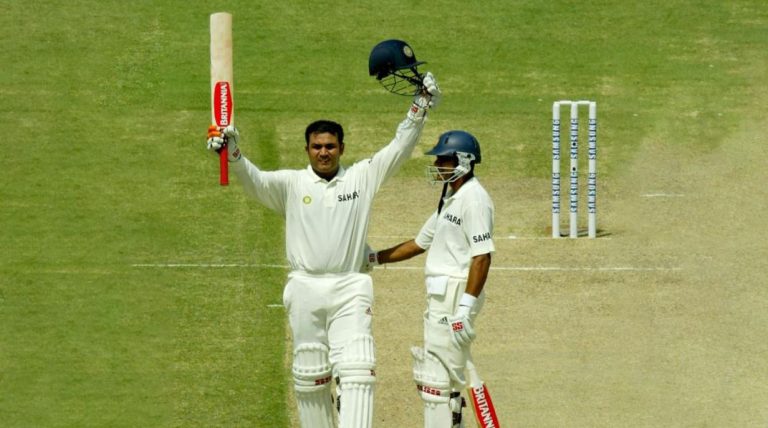
One player features three times in the top five highest individual scores for India in Tests. India have been blessed with magnificent batsmen over the years, with many performances flattening opponents and creating memories that last a lifetime.
In this article, we will look at the top five highest scores by an Indian player in a Test innings.
Top 5 highest individual scores for India in Test cricket
5. VVS Laxman 281 vs Australia, Eden Gardens, 2001
One of the great knocks in Test history. An innings that was a turning point in Indian cricket; one that taught millions that anything was possible.
Australia, aiming for a 17th consecutive Test victory, were well on top in the second Test of the 2001 series in India. After scoring 445, Australia rolled India for 171.
With India 232/4 following on in their second innings, Steve Waugh’s team still had the upper hand.
However, not even the most optimistic of India fan could predict what would happen next. Laxman combined with Rahul Dravid (180) for a 376-run stand, which was the catalyst for one of the all-time wins as Australia were then bowled out for 212 chasing 384.
4. Virender Sehwag 293 vs Sri Lanka, Brabourne, 2009
Virender Sehwag was a sight to behold in full flow. After Sri Lanka made a respectable 393 batting first, Sehwag blew the visitors away with 293 off 254 balls against an attack featuring Muttiah Muralitharan and Rangana Herath.
India amassed 726/9d in response, before Zaheer Khan (5/72) led the way as India sealed a massive win by an innings despite Sri Lanka crossing 300 twice.
3. Karun Nair 303* vs England, Chennai, 2016
In one of the more famous and unexpected performances, Karun Nair became the second Indian to hit a triple hundred when he took down England in 2016.
Alastair Cook’s team were in a decent position having struck 477 in their first innings, but that’s where their joy ended. India piled on partnership after partnership, with Nair (303*) an KL Rahul (199) making the bulk of the huge 759/7d.
Virender Sehwag played another one of his trademark knocks as he took down Pakistan in Multan in 2004. He smashed 39 fours and six sixes in his 375-ball stay, never letting the Pakistani attack settle.
The swushbuckling opener combined with Sachin Tendulkar for a 336 run-stand to flatten the hosts. Controversially, Rahul Dravid declared on 675/5 with Tendulkar six short of a double century.
Pakistan made a solid 407 in response, but were still made to follow on. Despite Mohammad Yousuf’s 112 second time around, India won easily by an innings and 52 runs.
1. Virender Sehwag 319 vs South Africa, Chennai, 2008
Virender Sehwag again. Even though South Africa possessed excellent fast bowlers, they were at the mercy of Sehwag and a very flat Chennai pitch in 2008.
After India conceded 540 in the first innings, Sehwag took it upon himself to take the attack to the Proteas. The opener hammered 319 off 304 balls, including 42 fours and five sixes. Rahul Dravid, struggling for form at the time, would have been feeling as though he was batting on a different planet for his 291-ball 111.
That Test ended up in a dull draw after India made 627. South Africa batted for 109 overs and scoring 331/5 in their second innings.
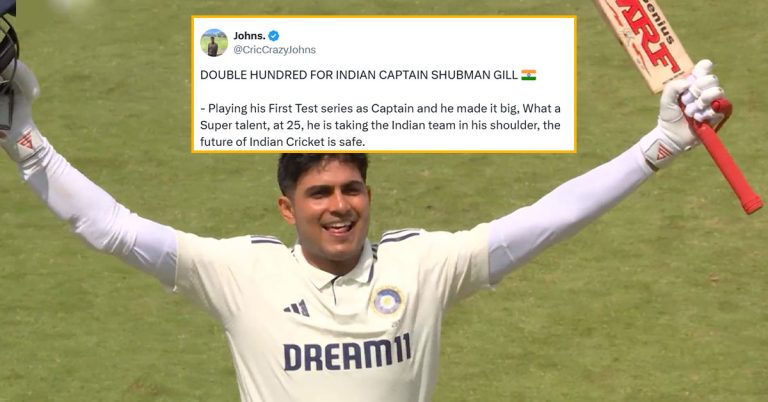
Shubman Gill has become the first Indian captain to score a double hundred in England, achieving the feat on the second day of the Edgbaston Test. It was a beautifully paced innings by Gill, who followed up his hundred in the first Test in grand style.
Gill has been a consistent run-getter in white-ball cricket. He is a magnificent stroke-maker in both ODIs and T20s. But, the manner in which he set up to play a long innings is encouraging, showing he is keen to lead the way with the bat as Indian captain. After giving it away on 147 in the first Test, he ensured he did not repeat such a dismissal when he had the chance again to go really big.
England tested Gill with the delivery coming back in early. After surviving a few close moments, India’s number four never looked back, batting at 93% control even as he crossed 300 balls.
Although the Edgbaston pitch is flat, batting long periods requires discipline and patience, which the captain showed in spades. Gill brought up his hundred on the first evening during a crucial partnership with Ravindra Jadeja, followed by the double hundred alongside Washington Sundar as India neared 500. In the process, he became the fifth player in history to score a double century in both men’s ODIs and Tests.
Reactions: Shubman Gill hits maiden double hundred as India post 500+ at Edgbaston
“Fabulous start to his leadership stint, this would do him a world of good moving forward,” wrote former India offspinner R Ashwin on X (formerly Twitter).
“Take a bow @ShubmanGill! Making it look so easy on the big stage! Well played and well deserved double century an example of being unstoppable when the intent is clear,” wrote Yuvraj Singh.
A double for Gill.👌👌👌
Fabulous start to his leadership stint, this would do him a world of good moving forward.
Take a bow @ShubmanGill! Making it look so easy on the big stage! Well played and well deserved double century 💯 an example of being unstoppable when the intent is clear 🔥 #IndVSEngpic.twitter.com/A1JXYVkzni
– Playing his First Test series as Captain and he made it big, What a Super talent, at 25, he is taking the Indian team in his shoulder, the future of Indian Cricket is safe. pic.twitter.com/bBFYxxHWpK
There have been over 150 double centuries in the last two decades of Test cricket. Shubman Gill's knock has included 5% false shots, ranking 6th among those innings for control. After giving it away last week in Leeds he's been completely ruthless – brilliant knock
A very special achievement from Shubman Gill a double hundred and away in England. Fantastic batting, his first double 100 ever. Great achievement 100 in the first match now 200 in the second .#ENGvsINDpic.twitter.com/SP3IioWZxC
The vultures were circling, the critics had their pens ready and then this guy walked in with fire in his eyes and let his bat do the talking. The cricketing gods chose their vessel, and he delivered.
— Broken Cricket Dreams Cricket Blog (@cricket_broken) July 3, 2025
Gill passed Sunil Gavaskar’s 221 to become the holder of the highest score by an Indian in a Test innings in England. For a while, he threatened to go past Virender Sehwag’s 319. In the end, he was dismissed for a superb 269.
India, especially coach Gautam Gambhir, have come in for criticism after selecting a bowling attack featuring neither of Jasprit Bumrah or Kuldeep Yadav for the Edgbaston Test against England.
Whether Bumrah would feature was a hot topic of debate after Headingley, given the team management confirmed he would play three of the five Tests. However, for India to leave Kuldeep Yadav out in favour of all-rounders has not sat well with India fans. The attack, on paper, lacks firepower to be able to take 20 wickets.
India, despite scoring 835 runs in the first Test, have opted for more batting depth. This mindset cost them dearly in the 2024/25 Border-Gavaskar Trophy, where Washington Sundar was not a factor on a spicy SCG surface.
For someone who speaks so regularly of the importance of taking 20 wickets – even as recently as post-Headingley – Gautam Gambhir doesn’t select teams for it. “Taking 20 wickets is the only way to win Test matches,” he said. “Batting runs alone can’t win Tests. You can score 1,000 runs, but unless you take 20 wickets, you don’t win Test matches.”
Yet, at the toss, Shubman Gill confirmed what many fans suspected. “We were very tempted to play [Kuldeep] but looking at the last match we wanted to add some depth to the batting,” said the Indian captain after England won the toss and chose to bowl.
Ravi Shastri was disappointed with India’s decision to rest Bumrah. “You have the best fast bowler in the world and you make him sit out after seven days’ rest. It’s something very hard to believe and I can’t agree with it,” he said on Sky Sports.
Reactions: Gautam Gambhir and India criticised for defensive team selection, including leaving Kuldeep Yadav out
Tom Moody led the chorus of discontent on social media around India’s team selection.
“India’s selection for this Test is baffling. No Bumrah is one thing, but to only have 5 specialist batsmen is a gamble,” Moody wrote on X (formerly Twitter. “The fixation on all-rounders who are there to offer depth with bat and ball has never worked. Specialists are always going to offer more over a Test.”
“The reason they mentioned to not play Kuldeep is shocking icl unreal coward mentality from this coach [Gambhir] and captain [Gill],” one fan wrote. “My goodness…. Adding more depth to the batting that scored more than 700 runs in their last test match. Why can’t you just sack Gambhir right away BCCI?” wrote another.
Here are some of the reactions to the India XI, including disappointment for Sai Sudharsan who was dropped after one Test.
India’s selection for this test is baffling. No Bumrah is one thing, but to only have 5 specialist batsmen is a gamble. The fixation on all-rounders who are there to offer depth with bat and ball has never worked. Specialists are always going to offer more over a test. #ENGvIND
If Bumrah was fit to play then surely you need to pick the best bowler in the world? At the very least Kuldeep has the be in the XI if you’re worried about taking 20 wickets. Yes, he might be more expensive but he’s the next best attacking option!
Michael Atherton: “why did you not play Bumrah and Kuldeep”. “Well, we think there might be more in the wicket at Lord’s and this pitch might be very flat, so we won’t play our only good pacer on flat ones and we’ll play the batting depth instead of increased bowling teeth” https://t.co/4tvnwc2NW3
Building a Test XI like a T20 team. This is not a format where you stack up all-rounders for safety. You have proper batters and proper bowlers with an all-rounder in the middle. This is a very defensive approach. If your top 6 can’t get you runs, last four won’t do…
With this IND XI, even 500 is not safe. And this is not to do with Bazball. When ENG toured IND in 2016-17, they regularly made big scores in the first innings on flat pitches. But it didn't matter. They just didn't have the bowling to get 20 wickets, while IND did.
Now India has the proper batting till number 8 and Akash Deep can also bat, that means Gambhir still think we loss due to batting not bowling. This is the most defensive mindset I have ever seen in last 10 years of Indian cricket. pic.twitter.com/G92CwjMeo9
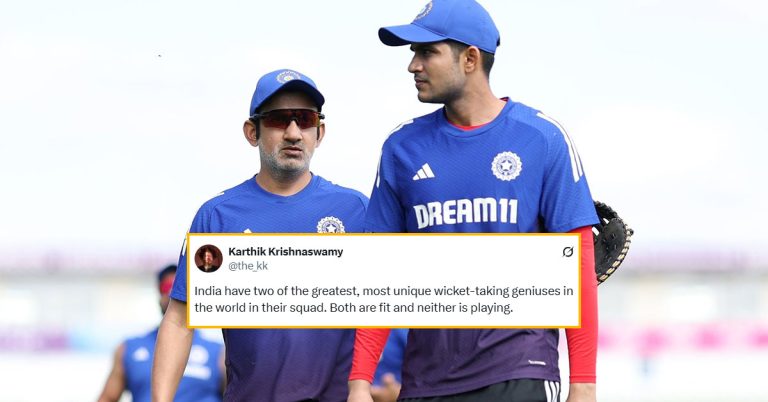
Cricket gyaan: a test team that wants to win MUST always pick its best 4 wicket taking bowlers all the time . Guess what? Our best two wicket takers @Jaspritbumrah93 and @imkuldeep18 are not playing! How will you win a game without taking 20 wickets? Sorry, don’t agree at all…
— Rajdeep Sardesai (@sardesairajdeep) July 2, 2025
the reason they mentioned to not play Kuldeep is shocking icl unreal coward mentality from this coach and captain.
where is the "You can score 1000 runs but if you don't take 20 wickets you can't win a test match" principle here which Gambhir said after last game?
What was the point of giving Sai Su a debut game if you were going to drop him regardless? When Bumrah is not playing, how do you plan to take wickets if you're not even including Kuldeep? Fill your team with 700 5th choice bowlers and you still won't be able to take 20 wickets.
What a horribly defensive team selection. Like I said during the last test, nothing is learnt from the previous BGT. This is a XI which is being put out to avoid a defeat by putting enough runs on the board. And given the lack of control that Prasidh has shown in his career, he's…
— Gurkirat Singh Gill (@gurkiratsgill) July 2, 2025
Still cannot wrap my head around why you need a spinning AR in Sundar over Kuldeep. The batting lineup scored 835 runs but we couldn't pick 20 wickets in time.
The way Atherton asked Gill about Kuldeep had a sense of 'how is he not playing?' to it. You don't often see these tough questions asked. Props to him #ENGvINDhttps://t.co/LClIpO9aLn
How long do you want your batting??..8?9?10? What about picking 20 wickets? No kuldeep.. No lessons learnt after BGT hammering.. Done with the pathetic tactics #ENGvIND
Gautam Gambhir’s defensive, passive regime continues with full speed. Picking T20-style deep batting line-ups instead of valuing 20 wickets. It’s no surprise since any ‘coaching’ experience of his is reduced to two mentorship roles.
No Kuldeep again even with no Bumrah. Sai out & Karun at 3?
Happy to be wrong, but messed up playing XI again.
Prasidh, Siraj, Akash, Sundar & Jadeja very poor bowling group for conditions. Kuldeep had to play all Tests (even with Bumrah). No reason to omit him.#ENGvsIND
Nah Shubman, you can’t have it both ways — first say that taking 20 wickets is the top priority, and then turn around and say you want batting depth when asked about Kuldeep.
Assistant coach Ryan ten Doeschate said it is likely India will play two spinners for the second Test against England at Edgbaston. Speaking at the pre-match press conference, ten Doeschate stated it will be a decision between three spinners Ravindra Jadeja, Kuldeep Yadav and Washington Sundar.
“There is a very strong chance of playing two spinners. It’s just which two we play. All three spinners are bowling very nicely. Washi’s batting very nicely. So it’s just which combination do we go with? All-rounder spinner or the out-and-out spinner? And obviously, you have to play the bowling all-rounder again. So there are so many different variables,” he said.
Reports emerged on match-eve that India will likely select Washington Sundar. According to Express Sports, Kuldeep Yadav will miss out. It is a report that worries many Indian fans, especially as Jasprit Bumrah is a chance to be rested.
🚨 TEAM INDIA UPDATES. 🚨
– Nitish Kumar Reddy and Washington Sundar likely to play at Edgbaston.
– Jasprit Bumrah and Kuldeep unlikely to play the 2nd Test. (Express Sports). pic.twitter.com/sD4RHRakTC
Washington Sundar reportedly selected over Kuldeep Yadav: Is it the right call?
Washington Sundar over Kuldeep Yadav is a defensive move from a bowling point of view. Sundar can keep things tight, but whether he possesses the wicket-taking threat Kuldeep has remains to be seen. If Jasprit Bumrah is not selected, Kuldeep’s absence would further reduce the strike value in India’s attack.
The motive behind the decision to play Washington, should it eventuate, is batting depth. India collapsed badly in both innings at Headingley. However, they went with this approach in the 2024/25 Border-Gavaskar Trophy, and while Washington made an excellent contribution with the bat at the MCG, the visitors lacked strike apart from Bumrah.
India fans on social media share this sentiment. A lot of attention has been directed towards Gautam Gambhir. The head coach is on record multiple times talking about the importance of bowling strength, even as recently as India’s loss at Headingley.
“Taking 20 wickets is the only way to win Test matches,” Gambhir said. “Batting runs alone can’t win Tests. You can score 1,000 runs, but unless you take 20 wickets, you don’t win Test matches.”
Yet, the make up of the team suggests otherwise. Here are some of the reactions and viewpoints from India fans ahead of the Edgbaston Test.
Washi is fabulous batsman and can bowl sides out in India, maybe but he’s way behind Kuldeep the bowler, overseas. If Washi has to play, get him in for Jaddu and not Kuldeep. Kuldeep must play #kuldeepyadav#Kuldeepmustplay#INDvENG
Deserve to lose, if they do NOT play Kuldeep. Even a novice red ball player in Ranji has more team selection knowledge than Gg. Miserable feeling as a fan.
India will play two spinners at Edgbaston. I think they should go with Kuldeep Yadav, Washington Sundar and drop Jadeja. He has been below par in overseas Tests. Washi bats really well and Kuldeep can be lethal. #ENGvIND
Would be so stupid. With reddy sundar and jadeja in the XI you are basically playing with 3 frontline bowlers and 3 bowlers that MAY have an impact. Sounds a lot like Sydney fifth test
Our coach is one weird guy!! Shows all the aggression, alpha male, patriotism from desh,140 cr janta, bhagat singh, chandrashekhar azad in PC’s and comedy shows!!!
And goes all defensive playing an attack which doesn’t have a place for your only attacking wicket taking option! https://t.co/p6qocqYAdi
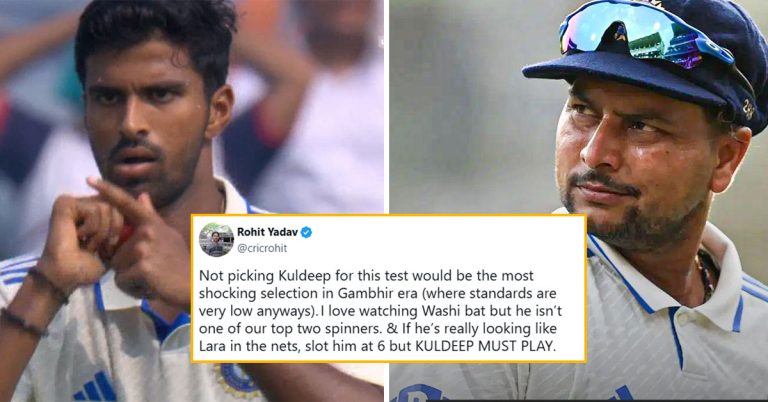
Not picking Kuldeep for this test would be the most shocking selection in Gambhir era (where standards are very low anyways). I love watching Washi bat but he isn’t one of our top two spinners. & If he’s really looking like Lara in the nets, slot him at 6 but KULDEEP MUST PLAY. https://t.co/turw6iBIpp
India had Eng on the ropes multiple times in the first test. If they'd taken their catches the result might have been different. The key is not to panic and make too many changes. But Kuldeep must play. #ENGvIND
India right to play two spinners in Edgbaston. But they should not even think about not including Kuldeep Yadav in the XI when Bumrah isn’t around. Play Kuldeep and Washington.
Australia’s top order struggles, coupled with the upcoming Ashes, ensures plenty could be riding on the first few rounds of the 2025/26 Sheffield Shield. The season kicks off on October 10, with four rounds to be played before the first Ashes Test begins on November 21 in Perth.
Players all over the country will be looking to put their hand up for Ashes selection. This is especially the case for top order players as there is uncertainty around Usman Khawaja, Sam Konstas, Marnus Labuschagne and Cameron Green.
5 players to watch out for in the early rounds of the 2025/26 Sheffield Shield season
Matt Renshaw
Australia have been searching for an opener to partner Usman Khawaja for some time. The fact Matt Renshaw hasn’t done enough in recent seasons is a disappointment given the potential he showed earlier in his career.
Renshaw, who has played 14 Tests, has a modest 1,180 runs at 31.05 in the past three seasons.
Now is the time to deliver for the talented left-hander. He is currently 29 years of age and should be approaching the peak of his career. If he makes a strong start to the season for Queensland, selectors may be swayed to pick him if a position is available.
Jake Weatherald
30-year-old Jake Weatherald had a season to remember at the top of the order for Tasmania in 2024/25. The left-hander hit the most runs of any player (906) at an average of 50.33, including three fifties and three centuries.
How hard the selectors think of picking Weatherald depends on his early season form plus potentially who his opening partner would be for Australia. If Konstas continues to struggle in the West Indies and Usman Khawaja finds some form, Weatherald could be a good foil for the latter as he had a strike rate of 68.33 last season.
Nathan McSweeney
Nathan McSweeney had a taste of Test cricket in arguably the most challenging of circumstances. Elevated to opener, McSweeney felt the full force of Jasprit Bumrah in last year’s Border-Gavaskar Trophy. He was dropped – harshly – after three Tests.
While McSweeney didn’t make the big runs, he can occupy the crease. He is not a flashy player by any means, but can wear bowlers down with his solid technique and temperament.
Such an approach could work well in the Ashes. Keeping the England quicks out in the field for long periods can result in Australia coming out on top.
However, McSweeney had a quiet second-half of the 2024/25 Sheffield Shield season with the bat as he led South Australia to their first title in 29 years. If he is to convince the selectors to move away from Cameron Green and keep Marnus Labuschagne at bay, he will need to produce a superb start to the 2025/26 season.
Could Kurtis Patterson finally play a Test after averaging 144 in his first two? Patterson was outstanding last season, hitting 743 runs at 57.15 in eight Shield games for New South Wales. He also scored a century for Australia A against England Lions in January.
Patterson’s numbers represent a remarkable turnaround. He began last summer in grade cricket after a lean run of form that cost him the New South Wales captaincy.
If he starts the 2025/26 Sheffield Shield season from where he left off, who knows what could come of it.
Jason Sangha
Another contender for the number three position is Jason Sangha. The 25-year-old enjoyed a magnificent finish to the 2024/25 season, playing a central role in South Australia winning the title.
In just six games, Sangha struck 704 runs at an average of 78.22. This included three fifties and three hundreds in 12 innings.
Should he start the 2025/26 Sheffield Shield season in similar fashion, he will be firmly on the radar of the selectors.
Outside chance: Marcus Harris or Cameron Bancroft
This seems unlikely. However, coach Andrew McDonald confirmed Harris and Bancroft are regularly “in the conversation” in terms of featuring in the Test side. If either plunders runs in the early rounds of the Sheffield Shield, anything is possible.
Bancroft’s history may work against him. After all, he hit 1,723 runs combined in the 2022/23 and 2023/24 seasons at an average of 53.84, and still wasn’t selected. Also, Bancroft confirmed he has never spoken to Andrew McDonald in an interview with BBC’s Stumped podcast earlier this year. But, a big start to the new season can give the selectors something to think about.
The other contender is Marcus Harris. The left-hander enjoyed a great stint in the County Championship for Lancashire back in April and May. He struck 77, 34*, 147, 24, 121, and 43 in his first three matches. Like Bancroft, he will need a huge start to the Shield, as well as at least one of the two incumbents – Khawaja or Konstas – to be left out.
Codi Yusuf has enjoyed a positive start to his Test career. Batting at ten in the first Test against Zimbabwe in Bulawayo, Yusuf played nicely for a 49-ball 27. He then impressed with the ball, taking 3/42 in 14 overs as South Africa bowled the hosts out for 251.
Yusuf, who turned 27 in April 2025, played 33 First Class matches in South Africa and England before his Test debut. He picked up 105 wickets in total at 27.81, including 17 wickets at just 20.94 for Durham in the 2025 County Championship season.
Yusuf has worked hard to get to this point. He debuted for Mpumalanga in the Africa T20 Cup in 2018, marking his professional debut. In 2019, Yusuf was playing all formats for Gauteng.
In addition to his red-ball exploits, Yusuf has also performed admirably in white-ball cricket. He took 16 wickets in nine matches in the 2019-20 CSA One-Day Challenge and has also featured for Paarl Royals in the SA20.
“I haven’t had a taste of international cricket yet, but it would be unbelievable to go and make a mark there and show people that I can perform at the highest level,” Yusuf told Independent Media before the Zimbabwe series.
“I personally believe in myself and feel like I can do that, and I know a lot of other people do as well. I know coach Shukri Conrad does as well, and that’s why he would have chosen me to be part of his squad.
“I don’t want to put too much pressure on the game and on the moment, but it would definitely be up there as probably the most important game in my career so far.”
Dale Steyn provides insight into Codi Yusuf on Test debut
Yusuf’s whippy action makes him a tricky customer. He can hurry batters, which he has shown on numerous occasions in recent months.
“For those in world cricket that don’t know much about Codi Yusuf. Quick, skiddy, away shape, consistent in length and bowls a nippy bouncer that gets on you faster than you think,” wrote Dale Steyn on X (formerly Twitter).
“Watched him bowl against an England Lions team this past December and honestly tore through them. Deserved national call up!”
For those in world cricket that don’t know much about Codi Yusuf.
Quick, skiddy, away shape, consistent in length and bowls a nippy bouncer that gets on you faster than you think.
Watched him bowl against an England lions team this past December and honestly tore through them.…
Codi Yusuf took 3/59 and 2/22 in that match Steyn is referring to. Yusuf also displayed good pace and bounce in his debut innings as a Test bowler, hurrying the Zimbabwean batsmen on a Bulawayo surface aiding the new ball bowlers.
Codi Yusuf a fine seam-bowling All-rounder for South Africa. He is a brilliant bowler and handy batsman. pic.twitter.com/5X4wvG6jdT
On Test debut, Yusuf watched on as fellow debutant – 19-year-old Lhuan dre-Pretorius – became the youngest player in history to score 150 in a Test innings. South Africa finished with 418/9 declared, before taking a 167-run lead into their second innings.
Steve Smith is on track to play the 2nd Test against West Indies in Grenada. The great batsman rejoined the Australia squad over the weekend in a bid to be fit for the match which begins on July 3.
Smith missed the Barbados Test due to a dislocated finger which he suffered on day three of the World Test Championship (WTC) Final against South Africa. He has been undergoing rehabilitation for the nasty injury, and Pat Cummins confirmed Smith has been taking steps towards a return.
Wouldn't be surprised if Steve Smith misses at least the start of the West Indies tour. A very nasty injury.#WTCFinalpic.twitter.com/l58xL3yRkN
Steve Smith a strong chance to play 2nd Test, but must tick a few boxes first
After Australia sealed a 159-run win on day three in Barbados, Cummins said Smith has “had a few hits” as he aims to return to the XI. However, Smith still has a few boxes to tick as he has not batted against a cricket ball yet since the injury.
“He’s had a few hits over in New York, which I think was with a tennis ball and an incredi-ball,” Cummins said, as quoted by cricket.com.au.
“I think his wound is looking good, so the next stage is to come over here and hit some balls in the nets. So we’ll know more over the next few days.”
Andrew McDonald is confident Smith will be available. The Australia coach said Smith will have the main session as well as training on match-eve to prove his fitness.
“It’s really about functionality around the finger rather than anything else,” McDonald said, as quoted by ESPNcricinfo. “”There’ll be no risk to long-term health of that finger. He’ll return and I think it’s likely he’ll play. Leading into the next game, he’ll have the main session two days out.
“He’ll [also] train the day before [the match]. If that all goes well, then I’d expect Steve to resume at No. 4.”
If Smith is fit to play, Australia will certainly welcome him with open arms. The top order struggled significantly in the first Test. Usman Khawaja’s issues around offstump remain. Sam Konstas endured a tough return to the Test side. Cameron Green at number three doesn’t look the right fit, nor does Josh Inglis at four.
Pat Cummins backs younger players to come good
However, Cummins has called for calm given batting conditions were difficult in Barbados.
“You saw today how tricky a wicket that was. There weren’t too many 50-run partnerships throughout the whole game,” the captain said.
“That’s the challenge for our young batting group. If you presented that same wicket next week, would you do anything differently? Would you not? That will be the conversations over the next few days.
“But we back them in and their prep leading in was excellent and the way they’re talking about playing is really good, so we’ve got full confidence.”
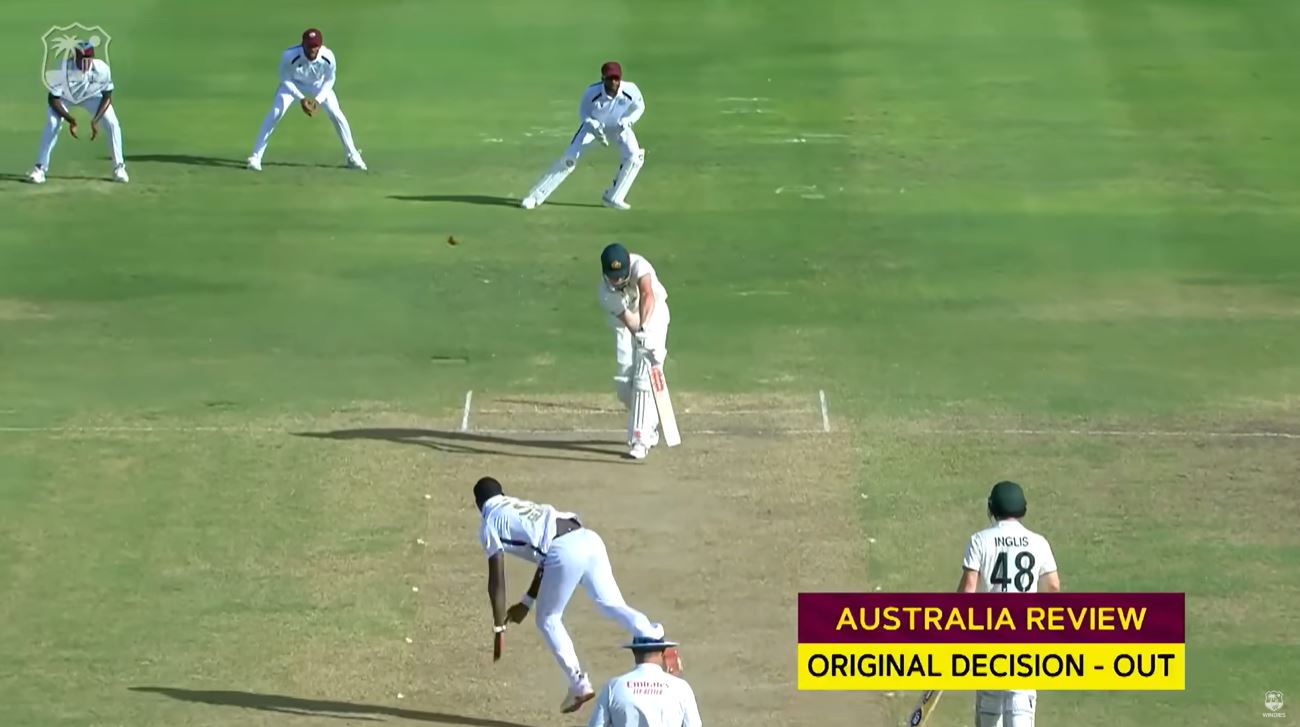
After a tough first two days where Australia were saved by poor Windies fielding and questionable third umpire decisions, Cummins’ team took the game by the scruff of the neck. After beginning day three on 92/4 leading by 82, Travis Head, Beau Webster and Alex Carey all struck crucial half-centuries to propel the Aussies to a lead of 300.
Australia’s experienced attack was then far too strong for the hosts on a difficult pitch. All ten wickets fell in the final session as the Windies were bundled out for just 141.
Australia will travel to Grenada on Monday to prepare for their first-ever Test in the island nation. The National Stadium has hosted just four Tests in its history, along with 24 ODIs and eight T20Is.
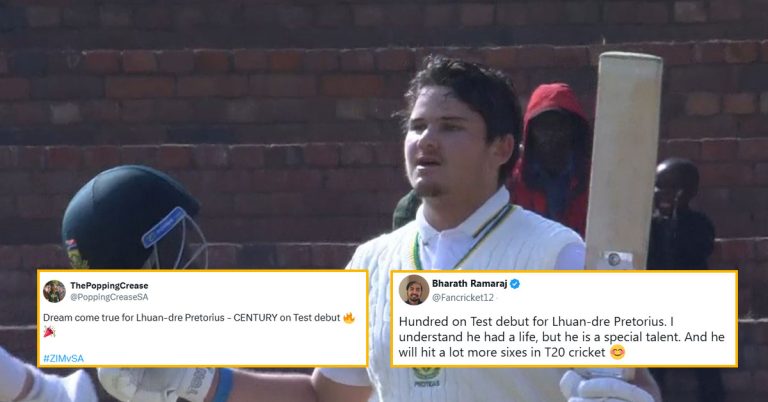
Lhuan-dre Pretorius. Remember the name. The 19-year-old has made a superb start to Test cricket, becoming the first South African since Stephen Cook against England in 2016 to hit a century on debut. He is also the youngest Protea to score a Test century, full stop.
Pretorius walked in with South Africa in a spot of bother against Zimbabwe on a Bulawayo pitch offering assistance. The Proteas were reduced to 23/3 and then 55/4, before a terrific counterattack between he and fellow debutant Dewald Brevis allowed South Africa to get a foothold in the contest. Pretorius himself wasted no time getting going, smashed his fourth delivery for six.
The 19-year-old enjoyed a big stroke of luck when he was on 30. He was given not out after edging behind against Tanaka Chivanga. With no DRS available in this series, Zimbabwe could not review Richard Illingworth’s decision. However, the attacking left-hander played superbly nonetheless.
Pretrorius brought up his hundred off just 112 balls at a control percentage close to 90. He was particularly strong against the spinners, which allowed him to get into his groove at Queens Sports Club in Bulawayo. As he brought up his century, the Proteas went past 200 and can focus on shifting even more pressure back on Zimbabwe.
In the process, Lhuan-dre Pretorius became the sixth South African to make a century on Test debut, joining Andrew Hudson (vs WI, 1992), Jacques Rudolph (vs BAN, 2003), Alviro Petersen (vs IND, 2010), Stiaan van Zyl (vs WI, 2014) and Stephen Cook (vs ENG, 2016) in an exclusive list.
Reactions: Lhuan-dre Pretorius becomes sixth South African to score century on Test debut
Lhuan-dre Pretorius has already made a name for himself in T20 cricket, with 1,021 runs in 38 matches at a strike rate of 146.48. However, he has also been fantastic in First Class cricket, with 485 runs at 60.62 heading into this Test. This included three centuries.
“Hundred on Test debut for Lhuan-dre Pretorius. I understand he had a life, but he is a special talent. And he will hit a lot more sixes in T20 cricket,” wrote Bharath Ramaraj, Principal Correspondent at RevSportz.
“100 on First Class Debut, 100 in the First Class Final, 100 on Test debut. So lovely to see he [Lhuan-dre Pretorius] is hungry to make an impact in big moments!” wrote South Africa wristspinner Tabraiz Shamsi on X, formerly Twitter.
Here are some of the reactions.
Hundred on Test debut for Lhuan-dre Pretorius. I understand he had a life, but he is a special talent. And he will hit a lot more sixes in T20 cricket 😊
Sean Williams made his International debut before Lhuan-dre Pretorius was even born. And though being in red-hot Test form himself lately, watching this kid smash a debut ton like that must’ve made him feel ancient for a second…
Only the 7th and the youngest batter (19) to score a century on debut for the Proteas 🙌 !!! INCREDIBLE INNINGS!!The FUTURE IS BRIGHT AND THE FUTURE IS NOW!!!! WELL PLAYER LHU!!! 🔥🔥🔥🙌🙌
Brilliant to see Lhuan-dre Pretorius making a splash in Test cricket. Such a precocious talent in all formats. Absolutely loved watching him bat with Joe Root at the SA20.
Pretorius survived another close caught behind shout off Brian Bennett on the stroke of tea. He went to the break not out on 128, making up more than half of South Africa’s 248/6. He was eventually dismissed for a magnificent 153 off 160 balls.
As Cameron Green struck multiple hundreds for Gloucestershire in the lead up to the World Test Championship (WTC) Final, Australian selectors were adamant he needed to be back in the side. Green, playing professional cricket for the first time since back surgery, was looking in good touch.
However, Australia only had openings at the top of the order as Steve Smith, Travis Head and Beau Webster were certain starters. Webster enjoyed a superb start to his Test career and provides the all-important fifth bowling option given Green is only batting.
George Bailey and Andrew McDonald have spoken in the past of their desire to have their perceived best six batters in the country playing for the Test side, no matter where they bat in the order. Green’s runs in the middle order in County cricket can easily be transferred to the top of the order in Test cricket, right?
Not quite.
A run of low scores is not uncommon for a number three, especially against quality pace bowlers on helpful pitches. Green’s returns of 4, 0, 3, and 15 against South Africa and West Indies respectively are obviously underwhelming. However, it’s the manner of Green’s dismissals that are cause for concern.
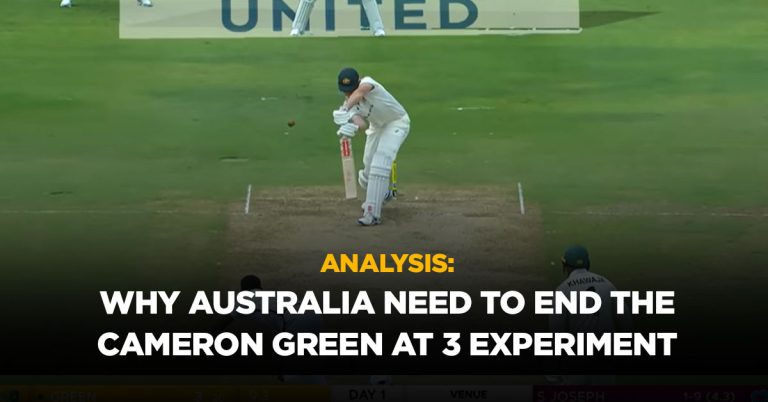
Analysis: A look at why Cameron Green is struggling at number three
Cameron Green’s struggles are underpinned by four key technical deficiencies that make it nigh on impossible to succeed in such a crucial position:
Pushes with very hard hands.
Heavy on his feet.
Backfoot slides across to the legside at point of impact when looking to punch through the offside.
Bat comes down at an angle across his front pad against deliveries pitched around the stumps.
Issue #1: Pushing out with hard hands
Australia, in a time of batting uncertainty, need confidence from their number three. Green has often been a nervous starter in Test cricket, and the move to three has exposed this significantly.
With nerves comes Green’s desire to get bat on ball. He pushes out with hard hands and is loose on offstump. Sure, there is a shift towards more attacking strokeplay in Test cricket, but allowing the ball to come to you and playing late remains vital, especially on surfaces offering movement.
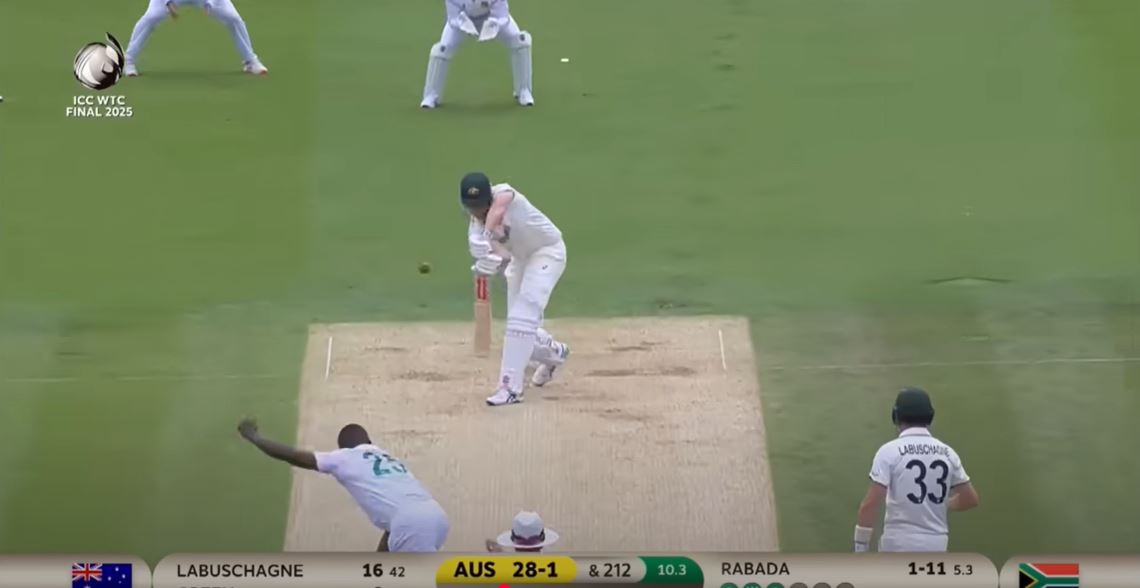
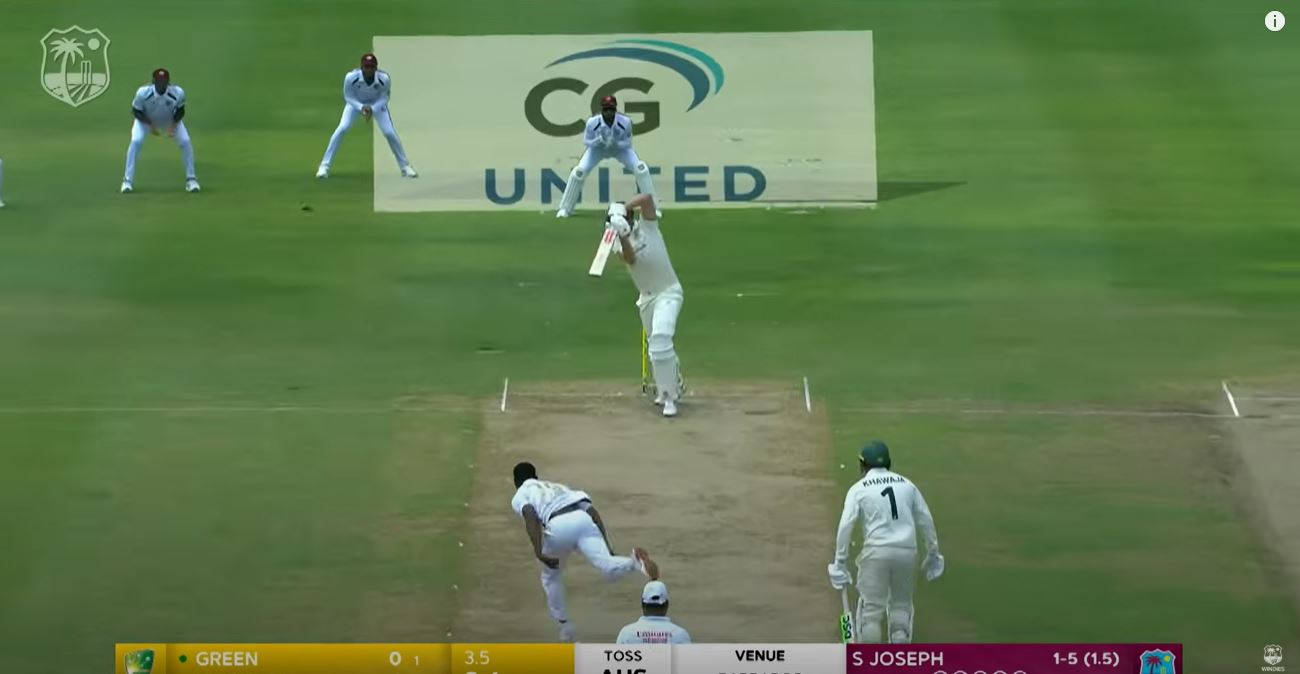
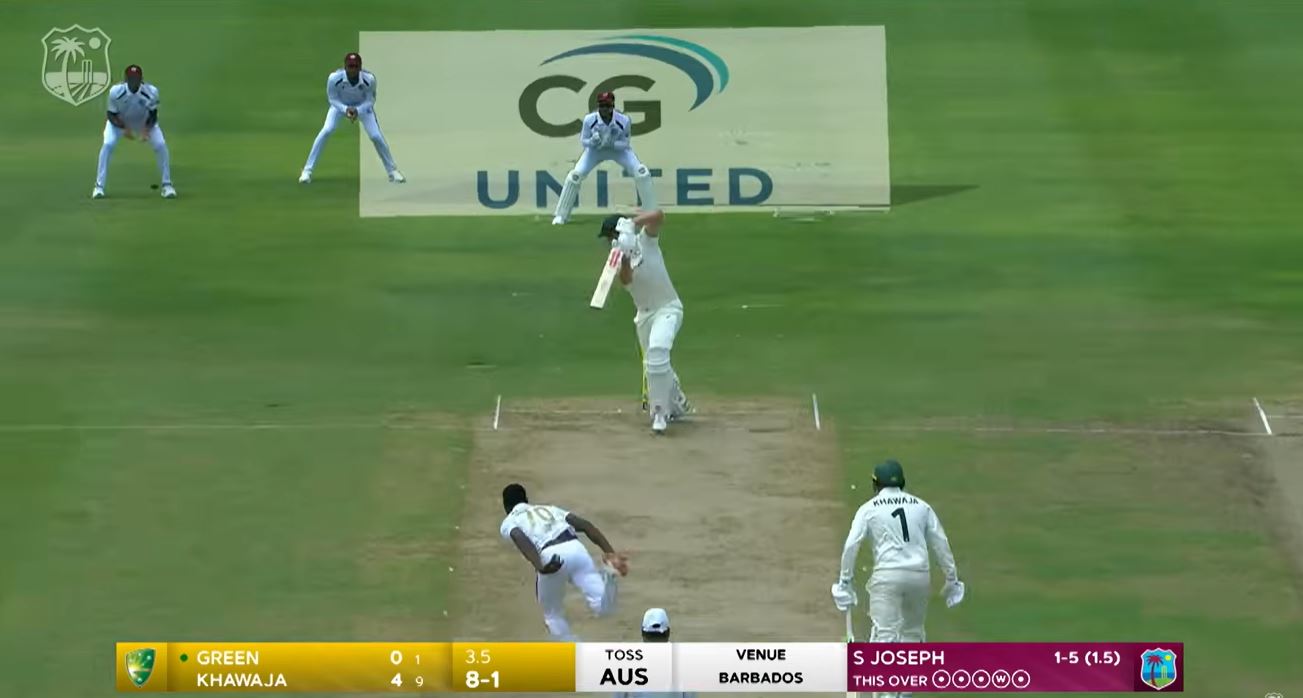
Below are screenshots of two of his four dismissals since moving to number three. The first – in the second innings of the WTC Final – sees Green getting down the pitch to counter the threat of Kagiso Rabada. However, Green ends up pushing hard at a delivery just outside the offstump, and seam movement has him in trouble. He nicks to slip.
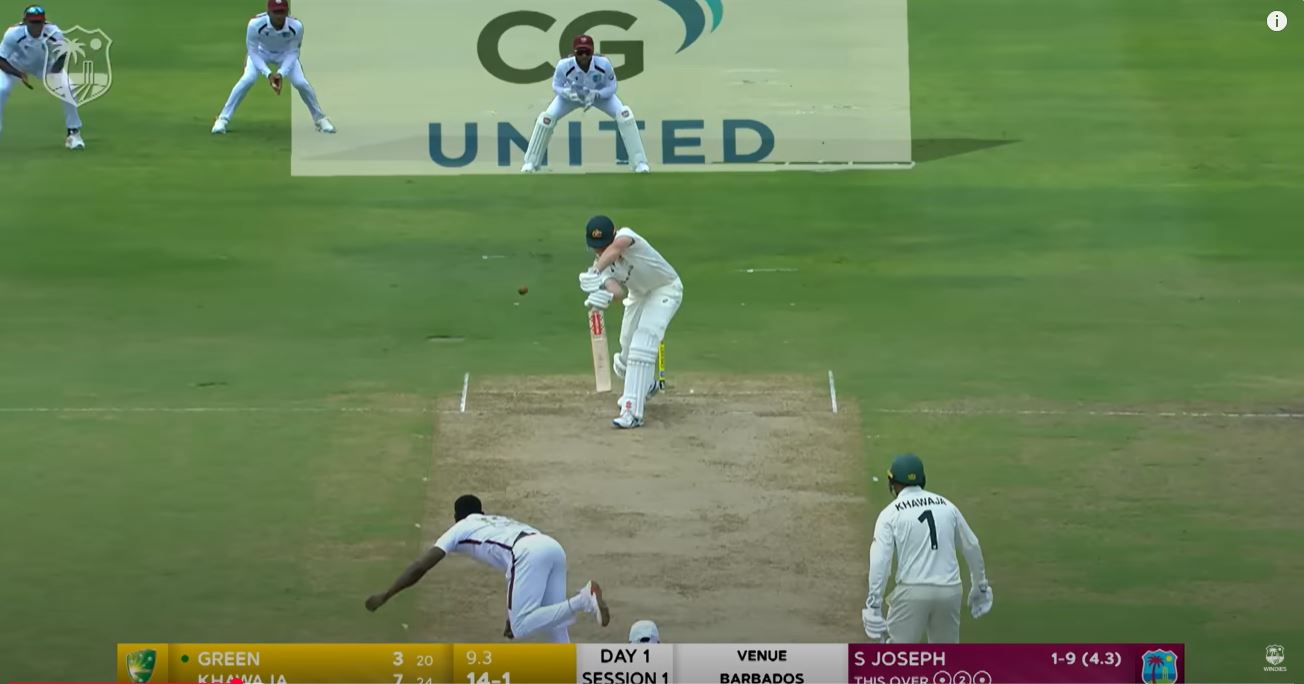
The second – in the first innings of the opening Test against West Indies – is arguably worse. His bat is way out in front to a delivery in the channel. He nicks to slip again.
“If you’re going to bat at number three for Australia, or any Test side, you need to be a little bit tighter in your defence than that,” said Greg Blewett on commentary on day one.
“That to me is just nerves, pure nerves. He wants bat on ball. If you’re getting wide of off stump … you’ve got to be a little bit more focused and play it a little bit better. He’s a better player than this. He’s just showing his nerves at the moment.”
Cameron Green dismissal in second innings of WTC Final: Pushing out with hard hands.
Cameron Green’s dismissal in the first innings of the first Test vs West Indies: Pushing out with very hard hands.
Issue #2: Not light enough on his feet
Green looked composed and assured during his magnificent 174* against New Zealand batting at number four last year. His footwork looked better than ever in Test cricket, providing hope that he had moved past the struggles from earlier in his career.
However, those issues have come roaring back in the past few weeks. Green is quite heavy on his feet and plants his front foot, which doesn’t allow him to adjust quickly enough to what the ball is doing. Couple this with the hard hands mentioned above, and it is a recipe for disaster.
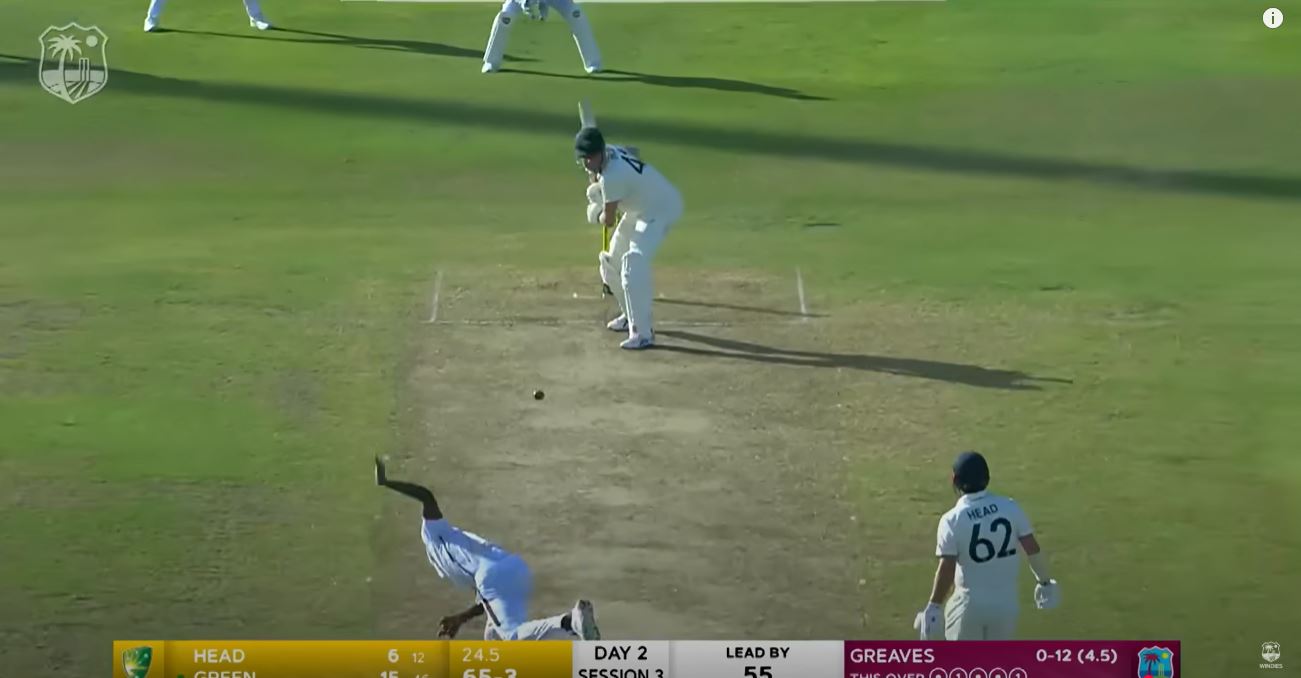
The first screenshot below is from his dismissal in the second innings of the first Test against West Indies. Green’s feet are firmly planted, which doesn’t allow him to be nimble enough to adjust.
This ties in closely with the second screenshot below, from the first innings against West Indies. Green’s front foot is still on the move as he hits the ball, highlighting the ongoing issue with his slow footwork.
Cameron Green struggling at number three: Heavy on his feet.
Cameron Green’s dismissal in the first innings of the first Test vs West Indies: Front foot still on the move.
Issue #3: Back foot slides to the legside when looking to punch through the offside
Green becomes an even likelier candidate to edge the ball when trying to punch through the offside, given the position of his back foot. Instead of the back foot coming into line, it shifts towards the legside, throwing off Green’s positioning and balance.
The two screenshots below are from the second delivery he faced in the West Indies series. His back foot slides further out to the legside at point of contact, making him very susceptible to edging the ball. In this instance, Brandon King dropped the catch at gully.
Cameron Green struggling at number three: Backfoot begins sliding out to the legside
Cameron Green struggling at number three: Backfoot slides out further to the legside
This issue was even more pronounced in his second innings dismissal. Looking to punch through the offside on the back foot, Green got himself in an awkward position, with his back foot again sliding out to the legside, ensuring his weight wasn’t fully into the shot.
Cameron Green’s dismissal in the second innings of the first Test against West Indies: Backfoot problems.
Cameron Green’s dismissal in the second innings of the first Test against West Indies: Backfoot ends up well outside leg.
Issue #4: Green’s bat comes down at an angle to deliveries pitched on the stumps
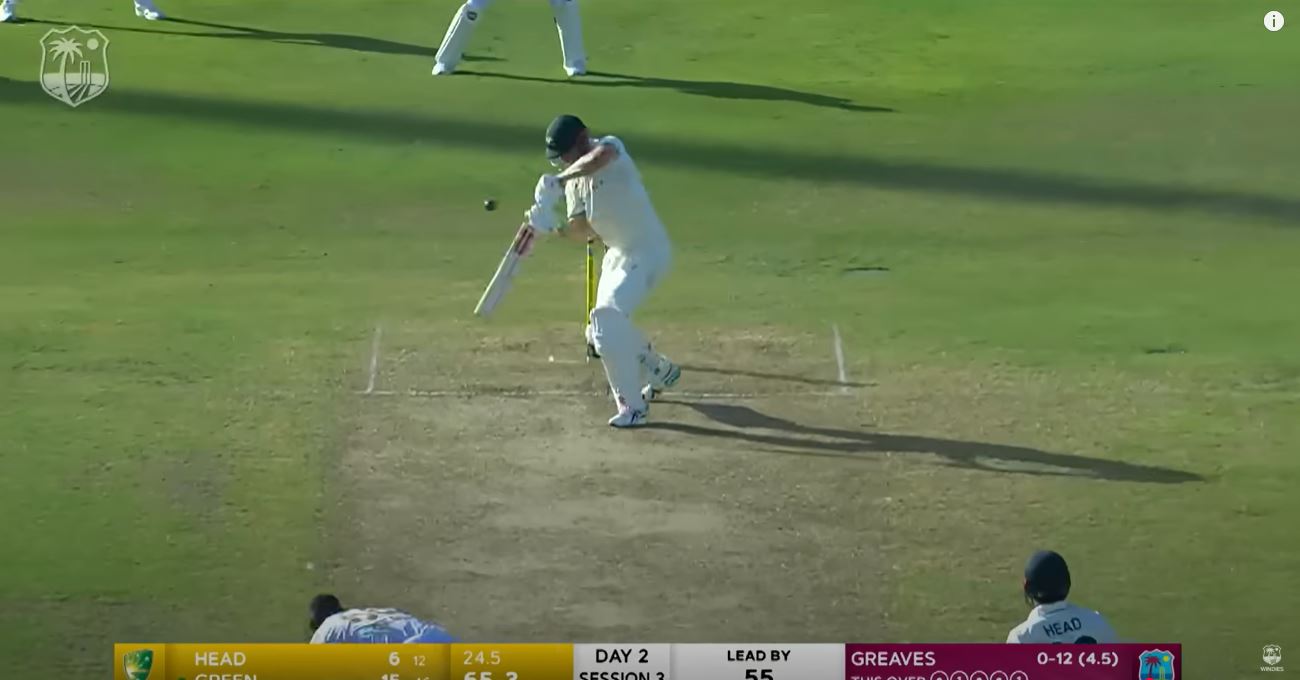
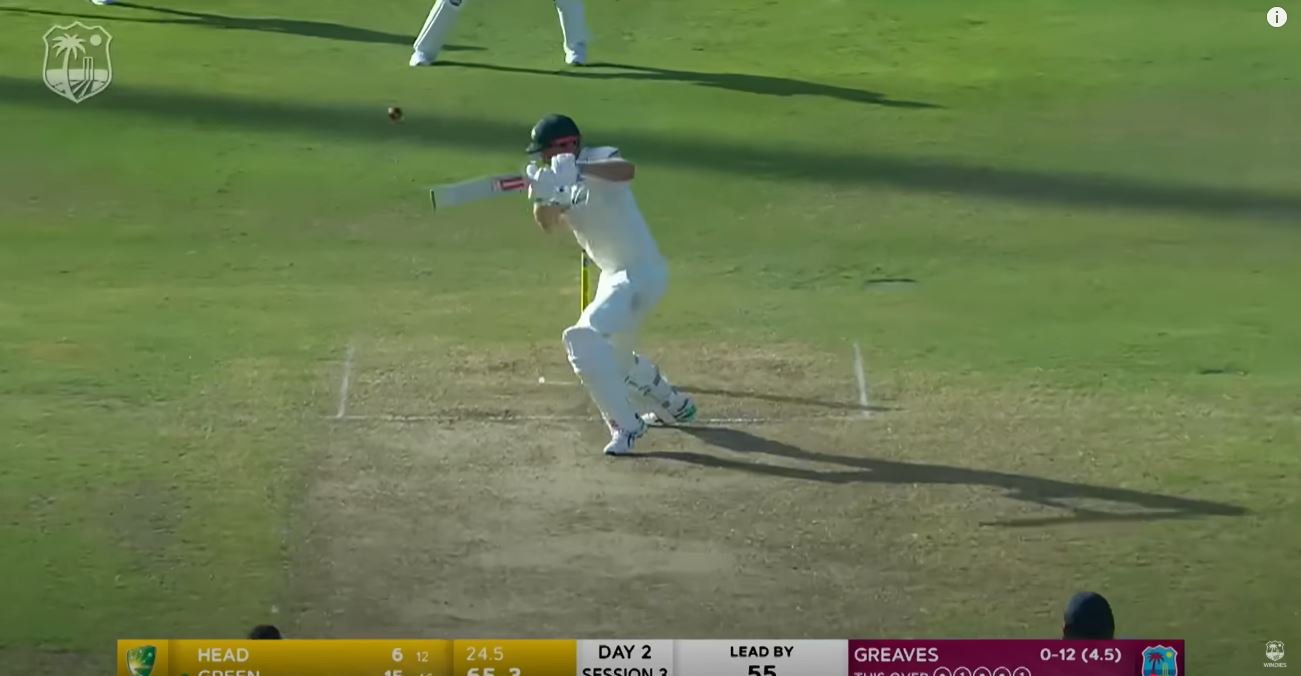
If the channel wasn’t dangerous enough, Green can also nick off to deliveries pitched on or close to the stumps. Against balls pitched further up, Green’s bat often comes down at an angle and across his front pad. He is also an LBW candidate as a result. In fact, he survived a close shout on day two of the first Test against West Indies.
The first three screenshots below are from day one of the WTC Final. Rabada bowls a beautiful delivery which nips away, but Green’s hard hands and angled bat means a dropped catch is his only hope of survival. Aiden Markram took a superb catch behind a diving Wiaan Mulder.
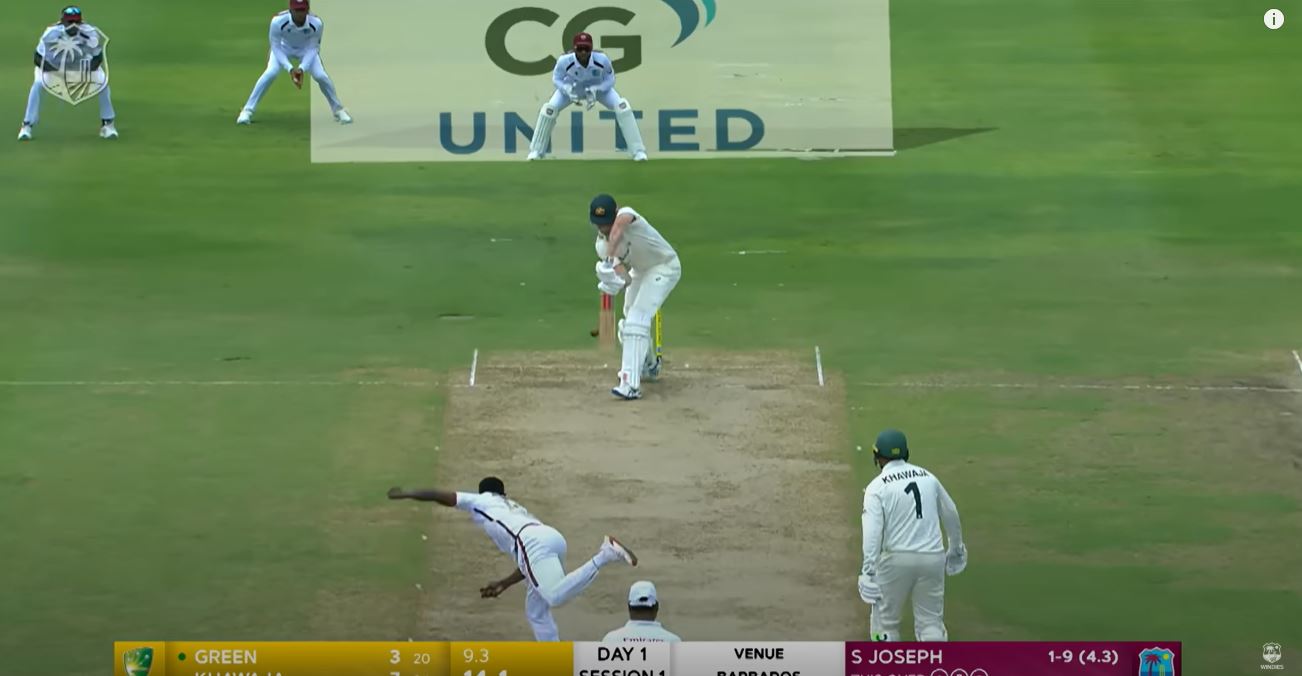
The fourth screenshot is of the LBW appeal in Barbados.
Cameron Green dismissal in WTC Final: Bat begins to come down straight, but head position is falling to the offside.
Cameron Green dismissal in WTC Final: Bat comes right across his body, exposing both the edge and front pad.
Cameron Green dismissal in WTC Final: He ends up nicking off to second slip.
Cameron Green survives LBW shout in West Indies Test, with the bat again coming across his body.
These glaring issues require hours of practice to rectify. I still believe Green has what it takes to be a successful Test cricketer, but number four is the absolute highest he should bat. With Steve Smith still going strong, Green will have to bide his time for that position.
Also, Beau Webster has made a strong start to his Test career in Green’s usual number six spot. So, it’s best the selectors take Green out of the spotlight and focus on fixing the technical issues that are plaguing him currently.
“Leading into the Australian series [Ashes] at home, how is the top three going to shape up?” Greg Blewett asked at stumps on day two of the first Test in Barbados.
“Who’s going to bat at number three for Australia? To me, Cameron Green isn’t the answer. There’s some things for the Australian selectors to work out.”
Marnus Labuschagne was dropped for the first Test against West Indies, but there is every chance he gets recalled quickly. Also, Australia have options domestically including Nathan McSweeney and Kurtis Patterson.
Time will tell who bats at three in the Ashes. On this evidence, however, it cannot be Cameron Green.
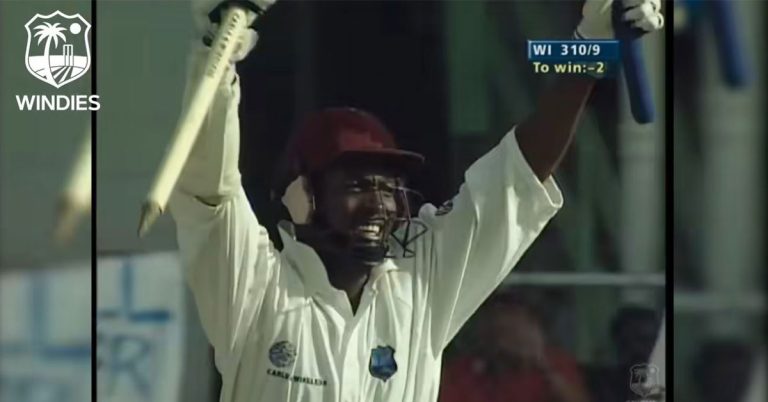
There has only been one successful run chase in Test cricket at Kensington Oval in Barbados. We’d have to go back to 1999 for one of the greatest innings in Test history – Brian Lara’s 153 not out which led the West Indies to a successful chase of 308 with just one wicket in hand against Australia.
West Indies collapsed to 105/5 and 248/8 in that game, before Lara and Curtly Ambrose (12 off 39 balls) took the hosts to 302/9. Courtney Walsh, one of the more famous number elevens in history, successfully negotiated five deliveries before Lara hit the winning runs with a trademark cover drive to spark scenes of joy.
One successful run chase in Tests at Kensington oval Barbados
While the West Indies’ chase in 1999 remains the only successful run chase in Tests on this ground, there have been two bigger scores in the fourth innings.
West Indies struck 387 batting fourth against Australia in 2008. However, the Australians won by 87 runs despite the Windies sitting very pretty at 307/3 chasing 475 at one point. Simon Katich was man of the match with scores of 36 and 157.
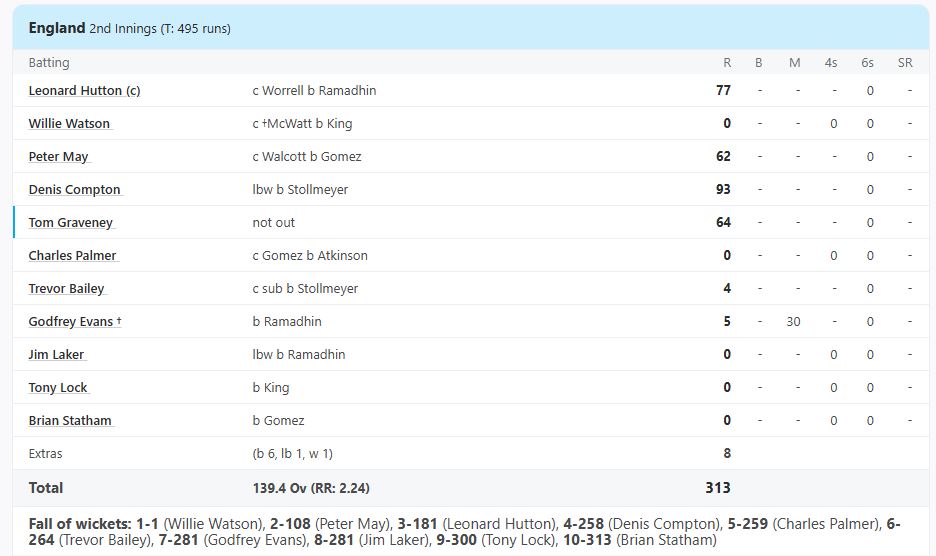
The other bigger total batting last was 313 by England way back in 1954. Chasing 495 for victory, Len Hutton (77), Peter May (62), Denis Compton (93) and Tom Graveney (64*) all crossed 50. However, no other player made more than five in one of the more unique scorecards in Test cricket.
Four half-centuries and five ducks in England’s attempted run chase against West Indies at Barbados in 1954.
West Indies have a great chance to become the second team to chase a target at Barbados in the 2025 Test against Australia. The visitors ended day two on 92/4, leading by 82 on a tricky surface.