Home Blog Page 98

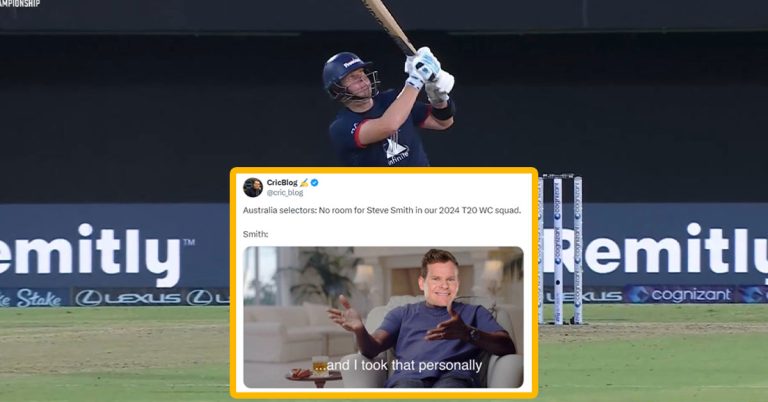
Steve Smith sends reminder to Australian selectors in MLC after T20 World Cup snub

Three months on after he was snubbed from Australia’s T20 World Cup squad, Steve Smith sent a timely reminder to selectors of his capabilities after starring in the 2024 Major League Cricket (MLC) tournament. Smith led the Washington Freedom to their first title, starring with the bat and as captain in a dominant display in the final.

Smith showed his class, highlighting his ability to step up in tournament finals. He hit 88 off 52 balls at Grande Prairie Stadium, accelerating significantly after crossing 40. His final 48 runs came off just 24 balls, with a trademark scoop winding back the clock.

Smith finished with 336 runs in the tournament at an average of 56.00 and strike rate of 148.67. His campaign served as a reminder to selectors who considered Smith surplus to requirements for the recent T20 World Cup, where fielding and batting mishaps cost Australia a semi-finals’ berth. Also, Washington Freedom lost just one game this season under his leadership.

MLC campaign keeps Steve Smith on the T20 radar

Playing spin will be key for Australia in the 2026 T20 World Cup to be held in India and Sri Lanka. Smith is solid in this regard, rotating strike well and providing a platform for other batters to play around him.

As he gets set, Smith can then let loose against the pacers. In MLC 2024, Smith hit 259 runs against pace bowling at an average of 58.1 and strike rate of 167.1.

“He [Steve Smith] has been absolutely brilliant,” said Washington Freedom coach Ricky Ponting after the huge 96-run win over San Francisco Unicorns in the MLC Final. “The way he played, he single-handedly won us this game. I told him this morning that if he played well, showed his class, he could win us the game.”

Smith’s 88 is part of a long list of strong performances in knockout matches. He has delivered in big World Cup games, scored a hundred in the 2023 World Test Championship Final and has strong scores in franchise T20 games around the world.

Here are some of the reactions from fans to Steve Smith’s strong showing.

Steve Smith won player of the match in the MLC Final thanks to his excellent knock. Travis Head finished as the player of the tournament with a blistering 336 runs at a strike rate of 173.19, including five 50+ scores in nine innings.

Washington Freedom’s Saurabh Netravalkar (15), Rachin Ravindra (12) and Marco Jansen (11) finished as three of the top four wicket-takers in MLC 2024.

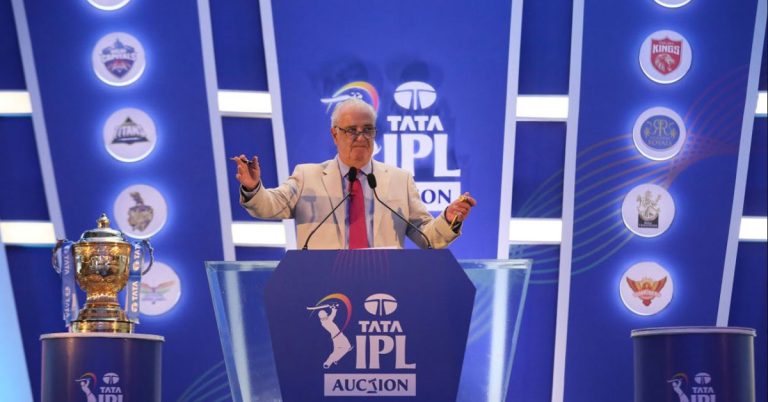
What does RTM mean in the IPL auction?

Right To Match (RTM) is a card that can be played during the Indian Premier League (IPL) auction. This card gives any franchise the opportunity to match the final bid for a player who was in their squad in the previous season of the competition.

For example, if Royal Challengers Bengaluru (RCB) release Cameron Green and Mumbai Indians (MI) purchase him for INR 10cr, RCB have the opportunity to match this bid and have Green’s services for IPL 2025.

According to reports, the BCCI may implement RTM cards for each franchise to use during the IPL 2025 Mega Auction. There was no RTM during the previous mega auction which was held for the 2022 season.

What is the difference between RTM and a retention in the IPL?

A retention is a player whom an IPL franchise decides to keep for the upcoming season. RTM, as explained above, works for a player who was released by said franchise.

According to CricBuzz, the BCCI is likely to cap retentions at five or six players for the upcoming auction, up from the four players from previous mega auctions. The reason for this is to strike a balance between franchises keeping a core group of players, but ensuring the auction process is as exciting as possible.

The BCCI will meet with IPL franchise owners on July 31 to decide on the exact number of player retentions per team. Also, CricBuzz reports that the RTM is a contentious issue, with the franchises and BCCI representatives to also discuss this during the meeting.

Fans have taken to social media to share their view. The general consensus is that one or two RTM options, along with about five retentions, is an auction sweetspot.

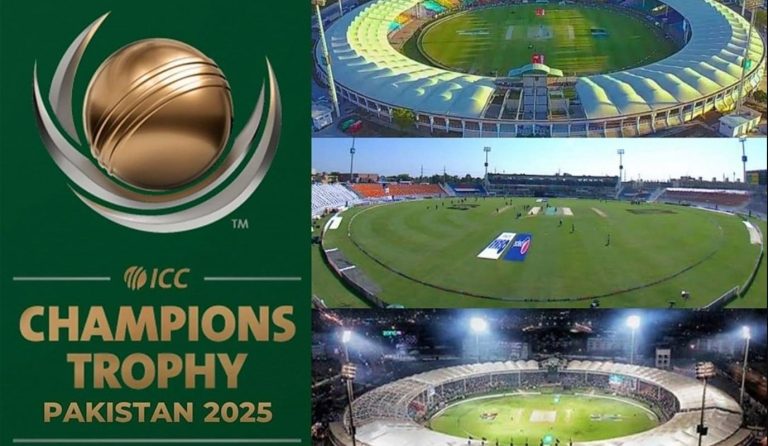
Will India travel to Pakistan for the 2025 Champions Trophy?

Pakistan Cricket Board (PCB) chairman Mohsin Naqvi has stated that the 2025 Champions Trophy will be held entirely in Pakistan. In a report in Pakistan media outlet Express News, Naqvi said the PCB is not interested in a hybrid model for the tournament.

The report stated, “PCB chairman Mohsin Naqvi has made it clear to the ICC that Pakistan will host the 2025 Champions Trophy, and there will be no hybrid model. It’s ICC’s responsibility to bring India to Pakistan for the event, and not PCB’s task.”

There has been no official statement from the Board of Control for Cricket in India (BCCI) on the matter. However, India have kept their stance solid over the years with regards to travel to Pakistan. In 2023, the Asia Cup was shared between Pakistan and Sri Lanka, with India playing their matches in the Island nation.

With regards to whether India travel to Pakistan for the 2025 Champions Trophy, India’s Ministry of External Affairs is expected to make the final call. Should they choose not to travel, the ball will then be in the International Cricket Council’s court. A tournament without India would be a big financial hit for the ICC given the revenue they generate.

BCCI unlikely to send India to Pakistan for 2025 Champions Trophy – report

According to an ANI report, a BCCI source claimed that India would not be travelling to Pakistan for the 2025 Champions Trophy. The report states the BCCI will ask the ICC to shift matches to the UAE (likely Dubai) or Sri Lanka.

Also, Gautam Gambhir, India’s new coach, has previously supported India’s political stance against Pakistan, making it all the more unlikely that the team will play its matches in the neighbouring country.

India have not played in Pakistan since 2008. An attack on the Sri Lankan team bus in 2009 put a halt to international cricket in Pakistan for six years. Since then, only India and Ireland have not played a series in Pakistan among Test playing nations.

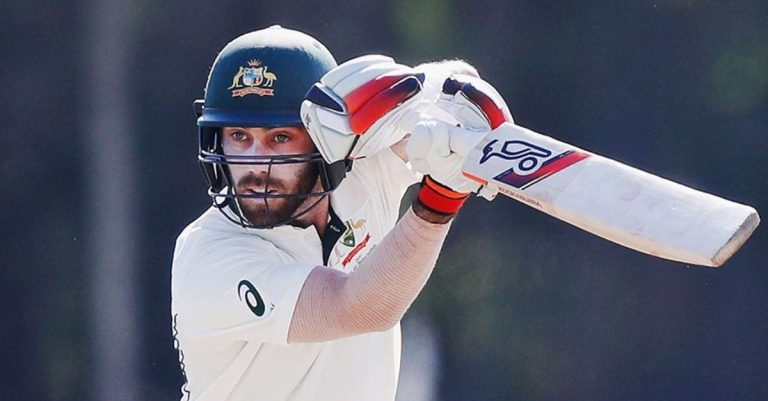
Glenn Maxwell could return to Tests in 2025 Sri Lanka tour

Australia are pondering the possibility of selecting Glenn Maxwell for their Test tour of Sri Lanka, slated for early 2025. This is according to Dan Brettig of The Age, who wrote that Maxwell was rested for portions of the upcoming white-ball tour of Scotland and England to prepare for the summer ahead.

According to Brettig, selectors are considering Maxwell after the all-rounder narrowly missed selection in the XI during Australia’s 2022 tour of Sri Lanka where the Test series finished 1-1. Also, he reports that Travis Head would open with Steve Smith moving to number five. Peter Handscomb and Josh Inglis, two players the selectors see as better players of spin, are also in line for an opportunity, with Maxwell to bat at seven.

Glenn Maxwell return to Tests not out of the picture

Of course, a lot depends on how the showpiece five-match Test series against India pans out. Any player who performs brilliantly in that series will be very hard to ignore for Sri Lanka, albeit in different conditions.

“We prioritise every Test, we’ll take that across the summer and see how the five Tests against India go and then we’ll make those decisions post that as to exactly how everyone’s travelling,” said selection chair George Bailey, as quoted by The Age.

“What we do know about Sri Lanka is that potentially the surfaces there do give you a bit of a different make-up of your Test side so it doesn’t tend to look exactly the same as what the Test team over the Australian summer might look like.”

Bailey also said that they have a clear plan in place for what preparation looks like for the Sri Lanka tour. The dates are yet to be confirmed, but it is likely to be towards the end of January before the Champions Trophy.

“There’s a pretty clear plan in place in terms of what the Test prep will look like, and getting away and ensuring guys get some time in similar conditions or Sri Lankan conditions before the start of those two Tests,” he said.

However, Maxwell will more than likely be playing Big Bash League (BBL) in December and January. Whether the selectors deem that as enough preparation will be interesting to see.

I’m still an option in Tests – Glenn Maxwell

In November 2023, Maxwell spoke of his desire to return to the Test team. He reiterated his skillset is suited to the subcontinent, and will welcome any opportunity to don the baggy green for the first time since Bangladesh in 2017.

“It’s pretty clear that I’ve always had a pretty solid game in subcontinent conditions and it’s been something that has developed since my first tour over there [in 2013],” he said.

“The way I’ve played spin bowling in subcontinent conditions, with being a little bit more aggressive and putting pressure on the opposition, has been something appealing to the selectors over time.”

“Just the fact I was able to be on the Sri Lanka tour last year is a sign they still have me in their thoughts and see me as an option. Regardless of whether I played one or 30 games in red-ball cricket, I’m still going to be an option to go over there.

“I think that’s why 2025 in Sri Lanka is something I’ve put in my calendar as something I’m hopeful to be a part of, and not giving up hope that my Test cricket’s done. If I can get there and hopefully be good enough to take part in the series.”

Who is Cooper Connolly? Young gun selected for Australia’s T20I squads for Scotland and England

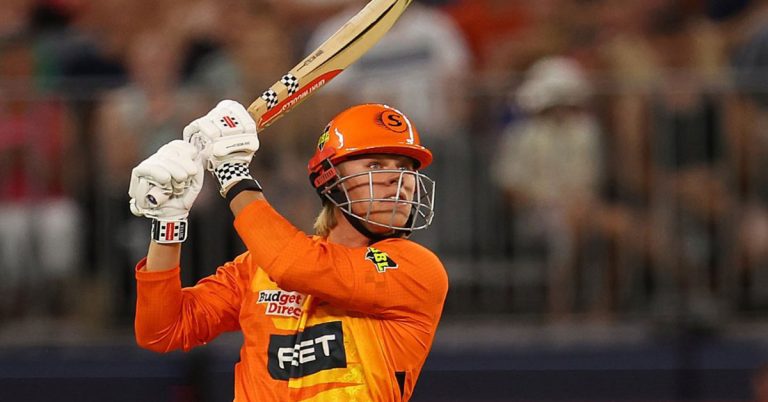
Australia have selected 20-year-old Cooper Connolly for the T20I legs of the upcoming Scotland and England tours. Born in Perth in August 2003, Connolly is an allrounder who plays for Perth Scorchers. He bats left-handed and offers a handy left-arm orthodox spin option.

Connolly burst onto the scene in the Big Bash League (BBL) 2022/23 Final. The Scorchers were in all sorts of trouble in their run chase of 176 against Brisbane Heat, sitting in a precarious 137/5 with 19 balls remaining and all of the experienced batsmen back in the hut.

Then 19, Connolly rose to the occasion, slamming 25* off 11 balls to send the capacity Optus Stadium crowd into a frenzy. Before that innings, Connolly had played just three BBL games and faced just 11 balls.

Cooper Connolly: Australia’s next big thing?

Connolly, who plays for local club Scarborough in Western Australia, captained Australia during the 2022 U-19 World Cup in West Indies. He had a quiet tournament with the bat (6 inns, 73 runs), after 72 runs in two innings (including 64 off 53 balls vs West Indies) as a 16-year-old in the 2020 U-19 World Cup.

Perth Scorchers and Western Australia saw him as a great talent worth investing in. The left-hander has impressed in his short career so far. He currently has 15 T20s under his belt, scoring 226 runs at an average of 28.25 and strike rate of 145.80. He has also taken six wickets at an average of 15.16 and economy of 7.00.

The youngster made his First Class debut in the 2024 Sheffield Shield Final against Tasmania. He struck a superb 90 off 115 balls in his first innings, hitting 12 fours and three sixes.

Cricket News: A look into 20-year-old Cooper Connolly, who was selected in Australia's T20I squads for Scotland and England tours

In T20s, Connolly has batted both at the top and middle order, so it will be interesting to see where he lines up for Australia. He has opened four times, batted six times at number six and has lined up at seven on two occasions.

“We haven’t had that many bolters for a little while,” said national selector George Bailey, as quoted by ESPNcricinfo.

“He’s an exciting young talent. Hasn’t played a great many games yet, but we really like his versatility,” Bailey continued. “His work through the middle order for the Scorchers has been really impressive. Handy left-arm spin as well which, as a secondary skill, is something we are really keen to keep exploring and see where that goes with his cricket.”

Australia’s squad for T20Is vs England and Scotland & ODIs vs England

Connolly joins Jake Fraser-McGurk as the two young guns in the T20I squad. Xavier Bartlett is also included. Matt Short will be home for the birth of his first child before linking up with the squad for the ODIs. Pat Cummins (rested for whole tour), Glenn Maxwell and Mitchell Starc will miss the T20Is.

T20Is: Mitchell Marsh (c), Xavier Bartlett, Cooper Connolly, Tim David, Nathan Ellis, Jake Fraser-McGurk, Cameron Green, Aaron Hardie, Josh Hazlewood, Travis Head, Josh Inglis (wk), Spencer Johnson, Marcus Stoinis, Adam Zampa

ODIs: Mitchell Marsh (capt), Sean Abbott, Alex Carey (wk), Cameron Green, Nathan Ellis, Jake Fraser-McGurk, Aaron Hardie, Josh Hazlewood, Josh Inglis (wk), Travis Head, Marnus Labuschagne, Glenn Maxwell, Matthew Short, Steve Smith, Mitchell Starc, Adam Zampa

Australia begin the tour with three T20Is in Scotland on September 4, 6 and 7. They then travel to England for three T20Is on 11, 13 and 15, afterwhich they will play five ODIs.

Reactions to James Anderson retiring from Test cricket

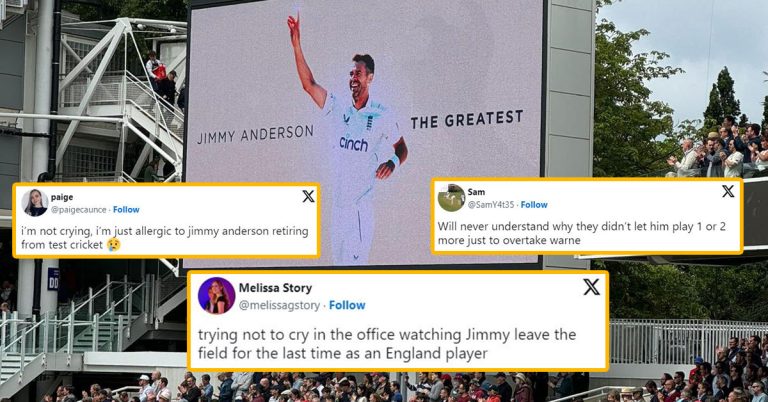
After an incredible 21 years, James Anderson’s Test career is over. And it’ll take some getting used to.

Making his debut at Lord’s against Zimbabwe in 2003, no one could have imagined what would come next. 188 Tests and 704 wickets later, Anderson goes down as England’s greatest bowler and the most prolific wicket-taker among pacers in Test history.

An emotional Anderson spoke to Sky Sports after England’s massive win over a hapless West Indies. “Overwhelmed by the reaction from the crowd,” he said in the post-match presentation. “To contribute to a win, something I’ve tried to do throughout my career, every time I’ve pulled on this shirt it’s been about trying to win games for England.”

Anderson pinpointed victories in Australia (2010/11) and India (2012) as the big highlights from over the years.

“Winning series and winning Test matches has been the only thing that I’ve been interested in. Winning in Australia, winning in India, becoming the No. 1 side in the world and contributing in those series, those are the things I’ll remember. And playing with some of the greats. Really special,” he said.

Anderson missed the chance to finish his career with a wicket. He dropped a simple caught and bowled chance. But, it did little to dampen the mood, with all of Lord’s staying back until the presentation to farewell a great of English cricket.

Reactions to James Anderson retiring – fans take aim at England management

While the West Indies were out of their depth, Anderson still looked in fine touch. He had the ball moving, with his final scalp – Joshua Da Silva – a trademark Jimmy wicket.

As England fans come to grips with James Anderson retiring, they shifted their attention to the call made by Rob Key and Brendon McCullum to give the pace bowler the “tap on the shoulder”, with next year’s Ashes in Australia the big priority.

Here are some of the reactions to a great career coming to an end.

Big changes in Pakistan cricket after early T20 World Cup exit

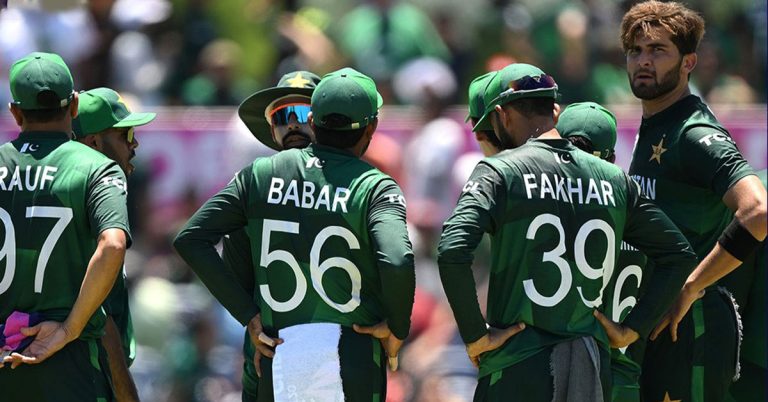
Predictably, big changes have taken place in Pakistan cricket after their disappointing T20 World Cup campaign. Considered as one of the teams who could compete for the title, Pakistan didn’t even make it out of the group stage, sparking widespread reactions online.

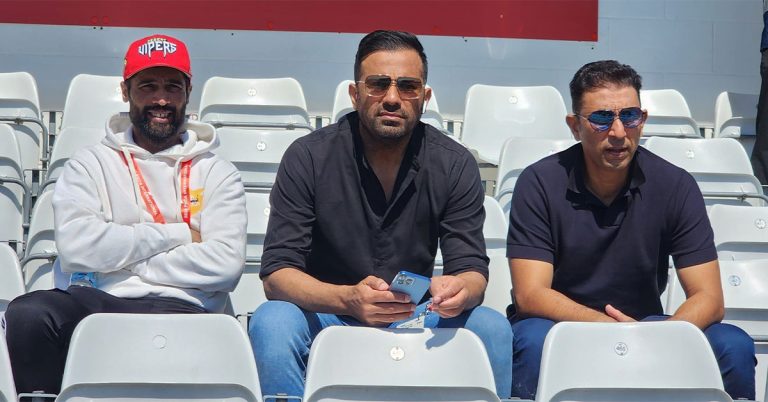
In the aftermath, Wahab Riaz and Abdul Razzaq have been sacked from the selection committee, as reported by ESPNcricinfo. Razzaq was appointed as a selector for both the men’s and women’s team just a few weeks ago in another example of the volatility in Pakiastan cricket.

Since January 2022, Pakistan have had five chief selectors, including Wahab, who took to X to share his thoughts. “I don’t agree with the statements being discussed about adding pressure to the members of the selection committee, how can 1 vote dominate 6? Everything is documented on record in the meeting minutes I will be issuing my statement today evening,” he said.

“There is a lot I can say, but I don’t want to be part of the blame games,” he wrote in a separate post.

More changes possible in Pakistan cricket according to a report

According to journalist Abdul Ghaffar, many players are facing the axe from Pakistan’s T20I team. Iftikhar Ahmed, Shadab Khan, Imad Wasim, Mohammad Amir, Azam Khan and Mohammad Nawaz are those likely to be dropped, as reported by OneCricket. Haris Rauf is also at risk of being dropped.

Youngsters Mohammad Haris, Amir Jamal, Salman Ali Agha, Abrar Ahmed and Shahnawaz Dahani are expected to play a key role for Pakistan moving forward.

Next up for Pakistan is five home Tests between August and October. They play two games against Bangladesh at Rawalpindi (starting August 21) and Karachi (starting August 30). England follow with three Tests in Multan, Karachi and Rawalpindi in October.

Pakistan also have their woes in Test cricket to overcome. They are winless in their last eight home matches and have won just three of their past 15 overall.

Next up for Pakistan in white-ball cricket is three T20Is and three ODIs in Australia in November.

Sunil Gavaskar: The man who was arguably 2nd to Bradman for so long

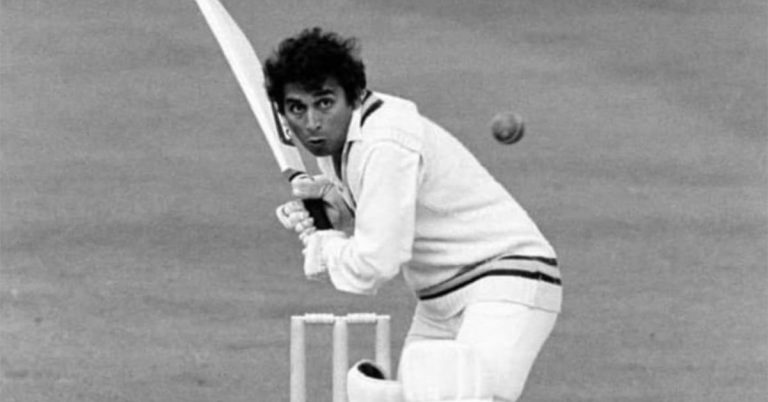
On July 10th, we commemorate the birthday of the legendary Sunil Gavaskar, whose name will shimmer as long as the game of cricket lasts; like an inextinguishable star in the galaxy.

Indian cricket virtually revolved around Gavaskar, who singlehandedly bore its mantle. Not many batsmen faced the lethal fast bowling as Sunny did, who broke batting records at a tempo unscaled since Bradman.

Gavaskar possessed powers of concentration at a magnitude unparalleled, with his technique flawless, capable of mastering all types of bowling in any conditions. His defence was impregnable and drives impeccable. In combating express pace, spin or the moving ball, Sunny was equally adept.

I never saw a batsman leave a ball with such profound judgement as Sunil. He was equally productive on the back and front foot, and possessed every stroke in the book.

Sunil Gavaskar was great in overcoming adversity

In overcoming adversity, I doubt Gavaskar had an equal. Here are some of his memorable career moments:

Gavaskar’s debut series in West Indies in 1971 was the most prolific ever from a debutant. He compiled 774 runs at 154.80. He was with Dilip Sardesai, the architect of India winning its first series ever in West Indies. Till this day, Gary Sobers maintains that he never saw an overseas batsman bat better in the Caribbean or anywhere.

At Old Trafford in 1974, Gavaskar’s 57 and 101, in overcast conditions, took technical skill to zones rarely climbed against the moving ball in overcast conditions.

In West Indies in 1976, Gavaskar scored two centuries at an average of 55.71. He was the architect of India making the then-record run chase at Trinidad when India chased 406 runs in the fourth innings. His 156 in the second Test all-but-won India the match but for intervention of rain and bad umpiring decisions.

In Australia in 1977-78, Gavaskar scored three centuries in the first three Tests, proving his skill on bouncy strips.

In Pakistan in 1978-79, Sunny averaged 89.40, scoring 447 runs with two centuries. He was grit and consistency personified, scoring a century in each innings in the final game at Karachi, and withstanding Imran Khan at his fearsome best better than any batsman in the world.

In a home series against West Indies in 1978-79, Gavaskar achieved mythical heights, scoring 732 runs at 91.5 with four centuries. His 205 runs at Mumbai was a masterpiece, blending technique and strokeplay to perfection. His back-to-back hundreds at Kolkata all-but-won the third Test.

In England in 1979, he scored an epic 221 off 443 balls at The Oval. It was a manifestation of cricketing perfection and never-say-die spirit in sport. Every bad ball was dispatched for a four and every good ball treated on merit.

Gavaskar resurrected India from dire straits to the pinnacle of glory, resembling an architect carving a famous monument with his tool chiselled to perfection. Questionable umpiring decisions robbed India of a famous win after Sunny was dismissed with India just 49 runs adrift from the record fourth innings target of 438 runs.

In 1979-80, Gavaskar was the architect of India winning its first series against Pakistan for 28 years. He grinded it out in the middle for eight hours to score 166 at Madras and win the match for India.

Sunil Gavaskar’s loss of form

For the first time in his career, Gavaskar faced such sensational loss of form on the tour of Australia and New Zealand in 1980-81, scoring only one 50. Also, he controversially protested against the decision to give him out LBW after scoring 70 in the third Test at Melbourne, which ironically India went on to win.

In England in 1982, he was unsuccessful but for a classical 48 at Lords, out of total of 128 against the moving ball, brilliantly fending of short pitched deliveries.

Facing Imran Khan at his best in Pakistan in 1982-83, Gavaskar scored a classical unbeaten 127 at Faisalabad and elegant 83 at Lahore. In a bat-for-your-life scenario, his Faisalabad knock was an epic.

He was a failure on the tour of West Indies in 1982-83 apart from a classical 90 in the 2nd ODI and unbeaten 147 at Georgetown. Noteworthy that his 90 in the ODI at Guyana secured India it’s first ever win in an ODI against the Calypsos.

In the home series v West Indies in 1983-84, his 121 at Delhi was scored in scintillating style reaching his hundred of a mere 94 balls.. At Ahmedabad, his 90 ranks amongst the masterpieces by an opening batsman on a bad wicket. His unbeaten 236 in dead rubber at Madras reminded one of a comeback of Muhammad Ali, taking determination and technical fortitude to scales of Everest.

In his farewell series in 1986-87, playing Pakistan at home on a broken pitch at Bangalore he scored 96, where he resembled a farmer digging a well in a desert. Sunny took batting craft to a height untranscended on a wicket with the ball turning square. India lost the game by 16 runs, with the exit of Sunil literally sealing the hopes of an Indian win.

Gavaskar bid farewell to his international career with a monumental 188 in a match between an MCC XI and World XI in 1987. It was an epic with technical virtuosity.

Gavaskar ended his Test career scoring a then-record 10,122 runs and 34 centuries at an average of 51.12 in 125 matches and 214 innings. At one stage, he scored a century every five innings, scored over 1,000 runs in a calendar year on four occasions, and a century in both innings of a game thrice.

In ODIs, he scored 3092 runs at an average of 35.13, with one century and 27 fifties.

Weaknesses/Arguments against Sunil Gavaskar

It must be stated that Gavaskar averaged only 43.6 in Tests won and very few of his centuries won games for India. His partner, Gundappa Vishwanath, was more effective in match winning causes, averaging 49. I am critical of Gavaskar often being over defensive and not escalating the tempo of the game when batting unlike batsmen like Virender Sehwag.

It is an aberration of cricket writers when they state that Gavaskar was the best performer against the Carribean pace battery. Gavaskar was not as successful against the top Caribbean pace attack as batsman like Greg Chappell, Alan Border, Graham Gooch and Mohinder Amarnath. Sunny scored 8 of his 13 centuries against West Indies against the weaker bowling attacks in 1970-71 and 1978-79. He also scored hundreds against a second string Australian attack in 1977-78 and 1979. He was relatively inconsistent against the Carribean pace quartet away and at home in 1983-84 averaging around 43.

Role as Captain

As a skipper he was shrewd but at times ultra-defensive. India did defeat Pakistan at home in 1979-80 and England in 1981-82 and drew a rubber for the first time on Australian soil. He also led India to win the World Championship of Cricket in Australia in 1985 which was a remarkable achievement. However, India also faced humiliating defeats in Pakistan in 1982-83 and series losses against England at home and away.

Evaluation of Greatness

In my view, Bradman or Tendulkar would not have combated ferocious pace or short pitched bowling against a new ball, as courageously or with as adept skill, that too without wearing a helmet, as Gavaskar. However, I would place both ahead of Sunny, because of sheer impact.

After Bradman, I cannot envisage a batsman re-writingRtest match record books within such a short span of time as Gavaskar. On pure statistical merit taking into account bowling attacks faced, there is a strong case for Gavaskar being rated the best batsman of his time, second-best Test match batsman to Bradman and best opener ever. However aesthetic or X-factor is where he arguably lost out to the likes of Tendulkar, Lara, Viv Richards or Sobers, who all had more inherent attacking ability to turn games.

Weighing all factors, Gavaskar ranks at eighth place amongst all–time great batsmen, behind Bradman, Hobbs, Viv Richards, Lara, Tendulkar, Sobers, and Hammond and on par with Hutton. Amongst opening batsmen, I place him in third place behind Jack Hobbs and Barry Richards.

Hobbs was more proven on bad wickets and more impactful while Barry was more explosive and a better match-winner. Still, it is almost impossible to make a comparison of batsmen from different eras with such variance in conditions. I assert that even if there were more gifted batsmen, Gavaskar had features to his batting character that no batsman could eclipse.

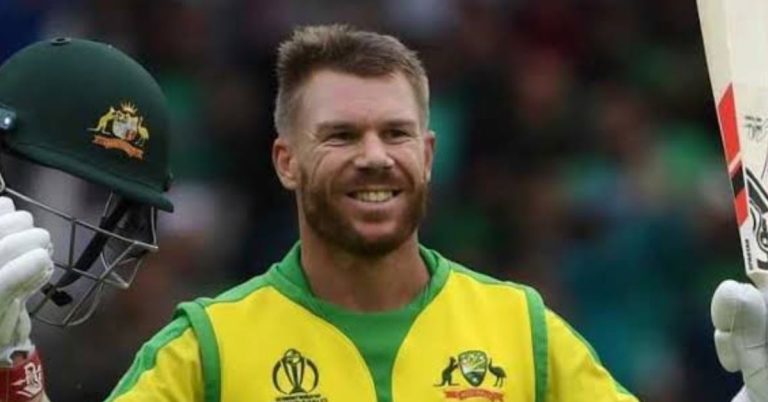
Open to playing Champions Trophy – David Warner

David Warner has said he is open to playing in the 2025 Champions Trophy if he is selected. Warner took to Instagram to reminisce over his international career after finishing up at the recent T20 World Cup in the Caribbean and USA.

However, Warner has reiterated his openness to play in the Champions Trophy tournament, which is set to be held in Pakistan in February and March next year.

David Warner says he is open to reversing his retirement decision for the Champions Trophy

“Chapter closed!! It’s been an unbelievable experience to play at the highest level for such a long period,” Warner wrote. “Australia was my team. The majority of my career was at the international level. It’s been an honour to be able to do this. 100+ games in all formats is my highlight.

“I want to say thanks to everyone out there who has made this possible. My wife and my girls, who sacrificed so much, thank you for all your support.”

Warner then wrote he will play franchise cricket for a while, with Sydney Thunder a beneficiary given the left-hander will play the full season in the BBL 2024/25 season. But, if the selectors wish to reach out to Warner for another international call-up, he might take them up on it.

“I will continue to play franchise cricket for a while, and I am also open to playing for Aus in the Champions trophy if selected,” he wrote.

Australia face Scotland, England and Pakistan in white-ball internationals this year

The young and dynamic Jake Fraser-McGurk is set to replace Warner as Australia’s white-ball opener. The 22-year-old was considered unlucky to not be in the main squad for the recent T20 World Cup, but plenty of chances are ahead of him.

The Australian men’s team’s next assignment is three T20Is in Scotland in September, followed by three T20Is and five ODIs in England. The home season begins soon after, with three ODIs and as many T20Is against Pakistan in November.

Should Fraser-McGurk perform admirably in these matches, there could be no room for Warner even if he is still keen to participate in the tournament. Also, with a 2026 T20 and 2027 ODI World Cups on the horizon, blooding as many youngsters as possible in an ICC tournament that is the Champions Trophy could be an important tactic for Australia.

That being said, Warner’s experience and pedigree would be hard to ignore, especially if he has a strong BBL campaign. The left-hander struck 6,932 ODI runs at an average of 45.30 and strike rate of 97.26 as well as over 15,000 runs across franchise and international T20s.

What’s going wrong with Pakistan cricket?

Pakistan’s recent poor display in cricket is exacerbated by their underwhelming performances in the T20 World Cup 2024. The team’s inconsistent showing has raised concerns among fans and analysts, prompting a closer examination of the underlying causes.

Gary Kirsten, the head coach, pinpointed poor fitness levels and lack of unity among the players as key reasons for the early elimination. Kirsten further ascribed that the future team selection should prioritise unity, fitness, and skill development.

Mental and physical fitness the key issues in Pakistan cricket

In sports, the ongoing team woes are highly linked with the players’ cognitive ability or intelligence quotient (IQ level) and athleticism or physical fitness. While cognitive skills are the invisible attributes not directly associated with sports performance, they substantially influence adaptation, strategic thinking, and decision-making. Strategic thinking is one of the important facets of modern time games and essential to a team’s achievement. Attributes such as mental toughness, flexibility, knowledge of the game, and decision-making—often referred to as the “sports brain” or “sports cognitive function” — have a big impact on players’ performance.

It is evident that when composure and strategic intelligence are needed, the Pakistan cricket team’s deficiencies in terms of game awareness, making decisions under pressure, and mental toughness have been exposed. Over the years, the team’s poor performance may suggest a cognitive gap in handling crunch situations in the game and capitalising on opportunities.

Another area of concern is retaining high fitness levels especially in T20s where games can frequently be decided by narrow margins. Physical fitness is equally important for the longer Test matches. Unfortunately, the Pakistan cricket team’s physical strength on the field mirrors their recent problem, where moments of brilliance or athleticism change the course of the game.

ALSO READ: Reactions to Pakistan getting knocked out of the group stage of the 2024 T20 World Cup

The men's Pakistan cricket team continues to underachieve, with the 2024 T20 World Cup campaign a very poor showing. What's going wrong?
Babar Azam is under pressure to keep his spot as captain of the Pakistan cricket team.

Change to the captain alone won’t solve Pakistan’s problems

In the modern era of international cricket, players have a fundamental obligation to keep themselves fit. However, deficiencies in skills like agility and athleticism have hampered the team’s overall performance, leading to batting errors and fielding mistakes. Their sluggishness in the field and lack of assessment of conditions during the games have rendered them vulnerable to the opponents’ exploitation.

The absence of interaction between cognitive abilities and physical prowess accounts for the dismal performance of the Pakistan cricket team. While Pakistan has been endowed with rich talent, mere talent alone can bring a player to the international arena without guaranteeing exceptional performance. Thus, a comprehensive strategy should be devised to improve players’ general abilities including mental and tactical planning. Acknowledging the value of both mental and physical skills helps narrow performance gaps and contend successful contention in the international arena.

In recent times, Pakistan’s cricket team has significantly underperformed, necessitating incremental efforts to improve its performance and competitiveness. In order to succeed, a dual approach—focusing on improvement at both domestic and national levels— is a prerequisite. Changing the captain alone won’t fix the issues.

In the last few years, Pakistan has not played cricket against the competitive teams. To develop potential and strength, it’s imperative to establish a competitive domestic environment and make infrastructural investments in domestic cricket, including leagues, coaching programs, and talent identification programs. Pakistan can improve its cricketing levels by bringing together exposure to elite competition with a strong local cricket base.