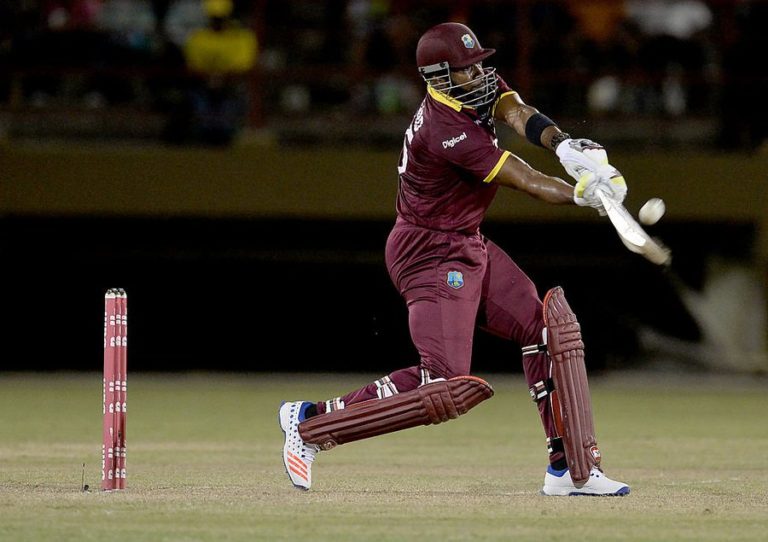
West Indian superstar Kieron Pollard has been named as the captain of the Trinbago Knight Riders ahead of the upcoming season of the Carribean Premier League. The Mumbai Indians player captained the franchise to a playoff finish last season.
Pollard takes the permanent reigns of captaincy from Dwayne Bravo, who led the Knight Riders to two titles in as many seasons in 2017 and 2018. Bravo was supposed to lead the side in last year’s edition, but was ruled out of the entire tournament due to an injury and was replaced by his longtime teammate Pollard.
“We are happy that Kieron who is the West Indies captain is our leader at TKR. The champion DJ Bravo has been coming to me year after year and asking me to give someone else the captaincy because he wants to just concentrate on playing and enjoying the game. I always told him not until I am ready and that time has come and he is very happy to play under Pollard”, said Vensky Mysore to T&T Guardian.
“They are great friends and they will both come together to give us the best chance at the CPL this year. Bravo said he has played under Pollard before and this will be the best thing at this time for all parties. Pollard was kind enough to accept the position to lead the team at the tournament. He said if we wanted him to do it he will and we said that we will be delighted to have him as captain again.”
Kieron Pollard is the current captain of the West Indies T20I team.
Bravo will be the official vice-captain of the franchise which comprises international stars like Sunil Narine, Pravin Tambe, Lendl Simmons and Colin Munro.
“Both Bravo and Pollard have captained each other at the local and international level and so are very comfortable working together and sharing information. Both are extremely accommodating in their approach to leadership,” team manager Colin Borde said.
The CPL kicks off on August 18 and will be played entirely in Trinidad and Tobago. The two-time champions play in the first match of the tournament as they take on Guyana Amazon Warriors.
The 13th edition of IPL 2020 is set to get underway in the UAE in September. However, there are key questions that require proper answers in place to ensure the tournament can go ahead as smoothly as possible in a COVID-19 world.
According to reports, the IPL’s governing body is meeting on August 2 to finalise key details, which will make up part of the tournament’s Standard Operating Procedures (SOPs). Below are key questions they must address effectively.
1. What will the bio-secure bubble look like?
In the ongoing English season, there are strict protocols regarding the bio-secure bubble. Just ask Jofra Archer. Players are required to stay put in the hotel for the safety of all, with the only time they leave being when they train and play.
It is important for the IPL governing council to confirm what this bio-secure bubble will look like. The franchises will likely be in control of the bubble, but what should the penalties be for anyone who breaks the protocols in place? Fines, in addition to isolation?
Also, some other key questions to answer are:
What is the maximum number of people allowed in a squad’s bubble? Will families be allowed?
How does the IPL ensure that squads are socially distant from people outside the bubble? Squads could be in the UAE for up to 80 days after arriving in August, which presents a challenge.
Will bubbles move around, given the tournament will be played across Dubai, Abu Dhabi and Sharjah?
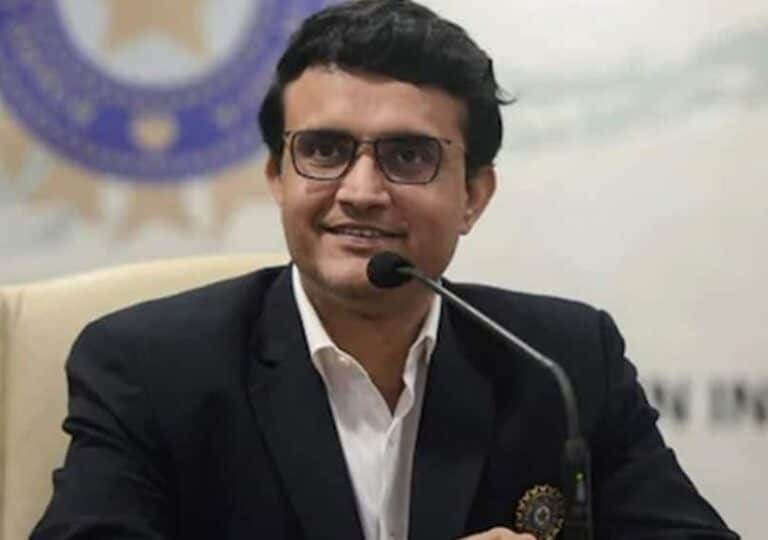
Sourav Ganguly needs to ensure IPL 2020 goes ahead as smoothly as possible.
2. What happens if someone tests positive for COVID-19?
We all hope this doesn’t happen, but unfortunately it is possible in the current climate. Franchises need to know the steps to take should someone test positive for COVID-19.
What will the impact be on the player, franchise and tournament as a whole? Specifically, the IPL’s governing body needs to answer these questions:
Will the entire squad have to be tested immediately?
Where does the squad isolate, should a member test positive? Will it be in the same hotel? Will other teams be at the hotel?
Will the next match of that particular team be cancelled or put on hold till everyone is tested?
What happens if someone tests positive on the day of the match?
3. How and when will squads get to the UAE safely?
Most players haven’t played for months, so there is a need to arrive in the UAE as early as possible to ensure they get the chance to train and prepare for the tournament. According to reports, the aim is to get squads over to the UAE by August 20 or 21, which gives everyone three weeks to ramp up their preparations.
For this to happen, the IPL’s governing body will need to oversee the organisation of chartered flights. Also, COVID-19 testing needs to take place before departure and then on arrival in the UAE.
4. What is the go regarding replacement players?
With the news that South African players might miss the IPL (as is the case with the CPL), the IPL needs to confirm what the protocols are regarding replacement players.
Each franchise is allowed eight replacement players. But, what happens if one or more isn’t able to participate in the tournament? Can franchises look to the outside for a replacement player? Also, what will be the testing requirements? Can that replacement player play straight away, or will they need to isolate for a certain period?
Also, players could be on national duty. Australia’s cricketers have reportedly been told to prepare for England in September – a limited overs series that Ashley Giles is “quietly confident” will go ahead. So, what will happen to the affected squads? For example, can Sunrisers Hyderabad attempt to replace star player David Warner, whom many believe is in the all-time IPL XI?
Will we see David Warner in IPL 2020?
5. Interaction with people outside the bubble
As mentioned previously, squads could be in the UAE for up to 80 days. How does the governing body aim to ensure there is as minimal contact as possible with people outside the bubble? For example, is the bus driver part of the bubble? What about net bowlers? Can they join the bubble after they have been tested?
It is important the IPL’s governing body ensures that there are clear contingency plans in place to ensure the tournament goes ahead as smoothly as possible.
ENG vs IRE 2nd ODI Preview Dream11 Possible Playing 11 Pitch Report | ENG vs IRE 2nd ODI Dream11 Prediction Today | England vs Ireland 2nd ODI Dream11 | ENG vs IRE 2nd ODI Key Players | Southampton Pitch Report
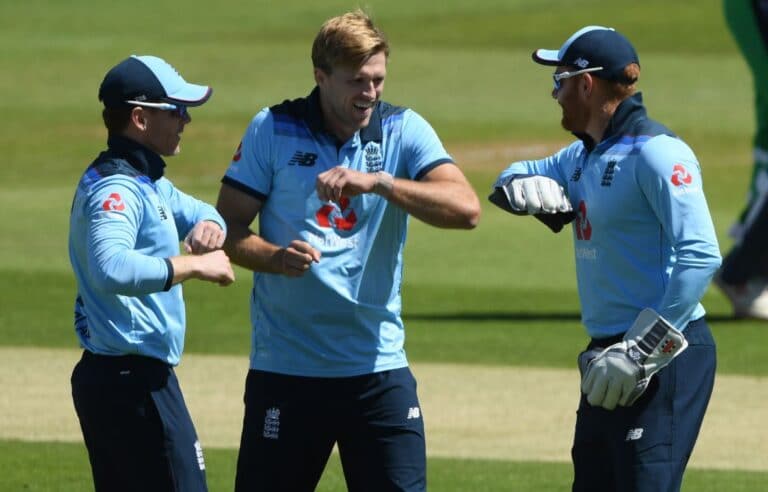
Key players and a vocal crowd may have been absent, but that didn’t stop England from continuing where they left off in ODI cricket. The world champions, on a sharp, upward trajectory since 2015, had little issues in dismantling Ireland in the first game of the ODI Super League. England didn’t look back after David Willey’s devastating opening burst, and now have a series win in their sights.
That Ireland reached 172 was somewhat of a miracle. Reeling at 28/5, Ireland’s lowest ODI score of 80 was under serious threat, before debutant Curtis Campher displayed excellent poise and technique under serious pressure to give his team some respectability.
They then displayed some good fight with the ball, reducing England to 78/4 even without the injured Barry McCarthy to raise hopes of the most stunning of upsets. However, if Ireland are to bounce back in this match, they need more from the likes of Paul Stirling and Andy Balbirnie, rather than placing their hopes on a debutant and number nine Andy McBrine.
Key Players to Watch/Key Stats
David Willey, man of the match in the first ODI, had a very successful return to the England team. His opening burst of 4/20 set the game up for England. Can he bamboozle Ireland with swing and subtle seam movement again?
Sam Billings was England’s other main star. Probably only playing because Joe Denly was injured, Billings produced a superb knock of 67* (54) under pressure to get England home.
Curtis Campher (59* and 1/25) had quite the promising debut. The question is: can he back up a fine effort with another on Saturday?
Jonny Bairstow failed with the bat in the opening match. However, his record at the Ageas Bowl remains superb: 239 runs, avg. 79.66, SR: 112.73.
Jason Roy didn’t push on with a start on Thursday, but he still averages over 50 at the Ageas Bowl (eight matches, 356 runs).
Eoin Morgan (36*) has the most runs of any player at the Ageas Bowl (646 runs, avg. 80.75). Also, Morgan has a superb record vs Ireland: 305 runs, avg. 76.25, SR: 91.
Paul Stirling (Ireland’s highest ODI run-scorer) and Andy Balbirnie (1,156 runs, avg. 39.86 since 2018) must step up for Ireland this time. Key players.
Harry Tector made a duck on debut. However, don’t write off the 20-year old, as he came into the match on the back of three consecutive List A fifties.
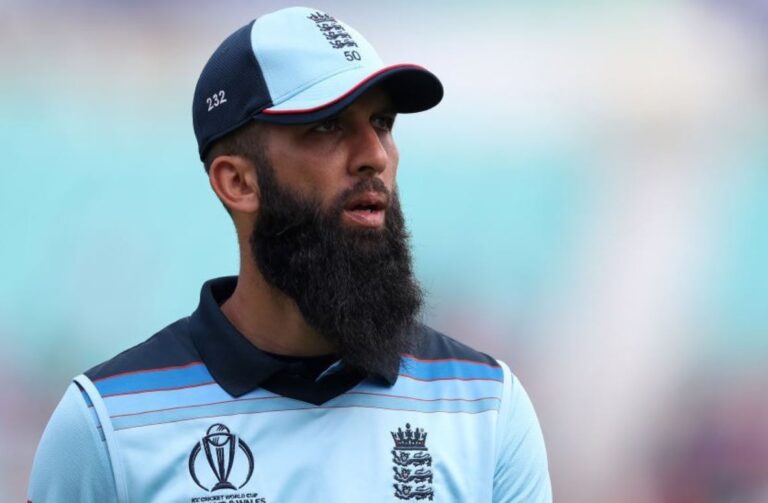
Moeen Ali was steady in the first ODI. However, if he gets a chance with the bat, watch out for his ball-striking. He struck at a SR of 272.22 in the T20I series in South Africa earlier in 2020.
It was quite pleasing for England to see Adil Rashid turn the ball both ways in the first ODI. His 1/26 included three maidens, and now has the most wickets of any current player in England-Ireland ODIs (9).
Craig Young showed an ability to nip the new ball around in the opening game (two wickets). Can he find greater support this time around?
Watch out for Tom Curran at the backend of an innings, as he continues to develop as a good death bowler with his variations.
ENG vs IRE 2nd ODI: Will Jonny Bairstow fire in the 2nd ODI?
Stats and Facts
Head-to-Head: 11 Matches, England 9, Ireland 1, NR 1.
Ireland’s only win vs England was the all-time classic in the 2011 World Cup. Kevin O’Brien hit a memorable century. However, can he improve on his average of 26.10 vs England?
In the last six completed ODIs at Southampton (2019-2020), the average first innings score is 245. The team batting first and second have both won three matches each.
Possible Playing 11
England could stick with the same team for this match to seal the series. If they win this match, they could then look to experiment a little more in the next match.
England: 1. Jonny Bairstow (wk), 2. Jason Roy, 3. James Vince, 4. Eoin Morgan (c), 5. Tom Banton, 6. Sam Billings, 7. Moeen Ali, 8. Tom Curran, 9. David Willey, 10. Adil Rashid, 11. Saqib Mahmood
Barry McCarthy injured his knee in the first ODI, so he is very likely to miss this game. Boyd Rankin could come in. Also, will Ireland push Curtis Campher up the order?
Ireland: 1. Paul Stirling, 2. Gareth Delany, 3. Andy Balbirnie (c), 4. Harry Tector, 5. Kevin O’Brien, 6. Lorcan Tucker, 7. Curtis Campher, 8. Simi Singh, 9. Andy McBrine, 10. Craig Young, 11. Boyd Rankin
Ageas Bowl Pitch Report and Conditions
The Ageas Bowl track in the first ODI was slow but still decent for batting, despite the scores not really depicting that. The new-ball bowlers, particularly Willey, found swing and subtle movement, which could be on show again. Importantly, the same track will be used for the second ODI, so if the top orders can get through the initial burst, runs will be on offer.
After a gorgeous day in Southampton on Thursday, there is the chance of a shower or two on Saturday.
Dream11 Prediction
Option 1:
ENG vs IRE 2nd ODI Dream11 Prediction
Option 2:
ENG vs IRE 2nd ODI Dream11 Prediction
Match Prediction
Ireland showed some positive signs after a terrible start in the first ODI. However, England with a solid core, as well as exciting young players, should go on to win the series.
For the first time since June 20, Pakistan fast bowler Haris Rauf has returned consecutive negative COVID-19 tests. As a result, it makes him eligible to join the Pakistan T20I squad in England.
Haris previously expressed his desire to play red-ball cricket, but unfortunately won’t get the chance in England as he is due to fly out this week. Pakistan’s 20-man Test squad is currently preparing for the Test series, due to begin on August 5.
However, the T20I series doesn’t begin until August 28, which gives Haris Rauf time to accilmatise to the new bubble, and prepare for the series. Earlier this month, Mohammad Amir was brought back into the Pakistan squad, but the consensus is that Haris will be one of the main bowlers for Pakistan.
Haris took to Twitter to announce the great news.
Can't thank enough Allah for the blessings He bestowed upon me during my tough times & fight against the epidemic COVID-19. الحمدلله tested negative and feeling absolutely fine and well. Thank you everyone who extended their prayers & well wishes.
He was originally one of the 10 players to test positive for COVID-19 back in June, before many of those 10 were then tested negative. However, it has been a frustrating journey for Rauf, who tested positive five times out of six until July 20. That one negative test was not enough for him to be cleared, as players were required to test negative in consecutive tests.
Now, Haris is good to go.
The action will begin for Pakistan with three Tests, before a three-match T20I series against England. The dates were announced by ECB earlier this month.
Going Round The Wicket: ENG vs IRE 1st ODI Fantasy Tips | ENG vs IRE 1st ODI Fantasy Cricket Analysis
After Test cricket, One-Day cricket is all set for its return after the long break due to the COVID-19 Pandemic. England will be hosting Ireland in a three-match series, starting from 30th July. You can get everything you need to know about this match in Cricblog’s match preview.
So now that you’ve read the match preview and have all the necessary stats, it’s time for some Round the Wicket tips and suggestions that can help you win some cash in Dream11 or any other platform.
This is the first match of the series so you can win big if you research well and follow your gut feel. We hope our suggestions can help you win big. So let’s get started:
Fantasy Cricket Tips
There are two factors that will play a major role in fantasy cricket in this match:
The Toss
Your Choice of Irish Players
England, despite some big names missing in their squad, are favorites to win this game and we will get to know only after the toss that they are bowling first or batting first. So, the toss will play a vital role in this game. 7-4 combination in favor of England should be preferred for this match, but you can also go with 6-5 if you want to. Pick more batters from England if they are batting first and pick more bowlers if they are bowling first.
However, don’t underestimate the Irish to surrender in front of the English. Ireland has some very good batters who can score big in these batting tracks.
The 4 or 5 Irish players will most probably determine the result for you. Players like Paul Stirling, Kevin O’Brien, Mark Adair, and Simi Singh are the most selected players from Ireland. Players like Andy Balbirnie, William Porterfield, Boyd Rankin, Joshua Little have been selected by very few fantasy players but they are also important picks in this match. James Vince and Saqib Mahmood are two very under-picked players in this match from the English side.
James Vince has ability in white-ball cricket.
Round the Wicket Tip:
You will have to drop at least one big player in this game due to the credits issue on Dream11. In this case, again, the toss will play a huge role. It’s a very big risk but you can drop Moeen Ali, at least in when England are chasing as he will bat at 6 or 7 and the only way he can give you points is by taking wickets. And we don’t expect him to take more than 3 that too when he’s having a good day. You can also drop David Willey when England are batting first.
Simi Singh is picked by 50%+ fantasy players on Dream11. You can also take the risk of dropping him as only skipper Eoin Morgan and Moeen Ali are the left-handers in the English side so he isn’t expected to be that effective with the ball.
Players like James Vince, Saqib Mahmood, Joshua Little, Mark Adair will be crucial as they are the credit savers and can give you an edge over your opponents.
You can go with Tom Curran as the only all-rounder in your Dream11 team. It’ll allow you to pick six batsmen which can be a good move considering the nature of the wicket at The Rose Bowl.
Round the Wicket Picks:
ENG vs IRE 1st ODI Fantasy Tips
You can pick these players to be different from your opponents. These players not selected by most of the fantasy players and they can win you easily if they performed:
James Vince
Saqib Mahmood
William Porterfield
Mark Adair
Boyd Rankin
Captain and Vice-Captain
Johnny Bairstow is the most popular captain in this match and it is advised not to think otherwise in small leagues. Jason Roy is the second most popular choice for captain and vice-captain role which is a great choice too. But if you want to be different from the crowd you can try these players as the captain or vice-captain:
Eoin Morgan (if England bat first)
Tom Curran (if England bowl first)
Andy Balbirnie
James Vince
Keep in mind that you can’t win all the matches in fantasy sports so it’s advised not to follow these steps blindly. These are some risky suggestions and it is advised to use your own knowledge with the stats provided in the preview along with the above-mentioned tips to create a good team.
We hope this will help you create a dream team and win some cash. Stay tuned for more Round the Wicket Stuff.
Thanks for reading!
Note: These are just suggestions and doesn’t guarantee a win on any fantasy sports platform.
Written by Robin Rounder – follow Robin on Twitter today.
Rishabh Pant has arrived with an aura like few starlets in international cricket. The swashbuckling southpaw attracted many to his splendid approach towards the shorter formats of the game.
Touted to be an immensely capable successor of MS Dhoni, Pant captured the imaginations of the fans of the game who were bothered by India’s rather pragmatic outlook towards T20 internationals. He provided an outlook that was fresh, captivating and rather unheard of in the Indian cricketing circuit.
Three and a half years down the line from his debut in the shortest version of the sport for the nation, the 22-year-old finds himself dropped from the playing XI in a format over which he was perceived to have attained mastery in. Many blame the Indian team management for sidelining Pant from their scheme of things.
They believe that the think-tank does not grasp the incredible potential that the lad carries. It has been said that there have been attempts to curtail his intentions; for Pant to adopt a more safety-first viewpoint towards the game.
The notion was circulated that adjusting to a new method does not come naturally to the batsman and hence he finds himself stumbled in a spot of bother on every occasion he arrives to the crease.
Has Rishabh Pant not been backed properly by India?
Is the statement “Rishabh Pant hasn’t been backed enough” true?
So, almost 42 months after Rishabh Pant first donned the Indian jersey to represent the country in T20 internationals, the entire blame of his inability to optimize his own potential is summarized in a single sentence by the masses, “He is not being backed enough by the management.”
Is it really so, though? Does the wicketkeeper’s inadequacy in living up the expectations that he entered the international stage result from the presence of an incomprehensible set of men who make the calls for the team? Perhaps, the fickle record of the current team management leads people to believe that they must be culpable for the occurrences that have transpired with Rishabh Pant in T20Is.
Surely they have made certain huge errors in the past, for which the Indian team has paid the price in major tournaments. However, they cannot be accused of not providing Rishabh Pant with enough chances and opportunities in T20Is.
Regardless of all their mistakes in the past, they persisted with Pant for a stretch of time that is hardly ever afforded to a newbie. One can rightfully argue that the Delhi Capitals’ player deserves to be supported by the management. However, the captain deserves to see tangible returns for his patience, otherwise the whole approach falls into an area of favoritism over legitimate patronage.
Before we delve further into the topic, it is necessary to note that the Indian team as a matter of facts plays few T20Is over the course of a calendar year. Much of it is due to the fact that one-off matches without a World Cup of the same to look forward to hardly carry any substantial significance.
The national team competed in their first ever T20I in December 2006. Almost 14 years since that day, they have played in only 134 international T20 encounters that include games from six World Cups too. It comes down to only 9.57 T20Is per 12 months and hence it is difficult for any player to rack up a significant number of appearances in this version of the sport.
RIshabh Pant has played 28 T20Is for India.
Despite the existence of such circumstances, it must be noted that Rishabh Pant has been a part of 28 T20Is ever since his debut on February 1, 2017. It is not that he has been deprived of opportunities to bat extensively in these matches either. The player has wielded the willow in 25 innings of the 28 encounters that he has played in.
Of course, a question might arise whether 28 games form a substantial sample space to assess a particular player. It isn’t a lot of games, surely. However, the mere fact that a 22-year-old Rishabh Pant has been a participant in 20.89% of all T20Is that the Indian team has played is simply not something to be shrugged off as per one’s whims and fancy.
Secondly, as aforementioned, not every player attains an opportunity to don the Indian cap for such number of matches in T20 internationals. It is largely because of two factors, i.e. lesser frequency of these games coupled with the rather irrelevance of bilateral series’ that often mark the commencement of a challenging tour or the conclusion of the same.
During such matches, every management rather looks to constantly experiment with new players rather than play their strongest XI on the field. So far, 82 cricketers have represented in T20Is in the last 14 years. Including Pant, only 21.95% of these players have gone on to play more than 25 T20Is for India.
Other than the southpaw, the other cricketers are: MS Dhoni, Harbhajan Singh, Dinesh Karthik, Suresh Raina, Gautam Gambhir, Yuvraj Singh, Rohit Sharma, Ravindra Jadeja, Ravichandran Ashwin, Virat Kohli, Shikhar Dhawan, Bhuvneshwar Kumar, Manish Pandey, Jasprit Bumrah, Hardik Pandya, Yuzvendra Chahal and KL Rahul.
In fact, 10 of these players had debuted before 2011 and a sheer glance through these names indicates that Rishabh Pant is a part of a list that includes some of the most prominent names that India has produced in limited overs cricket. Furthermore, after earning his first India cap in T20Is in early 2017, Pant has still managed to make it to the playing XI in almost 52.83% of the matches that the team has played in the shortest format of the game ever since.
That is, he has played 28 of the 54 T20Is that the Indian team has contested since his debut. If one pushes the time frame being taken into consideration a bit ahead, then the fact appears that the left-handed batsman has played a sizable 68.42% of encounters since the conclusion of World Cup 2019. It displays that Pant has gradually been inducted into the core set of players as his nascent career has progressed over time.
Furthermore, the Indian team has handed debuts to 14 players after Pant’s first T20I game. None of those have even rather come close to the number of appearances that the wicketkeeper-batsman has managed to register. The closest is Washington Sundar, who has turned up 23 times for the national team whereas the likes of Shreyas Iyer and Kuldeep Yadav have been capped 22 and 21 times respectively.
But, Rishabh Pant is undoubtedly a special limited-overs batsman. So, he must not be compared with debutants who made their first forays in the national team after him. Rather, one should be taking a perspective that includes all the prominent first-teamers including the skipper and his deputy. So, the only players to have played more T20Is for India ever since Rishabh Pant’s debut in February 2017 are Rohit Sharma, Virat Kohli, Shikhar Dhawan, Manish Pandey, KL Rahul and Yuzvendra Chahal. Rohit and Virat have led the team on numerous occasions in this time period. Dhawan is a part of an unshakeable top-order trio that only KL Rahul has managed to breach and break into very recently. Pandey has been persisted and rewarded for his impactful outings, explained over here. On the other hand, Chahal is undoubtedly the lead spinner of the lineup.
Now, consider the number of players that Pant has surpassed to make those many appearances: MS Dhoni, Dinesh Karthik, Ravindra Jadeja, Bhuvneshwar Kumar and Jasprit Bumrah. Whether he has crossed over these players due to their sabbatical, injuries or sidelining from the first team, it is still noteworthy that a player so young has managed to transcend the count of outings of these first-teamers since his debut.
Pant’s appearances compared to players of other nations
Now, we will widen the scope to international cricket and examine the players from the other top-nine ranked T20I teams (barring India) who made played their first international T20 match after Rishabh Pant’s debut. In total, 118 debutants across nine nations have plied their trade in the format since February 1st, 2017. West Indies have capped the most number of new entrants (18), whereas Afghanistan are at the bottom of the list (7).
Out of these 118 individuals, only Fakhar Zaman and Shadab Khan from Pakistan have played more T20Is than Pant over the course of last three and a half years. Otherwise, Alex Carey equals the Indian player’s tally of 28 T20Is. On an average, these players have been conferred with 7.56 matches since their debut before being shunted out or being permanently included in the scheme of things.
If one again shifts back to witness the whole scenario from India’s perspective, the team has provided opportunities to represent the country internationally to 15 players including our player in consideration since his debut. These cricketers have been handed 13.40 games on an average so far, and plenty of them continue to circumspect around the main squad as of now.
This puts forth two inferences. Firstly, the Indian team hasn’t been as detrimental for newer entrants as it is made out to be. Secondly, Rishabh Pant has been provided with more than two times the average number of games that the Indian team otherwise gives to a debutant. Internationally, he has been backed with almost four times the count of matches that the other times combined on an average trust a newly capped player with. And yet, his performances have led him to be on the fringes; neither an outcast, not a sure starter.
Rishabh Pant has been given the chances. Has he repayed the faith yet?
How has he fared with the bat, though? 25 innings is a fairly good framework to build one’s assessment on, especially if that player in new to the rigors of international cricket and does not have a credible past record against teams of similar calibre belonging to the same level. To be fair, Pant has been given rather ample chances in all significant middle-order positions that can optimize his skillset. Pant has played five innings at number three, 12 of them at two-drop and seven at number five. He batted at number six in only his first T20I match.
He averages the best from batting at number three i.e. 22.50. However, he strikes the runs quickest at number four, which is 130.57. Neither of these two values deserves to be at the highest spot in these critical parameters especially for a player as prodigious as Pant himself. But, they are, and that has been the arguably unfortunate reality of this player’s international stint in T20 cricket so far.
In 13 out of his 25 innings so far, Rishabh Pant has been dismissed for a single-digit score. That is 52% of the times that he has stepped out to bat in T20Is. Recently, a listicle was done about the five batsmen who have been dismissed on a single-digit score for the most number of times in T20 internationals. William Porterfield was placed fifth in the article, and he has been sent back to the pavilion on 40.98% of his total innings with such a miniscule score.
On the other hand, Rohit Sharma who tops this tally has been dismissed 34% of times on a single-digit score. Arguably, Pant doesn’t seem to be faring well if this approach continues. There is only so long so one can ignore poor decision-making and inability to stitch together a substantial knock in the name of raw talent, zealously offensive attitude and the player being a ‘quintessential T20 batsman’.
However, Rohit’s case is a fine example of the fact that despite having a significant number of inconsequential knocks to one’s name, the batsman can overshadow them by making the best of their good days. Pant’s shortcomings on more than half of his outings in T20Is can be overlooked if he piles up runs aplenty at a laudable scoring rate at times when he has managed to get in the groove.
The 22-year-old has scored two half-centuries, the most by an Indian wicketkeeper-batsman in T20Is. Both those knocks were while chasing a target against the West Indies at tricky tracks in Chepauk in Chennai and the Providence Stadium in Guyana. In addition to this, he played an unbeaten innings of 40 runs in 28 deliveries against New Zealand at Eden Park in Auckland to level the three-match series 1-1 in 2019.
Another slightly impactful innings by Pant was at Hyderabad against West Indies in December last year. He scored 18 runs off nine deliveries after arriving at the crease at a situation when the Indian team required 78 runs off 6.3 overs. It is appreciable that the former ICC Emerging Player of the Year kept up with the required rate but at the same time it can be argued that he could have continued on to see through the innings rather than succumbing at the start of the 17th over itself.
On the other hand, there have been several instances when Rishabh Pant has been unable to keep up with the scoring rate at which his team has proceeded in that innings. For example, one can look at one of his earlier T20Is from 2017 in Kingston against West Indies when Pant played a knock of 38 runs in 35 deliveries after coming out to bat at number three. The Indian team scored 190 runs in that match whilst batting first.
There was also a match against Sri Lanka in the Nidahas Trophy when Pant had arrived to bat at 104/3 in 12.4 overs with a well-set Shikhar Dhawan at the other end. For some reason, the lad couldn’t get going throughout the entirety of the last 7.2 overs. Pant played an innings of 23 runs from 23 deliveries, and couldn’t capitalize on the momentum that was easily prevalent at the time when he had come to bat.
In the first T20I of the three-match series against Australia at Brisbane in November 2018, a similar pattern ensued. The Indian team required 75 runs from 37 deliveries at the time of Pant’s entrance to the crease. With the required run rate of 12.29, it seemed to be just about the perfect situation for a player like him to apply his attacking instincts into the proceedings. Instead, the batsman scored 20 runs from 16 deliveries and departed with the side still needing 18 runs from 9 balls.
In the first T20I against Bangladesh last year, the left-handed batsman was sent out to bat at the fall of the third wicket. With the 11th over just having started, and the team scoring at 6.86 runs, he had a significant 10 overs to make use of and thereby pace the inning to shoot up the projected score by holding an end up until the 20th over. Instead, Pant notched 27 runs from 26 deliveries as the team added up runs at a scoring rate of 6.25 during the time that he stayed on the crease. Only a couple of wickets fell during that eight-over spell of Pant’s stay on the crease and yet there seemed to a difficulty in runs to come by through his willow.
Furthermore, this process was further more glaring in the third encounter of the series against South Africa in September last year. The team was scoring at 8.75 runs per over until the second over fell at the beginning of the eighth over and Pant walked in. He managed to stay at the crease for the next 5.2 overs. Within that, the batsman hustled his way to 19 runs in 20 deliveries. The team bagged 5.19 runs per over in those critical middle overs in which Pant remained at the crease. After his departure, the scoring rate again jumped up to 7.5 in each over.
Needless to say, the Indian team was defeated in each of the five instances that we have mentioned over here.
One of the patterns that can be witnessed is the player’s rather inability to keep up with the demands of the situation and modify his playing style to suit the same. There is a necessity to identify a sweet spot in the middle, wherein the player does not go overboard with his intentions and neither does he succumb into a shell either. Evidently, Rishabh Pant has fallen short in doing so.
RIshabh Pant has not been able to have the same impact in T20Is as IPL.
How does Pant’s IPL career compare?
Comparing Pant’s first 25 T20I innings to his first 25 IPL innings throws up some curious facts. Firstly, the number of times that he was dismissed for a single-digit score remains almost the same over there too, i.e. 11. Secondly, his progressive average at that point in time was better at 25.73 in comparison to 20.50 as it is right now in international cricket. However, the most remarkable improvement could be seen in his strike rate in the IPL. In his first quarter of innings for the then-Delhi Daredevils, Rishabh Pant struck runs at a rate of 153.26. After the same number of batting opportunities in T20Is, Pant strikes runs at merely 121.66, which is a sharp decline of 31.6 from his IPL numbers.
Moreover, he had ten 30+ scores to his name in those many innings in the early stages of his IPL career. In international cricket, he has surpassed the 30-runs mark only on five occasions so far.
Additionally, as reiterated earlier, it needs to be taken into account that just his ducks or low scores aren’t an issue in T20Is anymore. The occasions, on which Pant has managed to get him a good start, it has somehow turned out to be in detriment to the team’s benefits and his batting approach has lagged behind the behest of the situation at that point in time. So barring the few encouraging performances as mentioned before, an overwhelming majority of his international T20 career has been strikingly substandard.
All this is after the enormous amount of backing as stressed upon statistically in beginning of this article.
For a player so incredibly praised for his instinctive ability to take on the best of bowlers at his sheer will, he averages a lowly 13.27 in the 13 innings in which he has come out to bat after the 10th over of the match. Okay, the average might not matter to the modern-age statisticians, but his strike rate in such situations has been of only 114.06 too.
In fact, he has fared slightly better when the lad has been called onto action before the tenth over. In 12 such innings, Pant has an average of 25.4 at a rather indifferent strike rate of 121.53 for a player of his flair. If one further segregates Pant’s innings into different phases, some telling numbers appear.
He has proven out to be fairly more efficient in the six innings where he was required to bat in before the field restriction overs (0-6) concluded. He averages 34.6 with a strike rate of 126.57 whenever asked to bat in the first phase of the match. Both of Pant’s half-centuries have come when he arrived onto the crease before the end of the sixth over.
However, his other four outings barring these two haven’t really been one to gloat about. Three of them resulted in the player being dismissed in single-digit scores, which is quite unfortunate for any young player especially at a time when he has been provided with such an incredible opportunity to bat higher up in the T20I game.
These are the moments that one expects such individuals who create their mark in. The fourth innings of Pant from this lot is the one where he scored 38 runs from 35 deliveries when the team notched 190 against West Indies (a match that has been discussed earlier in this article). However, Pant’s average drops by nearly half to 18.87 when he is asked to bat after the powerplay in comparison to before the sixth over period. His strike rate falls down to 119.84 from 126.27 too.
However, it does post an intriguing question regarding whether he could succeed more prominently if allowed to bat higher up the batting order. In current circumstances with the likes of Rohit Sharma, KL Rahul and Virat Kohli deservingly occupying those critical spots, such a rearrangement seems highly unlikely.
Another reason attributed towards Rishabh Pant’s record in T20Is is that he has been lamented with a lot of criticism. However, with good comes the bad and it is rather redundant to reiterate the hype with which he arrived onto the international scene. There were calls from some quarters for him to replace MS Dhoni as a starter in ODIs in the World Cup 2019 itself. This is quite some praise for a player taking baby steps into the vast arena of international cricket.
Now, if one basks in the glory of such high praise during a good patch, it is a given that the backlash will be even more concrete when the player is unable to live up to those expectations.
Whether or not that individual manages to maintain an equilibrium state of mind during both such phases immensely determine the extent of success that the player eventually achieves in his career. For now, despite him undeniably being one of the best T20 batsmen across the world, one can definitely concur with the team management’s decision to explore other alternatives if possible.
They have persisted quite a lot, and the man may have to wait in the queue for the time being.
Written by Tarkesh Jha. Follow Tarkesh on Twitter today.
So, there it is. England complete quite the turnaround, after the disappointment of Southampton. They beat not only West Indies twice, but also the rain, as they overcame inclement weather in both the second and third Tests to register victory.
For the Windies, cricket post COVID-19 is the same for them as it was before. They enjoyed periods of excellent play, but ultimately, their lack of consistency is their downfall.
With skipper Jason Holder, who bats at eight, their highest-ranked Test batsman, it is vital the Windies improve their batting. For England, it was a good fightback, and can now look forward to the Pakistan series starting next week.
For now, here are five talking points from England’s 269-run win.
1. “Never change a winning side?”
After having earned themselves a comfortable victory against the West Indies in the second Test, many might have thought that the same XI would feature in the third and deciding final game. That was not the case.
The English coach, captain and selectors took what I initially believed to be a massive gamble by dropping a batsman (in an already timid lineup) for a specialist bowler in Jimmy Anderson. However, the gamble paid off. The English batsmen scored more than enough runs, before the four seamers ran riot through the West Indies top order.
2. Go for the kill!
As mentioned, the English were a batsman light and the likes of Root, Pope and Buttler were without runs coming into the game. With the exception of Sibley and Stokes, I would argue that the batting did not inspire great deal of confidence.
The West Indies got off to a fantastic start by claiming the top four for just 120 runs. Although that might not constitute a batting collapse, the English were in a spot of bother with their two most ‘vulnerable’ batsmen at the crease (Pope and Buttler), with only their five bowlers left to come.
The West Indies game plan then, for whatever reason, seemed to go out the window. The corridor of uncertainty was completely ignored and the quicks (Holder in particular) were, out of concern for being smashed down the ground, bowling far too short.
There was clearly plenty on offer for the bowlers who found movement through the air and off the wicket. The quicks were successful when bringing the English batsmen forward and it’s the plan they should have stuck with against the tail.
ENG vs WI 3rd Test talking points: Ollie Pope played beautifully
3. The 500 & 200 club
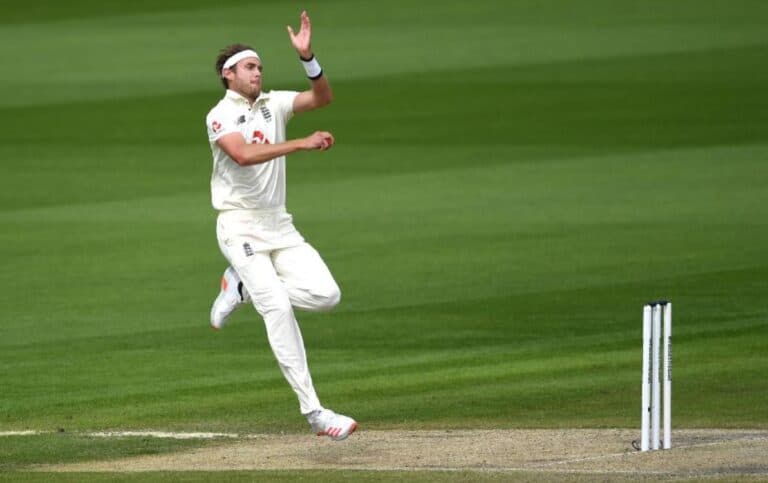
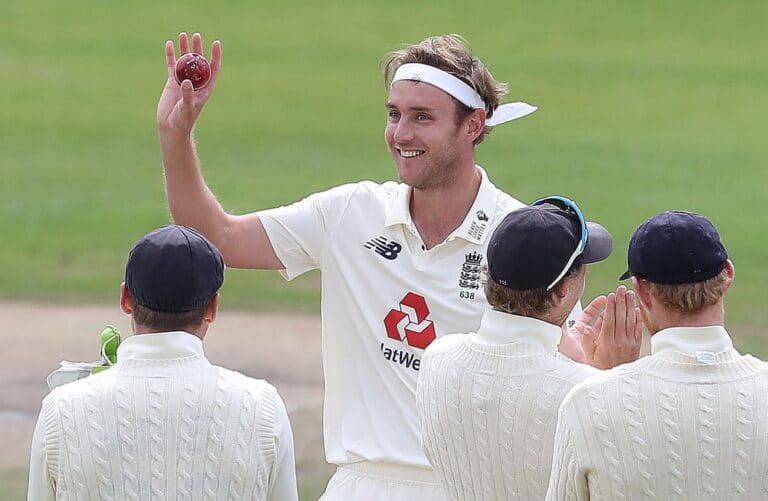
Stuart Broad not only claimed his third 10-wicket haul of his career, but more significantly his 500th Test dismissal. He entered an elite club of fast bowlers including Courtney Walsh, Glenn McGrath, and his teammate James Anderson. Currently in his 14th year of Test cricket, only James Anderson has played more Test matches as a fast bowler than Stuart Broad and their longevity is something that must be applauded.
At the age of 34, Broad still seems to have plenty in the tank to lead the attack for the next couple of years in the post-Anderson era. I’d go as far as to argue that he is the more ‘devastating’ of the pair and we saw that in full force in this final Test match. His ability to bowl to both right and left handers is one that not many fast bowlers have and is one that was executed to perfection against the West Indies batsmen.
ENG vs WI 3rd Test talking points: Stuart Broad went past 500 Test wickets.
The fast bowling ranks look bright for the English with Broad, Archer, Woakes, Wood and Curran likely to operate as their five red ball quicks going forward. The pace of Archer and Wood is well balanced by the swing and seam of Broad and Woakes, while Sam Curran left arm inswingers provide a challenge for batsmen.
For the West Indies, Kemar Roach claimed his 200th scalp, becoming only the ninth West Indian to do. He joins the likes of Walsh, Ambrose, Marshall, Garner, Holding, Sobers and Andy Roberts. Although it’s difficult to compare him to these aforemtioned legends, his contribution to an inconsistent and outright weak West Indian side that has been plagued by politics and Kolpak signings, cannot be overstated. He has been a rock for the West Indian side for a over a decade and has rightly earned the right to have his name placed amongst those legends.
What a list!
Windies quick Kemar Roach has picked up his 200th Test wicket early on day two of the #ENGvWI series decider. pic.twitter.com/r19hCHkFvw
It must be tough to really stand out in a bowling unit that consists of James Anderson and Stuart Broad, but Chris Woakes was phenomenal in the final innings. He kept things very simple, mixing up his conventional away swinging deliveries with the odd one that just held its line. The result was a couple of edges as well as three plumb LWB’s.
With a Pakistan series only a few days away, Chris Woakes has undoubtedly put his hand up has the third seamer of the side. His record in England is world class, while Jofra and Wood have been very underwhelming in the series. Having said that, given the proximity of the England and Pakistan series, as well as the short periods between the games themselves, I can see the English sticking to their rotation policy in the Pakistan series. I would like to see James Anderson make way for Sam Curran (to rest), but more importantly, I would like to see Chris Woakes get a shot with the new ball in conjunction with Stuart Broad in what could potentially be the new opening pair for England going forward.
ENG vs WI 3rd Test talking points: Chris Woakes offers great value to England, particularly at home.
The new ‘Cook & Strauss’?
Dom Sibley and Rory Burns shared in a 114-run opening partnership in their 2nd innings. It didn’t necessarily set the game up for victory, but rather eliminated the possibility of the West Indies getting back into the game. They were both solid throughout the series and I cannot quite remember the last time I saw two English openers who ‘looked the part’. Since the retirement of Andrew Strauss in 2012, Alastair Cook really lacked a consistent opening partner.
Rory Burns (29) and Dom Sibley (24) could form a solid opening pair for the next five to six years. When you combine this with a member of the ‘fab four’ in Joe Root, the best cricket player on the planet in Ben Stokes, and a highly effective fast bowling unit, there is no reason why England couldn’t compete with the India’s and Australia’s of the world in the near future.
Written by Daniel Orsmond. Follow Daniel on Twitter today.
Also read other Daniel Orsmond articles on CricBlog!
Stuart Broad joined elite company, becoming just the seventh bowler in the history of the game to take 500 Test wickets.
Broad’s feat, achieved on the fifth morning of the third Test against West Indies, is testament to his longeivity and strength in times of adversity. 140 Tests for a pace bowler (only topped by teammate James Anderson) is extraordinary, and Broad enjoyed the moment, as he should.
Anderson, his partner in crime, gave him a quick cuddle. We are in the age of COVID-19, but this moment deserves some love.
Two-and-a-half years ago in Australia, many believed Broad was past his best. He’s bounced back. Many wrote him off in the early 2010’s, as the role of ‘enforcer’ didn’t reap in the wickets. But, when he made the key change of bowling fuller in the 2011 series against India, he has not looked back.
Now 34, Broad is bowling as well as he ever has. He was superb in last year’s Ashes, in South Africa at the turn of the year and now here against West Indies, after England inexplicably left him out at Southampton. His ability to move the ball either way, particularly with his cutters, has seen him continue to take a bagful of wickets.
There was deserved praise for this great achievement, as Broad further confirmed his status as one of England’s greatest bowlers.
Iconic moment
The unstoppable hot streaks The reaction at Trent Bridge The 60 all out The 2011 Ashes series The partnership with Anderson The swashbuckling batting The celebrappeals The two Test hat-tricks The fact David Warner got out just reading this tweet
Momentous occasion in Test history. First time ever that two fast bowlers with 500 wickets are playing in the same match. Anderson and Broad. #RoyalPair
Congratulations to Stuart Broad … the seventh man, and fourth fast bowler, to reach 500 Test wickets … has has been well and truly on-song in the current Test v West Indies with 6-31 & currently 3-36 … still a few Tests left in him yet #ENGvWI ?
Remarkable achievement from Stuart Broad. What’s exciting is that if he keeps bowling this well there are still many more to come! #ENGvWIpic.twitter.com/S4urKJyHQ2
Both are greats of English cricket, so it’s unfair on both to have a debate on who is better. However, given the longevity of both, predicting who will finish with more wickets is one tough ask. Opinions are split.
One thing Broad and Anderson can share is the victim of their respective 500th wicket. Kraigg Brathwaite was dismissed by Anderson in 2017, and was dismissed by Broad today.
Poor Kraig Brathwaite as made history by being the 500th victim for two guys. Of all records, I don't think THIS will never be broken.
Stuart Broad and James Anderson are the only Englishmen to have 500 Test wickets. Both reached the landmark by dismissing Kraigg Brathwaite, and with remarkably similar deliveries. #ENGvWIpic.twitter.com/E9TGQ2UiVX
— The CricViz Analyst (@cricvizanalyst) July 28, 2020
Kraigg Brathwaite: No 500 for both Anderson and Broad
The Indian Premier League is set to turn 13 in September 2020. As the first and most successful T20 cricket league in the world, the IPL has set the benchmark for T20 cricket. Non-stop action, electric atmospheres, fours and sixes, stumps uprooting and fielders flying have been key features of the previous 12 years, and while this year is different, another big season can be expected.
Players from all around the globe, along with the Indian players, participate in the IPL. We have witnessed some amazing performances over 12 years. Here, we’ll name our top eleven players who have performed consistently for their sides over the years in CricBlog’s all-time IPL XI.
1. David Warner
David Warner is the first opener in our XI. Warner is at another level in the IPL. He’s arguably the most consistent batter the league has ever witnessed.
His consistency is evident in his numbers. Warner has scored 4,706 runs in 126 matches, which is the highest by any overseas player in the tournament. Better, he averages 43.17 and strikes at an incredible 142.39. Even better, Warner is the only player in the history of the league to win the Orange Cap thrice (2015, 2017 and 2019)
In fact, in 2019, Warner scored 692 runs in 12 games, 99 more than KL Rahul (593 runs), who was the second-highest run-scorer that season. These records are more than enough to show Warner’s class and he should walk into anyone’s IPL XI.
All-time best IPL XI: David Warner has been brilliant in IPL.
2. Rohit Sharma
We all know how dangerous Rohit can be on his day. He has scored 4,898 runs in 188 games at an average of 31.60 and strike rate of 130.82. He is the third-highest run-scorer overall in the league, which is very impressive given he used to bat in the middle order initially in his IPL career for the Deccan Chargers.
To go with this, Rohit has won the title four times as a skipper for Mumbai Indians, so his insights and know-how will be invaluable in any team. Although his performance in the last two seasons hasn’t been up to his high standards, he has proved his capabilities in the league and is the other opener in our XI.
All-time best IPL XI: Rohit Sharma has led Mumbai Indians so well since 2013.
3. Suresh Raina
Suresh Raina bats at three. Raina is known as “Mr. IPL” for his consistent performance in the league over an extended period of time.
He is the second-highest run-scorer in the history of the league with 5,368 runs in 193 games. Also, he is the only batter to score 300+ runs in every season of the league, and is the most-capped player in the IPL. He has produced some memorable performances for the Chennai Super Kings and has been one of the most important players for them. And don’t forget, he’s an excellent fielder, too.
All-time best IPL XI: Suresh Raina – one of the IPL greats.
4. Virat Kohli
Virat Kohli is in our XI. No brainer.
Kohli has been one of the best batters the league has ever witnessed. He is the highest scorer in the history of the IPL with 5,412 runs in 177 matches at an average of 37.84 and strike rate of 131.61. Virat has been performing exceptionally well in all formats of the game and everyone knows the impact he has on the game. He has the ability to demolish bowling attacks, particularly evident in the 2016 season, where he scored 973 runs in 16 games with four tons!
He is a match proven match-winner and no wonder King Kohli bats at four in our side.
All-time best IPL XI: Kohli and ABD – what a partnership
5. AB de Villiers
Next in our XI is “the freak”, AB de Villiers. AB will walk into any T20 XI without any second thought and our XI isn’t any different.
AB has scored 4,395 runs in 154 matches, averaging 39.95 and striking at an incredible 151.23. ABD is a class apart from other players, thanks to his amazing skill set and range of shots. Yes, the reverse scoops and paddle scoop sixes to the likes of Dale Steyn come to mind. He can change the course of the match in a matter of a few balls
To go with that, he is an electric wire in the field. With this kind of reputation and record, AB is a must pick in our XI.
6. MS Dhoni ( C & WK)
Mahendra Singh Dhoni is the next player. Dhoni is one of the superstars not only in IPL but also in world cricket.
Dhoni has 4,432 runs in 190 games to his name. One of the best finishers of all time, Dhoni has chased down some big totals from very difficult situations. He brings so much value to any team with his experience, and is also one of the best behind the wickets. Of course, his ultra-fast stumpings come to mind.
However, it is Dhoni’s captaincy which separates him from others. He is one of the most successful captains in the league, with a win percentage of 60.11% in 174 games. Under his leadership, CSK has qualified for the playoffs every time and has played eight Finals, winning three of them. MSD is the keeper and the captain of our XI, as he can change the odds in his favor with his batting, keeping and captaincy.
All-time IPL XI: Dhoni. One of the great captains.
7. Andre Russell
Andre Russell is an absolute beast in the T20 format. He hits sixes for fun and is arguably the most destructive batter in the game currently. Russell has played only 64 matches in the IPL, which is on the lower end considering that we are picking an all-time XI, but the impact he has had is too good to ignore.
He has scored 1,400 runs in these 64 games and has a career strike of 186.41! Russell scored 510 runs in the 2019 season, averaging 56.66 at an unbelievable strike rate of 204.81. He smoked 52 sixes that season.
Russell is also a good hit the deck bowler and has picked up 55 wickets at an economy of 8.88. Russell is a complete package who can whack the ball in the death overs and can chip in with few wickets while bowling.
All-time IPL XI: Russell’s six-hitting is extraordinary
8. Harbhajan Singh
Veteran off-spinner Harbhajan Singh is the next player in our XI. Bhajji is a very experienced campaigner and has performed very well in these 12 years of the IPL. He was a crucial part of the MI side for most of his IPL career and has been of great value to CSK since 2018.
He’s the third-highest wicket-taker in the league with 150 wickets in 160 games at an economy of 7.05, which is very very impressive. Also, Harbhajan is handy with the bat in hand. With his highest score being 64, this indicates that he can swing the blade effectively when needed.
9. Amit Mishra
Amit Mishra is the second-highest wicket-taker in the Indian Premier League. Mishra has 157 wickets to his name in 147 matches at an excellent economy rate of 7.34. Also, Mishra also has three hat tricks to his name, which is an excellent record and shows how capable he is. Although the last few years haven’t been that good for him, his records are outstanding in the league and he is the leggie in our team.
10. Lasith Malinga
Lasith Malinga is the superstar in the T20 format. A legend. No IPL XI, or T20 XI, is complete without him.
Malinga is the highest wicket-taker in IPL history with 170 wickets in just 122 games. Known for his slinging action and deathly yorkers, Malinga has been the most important player in Mumbai’s four title wins. He has been a true match-winner for them. He is unmatchable in the death overs and is undoubtedly in our team.
All-time IPL XI: Lasith Malinga, one of the all-time greats.
11. Jasprit Bumrah
Jasprit Bumrah has played a fewer number of matches to be on everyone’s radar regarding an all-time IPL XI. However, it’s very difficult to ignore him with the kind of player he is.
Bumrah’s 82 wickets in 77 games at an economy of 7.55 might not seem extraordinary, but it’s the impact he has on the game that makes him stand out. He is an outstanding death bowler and has the ability to defend any score against most batsmen.
He gave away only six runs against the likes of Aaron Finch and Brendon McCullum defending 12 in a super over after bowling a wide and a no-ball. Also, he played a crucial role in the classic IPL 2019 Final, winning man of the match. This shows how valuable he is in the death overs and as a result, is in our XI.
So this was our all-time IPL XI. There were many players who could’ve been the part of this team, but this is the best set of XI players according to us. Let us know your all-time IPL XI in the comments.
Thanks for reading!
Written by Robin Rounder – follow Robin on Twitter today.
The England Cricket Board (ECB) has finalised their 14-man squad for the three-match ODI series against Ireland starting on Thursday. The series will kick-off the ODI World Cup Super League.
Led by Eoin Morgan, the squad has a mixture of experience and youth; no surprises as a number of regulars are currently on Test duty vs West Indies and will play Pakistan one day after the Ireland ODI series is complete.
Promising batsmen Phil Salt and Sam Hain were left out, with James Vince and Joe Denly preferred. Salt had pressed his claims for an ODI debut, after he smashed 100 off 58 balls for England Lions against the Irish.
Walking in to face the second ball of the innings after Jason Roy was dismissed first ball, Salt went on the attack, hitting 14 fours and two sixes before retiring out so other batsmen could get a hit out in the chase of 297.
Hain is also considered very unlucky to miss the squad. The top-order batsman averages 59.78 in 58 List A matches, with some fans expressing their view that this is the perfect time for an opportunity.
Sam Hain has the highest List A average in history for anyone to have played 50+ games and can’t get picked, incredible
James Vince (66) and Sam Billings (54) starred with the bat in the latest tour match. Both have made the final squad, which has been trimmed down from the original 26 that was selected as the training squad. Also in the squad are familiar faces Jonny Bairstow, Jason Roy, Moeen Ali and of course skipper Eoin Morgan.
Morgan will lead an inexperienced bowling attack, where Adil Rashid and the returning David Willey will have a key role to play. Tom Curran, Reece Topley, Saqib Mahmood make up the remainder of the bowling options, along with Moeen Ali.
England 14-man squad for Ireland ODI series
Eoin Morgan (c) Moeen Ali (vc), Jonny Bairstow, Tom Banton, Sam Billings, Tom Curran, Liam Dawson, Joe Denly, Saqib Mahmood, Adil Rashid, Jason Roy, Reece Topley, James Vince, David Willey
Reserves: Richard Gleeson, Lewis Gregory, Liam Livingstone