Home Blog Page 49

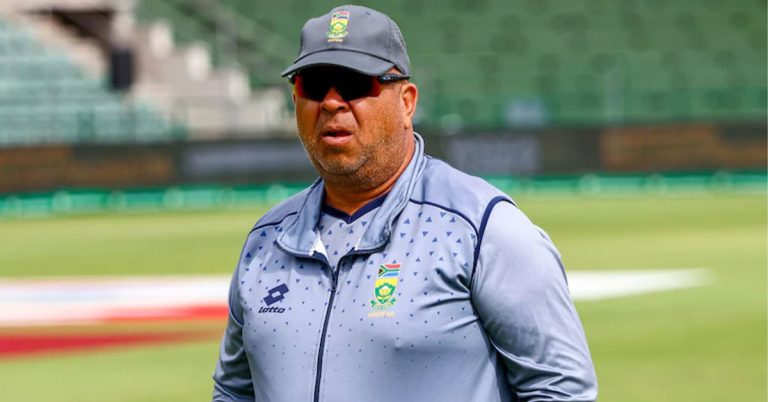
“Embarrassing” – Head coach Shukri Conrad reacts to South Africa’s 342-run ODI defeat

South Africa suffered the biggest-ever ODI loss as the team got bowled out for just 72 while chasing 415 runs against England in Hampshire on Sunday. Head coach Shukri Conrad didn’t hesitate to describe the defeat as embarrassing.

The result hinged on England’s overpowering innings with the bat, courtesy of centuries from Jacob Bethell and Joe Root, along with relentless speed from Jofra Archer – all factors that dismantled the Proteas. Fielding errors and wayward bowling compounded the damage. South Africa conceded 19 wides and dropped two simple catches in a performance Conrad said was “far from ideal, not good enough.”

“When you’re out of touch, you get exposed” – Shukri Conrad

In a post-match conference, Conrad didn’t mince words, “We were definitely off today. Against a top side like England, when you’re out of touch, you get exposed. That was slightly embarrassing.” His blunt assessment reflected not only frustration at the collapse but also recognition that complacency had crept in when the series was already sealed in South Africa’s favour.

Both this loss and the previous 276-run defeat to Australia spotlight a worrying pattern, dominant series leads followed by dramatic nosedives in dead-rubber games. Conrad pointed to lapses in discipline, field support, and mental focus as the culprits.

Captain Temba Bavuma added, “This doesn’t do justice to the achievements of the series. We played superbly earlier. Today was an aberration.” With injury concerns already sidelining key players like Kagiso Rabada, South Africa opted against forcing his inclusion, focusing instead on upcoming T20 fixtures. Rabada, along with Lungi Ngidi and Marco Jansen, is set to return for the shortest format.

As South Africa heads into new challenges, this loss will be a reminder that discipline and hunger can’t pause, even in “meaningless” games. For Conrad and his team, restoring pride will mean starting over, one match at a time.

Pakistan Asia Cup 2025 Squad Analysis: Can they win the tournament?

Pakistan squad for the Asia Cup

Salman Agha (capt), Abrar Ahmed, Faheem Ashraf, Fakhar Zaman, Haris Rauf, Hasan Ali, Hasan Nawaz, Hussain Talat, Khushdil Shah, Mohammad Haris (wk), Mohammad Nawaz, Mohammad Wasim, Sahibzada Farhan, Saim Ayub, Salman Mirza, Shaheen Shah Afridi, Sufiyan Muqeem

Pakistan in T20Is since 2024 T20 World Cup
(Until UAE Tri-Series)

Matches played: 22
Matches won: 9
Matches lost: 13
RPO: 8.22

Top Performers (Until UAE Tri-Series)

Most runs since 2024 T20 WC

  1. Saim Ayub (LHB): 396 runs in 13 innings, AVG: 36, SR: 151.72
  2. Agha Salman (RHB): 380 runs in 18 innings, AVG: 27.14, SR: 115.85
  3. Hasan Nawaz (RHB): 339 runs in 14 innings, AVG: 28.25, SR: 175.64
  4. Mohammed Haris (RHB): 265 runs in 14 innings, AVG: 22.08, SR: 154.97
  5. Sahibzada Farhan (RHB): 255 runs in 10 innings, AVG: 25.50, SR: 137.09

Most wickets since 2024 T20 WC

  1. Abbas Afridi (RAP): 22 wickets in 13 innings, AVG: 13.40, ECO: 7.83
  2. Haris Rauf (RAP): 18 wickets in 15 innings, AVG: 24.27, ECO: 9.10
  3. Sufiyan Muqeem (Left-arm Wrist spin): 17 wickets in 10 innings, AVG: 11.17, ECO: 5.64
  4. Abrar Ahmed (Right-arm Wrist spin): 15 wickets in 11 innings, AVG: 21, ECO: 8.36
  5. Mohammed Nawaz (left-arm orthodox): 10 wickets in 6 innings, AVG: 10.10, ECO: 6.06

Squad Overview and Key Changes

By excluding Babar Azam and Mohammed Rizwan, Pakistan Cricket Board’s selection reflects a clear intent to move away from conservative batting approaches.

Since 2020, Pakistan’s scoring rate in T20I cricket has been 128.81.

Babar last played a T20I in December 2024.

In PSL 2025, Babar scored 288 runs in ten innings for Peshawar Zalmi. It included knocks of 56*, 53* and 94 but his overall strike rate was 128.57.

Rizwan, like Babar, has not been part of Pakistan’s recent T20I squads for the home and subsequent away series against Bangladesh, followed by the T20Is in the West Indies.

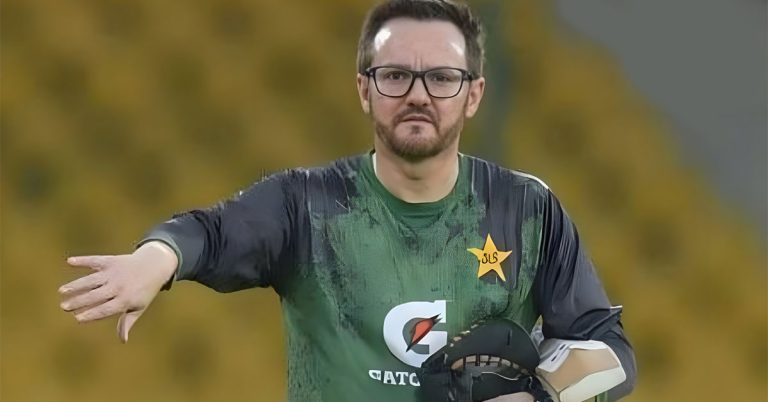
Pakistan head coach Mike Hesson said Babar has been challenged with improving his T20 game. “There’s no doubt Babar’s been asked to improve in some areas around taking on spin and in terms of his strike rate. Those are things he’s working really hard on,” he said, as quoted by ESPNcricinfo.

“But at the moment, the players we have have done exceptionally well. Sahibzada Farhan has played six games and won three Player of the Match awards. A player like Babar has an opportunity to play in the BBL and show he’s improving in those areas in T20s. He’s too good a player not to consider.”

Salman Agha will lead the 17-member squad, which also participated in the tri-series against UAE and Afghanistan in the lead-up to the Asia Cup. Fakhar Zaman, who suffered a hamstring injury in the first week of August, has recovered and is part of the side.

Shaheen Afridi, who had also found himself out of favour in T20 cricket of late, retained his place for the tri-series and the Asia Cup, though Naseem Shah missed out once again.

Abbas Afridi, Pakistan’s leading T20I wicket-taker since the 2024 T20 World Cup with 22 wickets, has surprisingly been left out. Though a little expensive, he was also the joint second-highest wicket-taker in PSL 2025 with 17 wickets.

The recent ODI series – which Pakistan lost 2-1 in the Caribbean – appears not to have influenced decision making either way. Hesson said he intended to stick to the aggressive top-heavy approach he has championed in the format and repeated that Pakistan’s game was suited to such a style.

Mike Hesson’s Vision

Since taking charge as Pakistan’s white-ball head coach in May 2025, Mike Hesson has articulated a comprehensive vision for transforming Pakistan cricket. His statements reveal a clear philosophy focused on modernising Pakistan’s approach while building sustainable success.

Fielding as Non-Negotiable

One of Hesson’s strongest emphases has been on elevating fielding standards. “Fielding is critical in white ball cricket; there’s no room for someone who can’t. You just can’t hide people in the field these days,” he said.

Multi-Skilled Players Over Specialists

Hesson has been vocal about modernising Pakistan’s team composition. “The idea of just specialist batters is very much outdated. You’ve got to be multi-skilled”. He wants players who can contribute in multiple facets: “You’ve got to be above par with the bat, and you’ve got to be below par with the ball and that’s the way we’ll be trying to operate.”

This philosophy was immediately visible in Pakistan’s series against Bangladesh, where they used eight bowlers in one match and seven in the others – a significant tactical shift.

Aggressive Intent and Strike Rates

Hesson has emphasised the need for aggressive batting approaches. “We need a run rate that puts us ahead of the game. T20 is all about setting the game up and being ahead of the game all the time”.

He’s critical of milestone-focused batting: “If we need 14 in an over, a single won’t help. Trying to bunt for a milestone means nothing if we lose by 20.”

Sustainable Development

Hesson has emphasised his medium-term commitment: “I don’t want to be here for six months, enjoy a few highs or survive a few lows, and then leave. For me, this is a medium-term project,” Hesson said.

His legacy focus is clear: “If when you leave, things fall over, then you haven’t done a great job. Focus is on building a sustainable model”.

Domestic Cricket Integration

He’s committed to talent identification: “There’ll be identified groups of players where I’ll be keen to go and have a look, talk, and meet players”. This systematic approach to domestic cricket monitoring represents a structural improvement.

Pakistan’s T20I Performance Under Mike Hesson

  1. Bangladesh in Pakistan (May-June 2025): Result: Pakistan won 3-0
  2. Pakistan in Bangladesh (July 2025): Result: Bangladesh 2-1. Pakistan’s away tour to Bangladesh proved challenging, resulting in Bangladesh’s first-ever T20I series win over Pakistan.
  3. Pakistan in West Indies (August 2025): Result: Pakistan won 2-1

In all six victories, Pakistan scored 175+, showing aggressive intent as Hesson demanded.

Predicted Starting XI

  1. Saim Ayub
  2. Sahibzada Farhan
  3. Fakhar Zaman
  4. Salman Agha (c)
  5. Hasan Nawaz
  6. Mohammad Haris (wk)
  7. Mohammad Nawaz
  8. Faheem Ashraf
  9. Shaheen Afridi
  10.  Haris Rauf
  11.  Sufiyan Muqeem

Team Notes (Strengths & Weaknesses)

  • LHB-RHB opening duo
    • But both Ayub & Farhan have significantly lower strike rates (and also average lesser) against left-arm pace compared to right-arm pace in the Powerplay.
    • However, they complement each other well against spin — Ayub destroys left-arm orthodox and leg-spin but struggles against off-spin, while Farhan has a strong record against off-spin yet tends to struggle against left-arm orthodox and leg-spin.
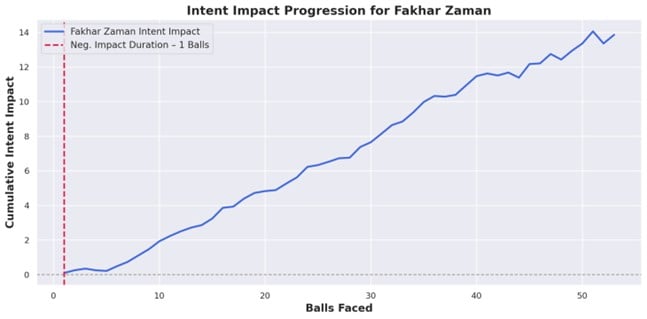
  • Fakhar Zaman will act as the aggressor at No.3.
    • He also has a strong record against all types of spin in the middle overs over the past couple of years.
Credit: @arnav1204aj on X
  • Interestingly, the skipper – Salman Ali Agha – who’s going to lead the aggressive brand of cricket, himself has a T20I SR of 115.85 after 18 innings, and is more of an ODI-style player, better suited to batting in the top order in T20s. Yet, he finds himself positioned in the middle order. The best approach would likely be to keep his batting position flexible rather than locking him in at No. 4.
  • Hasan Nawaz has been a revelation, injecting fresh energy into the team.
    • Struck at 175.64 across his T20I career so far.
    • While his century came as an opener, he has batted across positions from the top to No. 6 and is expected to settle into a middle-order role in this tournament.
    • With 28 sixes, he also finished as the leading six-hitter in this year’s PSL.

Alongside Mohammad Haris, another young, high-intent batter, Pakistan certainly have some genuine firepower in the lineup, a contradiction to what we’ve seen in the past. However, he’ll likely have to bat out of position, taking on a finisher’s role (a highly volatile player in a highly volatile role) in this team rather than his usual No.3 spot.

  • If Ayub and Fakhar fall early, left-arm spin could tie them down in the middle overs — unless they push Khushdil/Nawaz up the order as a low-value hitter to target spin and prevent a slowdown.

  • With Faheem and Nawaz following Mohammad Haris, Pakistan’s batting extends till No. 8, after which even Shaheen and Rauf can contribute with quick runs, providing sufficient depth.
  • While Pakistan have ample depth, their lower middle order remains highly unpredictable.

  • The volatility and explosiveness surrounding Salman Agha in the lineup may explain his role as the fulcrum around whom everyone else can play their part.
  • Faheem is the only seam-bowling all-rounder in the squad and may share the new ball with Shaheen.
    • Although expensive (ECO: 11.19), he was the joint second-highest wicket-taker in the PSL, claiming 17 wickets.
  • Shaheen, Rauf, and Hasan Ali form an experienced pace trio, all bringing their own unique attributes and strengths.
    • Shaheen was the highest wicket-taker in the PSL, with 19 scalps.
    • Rauf and Hasan were the joint second-highest wicket-takers, each claiming 17 wickets. Hasan conceded at 9.03 RPO, while Rauf went at 10.28 RPO.
  • Mohammad Wasim Jr. provides another reliable pace option, known for his reverse swing in the death overs.
  • Salman Mirza serves as an additional top pace backup. He was Pakistan’s leading wicket-taker with eight against Bangladesh in the away T20I series.

“Salman Mirza and Mohammad Wasim Jr. are probably the best death-over bowlers in Pakistan, especially with Wasim’s reverse in Dubai. We have created some depth and also added options.”

Mike Hesson

  • In Abrar and Muqeem, Pakistan have two fine wrist-spinners, the latter being particularly effective recently, claiming his 21 T20I wickets at an economy of 5.74.
  • They also have an in form left-arm spinner in Nawaz, the Player of the Series in West Indies, complemented by Agha and Ayub’s part-time off-spin, creating a complete and well-rounded spin unit.  

  • With Rauf’s decline, death bowling could be a concern for Pakistan, which might open the door for Wasim Jr. to find a place in the side.

Pakistan’s Asia Cup campaign begins on September 12 when they take on Oman in Dubai.

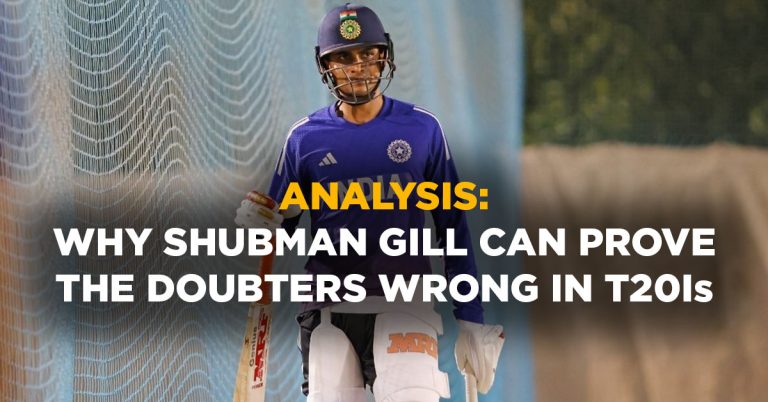
Why Shubman Gill can prove the doubters wrong in T20 cricket

Shubman Gill is often written off as a “regressive” T20 pick, dismissed as too slow for the format’s relentless pace. I disagree.

Since 2022, no batter has scored more runs in the IPL than Gill’s 2,249, notched at a strike rate of 149.79, outpacing even Jos Buttler’s 148.82. Critics, however, fixate on his T20I strike rate of 139.27, calling it underwhelming. Context is key here, since it is always king (or queen).

Two sluggish knocks – 39 off 37 in Pallekele and 31 off 29 in Harare – drag that number down. Here are the scorecards from those games:

A deeper look into the T20 career of Shubman Gill to date

In what remains a relatively small sample size in Shubman Gill’s young T20I career, just two such innings can skew the overall record, as they have, bringing his aggregate strike rate below 140. But when viewed in the right context, it’s not all that bad; those innings reflected the demands of the situations he faced. They were measured knocks, tailored to tricky situations, not aimless dawdling.

In T20Is involving Gill, top-order batters have averaged 25.07 at a strike rate of 133.95. This puts Gill’s average of 30.42 and strike rate of 139.27 into proper context. Gill has been above par.

That said, Gill is not flawless either. Since 2022 in the IPL, Gill has had a Powerplay strike rate of 137.2. Solid, but there’s room for improvement.

Breaking it down further, he’s struck at 132.61 against left-arm pace in the Powerplay, 3.06 below the average batter, and 136.47 against right-arm pace, 2.36 below the average.

In fact, Gill really comes into his own in the second half of the innings. Since 2022 in the IPL, his strike rate jumps from 139.3 in overs 1-10 to 176.7 in overs 11-20.

Credit: Divyansh Peswani (@whydewcare on X)

Abhishek (blue line) is evidently in a league of his own. Once he faces 10 balls, his strike rate soars past 200 and never really drops from that point onward.

Among Gill, Samson, and Jaiswal, it’s Jaiswal (red line) who gets out of the blocks the quickest, exactly what you want from a T20 opener. However, he oddly loses that momentum once the field spreads, slowing down after the Powerplay.

Gill (green line), however, is almost in cruise control — steadily, gradually ramping up without sharp spikes.

The obvious area of improvement for Gill is starting off quicker. That might come more naturally when he’s opening for India, where the batting depth and quality around him offer the freedom to take early risks — a luxury he hasn’t always had at Gujarat Titans.

India squad analysis for 2025 Asia Cup

India squad for the 2025 Asia Cup: Surya Kumar Yadav (c), Shubman Gill (vc), Abhishek Sharma, Tilak Varma, Hardik Pandya, Shivam Dube, Axar Patel, Jitesh Sharma (WK), Jasprit Bumrah, Arshdeep Singh, Varun Chakaravarthy, Kuldeep Yadav, Sanju Samson (WK), Harshit Rana, Rinku Singh

Standby players: Yashasvi Jaiswal, Prasidh Krishna, Washington Sundar, Riyan Parag and Dhruv Jurel

India in T20Is since 2024 T20 World Cup

  • Matches played: 20
  • Matches won: 16
  • Matches lost: 3
  • RPO: 9.90

Top Performers

Most runs since 2024 T20 WC

  1. Abhishek Sharma (LHB): 535 runs in 16 innings, AVG: 33.43, SR: 193.84
  2. Sanju Samson (RHB): 487 runs in 16 innings, AVG: 34.78, SR: 171.47
  3. Tilak Varma (LHB): 413 runs in 9 innings, AVG: 82.60, SR: 170.66
  4. Hardik Pandya (RHB): 320 runs in 13 innings, AVG: 35.55, SR: 145.45
  5. Suryakumar Yadav (RHB): 258 runs in 14 innings, AVG: 18.42, SR: 161.25

Most wickets since 2024 T20 WC

  1. Varun Chakaravarthy (Right-arm Wrist spin): 31 wickets in 12 innings, AVG: 11.25, ECO: 7.58
  2. Ravi Bishnoi (Right-arm Wrist spin): 25 wickets in 18 innings, AVG: 19.16, ECO: 7.14
  3. Arshdeep Singh (LAP): 20 wickets in 11 innings, AVG: 15.15, ECO: 7.87
  4. Washington Sundar (off-spin): 14 wickets in 11 innings, AVG: 11.42, ECO: 5.71
  5. Axar Patel (left-arm orthodox): 13 wickets in 10 innings, AVG: 16.30, ECO: 7.06

India 2025 Asia Cup Squad Overview and Key Changes

Shubman Gill has made a comeback to India’s T20I squad for the Asia Cup, replacing Axar Patel as vice-captain.

“We obviously see some leadership qualities in him, and his form in England was what we were hoping for. [He] exceeded all our expectations, which is a great sign when there’s so much pressure as captain,” chairman of selectors Ajit Agarkar said in Mumbai.

There was no place for Yashasvi Jaiswal, who finds himself instead among the five reserve players, along with Prasidh Krishna, Washington Sundar, Riyan Parag and Dhruv Jurel. Shreyas Iyer, who scored 604 runs at a strike rate of 175 in IPL 2025, also did not find a place in the 15.

“With regard to Yashasvi, it’s just unfortunate again,” Agarkar said. “There’s Abhishek Sharma: what he’s done over the last year or so – plus he can bowl a little bit – he gives us that option if required. One of these guys was going to miss out. Yashasvi just has to wait for his chance.

“With regard to Shreyas, who can he replace? No fault of his, nor is it ours. At the moment, you can just pick 15. So, he will have to wait for his chance.”

Gill was vice-captain in the previous T20I series he had played – in Sri Lanka in July 2024 – but he had not been picked in any of the subsequent series as India prioritised his appearances in the Test and ODI formats. 

“Last time when he [Gill] played T20 for India, post T20 World Cup when we went to Sri Lanka – not Zimbabwe – when I was leading, he was the vice-captain,” Suryakumar said after the selection meeting in Mumbai. “So that’s where we started a new cycle. After that, he got busy with all the Test series, and he didn’t get an opportunity to play T20s because he was busy playing Test cricket and Champions Trophy. So, he’s there in the squad, and we’re happy to have him.”

Missed Riyan Parag?

As Divyansh Peswani (@whydewcare) rightly points out in his excellent Substack piece, unlike top-order batsmen, a middle-order batter’s performance should be evaluated in the context of the situation they walk into. He then presents some fascinating numbers, as outlined below.

Parag has recorded a T20 SR of 144 since 2023 at an average of 33. That, put together with his half-decent bowling, and the improvements we had seen in this year’s IPL made him a very desirable option for No.5.

Also, a set Riyan Parag (15+ balls faced) has struck at 190 in the death overs, while even an unset Riyan Parag (<15 balls faced) has managed an even higher death overs strike rate of 199.

Predicted Starting XI

  1. Abhishek Sharma
  2. Shubman Gill
  3. Tilak Varma
  4. Suryakumar Yadav (c)
  5. Axar Patel
  6. Hardik Pandya
  7. Jitesh Sharma (wk)
  8. Harshit Rana
  9. Kuldeep Yadav
  10. Jasprit Bumrah
  11. Varun Chakravarthy

Top-order conundrum

Gill’s appointment as vice-captain all but confirms that he will partner the dynamic Abhishek Sharma at the top of the order. While Samson hasn’t done much wrong in the opportunities he’s had (and could still be considered for No. 3), Gill’s high-percentage yet highly effective approach — reflected in his IPL strike rate of 155.87 this season — gives him the edge.

At No. 3, though Samson remains in contention, Tilak Varma’s left-handedness, coupled with his two T20I centuries in the last seven matches, makes him the likely frontrunner for the role. With Samson missing out on the top three, Jitesh Sharma will slot in as the finisher and wicketkeeper.

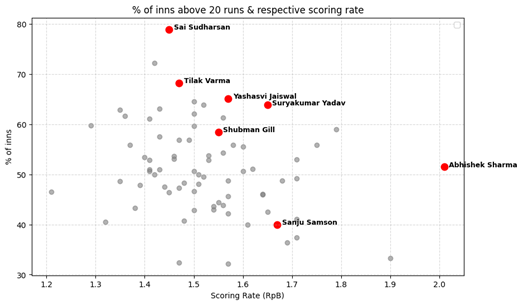
Also, a typical top-order innings lasts around 20–25 runs.

Looking at the batters of interest here (graph below, again from Divyansh’s excellent Substack piece), Abhishek Sharma stands out — he crosses the 20-run mark in nearly every other innings and strikes at 201 when he does, creating a clear gap from his peers.

Samson reaches a 20-run score only 40% of the time, but when he does, he strikes at 167. His peers achieve this milestone about 50% more often and maintain scoring rates that aren’t far behind his.

No.8?

While Bumrah, Kuldeep, Varun, and Arshdeep are automatic picks in the 15-member squad, only three are likely to feature together at any given time, given Gambhir and India’s emphasis on batting depth.

Harshit Rana is the only bowler in the squad who can offer contributions with the bat, making him the frontrunner for the No. 8 spot. This could also explain his selection ahead of Prasidh Krishna, who, despite taking 25 wickets in the IPL, was ignored.

But if Harshit’s batting doesn’t come through (it hasn’t yet translated from FC cricket to other formats), India’s solitary notable weakness — the lack of bowlers who can hit — will likely persist. In the long run, this is where someone like Vipraj Nigam — who hit 8 sixes in 79 balls while also bowling 39 overs in IPL 2025 — could prove valuable.

Another option for India is to play Shivam Dube as an all-rounder, with him, Hardik, Axar, and Abhishek sharing eight overs between them. But Kuldeep will have to make way for Arshdeep in that combination.

While this may not be a major concern in this tournament given the oppositions, it’s an area India will need to reassess and address ahead of the T20 World Cup next year.

Team Notes (Strengths & Weaknesses)

  • LHB-RHB opening pair
    • Both Gill and Abhishek are strong against all types of spin, with Abhishek being especially explosive, striking at over 200 against spin in the Powerplay in T20s since 2023.
    • Since 2023, Abhishek has averaged 24.75 against left-arm pace in the Powerplay in T20s, while Gill has averaged 97.67 — so if a left-arm pacer opens the attack, Gill can take strike.
    • Since 2023, Abhishek has averaged 22.17 against short balls from pacers in T20s, while Gill has averaged 36.75 and is among the world’s better players of the short ball — complementing each other well in this regard too.

  • India’s top six features three left-handers and three right-handers, making it harder for oppositions to plan.

  • Suryakumar Yadav averages just 5.60 in five T20Is in 2025 and has managed an average of only 18.42 in the format since last year’s T20 World Cup. Add to that a poor domestic season, and his form could easily have been a major concern for India. But he roared back in the IPL, producing a phenomenal season with 717 runs at an average of 65.18 and a strike rate of 167.92 — a timely reminder of why he’s regarded as the world’s best T20 batter.

  • Most of India’s middle-order batters have complementary skills, which means maximising the team’s overall output will require them to play smartly to their favoured matchups.
    • Legspin is Tilak’s kryptonite, but it’s very difficult to bowl against SKY and Axar.SKY’s weakest matchup is left-arm spin, but Tilak and Axar thrive against it.
    • Axar struggles against pace, but SKY strikes at over 170 against it.

  • Lower Order’s Range Against Pace
    • While Jitesh enjoyed a stellar IPL season, showing apparent improvement in handling short-pitched pace, it remains to be seen if that success translates to international cricket, where bigger ground and deeper attacks could challenge his range.
    • Axar’s limited range against pace, particularly back-of-length pace, is well-known, and even Hardik has his issues against hit-the-deck pace, which only gets magnified on larger grounds.
  • This is where someone like Riyan Parag could be missed.

  • In Bumrah, Kuldeep, and Chakaravarthy, India possess three high-quality all-phase bowlers — a rare luxury in white-ball cricket.
  • Chakaravarthy (right-arm leg-spin), Kuldeep (left-arm chinaman), and Axar (left-arm orthodox) form as complete a spin unit as you can get. Abhishek can chip in with some overs of part-time spin as well.
  • Harshit Rana provides India with a tall, hit-the-deck option in the middle overs, while Hardik too can bowl into-the-pitch cutters, smartly exploiting conditions and ground dimensions.

References

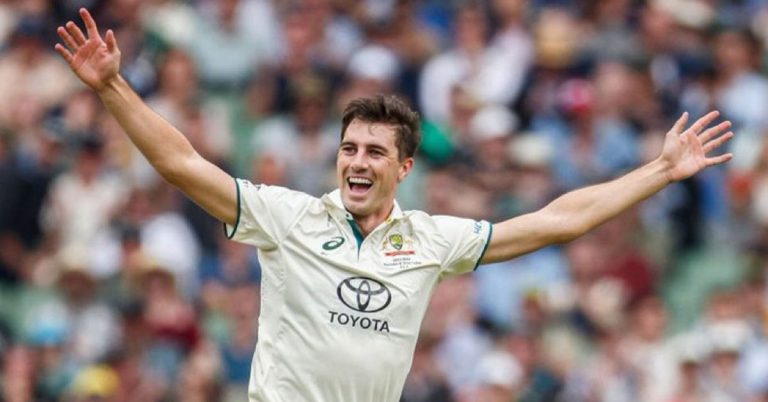
Pat Cummins provides update on back injury

Pat Cummins has provided an update on the back injury that has Australia holding its breath ahead of the Ashes. The fast bowler is committed to leading his side in the big series despite a lower back stress injury jeopardizing his participation in the opening game in Perth on November 21.

Medical scans confirmed a lumbar bone stress injury, ruling him out of the upcoming white-ball series against New Zealand and India. Cummins described the prospect of missing the series opener as devastating, and stressed he’s doing everything possible to be ready.

Pat Cummins update: Rest and light gym work crucial to recovery

Cummins taking a cautious approach limited to light gym work, with no bowling or running, hoping genuine rest will allow him to build up gradually. Cummins hasn’t set a return date, telling reporters the next reassessment is a month away. He remained confident he could return to peak form quickly, even without a run in domestic Shield matches.

With just under three months until the Ashes, Cummins hinted he’s prepared to “be a bit aggressive” in his rehab. “It’s not too bad, it was a little bit sore,” he said, as quoted by SEN.

The fast bowler said feeling sore after a Test series is normal, but the stiffness in his back hung around for an extended period after the West Indies Test series.

“How it works normally after a Test match, you’re pretty sore everywhere and things kind of cool down after a week or so, and you hope to go back to normal.

“But my back was a little bit stiff, so it’s just hung around a little bit, but there are still ages to go before the Ashes. So, a bit of rest, lots of gym work, and then we’ll build back up.”

Will Cummins be ready for the Ashes opener?

Selectors remain optimistic. Chief selector George Bailey noted there’s still adequate recovery window and said replacements like Scott Boland are on standby if needed. Given the nature of Cummins’ injury and past back injuries, it is likely that the captain won’t play all five Tests. However, Cummins has warned against deciding too soon.

“The intention is to try and play as much of it as possible, but especially the first Test as captain as well. That’ll be the aim absolutely and then you try and map out how you can play as much as possible,” said Cummins.

“It feels kind of pretty silly to try and work out hypotheticals this far out, but intention is to try and play as much as we can.”

Cummins had a stress fracture in his back in mid-2018 but recovered in time to play against India in 2018/19. The hope is he will be in full flow by the time the Ashes begins.

“But my back was a little bit stiff, so it’s just hung around a little bit, but there are still ages to go before the Ashes. So, a bit of rest, lots of gym work, and then we’ll build back up.”

Pat cummins on his back injury

The big series begins on November 21 in Perth. England are seeking their first Test win down under since 2010/11. A strong start for both teams will be vital.

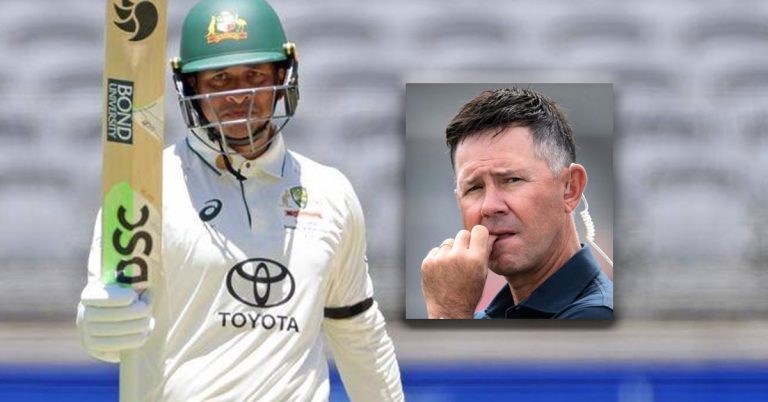
Ricky Ponting’s warning to Australia regarding succession plan

Ricky Ponting believes Australia must be clear on a succession plan given most of the current Test team is aged 30 years and over. The former captain fears the Test team will face multiple retirements at once. This will leave a huge hole that numerous inexperienced players will need to fill at the highest level.

The selectors have been hesistant to give younger players a go in recent years. They have chosen either to stick with experienced underperformers or bring in players who are above 30 themselves. Management were quick to leave 25-year-old Nathan McSweeney and 19-year-old Sam Konstas out of the XI against India and Sri Lanka respectively last summer, while other out-of-form seniors, including Usman Khawaja and previously David Warner, were under less scrutiny despite extended periods of lean returns.

Cameron Green was the only player under 30 in the World Test Championship (WTC) Final against South Africa. Konstas joined him in the West Indies after Marnus Labuschagne was dropped.

Australia are likely to opt for experience in the quest to retain the Ashes. Scott Boland is on standby should Pat Cummins miss any Tests due to a back problem. Also, 30-year-old Jake Weatherald is a strong chance due to his prolific returns since the start of last year’s Sheffield Shield.

Ricky Ponting on succession plan: “Five or six may go at once”

However, Ponting has urged Australia to think about the ramifications of too many players retiring at once.

“Yes, I think it is (important to start blooding new talent). But it’s heading down that path now where we might see five or six of them go at once,” Ponting told CODE Sports. “I think this could be Khawaja’s last summer; he could be one of the first ones to go.

“The bowling group has been together and been successful for so long, Cricket Australia (also) needs to manage that. I’m sure they’ve had discussions around that already, and if they haven’t, they should’ve.”

Ponting experienced this himself in the late 2000s. The Test team went through a lull after a number of legends retired.

“I was there when it happened to me as captain when we had Gilly (Adam Gilchrist), Matt (Hayden), McGrath, Warne, Langer move on together, no team wants that,” Ponting said.

“it’s heading down that path now where we might see five or six of them go at once”

Ricky Ponting on Australia’s conundrum

It has been a balancing act for selectors in recent years given the success of the Australian team. However, critics believe they have stuck with the likes of Warner and Khawaja too long instead of blooding in younger players. Also, selectors have stuck with the core group of fast bowlers even in situations where a series has been wrapped up.

The first Test against England begins in Perth on November 21. The first few rounds of the Sheffield Shield will be crucial in confirming selections in the Australian XI.

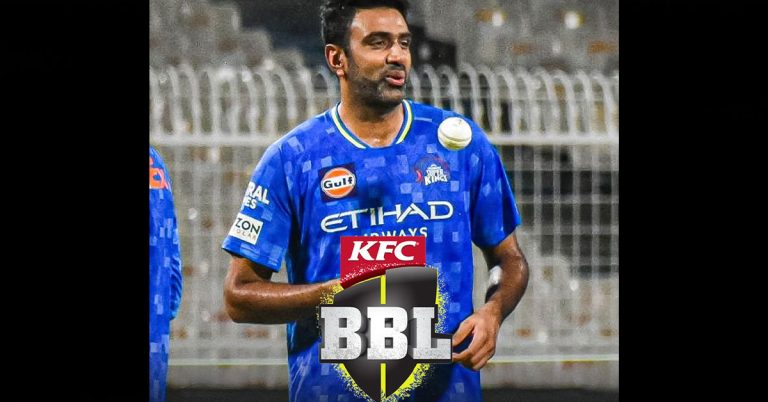
Will R Ashwin play in the 2025/26 BBL?

Ravichandran Ashwin could become the first high-profile Indian cricketer to feature in Australia’s Big Bash League (BBL), with discussions underway for the upcoming season.

While the complete details of this development are yet to come out, CA is weighing options on how to accommodate Ashwin, given that most teams have already exhausted their salary caps in the draft. A bespoke deal similar to the per-match contract offered to David Warner previously is under consideration. Speculation suggests Ashwin could be Melbourne-bound, but no final call has been taken.

CA Todd Greenberg: R Ashwin would be great for the BBL

Cricket Australia (CA) CEO Todd Greenberg confirmed that he had approached Ashwin shortly after the veteran off-spinner announced his retirement from the Indian Premier League (IPL) last week. Ashwin, who had hinted earlier at exploring overseas franchise cricket, is now being viewed as a potential marquee signing for the BBL.

“To get someone with Ashwin’s credentials to come over here for the BBL will be great at so many levels. He’s a champion cricketer who will bring a lot to the Big Bash and to our cricket summer,” Greenberg said to Cricbuzz.

The league has struggled to consistently attract top overseas names, and an Indian cricketer of his calibre with multiple IPL titles and World Cup victories would significantly boost its global reach, particularly in South Asia.

Ashwin announced his IPL retirement after a 16-year-long career, closing a chapter that began with Chennai Super Kings in 2009. His final appearance also came in the yellow jersey this year after CSK bought him back for Rs 9.75 crore following a decade-long gap. Over the course of 221 matches, he picked 187 wickets at an average of 30.22 and contributed 833 runs with the bat.

The 38-year-old had earlier retired from international cricket during India’s 2024-25 tour of Australia, finishing as India’s second-highest Test wicket-taker with 537 scalps, behind only Anil Kumble.

If the deal materialises, Ashwin’s move to the BBL will be a landmark moment for Indian cricketers’ participation in global franchise cricket.

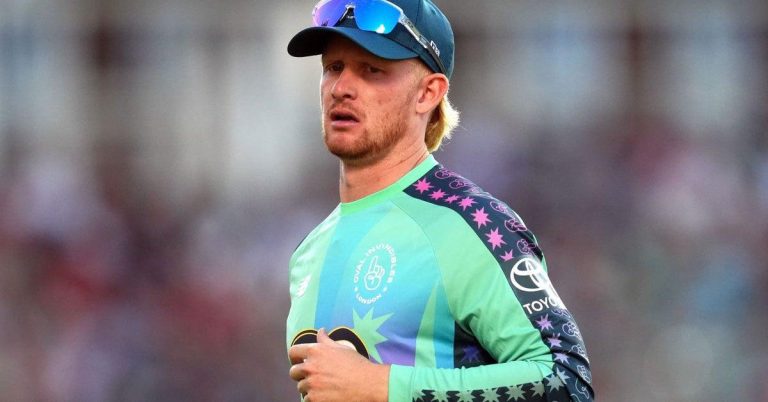
Is The Hundred trying to be like the IPL? Jordan Cox comments

Jordan Cox, top run-scorer for the Oval Invincibles and crowned Men’s Player of the Tournament in The Hundred 2025, argues the match should stay true to its 100-ball roots.

Jordan Cox hopes The Hundred remains as is

Cox made a bold statement about The Hundred tournament, “I absolutely love the format. I think it’s the best format.” He warned against chasing IPL-style appeal, stating plainly, “You’re never going to be better than the IPL. What’s the point in trying to change it to be second-best? This is perfect for English cricket. Just keep it the same. Friends, families, and kids love to come and watch. Why ruin it?”

For him, preserving the format means preserving what sets The Hundred apart in English cricket, i.e. its pace, accessibility, and family-friendly vibe.

As ownership shifts bring in fresh money and a push for radical changes, auctions, rebranding, and even a format switch, Cox remains firm that this competition works precisely because it’s different.

The Hundred was conceived as a distinct product to engage new audiences, particularly younger fans who may not have the patience for longer formats. Its 100-ball structure, shorter match times, and emphasis on entertainment were designed to complement, not compete with, global T20 tournaments. The formula has delivered packed stadiums, a vibrant atmosphere, and increased participation from women and children who are central to the growth of the sport in England.

Cox’s comments echo the concerns of many players and fans who fear that a change to T20 could dilute the brand’s uniqueness. While financial incentives from private investors are tempting, there is also the danger of alienating the very audience that The Hundred successfully brought into cricket.

Cricket boards worldwide have often grappled with balancing tradition, innovation, and commercial interests. England, too, stands at such a crossroads. “This format is ours. It belongs to English cricket,” he said, saying that The Hundred offers something no other league does.

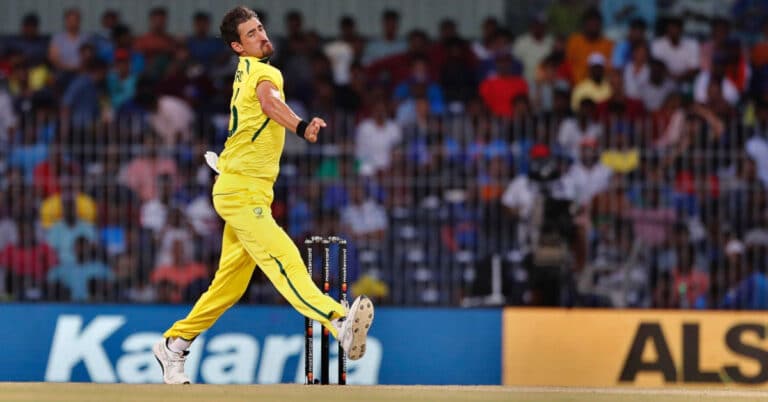
Why did Mitchell Starc retire from T20 Internationals?

Mitchell Starc is the first member of Australia’s fast-bowling “big three” to finish up from a format, announcing his retirement from T20 Internationals. The 35-year-old made the call to prolong his Test and ODI career.

The timing of the call can be an eyebrow raiser for some, but Starc confirmed he made the decision so Australia can prepare accordingly for next year’s T20 World Cup in India and Sri Lanka.

Mitchell Starc on retiring from T20 Internationals: Test cricket my biggest priority

In a statement, Starc spoke fondly of the 2021 T20 World Cup triumph, where the men’s team won their first title in the shortest format. He also reiterated his love for Test cricket and goal of playing in the 2027 ODI World Cup.

“Test cricket is and has always been my highest priority,” Starc said, as quoted by cricket.com.au.

“I have loved every minute of every T20 game I have played for Australia, particularly the 2021 World Cup, not just because we won but the incredible group and the fun along the way.

“Looking ahead to an away Indian Test tour, the Ashes and an ODI World Cup in 2027, I feel this is my best way forward to remain fresh, fit and at my best for those campaigns.

“It also gives the bowling group time to prepare for the T20 World Cup in the matches leading into that tournament.”

Starc finishes with 79 wickets in 65 matches, second only to Adam Zampa in terms of wickets for Australia in T20Is.

“Mitch should be incredibly proud of his T20 career for Australia,” said selection chief George Bailey.

“He was an integral member of the 2021 World Cup winning side and, as across all his cricket, had a great skill for blowing games open with his wicket taking ability.

“We will acknowledge and celebrate his T20 career at the right time, but pleasingly he remains focused on continuing to play Test and ODI cricket for a long as possible.”

How will Australia lineup in the T20I series in New Zealand?

Australia’s next assignment is three T20Is in New Zealand. Pat Cummins is ruled out due to a lumbar bone stress issue in his back. Nathan Ellis will also miss the series due to paternity leave, while Spencer Johnson and Lance Morris are also injured.

The likes of Ben Dwarshuis, Xavier Bartlett and Sean Abbott may form a core part of the attack that tours New Zealand. The three-match series begins on October 1.

Australia’s squad: Mitch Marsh (c), Sean Abbott, Xavier Bartlett, Tim David, Ben Dwarshuis, Josh Hazlewood, Travis Head, Josh Inglis, Matt Kuhnemann, Glenn Maxwell, Mitch Owen, Matt Short, Marcus Stoinis, Adam Zampa

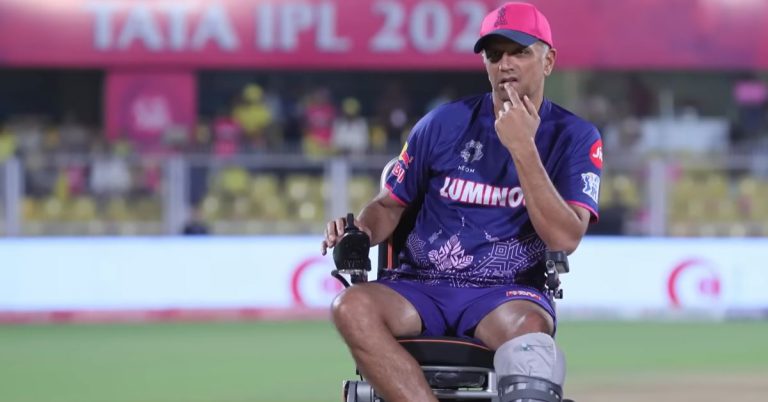
Rahul Dravid exits RR: What led to the sudden departure?

Rahul Dravid has stepped down as head coach of the Rajasthan Royals ahead of the IPL 2026 season. The franchise confirmed that while he was offered a broader strategic role following a structural review, Dravid declined and chose to exit.

His return to the Royals in 2025 came with high hopes, being a revered figure in Indian cricket and a former player, captain, and mentor within the franchise. Also, he rejoined after guiding India to the 2024 T20 World Cup title.

Why did Rahul Dravid leave RR ahead of the IPL 2026 season?

But the 2025 IPL campaign turned sour. The Royals managed just four wins in 14 matches and finished ninth. That poor record, combined with internal tensions, appears to have tested Dravid’s position.

As per the reports, disagreements over the succession plan for team captaincy played a pivotal role. While Riyan Parag and Yashasvi Jaiswal were in the running for leadership, stalwart Sanju Samson was reportedly reluctant to step aside, leaving Dravid caught in a storm.

Despite the off-field noise, the Royals highlighted Dravid’s positive influence on team culture and young players. Yet, his refusal to accept the newly proposed but less-defined role signaled the end of his most recent tenure. The franchise now faces the challenge of filling a leadership vacuum and rebuilding confidence heading into IPL 2026. Dravid’s legacy, built over the years, will endure but the Royals must now redefine their path.

The recent rumours of Samson wanting out also possibly played a part in Dravid’s exit. Prior to IPL 2025, the Kerala batter was likely India’s No. 1 choice opener in the shortest format. With three centuries in T20Is, Samson has been on a roll for the national team, locking in his place in the absences of Shubman Gill and Yashasvi Jaiswal.

However, a middling IPL campaign, on both the batting and captaincy fronts, resulted in him falling down the pecking order. Chief selector Ajit Agarkar even claimed prior to the Asia Cup that Gill and Abhishek Sharma will be India’s frontline openers, potentially putting Samson’s spot in threat again. That, coupled with him demanding a trade request as per Cricbuzz, resulted in the Royals having to choose between their captain and coach. It seems like they have gone for the former, as of now.