Home Blog Page 84

Predicted Australia XI for 1st Test against Sri Lanka 2025

Australia named their 16-man squad for their two-Test tour of Sri Lanka, which begins on January 29 in Galle. There were a couple of surprises, most notably 21-year-old spin-bowling all-rounder Cooper Connolly, who has played just four Tests to date.

Australia squad for two Tests against Sri Lanka: Steve Smith (c), Travis Head (vc), Sean Abbott, Scott Boland, Alex Carey, Cooper Connolly, Josh Inglis, Usman Khawaja, Sam Konstas, Matt Kuhnemann, Marnus Labuschagne, Nathan Lyon, Nathan McSweeney, Todd Murphy, Mitchell Starc, Beau Webster

In other squad news, Pat Cummins is unavailable due to the impending birth of his second child. Steve Smith will lead. Mitchell Marsh, who was dropped for the SCG Test against India, has been left out for Sri Lanka as well. Other notable omissions are Peter Handscomb and Glenn Maxwell as the selectors have opted for youth.

Predicted Australia XI for 1st Test vs Sri Lanka at Galle

1. Usman Khawaja, 2. Sam Konstas, 3. Marnus Labuschagne, 4. Steve Smith (c), 5. Travis Head, 6. Beau Webster, 7. Alex Carey (wk), 8. Mitchell Starc, 9. Nathan Lyon, 10. Todd Murphy, 11. Matt Kuhnemann

Opening conundrum

There are some big calls to make for Australia ahead of the first Test. Given Travis Head enjoyed the opening role in India in 2023 (223 runs at an average of 55.75 and strike rate of 71.47), will the selectors look to put him back at the top? If so, who misses out – 19-year-old Sam Konstas or 38-year-old Usman Khawaja?

“Trav’s an option (to open),” Bailey said in a press conference after the squad announcement, as quoted by cricket.com.au. “We’ve got a number of options and there’s been a few preliminary discussions around where that may land, and that may depend on the makeup of that first XI. I think Andrew (McDonald) and Steve (Smith) will settle on that in due course, once we hit Sri Lanka.”

If Head opens, one of Khawaja or Konstas will be left out. Khawaja’s experience, plus his improved batting against spin in recent years, are factors the selectors may wish to go with. But, with a World Test Championship (WTC) Final place sewn up, is it time Australia test new players, such as Nathan McSweeney or Josh Inglis in the middle order with Head and Konstas to open?

Because of WTC qualification, the selectors may be willing to try Konstas right away. If picked, he will certainly be tested against left-arm spin – a bowling type he has been dismissed by a few times in recent weeks, namely Ravindra Jadeja on Boxing Day and twice in the BBL before the fourth Test against India.

Should Australia go for the Konstas-Khawaja opening combination, it is difficult to see how Nathan McSweeney, Josh Inglis or Connolly force their way into the XI. However, there is pressure on Marnus Labuschagne to perform given there are other players knocking on the door and Cameron Green is nearing full recovery from a back injury.

Make up of the bowling attack

The make up of the bowling attack is another talking point ahead of the first Test. Conditions in Galle aid spin and you wouldn’t expect the Sri Lankans to produce a surface with any major assistance for the seam bowlers. So, do Australia still play both Boland and Starc?

Matt Kuhnemann is a must. Left-arm spin is so effective at Galle. The likes of Rangana Herath (102 wickets at 24.94) and Prabath Jayasuriya (71 wickets at 21.79) have enjoyed great success there.

However, if Australia opt for two frontline seamers, will they leave out exciting prospect Todd Murphy or take a risk by leaving out a left-arm spinner? In truth, all three of Murphy, Kuhnemann and Nathan Lyon should play given the conditions, with Beau Webster another seam option should they need it.

If the three-spinner strategy is what Australia go with, they may opt for Starc in the first Test given his ability to reverse swing the ball. That being said, there is argument to leave Starc fresh for the second Test at the same venue, where ground conditions may be more abrasive.

Australia are seeking their first series win in Sri Lanka since 2011. They lost 3-0 in 2016 and drew 1-1 in 2022. In fact, Australia have won just one series in Asia since then – Pakistan in 2022.
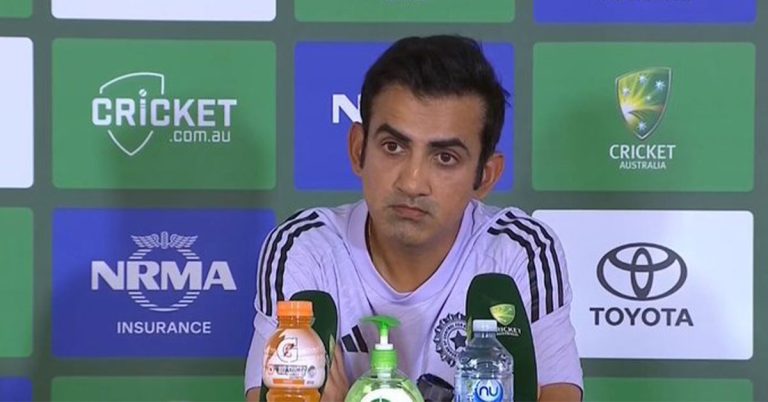
It’s time for Gautam Gambhir to walk the talk as India coach

It hasn’t been a smooth transition from analyst to head coach for Gautam Gambhir. Since replacing Rahul Dravid following the drought-breaking T20 World Cup win in the Caribbean, India suffered their first ODI series defeat against Sri Lanka since 1997, a shocking 3-0 series loss at home to New Zealand and a first Border-Gavaskar Trophy (BGT) series defeat since 2014/15.

The poor run of form has his doubters feeling justified. There was a view that Gambhir didn’t have the merit for the position given his experience as an IPL mentor to date. However, according to Cricbuzz, India are likely to persist with Gambhir for the foreseeable future, and it will be interesting to see how the head coach responds from here.

Gautam Gambhir: India coach yet to put his thoughts as analyst into action as coach

Over the years, Gautam Gambhir has been vocal of the role bowlers play in winning matches at tournaments. On the eve of home Tests against Sri Lanka in 2022, Gambhir said Rohit Sharma won’t face difficulties as Test captain because of what Virat Kohli set up from a bowling point of view. During the 2023 ODI World Cup, Gambhir said bowlers win you tournaments.

“This is what I have been saying from such a very long time; it’s the bowlers that win you tournaments and not batters and that’s exactly what our bowlers have shown today,” Gambhir said after India beat England, as quoted by India Today.

“I hope going forward we talk more about Mohammed Shami [who took four wickets against England at Lucknow]. Ever since his comeback in this lineup, it’s a completely different bowling lineup now and this was probably the best spell that I have seen from a fast bowler, bowling while chasing. It was incredible. Fast bowling of the highest quality. The pace, the lengths, the seam position, everything.”

Even as coach, Gautam Gambhir has spoke on the importance of bowlers. He even called for India’s “batsman-obsessed” culture to end as recently as October.

“This is the era of bowlers. Batters only set up matches. This batsman-obsessed attitude of ours needs to end. If a batter even scores 1,000 runs, it doesn’t guarantee victory,” Gambhir said at a press conference before the India-New Zealand Test series, as quoted by Times of India.

“But if a bowler takes 20 wickets, then there is a 99 per cent guarantee that we will win the Test match.”

However, what India have produced compared to what Gambhir has said is like chalk and cheese. Despite playing at home against New Zealand, who hadn’t won a Test in India since 1988, India were on the defensive, with nearly a quarter of deliveries resulting in singles and twos. It is reflective of Rohit Sharma’s captaincy approach in Tests, but Gambhir, as coach, surely has a say on how the team should play despite the obvious PR ahead of the Sydney Test against Australia.

Speaking of Australia. India ran Jasprit Bumrah into the ground, forcing him to bowl him spell after spell as the lack of depth came to the fore. The lack of consistent support for Bumrah was a key area of concern in Adelaide and Brisbane, but India instead chose to strengthen their batting by playing two spinners – Ravindra Jadeja and Washington Sundar – in Melbourne and Sydney. Bumrah, as feared by many, went down injured.

Sure, Sundar and Nitish Kumar Reddy and got India back into the contest at the MCG. Their 127-run stand was a terrific show of grit and determination, and the time it took out of the game gave India hope that a draw would be the worst result they would achieve.

The issue, though, is they conceded 474 and were playing from behind. In Australia’s second innings, India didn’t finish off the job after reducing the hosts to 91/6 and a lead of just 196. Pat Cummins’ team went on to lead by 339 and India’s chances of victory went up in smoke.

However, the big red flag was Sydney. India went in with the same combination on a very green pitch, opting for the extra batting that Gambhir has often spoken against. Playing two spinners with Bumrah and Mohammed Siraj already having big workloads was a huge risk. They ran out of juice with the series on the line on an SCG pitch that was still challenging to bat on by the time Australia’s run chase began.

Jadeja bowled three overs in the entire Test. Sundar came on for the first time when Australia needed 11 to win. It is a clear contradiction to Gambhir’s views on bowling depth as an analyst and even in press conferences as coach

If the pre-SCG Test Indian Express article is true that Gambhir “let the team do what it wanted for ‘the last six months'”, then that is not someone who has the mindset to give India a tactical edge. For Gambhir to succeed, he needs to implement his views we have seen and heard more strongly than he is currently.

Next up is the Champions Trophy. India, under Rohit Sharma as white-ball captain, should be in the final four at the very least. If not, the pressure will only amplify.

India’s next Test assignment is England away in mid-2025, and we can assume Gambhir will be there. It will be interesting to see his approach as coach in terms of the team combination he helps to select, as well as how long he persists with underperforming players. How positive India will be in their quest for a first series win in England since 2007 is the key question.

Time will tell.

“We know how to beat Australia” – Kagiso Rabada

Kagiso Rabada believes South Africa have what it takes to beat Australia in the 2025 World Test Championship Final (WTC) at Lord’s. Rabada, one of the world’s premier fast bowlers, says Test cricket is still alive and it’s the best format for the Proteas at the moment.

South Africa have won seven straight Test matches, sealing qualification to the WTC Final courtesy of a thrilling two-wicket win against Pakistan in Centurion. They then won the second Test by ten wickets in Cape Town.

“One hundred per cent, Test cricket is still alive. It’s our best format that we’ve been playing right now,” Rabada said on SuperSport following victory against Pakistan, as quoted by cricket.com.au.

“When you look at South African cricket and all our legends, they’ve all been great Test cricketers. The world’s best players are Test cricketers, and this series against Pakistan has been a wonderful advertisement for Test cricket, especially in South Africa.”

South Africa vs Australia is a great rivalry – Kagiso Rabada

Rabada spoke highly of the WTC Final, mentioning that it’s a big occasion the Proteas are excited for. In Bangladesh last year, wicketkeeper Kyle Verreynne said the team spoke about reaching the final on a regular basis.

“It’s actually quite some distance away, but a big occasion like the World Test Championship final gets you up for it,” Rabada said.

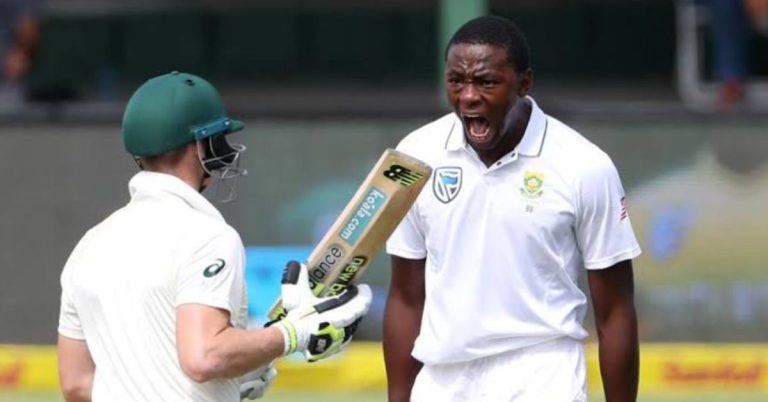
The fast bowler is also looking forward to another chapter in the South Africa-Australia rivalry. Both sides play attacking cricket, headlined by excellent fast bowling attacks. There have been fiery matches between the two nations, rearing to its head in the infamous 2018 series.

“South Africa versus Australia has always been an intense rivalry, because we play cricket quite similar. We play hard – and they’re going to come hard at us, and we know that,” Rabada said.

“But we also know how to beat them.”

Rabada has an excellent record against Australia. He has taken 49 wickets in ten Tests at an average of 23.08 and strike rate of 39.9. He forms part of an excellent pace-bowling brigade for the Proteas, which includes Marco Jansen, Gerald Coetzee and teenager Kwena Maphaka.

In addition to the bowling, South Africa’s batting has also improved, with Temba Bavuma leading the way. The skipper has struck 1,690 runs at an average of 49.7 since the start of 2021, and holds the key against the Australians.

“I think any captain who wants to lead from the front, they want to lead through performance as well, and that’s what Temba’s done exceptionally well,” said coach Shukri Conrad.

“He’s not lost a game as captain of South Africa (winning eight out of nine Tests). Leading from the front, turning out the performances he’s had, he’s probably in the form of his life.

“I haven’t seen him play any better, and that obviously gives you a lot of confidence when you’re captaining as well. I wouldn’t want anyone else to be captaining us.”

The WTC Final will take place at Lord’s on June 11. There is a reserve day in case inclement weather intervenes.

Two-tier Test stucture would be detrimental to cricket

The two-tier Test cricket structure has been a topic of conversation for a number of years, particularly with the rise of T20 cricket. It is no secret former England captain Michael Vaughan is a supporter of the concept.

“I’m a big advocate for two-division Test match cricket — two leagues of six and every two years one team will go down and one team will come up,” Vaughan said in December, as quoted by Fox Sports Australia.

Former India all-rounder Ravi Shastri is also a supporter. He believes the system is the way to keep Test cricket alive and thriving.

“I’ve been a firm believer in that if you want Test cricket to survive and be alive and thriving, I think that’s the way to go,” Shastri said on SEN during the fifth Test between Australia and India. “The top teams play against each other more often, so there is a contest; you want contests.”

They – and other supporters of the idea – may get their wish sooner rather than later. According to The Age, new ICC chairman Jay Shah will meet Australia chair Mike Baird and England Cricket Board chair Richard Thompson later this month to discuss the concept following the huge attendances and ratings in the 2024/25 Border-Gavaskar Trophy.

Two-tier Test structure would be overkill

Let’s be real. “Two-tier” is the term they want you to hear. “Big 3” is the reality.

Under the two-tier Test structure, India, England and Australia can play each twice every three years instead of every four years. As an Australian, such a concept is extremely disappointing as more is not always better. Part of why the 2024/25 BGT was so successful is because it had a special feel to it. India hadn’t toured Australia for Tests in four years, so it was an event you didn’t want to miss. If they had toured two years ago, it wouldn’t have the same spark.

India, England, and Australia playing each other even more than they do now would be overkill. It would lose its charm. Too much of anything loses its value. It’s human nature.

Now to the current landscape. Shastri’s comments in particular come as a surprise. 2024 was one of Test cricket’s most memorable years, with a number of unpredictable results, perhaps none more so than New Zealand’s 3-0 triumph in India. Add to that West Indies’ Test win in Australia, Sri Lanka’s win in England, Bangladesh’s 2-0 series triumph in Pakistan, and Pakistan’s 2-1 win over England, and you have a great platform to market Test cricket.

Instead, cricket’s powerbrokers are at the mercy of broadcasters, and don’t wish to think of the future. Overkill can turn fans away, and broadcasters will suffer in the long run if that does indeed transpire.

Will an Australia-India series generate such buzz, attendances and ratings if they play every year? What would the Ashes be reduced to? Questions to consider.

ALSO READ: Test cricket needs more than the Ashes to survive

The implications of a two-tier Test system on other nations

The Age reports the top tier would feature Australia, England, India, South Africa, New Zealand, Sri Lanka and Pakistan, while West Indies, Bangladesh, Ireland, Afghanistan and Zimbabwe would make up the second.

Spare a thought for the nations in the second division. It is already a fight as it is for Test cricket to be profitable. No matches against top teams for an extended period would be damaging. You wouldn’t blame those boards for casting Tests aside further, and the question then needs to be asked: what motivation would a youngster have to play Test cricket? Would Vaughan, Shastri and the two-tier supporters have an answer?

“I dare say the West Indies need to be invited to these geographies to play because a Test match in the West Indies today is a dead-rubber unless it’s against India, England or Australia where we get revenues from television,” said former West Indies Cricket president Whycliffe “Dave” Cameron back in 2020.

When this concept was talked about in 2016, then-BCCI president Anurag Thakur was on the money. “The BCCI is against the two-tier Test system because the smaller countries will lose out and the BCCI wants to take care of them. It is necessary to protect their interests,” he said.

“In the two-tier system, they will lose out on a lot, including revenue and the opportunity to play against top teams. We don’t want that to happen. We want to work in the best interests of world cricket and that is why our team plays against all the countries.”

Even those nations not named India, Australia and England in the first division would suffer. Because the three will play each other more, it means less opportunities for the others, and hence less revenue. The lower the revenue, the lower Test cricket sits on the priority list, and the more the format suffers.

Also, a two-tier Test structure would rob us of players making their name and performing brilliantly against higher-ranked nations. Less than a year ago, Shamar Joseph produced one of the all-time great performances on Australian soil. Later in 2024, Bangladesh fast bowler Nahid Rana had Pakistani batsmen hopping and jumping at Rawalpindi. Soon after, Mitch Santner enjoyed his finest hour in Tests as the Black Caps took down India in one of the all-time series upsets.

Plus, do we not want to see more of Kagiso Rabada having a crack at England or Australia? Or Will O’Rourke on an Australian pitch? World cricket has exciting talent to offer. Fans shouldn’t be robbed of seeing them taking on the best in the world more often.

Jay Shah’s reign as ICC chairman would be off to a poor start

Jay Shah has previously spoken of his desire to see Test cricket grow around the world. “While the T20 is a naturally exciting format, it is equally important that Test cricket remains a priority for everyone as it forms the bedrock of our game,” Shah is on record of saying. “We must see to it that cricketers are driven to longer format and our efforts will be channelised towards this goal.”

How exactly does a two-tier Test structure help the format remain a priority for everyone? How will cricketers be driven to play Tests? The move to this concept would go a long way to eliminating both and prove Shah’s doubters right.

One can hope other nations will oppose this structure and that it doesn’t go ahead. If it does, it will be an extremely sad and damaging time for this incredible and traditional format of the game.

Analysis: Why Australia thorougly deserved 3-1 BGT win

For the first time since 2017, the Border-Gavaskar Trophy (BGT) is back in the hands of Australia after their 3-1 win. Beau Webster’s winning runs were met with raucous cheers and applause from the Australian fans at the Sydney Cricket Ground (SCG), confirming the end of India’s BGT streak, which had stretched to four.

The 3-1 scoreline accurately reflects the series, with Australia much the better team since Perth. Pat Cummins’ team played from in front in each of the four Tests, with India offering hope of stunning comebacks in Melbourne and Sydney, buoyed by the events of 2020/21.

However, India have been a shadow of their previous selves in Australia. While the pitches had more in them for the bowlers this time around, the absence of the rock that is Cheteshwar Pujara was felt. Also, the fact the surfaces offered more only amplified the disappointment around the reliance on Jasprit Bumrah, whose injury at the end of the series was a nightmare come true for India fans.

Key reasons why Australia went on to win the BGT 3-1

Australia and India had questions about the batting heading into the series, but the hosts delivered more when it mattered

For Australia, Steve Smith was back at four and Nathan McSweeney was given the task of opening the batting thanks to his strong First Class form in the past 12-18 months. Smith, along with Marnus Labuschagne, Usman Khawaja and Travis Head, were coming off an under-par season collectively in 2023/24, with all-rounder Mitchell Marsh the only top six batter to average 40 in this World Test Championship (WTC) cycle.

India also had their questions. Coming off a shock 3-0 home loss to New Zealand, the form of Rohit Sharma and Virat Kohli was firmly under the microscope, while Shubman Gill still had to prove some doubters wrong as to his viability as a long-term number three. With Yashasvi Jaiswal on his first tour of Australia, the fear was India may rely too heavily on counterattacking brilliance from Rishabh Pant to get them out of trouble.

In the end, Australia answered the questions better. India passed 200 just thrice in their nine completed innings, while the hosts struck 337, 445 and 474 to set up the Adelaide, Brisbane and Melbourne Tests. Overall, India averaged 21.38 per wicket in their first innings, while Australia averaged nearly eight runs more at 28.82. KL Rahul started the series so brightly, arguably holding the mantle as India’s best batter this series after three Tests, but the fact he finished with an average of 30.66 is classic Rahul.

KL Rahul promised so much more in the 2024/25 BGT series.

Travis Head won man of the match in both Adelaide and Brisbane courtesy of his superb hundreds that put Australia on top. Steve Smith also enjoyed a return to his old ways in the third and fourth matches, with his MCG knock a convincing one to put Australia in the driving seat. Marnus Labuschagne, following his horror outing at Perth, hit three half-centuries in his next six innings.

Border-Gavaskar Trophy analysis: A look at the key reasons why Australia went on to win the BGT series by a margin of 3-1.
Travis Head was key for Australia in their 3-1 series win.

It feels Labuschagne isn’t out of the woods yet given some of his recurring dismissals behind the wicket, but even his returns are the kind India would have been pleased to see from their underperforming stars. 22-year-old Yashasvi Jaiswal may have sore shoulders of his own after carrying the weight of responsibility given the struggles of Rohit and Virat, with the captain averaging 6.1 in his three Tests and the latter dismissed in the channel all eight times.

Sam Konstas was brought in for Boxing Day at the expense of McSweeney, with the task of asking different questions of Bumrah. He did, and while there are question marks around his dismissals, the performances of others around him, especially debutant Webster in Sydney, ensured Australia benefitted from the quick starts the 19-year-old provided.

Australia were tactically superior as India went defensive to mask their flaws

Because of India’s shaky batting and Rishabh Pant’s own under-par series, India were willing to sacrifice bowling prowess for a longer batting lineup. They played two spinners – Ravindra Jadeja and Washington Sundar – with the main benefit of the longer batting lineup alongside Nitish Kumar Reddy to replicate the kind of lower-order contributions Cummins produced with the bat.

However, there is the bowling side India needed to consider. The best discipline of Cummins’ game is of his course his bowling. You can’t replicate Cummins as an overall player with two spinners in these conditions and another seam bowler whose a better batsman at this point of his career.

Border-Gavaskar Trophy analysis: A look at the key reasons why Australia went on to win the BGT series by a margin of 3-1.
Pat Cummins responsed brilliantly after the disappointment of Perth.

Sundar made a strong contribution with the bat in the first innings at Melbourne, batting 162 balls and combining for 127 runs with centurion Reddy, which increased India’s hopes of a draw given the time it took out of the game. However, India had conceded 474 and were relying too heavily on Jasprit Bumrah. India’s legendary quick was back for spell after spell with the fourth, fifth and sixth bowling options struggling to apply anywhere near the same pressure.

Inexplicably, India went for the same combinations on a much greener SCG pitch; a surface actually criticised by some Australian fans as one that can reduce the game into a pace bowling shootout. Jadeja bowled three overs, while Sundar took his mark to bowl for the first time with Australia needing 11 to win. That, along with their combined 65 runs for the match, seems an awfully low price to pay for Bumrah picking up the injury many feared he would get.

Compare this to Australia. The hosts were able to build pressure for much longer periods, even with Mitchell Marsh barely a factor with the ball. Scott Boland proved more than an able replacement for Josh Hazlewood, while Pat Cummins was at his relentless best after Perth. Mitchell Starc, not known as much for consistency, was able to ask questions even later in the series, particularly in the second innings at the MCG and first at the SCG.

Nathan Lyon, even in his limited capacity, conceded at just 2.70 per over, and Beau Webster’s superb debut enabled Cummins to rotate his quicks without worry of overworking them.

Four Australians – Cummins (167), Starc (153.2), Boland (101.4) and Lyon (122.4) – sent down over 100 overs, with Cummins and Starc’s figures inflated by Josh Hazlewood’s injury in Brisbane. For India, Bumrah (151.2) and Mohammed Siraj (157.1) contributed 308.3 out of India’s 620.4 overs, with Reddy sending down just 44. It is no surprise Siraj looked a tired figure by the time the second innings began at the SCG.

It was a similar story for India with regards to captaincy. Rohit, who reportedly “opted out” of the SCG Test, had a difficult year as Test captain. His propensity to go on the defensive all too quickly and refusal to stick to plans long enough saw a number of Australians – especially Travis Head – get into their innings.

India had their chance to even win at the MCG after reducing Australia to 91/6 in the second innings. However, Cummins counterattacked, Rohit stood back and Australia scored two 50-run partnerships for the last four wickets. More here.

Final thoughts

India had their good moments, but ruined it with some shoddy cricket, including the Yashasvi Jaiswal run out and losing seven wickets inside a session to crucially lose the MCG Test. Australia did better for longer periods, and in the end were willing to make the big calls, such as debuting Webster with the trophy still up for grabs.

In the end, the 3-1 margin for Australia is one to savour. Pat Cummins as a leader continues to grow from strength to strength, and this confidence can keep them in good stead for what promises to be another big year ahead in 2025.

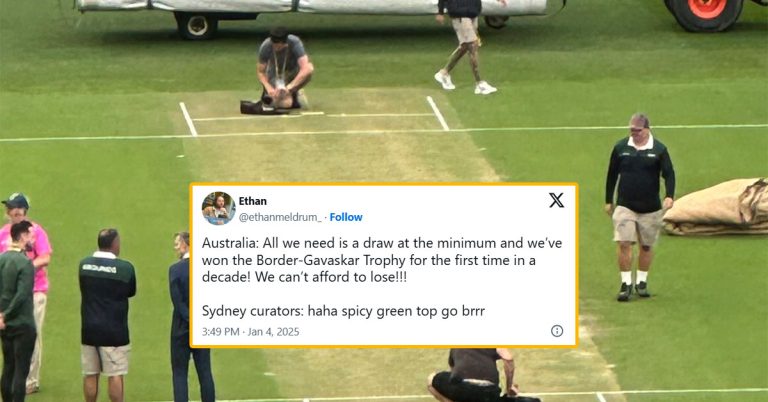
Australia fans question SCG pitch with team 2-1 up in the BGT series

Australia fans have questioned the timing of the spiciest Sydney Cricket Ground (SCG) pitch for a Test in recent memory as 26 wickets fell in the first two days against India. Pat Cummins’ team came into the match leading the series 2-1 after victory in the final hour at the MCG, with a draw enough to seal their first Border-Gavaskar Trophy (BGT) series win since 2014/15.

Instead, a greentop, so rarely seen in Test cricket as the SCG, has made the match somewhat of a shootout between the seam attacks. Scott Boland has been a nightmare to handle, taking combined figures of 8/73 in 33 overs across the first two days. India’s seamers were also effective, delivering even without their talisman Jasprit Bumrah, who went for scans soon after lunch due to back spasms.

Batting has been very difficult, with plenty of seam movement even with the older ball under the Sydney sunshine. Australia were playing from in front after bowling India out for 185, but the visitors fought right back as Beau Webster shone brightest in a tough first innings for the hosts.

In their third innings, India started quickly, before Boland ripped through the top order to put Australia in the driving seat. India then decided attack would be the best form of defence, with Rishabh Pant going on a rampage, smashing 61 off 33 balls to threaten to take the game away from the hosts. But, quick wickets meant Australia still had their noses in front.

Spicy SCG pitch: Australia fans surprised with surface given series scoreline

However, some Australian fans were still unimpressed by the surface given the series scoreline. Like a rank turner in the subcontinent, such conditions can bring teams closer. Batsmen from both sides have copped blows on the body, and who knows how the surface will play in the fourth innings as Australia faces a tricky chase.

On the contrary, there is the World Test Championship (WTC) argument. Australia needs a single win from their final three Tests (including two against Sri Lanka) to meet South Africa in the final at Lord’s later this year.

Sunil Gavaskar also had qualms about the SCG pitch. “If 15 wickets fell [on one day] in India, all hell would have broken loose. We had Glenn McGrath saying he’d never seen so much grass. Did you hear any former India cricketer moan about the pitch?” said the India legend after 15 wickets fell on day two.

“I did say that when we saw the pitch yesterday, the cows could have gone and grazed on it. This is not the ideal Test match pitch that you want because you want it to go into a fourth and fifth day. Unless there is rain I don’t see us being here on day four,” Gavaskar continued, as quoted as saying by ABC Sport.

India finished day two 141/6, leading by 145 after bowling Australia out for 181. The big question is whether Jasprit Bumrah will be available to bowl. If he can bowl effectively, anything around 200 arguably makes India favourites on this SCG pitch.

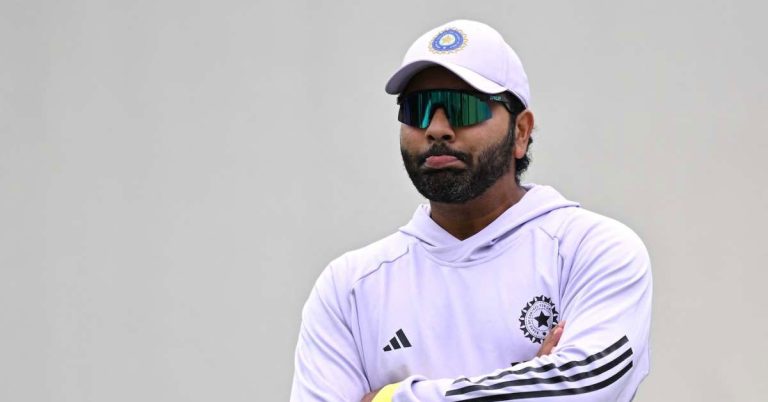
Reactions to Rohit Sharma missing the SCG Test

In the worst-kept secret in the last 24 hours, Rohit Sharma has been excluded from the Indian lineup for the fifth and final Test at the Sydney Cricket Ground (SCG). A report from The Indian Express suggested he opted out, which Jasprit Bumrah reiterated at the toss.

“Obviously, our captain [Rohit Sharma] has shown his leadership as well. He’s opted to rest in this game,” Bumrah said. “So that shows that there’s a lot of unity in our team. There’s no selfishness. Whatever is in the team’s best interest, we’re looking to do that.”

Rohit has struggled as Test captain in recent months, overseeing a 3-0 home loss to New Zealand and two losses in three matches in Australia. His batting form has also been of huge concern, hitting just 31 runs at an average of 6.2 in the 2024/25 Border-Gavaskar Trophy (BGT).

ALSO READ: Australian perspective – does Rohit Sharma’s omission give India a better chance of winning?

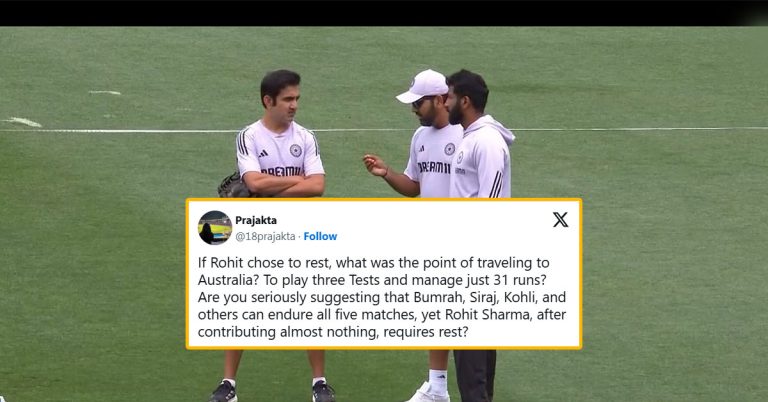
Fans react to Rohit Sharma “opting out” of the SCG Test

Hence, fans are skeptical of the official reason that Rohit decided the rest himself. There have been conflicting reports over the past day that Rohit had been dropped, while others claimed he was “rested”.

Sanjay Manjrekar was critical of how the whole episode has been handled. “So typical of Rohit Sharma. Doing the right thing, doing what’s right for the team. But could not understand the ‘cloak & dagger’ around the issue. Wasn’t even talked about at the toss,” he wrote on X.

Regardless of the reason, a number of Indian supporters were relieved to see Bumrah walk out for the toss, hoping to see the team recreate the performance they displayed at Perth in late November.

“What is opting to rest? This sounds like such a PR written line,” one fan wrote on X. “Are you seriously suggesting that Bumrah, Siraj, Kohli, and others can endure all five matches, yet Rohit Sharma, after contributing almost nothing, requires rest?,” another fan wrote.

India won the toss and decided to bat in their must-win Test. It is considered a brave decision given the green nature of the SCG pitch, but a good score batting first can set the game up.

Do India have a better chance to win at the SCG with Rohit Sharma out?

It was one of those days in Indian cricket. Conflicting reports, different updates from different sources, and fans getting their team news from journalists, wondering whether it’s true or not.

On the eve of the fifth and final Test of the Border-Gavaskar Trophy (BGT) at the Sydney Cricket Ground (SCG), reports emerged of Rohit Sharma’s possible omission from the Indian team soon after dressing room conversations were leaked following their loss at the Melbourne Cricket Ground (MCG). Coach Gautam Gambhir wouldn’t confirm Rohit’s participation at the press conference, bizarrely claiming “we are going to have a look at the wicket and probably announce our playing XI tomorrow” when asked whether the captain will be in the XI.

Earlier, there were whispers that Rishabh Pant would be the player dropped, adding further uncertainty around the makeup of the team. After all the deliberation and speculation, it was finally confirmed that captain Rohit would not lineup at the SCG.

How will India fare given Rohit Sharma will not feature at the SCG?

Such a leadup is not ideal preparation for a must-win Test. However, Rohit’s absence gives India the kind of edge not seen since Perth. Such a statement seems harsh on Rohit, who has a fine CV as a white-ball captain. However, red-ball captaincy is an art he has not mastered, and Australia reaped the rewards.

Rohit Sharma also endured a difficult home season before missing out on the SCG Test.

Rohit seems afraid of conceding boundaries, implementing T20-like tactics in Test cricket. He is very quick to go on the defensive, and does not stick to plans long enough, getting sucked into following the ball and often allowing opposition players to get away.

Simon Katich was particularly critical during the Gabba Test where Travis Head hit 152. In the 60th over, Head ramped a Mohammed Siraj delivery over slip down to third man, where India had a fielder the over before. That fielder had been removed before the next over began and then was reinstated following the shot.

“That is unbelievable from Mohammed Siraj because the over before, he had a man right in that spot. And he’s run in, and bowled what they were planning without the fielder there. That is dumb. Dumb cricket,” said Katich on commentary for Channel 7.

“Now he’s [Rohit] going to put the fielder back there right now. Horse has bolted, buddy.”

The Gabba example has its place among others in this series. On the second day of the Adelaide Test, India took the majority of their wickets against the run of play as Rohit allowed the game to drift. The MCG Test was a similar story, with open spaces even for Australia’s lower order to keep things ticking. In the end, the runs Pat Cummins, Nathan Lyon and Scott Boland scored were crucial to the result.

Truth to be told, the warning signs were there during India’s hastening 3-0 home loss to New Zealand in October and November. Out of the 2,295 balls they faced, the Black Caps hit a single or two 546 times (23.79% of the deliveries). Even on helpful, spinning surfaces in Pune and Mumbai, featuring an attack of R Ashwin, Ravindra Jadeja and Washington Sundar, Rohit opted for caution against a nation that had not won a Test in India since 1988 before their shock triumph in 2024.

It will be fascinating to see how India operate at the SCG. They were on fire in Perth, not even giving the Australians the chance to breathe in the ultimate show of aggression and intent. They have certainly not had that same intensity in the next three Tests, allowing the hosts to get away to first innings scores of 337, 445 and 474.

Sure, not all is Rohit’s fault, especially considering Jasprit Bumrah has required better support from the other end at times. However, the defensive tactics have left a lot to be desired.

Rohit’s batting doesn’t warrant selection

In addition to his captaincy, Rohit the batsman has simply not got going. He is a shadow of the player that shone brightly in 2021 (906 runs at 47.68) including 432 runs at 48 in some difficult batting conditions in England where he displayed great technique and temperament.

In 2024, the captain managed just 619 runs at 24.76, including 31 runs in six innings at 6.2 in Australia. Rohit’s return to the side meant the promising Dhruv Jurel had to make way. After struggling at number six in Adelaide and Brisbane, Rohit moved back to opener, displacing KL Rahul, who had arguably been India’s best batsman in the opening three Tests. Also, Shubman Gill, who looked promising in the pink-ball Test, was dropped at the MCG.

That being said, it’s not only Rohit’s batting in the spotlight. Virat Kohli’s form has been of huge concern since 2020, with dismissals outside the offstump a formality. His years of strong performances in Tests have handed him a very long rope, but he won’t be immune to being dropped if he is out cheaply in the channel once again.

The SCG Test has an interesting feel to it. Australia made their own big call in dropping Mitchell Marsh for debutant Beau Webster, so there is the argument both teams are playing their best possible XIs.

How India fare after three underwhelming Tests will make for interesting viewing. They not only must win to salvage this BGT series, but keep their hopes alive of joining South Africa at this year’s World Test Championship (WTC) Final at Lord’s.

Strap in, this should be fun.

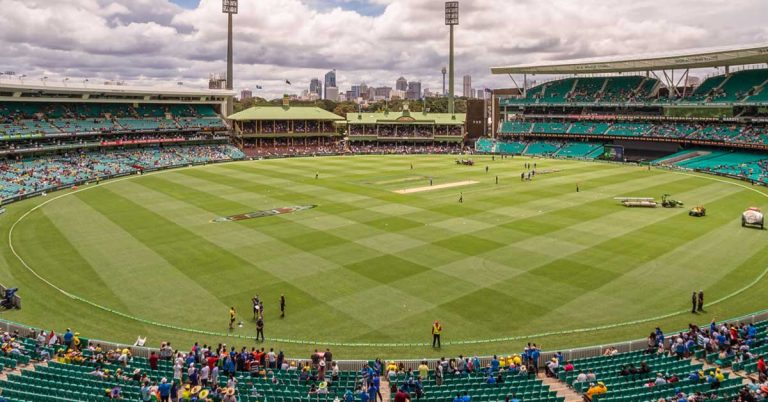
SCG weather forecast for 5th AUS vs IND BGT Test

The weather often seems to be a talking point when it comes to the New Years’ Test at the Sydney Cricket Ground (SCG). Fans and pundits were even factoring in the annual rain when making their predictions for this five-match Border-Gavaskar Trophy (BGT) series, believing the SCG Test could be the one that ends in a draw.

However, the forecast looks very promising for the 5th and final Test. Australia head into the match with a 2-1 lead courtesy of a win in the final hour at the MCG. Pat Cummins’ team are not only looking to seal the series 3-1, but also book their ticket to June’s World Test Championship (WTC) Final against South Africa.

SCG weather forecast looks promising for 5th Test

According to Bureau of Meterology (bom.gov.au), rain is set to stay away for most of the Test. Cloudy conditions are forecast on day one followed by three consecutive days of sunshine and temperatures around 30 degrees. At this stage, there could be showers on day five [Tuesday].

AccuWeather forecasts similar. There is a 9% chance of precipitation on day one, followed by just 2% on days two, three and four. Day five could be an issue, with the forecast currently reading “very windy; cooler with considerable cloudiness, afternoon showers.”

The weather in Sydney has been fantastic over the Christmas and New Year period. Temperatures have hovered around the late 20s and early 30s with plenty of sunshine. This aids in pitch preparations, allowing the curator to produce the sort of pitch they’re after without the challenges of rain in the leadup.

SCG head curator Adam Lewis said the warm weather heading into the Test has prompted them to water the pitch to ensure the moisture is there.

“Given it [the pitch] a cut about 7mm and giving it a nice roll today [Wednesday],” said Lewis.

“Giving it a little flick of water. It’s very hot in Sydney today, so we’ll just keep the moisture there just at the top and then tomorrow we’ll do a little more heavier rolling. Take a bit of the colour out then we should be ready to go for the 3rd [Friday].”

Hence, the surface could have some assistance for the bowlers early on day one, but should settle down to be a good batting track. Given the sunny conditions throughout the Test, expect the SCG pitch to take turn later in the game as well.

Most attended Test matches ever: Where does the 2024 MCG classic rank?

The 2024 Boxing Day Test was special in more ways than one. Not only was it a cracking match that was decided in the final hour, but the total attendance was a mammoth 373,691, making it the most attended MCG Test ever. The day five crowd was also an MCG record, with 74,362 fans flocking through the gates.

The previous highest total was 350,534 in a six-day Test between Australia and England way back in 1937. Sir Donald Bradman hit 270 as the hosts won by a significant 365 runs.

The attendance in this Australia-India Test could have been even higher. Day one was a sell out with over 90,000 fans expected, but temperatures touching 40 degrees may have kept some away, culminating in the Boxing Day figure of 87,242.

DayCrowd
187,242
285,147
383,073
443,867
574,362

Where does the 2024 MCG Test rank among the most attended matches ever?

This 2024 Boxing Day match is officially the second-most attended Test ever. India vs Pakistan at Kolkata in 1998-99 saw a total attendance of 465,000 in a match marred by crowd trouble.

Most attended Tests ever:

MatchTotal AttendanceYear
India vs Pakistan465,0001999
Australia vs India373,6912024
Australia vs England350,5341937

Pat Cummins’ team sealed victory in the final hour, taking a 2-1 series lead heading into Sydney. Also, Australia need just one more win to seal their qualification to the World Test Championship (WTC) Final.

This record-breaking summer of Australian Test cricket follows a strong season 12 months ago as well. There was a total attendance of 164,835 in the Boxing Day Test against Pakistan, with millions also tuning in to watch on Channel Seven and Foxtel.