Home Blog Page 396

Opinion: Post-Isolation South Africa Test XI

Opinion: Post-Isolation South Africa Test XI | South Africa Test XI | South African Dream11 | Best South Africa XI since Isolation

For the purpose of this write up, I will be looking solely at the post-isolation period of South African cricket. Simply put, I will be looking at the period 1991-2020, which provides three decades worth of cricketers to choose from!

First opener and captain

Starting at the top of the order, there can be no doubt about my opening batsman and captain Graeme Smith. With 117 Tests and 9,265 runs to his name, he, alongside Alastair Cook and Matthew Hayden, are without a doubt three of the greatest opening batsmen in the modern era.

His batting aside, Smith boasts the record of being the most-capped captain in the longest format. Also, his staggering 49%-win record places him above the likes of Allan Border, Stephen Fleming, MS Dhoni and Alastair Cook.

Post-Isolation South Africa Test XI: Graeme Smith is an easy choice.

Second Opener

His partner at the other end was a far tougher decision to make. Eventually, I was able to eliminate all but Gary Kirsten and Herschelle Gibbs. They were chalk and cheese in terms of how they went about their craft, but both were highly effective against the new ball.

At face value, Gary Kirsten seems the logical option with an average of 45 and 21 hundreds, compared to Herschelle Gibbs’ 42 average and 14 hundreds. However, upon further inspection, you’ll find that Gary Kirsten’s average is ‘bloated’ by his average of 71 batting at number three and in fact averages 41 as an opener. Gibbs’ average, on the other hand, is weighed down by his performance batting in the middle order. If we isolate his stats as an opener, Gibbs boasts an average of 47.

Post-Isolation South Africa Test XI: Gibbs had a strong record as Test opener.

That being said, I still believe these stats lack some context. What really matters in my opinion is how these players perform against quality opposition.

Key question: How have they fared against the likes of mighty Australia, England and India?

In 88 innings, Gary Kirsten managed 3462 runs at an average of 41.21. In contrast, Gibbs accumulated 2563 runs in 73 innings at 35.60. The decision became easier at this point. If I’m honest, I’ve always had a bit of a soft spot for the nuggety, gritty and almost ‘ugly’ type of openers, compared to the flashy and elegant guys for whom batting seems to come too easily.

Post-Isolation South Africa Test XI: Kirsten wins over Gibbs.

Middle Order

I didn’t lose a wink of sleep thinking about who could possibly fill the 3-5 positions. Between Hashim Amla, Jacques Kallis and AB de Villiers, the meat of my middle order has over 31,000 Test runs. They average 47, 55 and 51 respectively, with the added bonus of Kallis operating as my fifth bowler.

More, they have been successful against all opponents, in all conditions and across formats.

These three have formed a key part of the most dominant Proteas side to ever exist. I do not accept any debate when it comes to them.

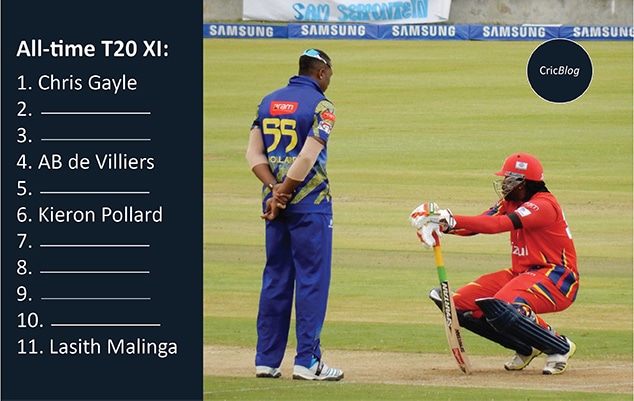
Also read: AB de Villiers and who else? All-time T20 XI

Opinion: Post-Isolation South Africa Test XI | South Africa Test XI | South African Dream11 | Best South Africa XI since Isolation
Post-Isolation South Africa Test XI: Three incredible players

Numbers six and seven

My middle-lower order proved to be a slightly tougher decision. Having Kallis in the side does allow me to pick an extra batsman and obviously one of 6-7 must keep wicket.

My ideal number six needs to be a gutsy player; someone who could weather an unlikely top order collapse, and really knuckle down with a stroke-playing number seven. The number seven should have the ability to score freely in the event of having to bat with the tail. Selecting my seven first; the obvious decision is between:

  • Mark Boucher, who holds the record for the most Test dismissals as a keeper, and;
  • The young-but-highly-destructive and talented Quinton de Kock.

As it stands, Boucher is probably the better gloveman. However, I’d argue that they are worlds apart when it comes to their batting. I can think of nothing more demoralising for an opposition captain than to have Quinton de Kock stride in after all those greats, with his ability to take the game away from you within a single session of play.

Boucher’s cricketing mind and experience will definitely be missed, but with the likes of Smith, Kallis and AB in that slip cordon, I believe there is enough experience to go around. Quinton de Kock slots in at seven.

Post-Isolation South Africa Test XI – Quinton de Kock is an exciting batsman.

Going back to my number six; there are a handful of players and a handful of variables to consider. Many might assume that Daryll Cullinan, with his 44 average, is the obvious option.

However, I have two main reservations here. Firstly, Cullinan batted at four for 84% of his career. In fact, he only operated as the number six once in 115 innings. Secondly, although his overall stats look impressive, his average of 12 against Australia leaves a lot to be desired.

JP Duminy, probably the most conventional, talented and elegant number six of the players considered, never really lived up to his potential. His Test career ended with modest average of 33 (25 batting at six). His record against Australia is something to be admired, but unfortunately he has not done enough to earn himself a position in the Proteas XI.

The late Hansie Cronje is another player that comes to mind, who too seemed to perform above average against the Aussies. However, he struggled to replicate that form against the likes of India and England. Furthermore, with an average of 28 in eight innings while batting at number six, he also has not done enough to earn himself a place amongst these legends.

So, with Cullinan, Duminy and Cronje excluded, we’re left with two players:

  • Ashwell Prince, an immensely talented and mentally tough left-hander, with a wide variety of strokes, who helped the Proteas out of more than one sticky situation throughout his career and;
  • Former Proteas test captain, Faf du Plessis.

Let’s compare them:

Opinion: Post-Isolation South Africa Test XI | South Africa Test XI | South African Dream11 | Best South Africa XI since Isolation
Post-Isolation South Africa Test XI – Prince vs du Plessis

There is of course very little difference between these players. Prince has a marginally higher career average and average against stronger opposition. du Plessis has the higher average batting at six and a particularly good record against Australia.

They both have an impressive resume when it comes to digging South Africa out of a hole. But, in the end, I simply asked myself who I would choose to bat for my life. Between these two guys, Faf du Plessisdebut heroics against the Aussies down under is an innings I wont forget anytime soon. He slots in at six.

Opinion: Post-Isolation South Africa Test XI | South Africa Test XI | South African Dream11 | Best South Africa XI since Isolation
Post-Isolation South Africa Test XI – Top Seven

Bowling Attack

Spinner:

For the sake of balance, I will go with three seamers and one spinner, with Kallis the fifth option. This might seem strange given the plethora of fast bowlers that have come out of South Africa over the last 30 years, but I believe an attack consisting of five right-arm fast bowlers is a bit one-dimensional.

With a strike force coming from the likes of Allan Donald, Shaun Pollock, Makhaya Ntini, Dale Steyn, Morne Morkel, Vernon Philander and Kagiso Rabada, you can imagine that the role of my spinner will not necessarily be to try and take wickets. Rather, he should be able to keep an end tidy while I rotate my quicks in short spells from the opposite end.

It’s no secret that South Africa is yet to produce a ‘world class’ caliber spinner. However, I do believe that Paul Adams, as well as Keshav Maharaj, have been successful at the highest level.

They will be my two contenders for the spinner role.

There is a common misconception among South African fans that Paul Adams was the (expensive) wicket taker, while Keshav Maharaj has the ability to keep an end quite without bothering the batsmen too much.

However, if we look at the numbers, you’ll find that Paul Adams was the more economical of the two. Maharaj, although moderately more expensive, tends to pick up wickets at a faster rate than Paul Adams. Upon further inspection, Maharaj appears to have struggled against major opposition (India in particular) and averages nearly 43 against the likes of Australia, England and India.

Adams, on the other hand, relished the opportunity to play against the Indians, averaging 23.73 against them. More, he averaged 31.19 against the aforementioned ‘big three’ Test sides. He is arguably the more skilful of the two bowlers, and although his action is unorthodox, his variety will compliment my three right arm quicks.

Post-Isolation South Africa Test XI: Keshav Maharaj just misses out.

Fast Bowlers:

To complete my XI, I want three wicket takers. I’m not looking to strike the perfect balance between swing, seam, and pace bowling between the three. I simply want the three most destructive fast bowlers that South Africa has produced in the last 30 years.

It goes without saying, but it does become difficult to compare players from different periods of the game. Stats alone cannot tell the full story, but I do think it is a good starting base.

Pace Bowling Stats:

With an abundance of fast bowling legends, it seems cruel to ask a person to pick the best of the best. But, if I were to toss the ball to each of these players and ask them to all pick up a wicket, Rabada (according to his strike rate of 40.6) would be first. Steyn second. Donald third.

If I were to ask each of these players to pick up a wicket whilst conceding as little runs as possible, Donald would be my go-to guy. Followed by Philander. Then, by Steyn and Rabada, who both average 22.95 runs per wicket.

In terms of how ‘destructive’ they are, Rabada requires only 19.5 innings to pick up a 10 wicket haul. Steyn around 34 innings. Donald closer to 43. Looking solely at five-wicket hauls, the same names appear: Donald, Steyn and Rabada.

All three have bowled north of 150 clicks at a point in their career. All have all been successful against major opposition. And, all have had success in conditions that don’t necessarily suit fast bowling. Steyn and Rabada are the more skilful of the three, both able to move the ball either way at high speeds. Donald relied slightly more on his aggression and pace, often taking wickets through sheer determination and relentlessness rather than through masterful swing or seam bowling.

The trio view bowling as a personal battle between them and the batsman. Dale Steyn is one of, if not the only bowler, who would geniunely get quicker and quicker throughout the day. More, I cannot think of another bowler in world cricket who I would rather turn to if I was desperate for a wicket leading into the end of the day’s play. Graeme Smith certainly thought the same.

I would toss the new ball to Allan Donald and Dale Steyn. If a batsman had the temperament and ability to handle them, then comes a barrage of hostile fast bowling from the young Kagiso Rabada; a situation that I’m sure no batsman from any era would like to find themselves in.

A wonderful attack to top off a superb top seven.

Opinion: Post-Isolation South Africa Test XI | South Africa Test XI | South African Dream11 | Best South Africa XI since Isolation
Post-Isolation South Africa Test XI

Written by Daniel Orsmond. Follow Daniel on Twitter today.

Other CricBlog content you might enjoy:

Top 5 Best India Test Matches Since 2000

Top 5 Best India Test Matches Since 2000 | Best Test Matches for India since 2020 | What is the best India Test Match? Best India Test Matches

India have been involved in many memorable matches since 2000, across formats. This includes matches against Pakistan, although we don’t see the great rivalry as often as we should.

However, in 211 Tests since January 2nd, 2000, India have been involved in Test matches so memorable that they are still spoken of as if they happened yesterday.

As a result, choosing India’s top five Tests over the course of 20 years is a challenge. There have been many, including memorable wins over England, Australia, South Africa and the like. So, the selection of the top five is based on the following criteria:

  • Match context: Did India have their backs against the wall? Considered next-to-no-chance of winning?
  • Series context: Was the series still alive?
  • A match that helped shape Indian cricket and inspire a nation.

5. England vs India, 2nd Test 2007, Trent Bridge

India won a Test in England in 2002 (Headingley), which was a landmark moment. India had won just two Tests in the country in their previous 41 attempts.

However, their win in 2007 at Trent Bridge was more special. In the previous three summers before the 2007 series, England had smashed New Zealand and West Indies (2004), beat Australia in the memorable 2005 Ashes, drew to Sri Lanka and beat Pakistan 3-0 (2006).

England were on a roll. India escaped with the most thrilling of draws in the first Test, but it was widely expected that England would do what they did to Australia in 2005 – build on such a close miss and then win the series. However, led by Zaheer Khan and their great batsmen, India inspired belief that they could win more matches overseas, en-route to their first series win in England since 1986.

Photo by Laurence Griffiths/Getty Images: Rahul Dravid & Sourav Ganguly

4. Australia vs India, 2nd Test 2003, Adelaide

One of India’s greatest ever Test matches.

Most people would have thought that only two results were possible: an Australian win or a fighting draw from India when Australia piled on 556 in their first innings, led by Ricky Ponting’s 242,. Then, when India were down-and-out at 85/4, an Australian win seemed inevitable.

However, Rahul Dravid (233), the only batsman to face 30,000+ balls in Tests, and VVS Laxman (148) tormented Australia once again. They slammed a 303-run stand that formed the biggest chunk of India’s huge 523.

But, one big batting total is not enough to win a Test; your bowlers need to step up to the plate as well. Ajit Agarkar did just that, taking 6/41 to bowl Australia out for 196. Crucially, India took just 56.2 overs to roll Australia, which gave their batsmen time to chase 233. Led by the great Rahul Dravid once again (72*), India got home by four wickets in one of their greatest triumphs.

Australia’s 556 is the fourth-highest first innings score to result in a defeat in Test history, and Australia’s second-highest. A great effort from India.

Also read: 6 underrated bowlers in Test cricket 2019/20

India Test Matches: Rahul Dravid played many-a-great innings in SENA.

3. India vs England, 1st Test 2008, Chennai

This was more than just the result. It was an outpouring of emotion.

India was rocked by a terrorist attack in Mumbai just weeks earlier. So, England’s tour of India was understandably thrown into doubt. But, when it went ahead, only the most optimistic Indian fan could have dreamt of what happened next.

Just two years earlier, England thrashed India in Mumbai, as India failed badly in their quest of a 300+ fourth innings score. But, Chennai 2008, one of the finest moments for both Virender Sehwag and Sachin Tendulkar, was a different story.

Set an improbable 387 to win a turning track, Sehwag, who won Player of the Match, rocked England early with a stunning 82 off 68 balls. The Little Master then walked in to bat early on the fifth morning after Dravid was dismissed cheaply. The rest was history, as Tendulkar produced one of the great fourth innings hundreds you’ll see, in conjunction with Yuvraj Singh’s superb unbeaten 85* (131) to get India over the line by a stunning six wickets. A win for the ages.

India Test Matches: Sachin Tendulkar was a master at work.

2. India vs Australia, 1st Test 2010, Mohali

Mohali 2010. A match that haunts Australia fans. One that puts a huge smile on the face of every Indian fan who witnessed it.

After both sides scored 400+ in contrasting fashion (Australia steady, India rollicking), the game opened up in the third innings, as most great Tests do. India’s effort to bowl Australia out for 192 gave them a very gettable 216 to win. However, with the pitch showing significant signs of wear and tear, India kept crashing under the waves of Australian pace bowling pressure, falling to 124/8.

A loss was inevitable. One that would have been condemned by all in India, given that Australia fielded only one specialist spinner – the much-maligned Nathan Hauritz, who only bowled just nine overs out of 58.3, and went at five an over.

But, when VVS Laxman is at the crease, anything is possible. He and the stubborn Ishant Sharma (31 off 92 balls) raised hopes of a miraculous comeback with every boundary and forward prod respectively, eventually taking India to within 11 runs of victory.

However, a game like this was not going to end without further drama. Laxman, suffering from a sore back, needed a runner. Ishant, who batted so stoutly, was given out LBW when the ball was heading way down leg. Pragyan Ohja, India’s number 11, was a nervous wreck, refusing to run when Suresh Raina called him for a single. VVS Laxman was famously furious. Then, Ohja was plumb LBW, only for Billy Bowden to give it not out, before Steve Smith threw the ball for four overthrows in a run-out attempt.

Two leg-byes later, India had their amazing win, which was one of their great escapes. Australia were crestfallen, going on to lose the two-match series 2-0.

Also read: 5 new cricket records that could happen in the next decade: 2020-2029

India Test Matches: VVS Laxman was superb for a decade vs Australia.

1. India vs Australia, 2nd Test 2001, Eden Gardens

Shut the gates. While picking four of India’s other great wins in a top five was difficult, the number one pick is straight forward. Eden Gardens 2001 is a match no India fan will ever forget.

Australia hadn’t won a Test series in India since 1969. Steve Waugh’s side, on the back of 15 straight wins, travelled to India with strong belief that they could finally break the drought. And, they were well on the way, thumping India in the first Test and then picking up a huge 274-run lead in the next, after rolling India for 171.

The Australians were buoyant. Confident. Smelling blood in the water. Forget batting again, they believed they could win by an innings. After all, they were a side that had won 16 straight Tests before this match. Follow-on enforced. India’s first four wickets produced a very respectable 233, but they were still 41 runs behind. History-making series win for Australia in the making.

Until Rahul Dravid and VVS Laxman joined each other at the crease.

VVS Laxman’s 281 “altered the world’s perception of India” in the words of the great man himself. It instilled belief that India could achieve anything. That they were never down-and-out. And boy, a lot of belief was needed to pull this off, as only two teams had previously won after being forced to follow on in the history of Test cricket.

Laxman and Dravid’s 376-run stand is etched in Indian cricket folklore. Laxman was full of belief. Dravid responded to something written about him earlier with a big celebration after reaching his 100. Steve Waugh bowled everyone but himself and wicketkeeper Adam Gilchrist on a solemn fourth day for the Aussies (355 runs): the harshest of harsh reminders that cricket can be a funny game. However, if this Test were a comedian, Waugh and the Aussies would throw anything and everything at it in abuse with a loud chorus of boos.

Eden Gardens was full. 50,000 spectators. After taking a 274-run lead, Australia then needed 384 to win the game. Or bat out the rest of day five without losing 10 wickets. They couldn’t, with Harbhajan Singh taking 6/73 to finish the script of India’s greatest ever Test win. They levelled that series, which they went on to win 2-1. Memorable.

India Test Matches: Laxman and Dravid put on quite the show in 2001.

So, are there any other Test matches, such as Australia 2018, that come to mind that you feel should be included? Have your say.

Thanks for reading!

Vanuatu T10 League Match 3: IS vs MTB Dream11 Possible Playing 11 Pitch Report

Vanuatu T10 League Match 3: IS vs MTB Dream11 Possible Playing 11 Pitch Report |IS vs MTB Dream11 Prediction Today | Ifira Sharks vs MT Bulls Key Players to Watch | Vanuatu Cricket Ground Pitch Report

Note: The series is streamed live on CricTracker’s YouTube channel.

After a nightmare first game where they were bowled out for 35, Ifira Sharks have the opportunity to bounce back in the third game of the Vanuatu T10 League.

They play MT Bulls, who, despite losing their first match also to Mighty Efate Panthers (MFE), made a good score of 91, led by Andrew Mansale’s superb innings.

So, with MFE sneaking ahead after the tournament’s first day, which of these two sides can make up some ground?

CricBlog is now on YouTube: Subscribe to CricBlog TV today!

Ifira Sharks vs MT Bulls Squads

Ifira Sharks: Alex Stephen, Fernando Laumae, Nalin Nipiko, Wolford Kalworai, Bethan Moli, Niko Unavalu, Obed Yoseph, Stephane Sandy, Vince Vira, William Yamak, Gilmour Kaltongga, Harry Pakoa, Jamal Vira, Michael Avock, Ambong Rakau, Apolinaire Stephen, Brenan Meyer

MT Bulls: Andrew Mansale, Clement Tommy, Damien Chilia, Nono Chilia, Vincent Matautaava, Wamejo Wotu, Williamsing Nalisa, Darren Wotu, Eddie Mansale, Malon Tastuki, Marcel Taea, Patrick Matautaava, Philip Tsione, Rival Samson, Shay Narai, Godfrey Mangau, Julian Tommy

Vanuatu T10 League Match 3: IS vs MTB Dream11 Possible Playing 11 Pitch Report | IS vs MTB Dream11 Prediction Today | Vanuatu Cricket Ground Pitch Report
Vanuatu T10 League Match 3: IS vs MTB Dream11 – Andrew Mansale will be key.

Key Players to Watch/Key Stats

  • Andrew Mansale scored a superb 75* (38) on Thursday, which was 82.42% of MT Bulls score of 91/7.
  • Patrick Matautaava had a poor outing with the bat for MT Bulls on Thursday (golden duck). However, he has has the highest strike rate for Vanuatu in T20Is (265 runs, SR 169.87). This includes a top score of 103. Also, he scored 46 (19) in a T10 match last month.
  • Also, Matautaava has nine wickets in his 10 T20Is, plus he took a wicket in the first game of this tournament.
  • Nalin Nipiko, part of the Ifira Sharks squad, is captain of Vanuatu and one of their best cricketers. He has the second-most runs (312) and the most wickets (24) for Vanuatu in T20Is.
  • Alex Stephen was out first ball in Ifiria Sharks’ capitulation on Thursday. However, he has a top score of 98 in three U-19 club T20 games. One to watch.
  • Clement Tommy, Vanuatu’s fourth-highest T20I run-scorer (180), scored three starts (double figures) in his past five T20Is in October 2019. However, he needs to improve on his SR of 94.24.
  • Eddie Mansale is coming off 2/23 in his first match in the 2020 Vanuatu T10 League.
  • Stephane Sandy was a solid wicket-taker for Vanuatu U19s vs Fiji and Samoa in 2017. He took eight wickets in five matches with his offspin.
  • Also, Sandy bowled beautifully on Thursday, taking 1/3 in two overs vs MFE.

Possible Playing 11

Ifira Sharks: 1. Nalin Napiko (c), 2. William Yamak, 3. Jamal Vira, 4. Bethan Moli, 5. Apolinaire Stephen, 6. Michael Avock, 7. Alex Stephen, 8. Fernando Laumae, 9. Stephane Sandy, 10. Vince Vira, 11. Obed Yoseph

MT Bulls: 1. Clement Tommy, 2. Patrick Matautaava, 3. Andrew Mansale (c), 4. Philip Tsione, 5. Eddie Mansale, 6. Godfrey Mangau, 7. Wamjeo Wotu, 8. Marcel Taea, 9. Nono Chila, 10. Rivla Samson, 11. Darren Wotu/Williamsing Nalisa

Vanuatu Cricket Ground Pitch Report and Conditions

There have been some high scores in T10 cricket at Vanuatu Cricket Ground in recent times, including 128/5 vs 91/7 in the MTB vs MFE game on Thursday. If teams bat well, runs will certainly be on offer.

There is a minimal chance of rain during the day in Port Vila, so a full game can be expected.

Dream11 Prediction

Option 1:

Vanuatu T10 League Match 3: IS vs MTB Dream11 Possible Playing 11 Pitch Report | IS vs MTB Dream11 Prediction Today | Vanuatu Cricket Ground Pitch Report
Vanuatu T10 League Match 3: IS vs MTB Dream11

Option 2:

Vanuatu T10 League Match 3: IS vs MTB Dream11 Possible Playing 11 Pitch Report | IS vs MTB Dream11 Prediction Today | Vanuatu Cricket Ground Pitch Report
Vanuatu T10 League Match 3: IS vs MTB Dream11

Dream11 and Fantasy Cricket content for you to enjoy on CricBlog:

Match Prediction

MT Bulls showed more promise than Ifira Sharks did on the opening day of the tournament. Also, the Bulls look to have greater experience, which could count for plenty.

Thanks for reading!

CricBlog is now on YouTube: Subscribe to CricBlog TV today!

IS vs MFE Dream11: Vanuatu T10 League Match 2 Possible Playing 11 Pitch Report

Vanuatu T10 League Match 2: IS vs MFE Dream11 Possible Playing 11 Pitch Report | IS vs MFE Dream11 Prediction Today | Vanuatu Cricket Ground Pitch Report | Ifira Sharks vs Mighty Efate Panthers Key Players

After MT Bulls and Mighty Efate Panthers go head-to-head in the first Vanuatu T10 League match, this match follows right after, at 3:00pm local time in Vanuatu.

Mighty Efate Panthers will be keen to head into this match with a win, as their second match won’t be an easy assignment. Ifira Sharks possess some of Vanuatu’s up-and-coming cricketers, so they will be keen to fire right away and make a good start to the tournament.

Note: The series will be streamed live on CricTracker’s YouTube channel.

Squads

Ifira Sharks: Alex Stephen, Fernando Laumae, Nalin Nipiko, Wolford Kalworai, Bethan Moli, Niko Unavalu, Obed Yoseph, Stephane Sandy, Vince Vira, William Yamak, Gilmour Kaltongga, Harry Pakoa, Jamal Vira, Michael Avock, Ambong Rakau, Apolinaire Stephen, Brenan Meyer

Mighty Efate Panthers: Brian Tari, Edwell Kalfau, Jarryd Allan, Richard Barnes, Selwyn Garae, Shem Sala, Simpson Obed, Tony Tamata, Lazaro Carlot, Lency Shem, Wesley Vira, Joshua Rasu, Junior Alfred Carlot, Kendy Kenneth, Kenny Tari, Manu Kenni, McMillan Markia, William Laumae, Lenika Natapei

Vanuatu T10 League Match 2: IS vs MFE Dream11 Possible Playing 11 Pitch Report | IS vs MFE Dream11 Prediction Today | Vanuatu Cricket Ground Pitch Report | Ifira Sharks vs Mighty Efate Panthers Key Players
IS vs MFE Dream11: Joshua Rasu will be out to impress.

Key players to Watch/Key Stats

  • Joshua Rasu, skipper of Mighty Efate Panthers, has the most T20I runs for Vanuatu (374 in 13 matches, avg. 28.76, SR 110.65).
  • Also, Rasu can bowl if needed. He has five T20I wickets.
  • Nalin Nipiko, part of the Ifira Sharks squad, is captain of Vanuatu and one of their best cricketers. He has the second-most runs (312) and the most wickets (24) for Vanuatu in T20Is.
  • Brian Tari, who will likely bat in the top three for MFE, is considered a real talent and one to watch.
  • Alex Stephen has a top score of 98 in three U-19 club T20 games. One to watch.
  • Simpson Obed is Vanuatu’s third-highest T20I wicket-taker with 11. He will be key with his legspin.
  • Stephane Sandy was a solid wicket-taker for Vanuatu U19s vs Fiji and Samoa in 2017. He took eight wickets in five matches with his offspin.
  • It has been a slow start to Apolinaire Stephen’s T20I career with the bat (one run in two games). However, he can play a role with the ball, as he has two wickets in as many games.

Possible Playing 11

Ifira Sharks: 1. Apolinaire Stephen, 2. Nalin Nipiko (c), 3. Jamal Vira, 4. William Yamak, 5. Wolford Kalworai, 6. Alex Stephen, 7. Obed Yoseph, 8. Harry Pakoa, 9. Stephane Sandy, 10. Vince Vira, 11. Niko Unavalu/Michael Avock

Mighty Efate Panthers: 1. Joshua Rasu (c), 2. Lazaro Carlot, 3. Brian Tari, 4. Kendy Kennath, 5. Jarryd Allan, 6. Selwyn Garae, 7. McMillan Markia (wk), 8. Wesley Vira, 9. Simpson Obed, 10. Edwell Kalfau 11. Lancy Shem

Vanuatu Cricket Ground Pitch Report and Conditions

There have been some high scores in recent T10 matches at the Vanuatu Cricket Ground. About a month ago, Vanuatu High Performance Green and Black both scored over 100 in a high-scoring match.

However, there are some showers expected for this match, which is scheduled to begin at 3:00pm local time.

Dream11 Prediction

Option 1:

Vanuatu T10 League Match 2: IS vs MFE Dream11 Possible Playing 11 Pitch Report | IS vs MFE Dream11 Prediction Today | Vanuatu Cricket Ground Pitch Report
Vanuatu T10 League Match 2: IS vs MFE Dream11 Prediction

Option 2:

Vanuatu T10 League Match 2: IS vs MFE Dream11 Possible Playing 11 Pitch Report | IS vs MFE Dream11 Prediction Today | Vanuatu Cricket Ground Pitch Report
Vanuatu T10 League Match 2: IS vs MFE Dream11 Prediction

Dream11 and Fantasy Cricket content for you to enjoy on CricBlog:

CricBlog is now on YouTube: Check out some of the things Indian Cricket Fans never say!

Subscribe to CricBlog TV today!

Vanuatu T10 League Match 1: MTB vs MFE Dream11 Possible Playing 11 Pitch Report

Vanuatu T10 League Match 1: MTB vs MFE Dream11 Prediction Today | Vanuatu Cricket Ground Pitch Report | MT Bulls vs Mighty Efate Panthers Possible Playing 11 | MTB vs MFE Key Players to Watch

Vanuatu, a beautiful South Pacific Ocean nation, located approximately 3,000km north-east from Australia, will host its first ever T10 League as fans seek a cricket fix. The nation has reported no COVID-19 cases to date, which makes this a safe place to play.

Cricket fans will get their fix as three teams, beginning with MT Bulls vs Mighty Efate Panthers, fight it out for the trophy, with the Final to be held on June 13, 2020.

Note: The series will be streamed live on CricTracker’s YouTube channel.

MT Bulls vs Mighty Efate Panthers Squads

MT Bulls: Andrew Mansale, Clement Tommy, Damien Chilia, Nono Chilia, Vincent Matautaava, Wamejo Wotu, Williamsing Nalisa, Darren Wotu, Eddie Mansale, Malon Tastuki, Marcel Taea, Patrick Matautaava, Philip Tsione, Rival Samson, Shay Narai, Godfrey Mangau, Julian Tommy

Mighty Efate Panthers: Brian Tari, Edwell Kalfau, Jarryd Allan, Richard Barnes, Selwyn Garae, Shem Sala, Simpson Obed, Tony Tamata, Lazaro Carlot, Lency Shem, Wesley Vira, Joshua Rasu, Junior Alfred Carlot, Kendy Kenneth, Kenny Tari, Manu Kenni, McMillan Markia, William Laumae, Lenika Natapei

Vanuatu T10 League Match 1: MTB vs MFE Dream11 Prediction Today | Vanuatu Cricket Ground Pitch Report | MT Bulls vs Mighty Efate Panthers Possible Playing 11 | MTB vs MFE Key Players to Watch
MTB vs MFE Dream11 Prediction Today: Joshua Rasu will be out to impress.

Key Players to Watch/Key Stats

  • Joshua Rasu, part of the Mighty Efate Panthers squad, has the most T20I runs for Vanuatu (374 in 13 matches, avg. 28.76, SR 110.65). He also has five wickets.
  • Patrick Matautaava, who will play for MT Bulls, has the highest strike rate for Vanuatu in T20Is (265 runs, SR 169.87). This includes a top score of 103. Also, he scored 46 (19) in a T10 match last month.
  • Also, Matautaava has nine wickets in his 10 matches.
  • Andrew Mansale will be key for MT Bulls with both bat and ball. He has the fifth-most T20I runs for Vanuatu (159) and second-most wickets (13) in 14 matches.
  • Clement Tommy, Vanuatu’s fourth-highest T20I run-scorer (180), scored three starts (double figures) in his past five T20Is in October 2019. However, he needs to improve on his SR of 94.24.
  • However, Tommy smashed 557 runs in seven outings in last year’s Club Championship T20 round at the strike-rate of 220.
  • Brian Tari, who will likely bat in the top three for MFE, is considered a real talent and one to watch.
  • Williamsing Nalisa could prove to be a wicket-taking threat in the T10 League with his legbreaks. Can he build on his five wickets in nine T20I matches?
  • Simpson Obed will be key against his opposite number, Williamsing Nalisa. He is Vanuatu’s third-highest T20I wicket-taker with 11.

Possible Playing XIs

MT Bulls: 1. Andrew Mansale (c), 2. Julian Tommy, 3. Patrick Matauttava, 4. Malon Tastuki, 5. Clement Tommy (wk), 6. Nono Chilia, 7. Darren Wotu, 8. Damien Chilia, 9. Williamsing Nalisa, 10. Eddie Mansale, 11. Shay Narai/Godfrey Mangau

Mighty Efate Panthers: 1. Joshua Rasu (c), 2. Lazaro Carlot, 3. Brian Tari, 4. Kendy Kennath, 5. Jarryd Allan, 6. Selwyn Garae, 7. McMillan Markia (wk), 8. Wesley Vira, 9. Simpson Obed, 10. Edwell Kalfau 11. Lancy Shem

Vanuatu Cricket Ground Pitch Report

There have been some high scores in recent T10 matches at the Vanuatu Cricket Ground. About a month ago, Vanuatu High Performance Green and Black both scored over 100 in a high-scoring match.

Dream11 Prediction

Option 1:

Vanuatu T10 League Match 1: MTB vs MFE Preview Possible Playing 11 Dream11 Today | Vanuatu Cricket Ground Pitch Report | MTB vs MFE Key Players to Watch
Vanuatu T10 League Match 1: MTB vs MFE Dream11 Prediction

Option 2:

Vanuatu T10 League Match 1: MTB vs MFE Preview Possible Playing 11 Dream11 Today | Vanuatu Cricket Ground Pitch Report | MTB vs MFE Key Players to Watch
Vanuatu T10 League Match 1: MTB vs MFE Dream11 Prediction

Dream11 and Fantasy Cricket content for you to enjoy on CricBlog:

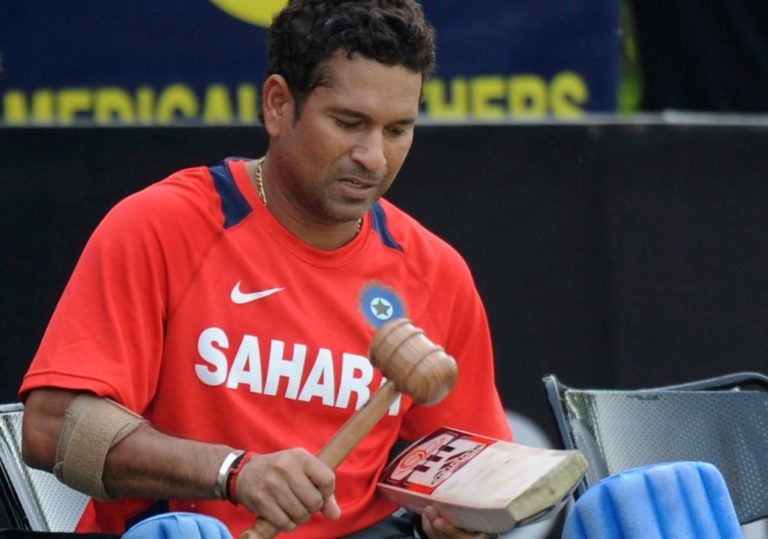
How to Prepare & Repair your Cricket Bat and Get It Match-Ready

How to Prepare and Repair your Cricket Bat and Get It Match-Ready | How to Repair Cricket Bat | How to Fix Cricket Bat | How to get Cricket Bat ready for a match

Buying/owning a beautiful cricket bat is a feeling cricketers love. We tend to stare at our new purchase or favourite bat like it is the love of our life.

However, cricket bats need plenty of care, right from the beginning to when it is a few years old. In this article, with the help of Sturdy Sports, you will come across some key tips to help you prepare your bat for match situations, as well as increase the life of your bat with some maintenance and repair tips.

Bat Preparation

1. Knocking in your bat

This is the most important aspect of getting your new bat ready for match situations. If you don’t knock in your bat adquately, you run the risk of causing cracks and dents, particularly against faster bowling.

What does knocking in your bat do?

  • Softens the fibre on the bat face and helps get the best ping, performance, and longevity out of your bat.
  • Helps reduce vibration, which aids your game.
  • Prepares the grains and fibres in your bat for action. Specifically, you strengthen and compress these fibres to prepare your bat.

How long should I knock my bat in for?

The more knocks, the better. If you use a standard mallet, the recommended time of knocking in is about six hours. So, if you choose this option, spend at least 30 minutes-1 hour each day for a week knocking in all parts of the blade, including the toe and edges.

If you want to outsource the knocking process, you can. Sturdy Sports provides a bat-knocking service, which includes 15,000 knocks by a machine.

Knocking in your cricket bat is vital.

2. Oiling your bat

Oiling helps prevent your bat from becoming too dry. A very dry bat is prone to cracking or splitting.

If you want to oil your bat, you can. Lightly oil the edges, toe, face and back of the blade. Leave your bat to dry, and then coat again at least one or two more times. Here are some key tips:

  • Use a small amount of Lindseed Oil. About a 10 cents coin’s worth.
  • To see if your bat needs more oil, run your thumbnail up the bat’s blade. If there is a tiny speck of oil on your thumbnail, then it is oiled nicely. If there is none, it needs another light coating.
  • Don’t oil the stickers or splice.

But, like bat knocking, you can have a service provider oil your bat. Sturdy Sports also provide this service.

3. Other considerations

There are a few other key things to keep in mind to further prepare your bat:

  • A toe guard is important as the toe is a fragile part of the bat.
  • Ensure your bat is at the perfect weight. Find out more here.
  • Add a bat sleeve to further protect the face and edges.
  • Face slow bowling (with an old ball) in the nets.
  • If you see some seam marks during practice, spend more time knocking the bat in.
Cricket Bat Repair: A good toe guard is important for a cricket bat.

Bat Protection

So, you’ve prepared your bat for action. Then, a few months and years pass. What next?

Bat care and protection never stops. There are some key considerations to keep in mind to protect your bat overtime.

1. Bat Servicing

From re-oiling to new sheet to new grip, it is important to always keep your bat in tip-top shape.

Check out this checklist which covers the important aspects of bat servicing, which also includes face protection, sanding and toe protection.

2. See any cracks?

Even if you prepare your bat well, there is always a possibility that a crack or split may occur, particularly against faster bowling.

What can I do if I see cracks?

  • If it’s a small crack, gently sandpaper that area of the bat for about 20 seconds. It should then disappear, which shows that there is no damage to the bat.
  • For a ‘hairline’ crack (less than two inches in length), use a very small amount of superglue.
  • Apply some glass fibre tape around the bat if its a slightly bigger crack.

However, if your bat has suffered significant damage, you will need the help of a service provider. For example, Sturdy Sports offers services such as shoulder crack repair, handle replacement and toe repair.

These options, along with some other repairs, could suit you if you love your current bat so much that you prefer it over buying a new bat.

How to Repair your Cricket Bat and Get It Match-Ready | How to Repair Cricket Bat | How to Fix Cricket Bat | How to get Cricket Bat ready for a match
Repair Cricket Bat: Cracks such as these should be repaired by a service provider.

Hope you enjoyed these special tips. You and your bat will be better for it.

Thanks for reading!

Why has RCB Struggled for Success in the IPL?

Why has RCB Struggled for Success in the IPL? | RCB Analysis | Why have Royal Challengers Bangalore Struggled? | When will RCB win the IPL?

Royal Challengers Bangalore, a star-studded team from the first season of the IPL, have always looked the goods. One of the strongest teams on paper after every auction, most experts, before the start of a season, predict them to lift the cup.

But, all the predictions fail more often than not. An incredible team on paper, consisting of Virat Kohli, AB de Villiers, Chris Gayle (for most of his IPL career), and many more international and domestic stars, has struggled for success in the IPL. By success, we don’t only mean winning the title; they have not performed as well as they’ve liked to and according to their potential.

This chart will help you understand this better:

Why has RCB Struggled for Success in the IPL? | RCB Analysis | Why have Royal Challengers Bangalore Struggled? | When will RCB win the IPL?

RCB has played the second-most number of matches in the history of the IPL, after Mumbai Indians. However, they are the sixth-most successful team in terms of winning matches among active teams in the league. They have qualified for the playoffs only five times in 12 attempts, which includes the three Finals (2009, 2011 & 2016).

The Bangalore-based franchise has not been as successful as many believe they should. Wondering why? So are we. Let’s try and find the answers to this question.

CricBlog is now on YouTube: Check out some of the things Indian Cricket Fans never say!

Subscribe to CricBlog TV today!

https://youtu.be/10a8Rr1eph4

The Management

The biggest reason why RCB has struggled for success is their management. The management has performed very poorly in all the 12 seasons and is the reason that a team full of T20 superstars of the cricketing world is one of the most underperforming sides in the tournament.

Let’s get deep into this and talk about the areas where they’ve lacked compared to the successful teams.

Why has RCB Struggled for Success in the IPL? | RCB Analysis | Why have Royal Challengers Bangalore Struggled? | When will RCB win the IPL?
RCB have underachieved right from the beginning of IPL cricket.

Poor on the Auction Table

Royal Challengers Bangalore has a very explosive batting line-up – arguably the best top order in the league.

But it’s not the same case with their bowling department. They are over-dependent on their batting to win them games; automatically not a good sign for any team when your bowling can’t win you games.

Why has RCB Struggled for Success in the IPL? | RCB Analysis | Why have Royal Challengers Bangalore Struggled? | When will RCB win the IPL?

This chart represents the economy rates of all the teams in the league. It shows that RCB is ranked seventh among the active eight teams, only better than Kings XI Punjab.

Why has RCB Struggled for Success in the IPL? | RCB Analysis | Why have Royal Challengers Bangalore Struggled? | When will RCB win the IPL?

This chart indicates the economy rates in the last four overs of an innings. It reflects that RCB concedes the most runs in the last four overs among active teams, showing that bowling is their weak link, particularly at the death.

But, instead of picking good death bowlers, they are always found bidding for batters on the auction table. As a result, they often don’t have enough purse remaining to bid on quality bowlers, which means they don’t have any other option than going with their inexperienced domestic bowling attack.

Crucially, RCB has a tendency to go for the big names in auction rather than going for players they need. This has proved to be very costly throughout the 12 seasons of the league, reflective in their underwhelming record. They need to fix this.

Chinnaswamy is great for batting, but RCB have given themselves little chance of winning Titles.

Releasing Important Players

Royal Challengers Bangalore over the years have regretted releasing some of the superstars of T20 cricket. Players like Chris Gayle, KL Rahul, Robin Uthappa, Quinton de Kock, and many more were once part of their squad, but were released either after a bad phase or some even without getting enough games.

Chris Gayle was released after a couple of bad seasons. He came back to form. Sarafarz Khan was retained over KL Rahul. It proved to be a very very costly mistake. In the next season, Sarafarz was also released.

Releasing such big players is not a wise decision and it causes few problems for the team and we’ll talk about one of them next.

Absence of a Strong Core of Players

RCB lacks a strong core of players in their side. If you look at most successful teams like CSK and MI, they have a strong core of Indian players mixed with 2-3 overseas stars. In contrast, RCB has only Virat Kohli, AB de Villiers and Yuzvendra Chahal as their core players.

This again is the management’s fault. In 2015, they had Chris Gayle, Virat Kohli, AB de Villiers, Dinesh Karthik, Mitchell Starc, and Yuzvendra Chahal, which represents one of the strongest cores in the league. If they maintained this set of players, they would surely be the team to beat in future seasons.

However, they released most of the players who could’ve been their potential core. Worse, it seems as they are still not interested in building the core of their team. This is one major reason why they’ve struggled as a franchise.

Mismanagement of Players

This is the biggest problem of RCB. They don’t manage the players well and by managing, we mean that they don’t use the players well.

The biggest example is Shane Watson, who has become an integral part of the CSK squad; one of their most important players. Before getting picked by CSK, he was at RCB.

IPL 2019 Match 1: CSK vs RCB Preview Dream11. Chennai Super Kings vs Royal Challengers Bangalore Preview Dream11 Prediction March 23 2019
RCB have been poor in player management compared to teams such as CSK.

Watson, who has opened nearly his whole career, was batting at number six for RCB. Also, he was bowling in the death overs. Surprise, surprise, he didn’t perform as expected, and instead of RCB changing his role in the team to suit his strengths, he was released.

Another example is Shimron Hetmyer. The young gun from Windies was picked by RCB in 2019 for 4.2 Crore Rupees. After struggling in the first four games, he was benched until RCB’s last game of the season, where scored 75 runs off 47 balls. It wasn’t good enough for RCB, though, with Hetmyer released by the franchise.

One of the biggest flaws of RCB management is that they try to shape players into roles according what they desire, rather than maximising the strength of the player. One example is the decision to bowl Shane Watson and Corey Anderson in the death overs, rather than picking good death bowlers. RCB did this so they can accomodate expensive, big name top order batsmen.

These are areas where RCB management has been poor and should improve.

Over-Dependency on Virat, AB, and Chahal

Most of the time, RCB depends on skipper Virat Kohli and AB de Villiers to score the runs and then Yuzvendra Chahal to defend them. If they fail, they lose. They are over-dependent on these players for getting them over the line.

RCB rely on AB and Virat too much with the bat.

They have some other players in the batting department but the bowling is mostly dependent on Chahal. Even if he picks 2-3 wickets and stops the flow of runs, their death bowling balances things out. They need to find good players to accompany these players in the squad.

This shows the importance of a strong core which, again, they lack.

Need to Back their Players

Virat Kohli in someway hasn’t been upto the mark on the tactical front. He is known for chopping the playing XI after every defeat and doesn’t back his players after few bad performances.

Successful teams like MI and CSK back their players until they perform. Shane Watson is the best example. He was struggling to score runs but MS Dhoni and CSK backed him and he scored a hundred in the 2018 Final and almost took them over the line in the 2019 Final.

This is not the case with RCB. As mentioned above, a player like Hetmyer was dropped after a few bad games and got a chance finally after eight games. Eventually, he was released before the next auction, much like Watson was released before him after misusing the all-rounder.

RCB’s players are always under pressure and have a fear of getting dropped after a bad game. It is very difficult to play your natural game under that kind of environment. Virat Kohli should back his players to do well even if they are having a bad phase. Also, Virat Kohli makes some tactical errors, especially under crunch situations, so he also needs to analyse things better.

———

So, the biggest reason for RCB’s struggle in the league is poor decision making; a real flop show by their management. They need to start from the auction table, plan better, and pick the players according to their strengths. Then, it is vital they manage them well and back them in their bad phases.

Overall, RCB has what it takes to be a champion side. RCB fans hope that the Virat Kohli-led side will perform to their potential and provide some cracking on-field action that translates into tangible results.

Thanks for reading!

Written by Robin Rounder. Follow Robin on Twitter today.

Check out more of Robin’s articles on CricBlog, including:

Also, CricBlog is now on YouTube: Check out some of the things Indian Cricket Fans never say!

Subscribe to CricBlog TV today!

https://youtu.be/10a8Rr1eph4

5 Reasons Why Changing the LBW Laws would be a Poor Move

5 Reasons Why Changing the LBW Laws would be a Poor Move | Changing the LBW laws | Ian Chappell’s solution to bridging the gap between bat and ball

As I get ready for another Monday with coffee in hand, I stare in disbelief at my computer screen. Sitting there, I am wondering if ESPNCricinfo are so out of ideas during the COVID-19 pandemic that they have turned to satirical articles.

But, I realise that ESPNCricinfo don’t really do satirical articles. Plus, Ian Chappell isn’t the kind of guy to write them.

Chappell, a tough cricketer and possessor of one of the finest minds of the game, has suggested cricket changes its LBW laws once it returns. Specifically, he says that it shouldn’t matter where the ball pitches or hits the batsman; if the umpire thinks it’ll hit the stumps, you’re out.

“Forget where the ball pitches and whether it strikes the pad outside the line or not; if it’s going to hit the stumps, it’s out” are Chappelli’s words. But, while this might seem attractive to the bowlers, it is a bad idea for the game.

Here is the article source, for your reference: https://www.espncricinfo.com/story/_/id/29155144/change-ball-tampering-lbw-laws

Here’s why:

1. Encourage negative bowling

The reasons why we have the current legside law is two fold;

  1. A ball pitching outside leg can create a bit of a blind spot for a batsman, given they stand side on.
  2. Leg stump bowling is an unattractive feature of cricket. Also, it is often considered something to avoid from a bowling point of view. “Top of off”, anyone?

If Ian Chappell gets his wish, then a delivery pitching outside leg stump can result in a wicket. So, why not bowl around the wicket? Switch the famous 7-2 field and make it a 2-7 field? Focus on legstump rather than off? Boring.

This move will encourage negative bowling; the kind that if there is too much of, the umpire will call a wide as per current laws. There will be an increase in unwatchable passages of play, which does not do the game any favours, should Chappell get his wish.

If Chappell has his way regarding the LBW laws, this could be out…

2. Swings the balance too far the other way

Cricket has evolved into a batsman’s game. However, better pitches, rather than a change in LBW law, is a key part of creating an equal battle between bat and ball.

The balance will swing too far the other way if we introduce an LBW rule where it doesn’t matter where the ball pitches or hits the batsman. All of a sudden, bowlers, particularly spinners on tracks with some turn, will have too much of an advantage. As a result, we will see an increase in low scores as the margin of error for batsmen becomes way too small.

It’s all about an equal battle between bat and ball. Tactics focused on hitting the pad by all means possible do not encourage positive, attractive cricket.

Bowling around the wicket would become a huge tactic for teams.

3. Offside play becomes an even bigger risk

The back-and-across technique has been a key part of cricket for many-a-decade. Protecting your stumps is something players are tought from a young age, particularly when the ball is moving around.

Picture this. A ball jags back into a batsman, but they cover it well, getting hit outside the line (while playing a shot, of course). Instead of a batsman being rewarded for knowledge of where their offstump is, they will be punished if the ball is deemed to be hitting the stumps.

So, it’s not really leg BEFORE wicket anymore is it? It’s LOWBHW: leg outside wicket, but hitting wicket. And, before you say that leg before wicket should apply even to a ball pitching outside leg (particularly if it still hits the batsman in line), please refer to point one.

4. We will place our trust in Hawkeye even more

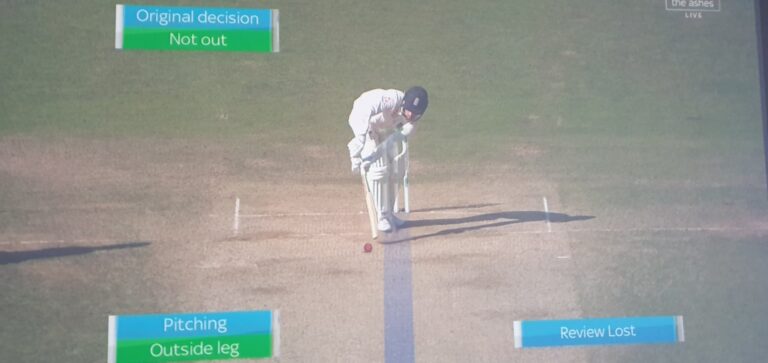
Hawkeye isn’t considered to be 100% accurate; the reason why we have umpire’s call. So, could you imagine trusting Hawkeye to make the right call on a delivery the hits a batsman well outside off or leg stump? Think about it. We question Hawkeye even when the ball hits a batsman in line. Ben Stokes’ non-LBW in the dying stages of the classic Headingley Test of 2019 comes to mind. So does Virat Kohli’s close LBW in the 2019 World Cup Semi Final. And, of course, who could forget the Sachin Tendulkar call in the 2011 World Cup Semi Final, still debated to this day?

With this rule change, you’re asking Hawkeye to predict the path of the ball on different angles and longer distances, which can open up a whole other can of worms.

When hawkeye came under serious question in an India-Pakistan WC Semi Final.

5. Tests will finish a lot sooner

Ian Chappell advocates for the four-day Test in his article, claiming that huge first innings totals will be a thing of the past. However, this rule change will see even the fourth day become a spare one for everyone involved in a Test, as totals will move to the other extreme: too low.

Worse, Tests have been ending quickly as is more often in recent years.

Why? Hint: Not because of the LBW laws.

But rather, because teams are not as as Test-hardened anymore. So, why run the risk of putting another nail in Test cricket’s coffin by increasing the possibility of making them even shorter?

  • Wickets will tumble quicker as the balance has shifted too far
  • Bowling on legstump will be encouraged;
  • And the game that we fell in love with will become unrecognisable

It’s not broken. So no need to fix it.

Thanks for reading!

On a lighter note, CricBlog is now on YouTube: Check out some of the things Aussie Cricket Fans never say!

Subscribe to CricBlog TV today!

https://youtu.be/6NlxEPf55vQ

Opinion: All-Time T20 XI: Who Makes the Cut?

All-Time T20 XI | Best T20 XI of all-time | Best T20 Player of all-time | Who is the best T20 cricketer?

The best T20 cricketer of all-time has been a strong topic of conversation in a cricket-starved 2020.

Following on from ESPNCricinfo’s poll fiasco, one can extend on the “Greatest T20 Player” vote, and turn it into the greatest T20 XI in history. After all, it mighty difficult to choose between some of the top players (which remains the case when choosing an XI), but at least you can justify a team with arguments about balance, quality and sheer T20 knowhow.

So, without further ado, here is CricBlog’s all-time T20 XI:

CricBlog is now on YouTube: Check out some of the things Aussie Cricket Fans never say!

Subscribe to CricBlog TV today!

https://youtu.be/6NlxEPf55vQ

1. Chris Gayle

T20 record: 404 matches, 13,296 runs, avg 38.20, SR 146.94, 82 50s, 22 100s, 80 wickets, econ. 7.64

When one thinks about T20 cricket, Chris Gayle comes to mind.

Much has been expected of Chris Gayle right throughout his career, but he has looked at expectation as an opportunity to wow rather than a threat of disappointing people. Over the course of his 404-game career, taking him right around the globe (19 franchises), Gayle has ammassed the most runs (13,296), the most centuries (22. No one else has 10) and has 978 sixes to his name (next best is 652). The Undisputed GOAT.

All-Time T20 XI | Best T20 XI of all-time | Best T20 Player of all-time | Who is the best T20 cricketer? | Best T20 Team of All-Time
All-Time T20 XI: Chris Gayle is an easy pick.

2. David Warner

T20 record: 280 matches, 9,218 runs, avg 37.93, SR 142.20, 75 50s, 8 100s

David Warner’s T20 record is absolutely incredible.

It was a really tough call to not pick the likes of Brendon McCullum, Rohit Sharma and Martin Guptill as opener, but with Warner trumping the others on key stats, it is justified. To paint a picture, Warner’s strike rate of 142.20 is just four less than Chris Gayle’s and higher than McCullum’s of 136.49; two players who found the boundary with ease. Also, Warner makes a 50+ score every 3.73 matches, which is the best of all the T20 greats with at least 7,000 runs to their name.

In addition, Warner is the only player to win the IPL Orange Cap three times, and with Australia’s renewed focus on T20I cricket, Warner will only continue to go from strength-to-strength as he nears 10,000 T20 runs.

All-Time T20 XI | Best T20 XI of all-time | Best T20 Player of all-time | Who is the best T20 cricketer? | Best T20 Team of All-Time
All-Time T20 XI: David Warner has been a consistent performer in T20 cricket.

3. Virat Kohli

T20 record: 281 matches, 8,900 runs, avg. 41.20, SR 134.56, 64 50s, 5 100s

After what is likely to be a blistering start by the openers, Virat Kohli is just about the perfect player to come in at three.

Kohli is one of those players who will reach 30 with such ease and skill, that you often don’t realise just how quickly he scores his runs. And, with his reliability (only player with over 5,000 runs to average over 40 in T20s), you can be sure the team will be on track for a huge total.

But, just looking good doesn’t cut it. Kohli’s achievements in T20 cricket are terrific, including an average of 50+ in 82 T20Is, two Player of the Tournament awards at World T20s and the most runs in an IPL season (973).

All-Time T20 XI | Best T20 XI of all-time | Best T20 Player of all-time | Who is the best T20 cricketer? | Best T20 Team of All-Time
All-Time T20 XI: Virat Kohli is one of the all-time greats in white-ball cricket.

4. AB de Villiers

T20 Record: 310 games, 8,657 runs, avg. 37.15, SR: 149.77, 62 50s, 4 100s

It’s not an all-time T20 XI without AB de Villiers. One of the most gifted batsmen in history, de Villiers could smash a 40-ball 100 one day and bat 200 balls to try save a Test the next.

From a T20 perspective, de Villiers has wowed millions around the globe with his greatness, with his name enough to send goosebumps down the spine of cricket fans (and opposition bowlers). His sheer ability to make capable bowlers look third-rate has been a key feature of de Villier’s career, with his freakish, 360-degree strokeplay underpinning his remarkable strike rate of 149.77.

All-Time T20 XI | Best T20 XI of all-time | Best T20 Player of all-time | Who is the best T20 cricketer? | Best T20 Team of All-Time
All-Time T20 XI: AB de Villiers is a must-have.

5. Andre Russell

T20 record: 321 matches, 5,365 runs, avg. 26.95, SR 171.29, 18 50s, 2 100s. 291 wickets, avg. 25.88, econ. 8.27, 8 four-wicket hauls

It was excruciatingly difficult to leave Andre Russell out of my top five T20 players list. However, there is no such difficulty including him in this one.

Russell has the third-highest strike rate of any player in T20 history. To paint a picture, the other four players in the top five don’t even have 1,000 runs to their name.

Russell has 5,356, boasting a ridiculous strike rate of 171.29. This man’s brute force sends shivers done the spine of bowlers all around the globe. He is the perfect player to come in after a platform is set, and when you add his 291 wickets, he is a captain’s dream.

All-Time T20 XI: “Dre Russ” is a massive threat whenever involved.

6. MS Dhoni (c & wk)

T20 Record: 317 matches, 6,621 runs, avg. 39.88, SR 135.62, 27 50s. 170 catches, 83 stumpings. 270 matches as captain, 160 wins (60.29% win rate)

Now, it can be tempting to leave another batting star out of the side to accomodate Dhoni, or push Pollard or Russell further down to push Dhoni up to five. So, the key question is whether you get the maximum impact out of Pollard and Russell’s strike rates if you bat them too low.

So, the best conclusion is that skipper Dhoni can choose who bats where depending on the situation.

Of course, it just doesn’t feel right to have a side without MS Dhoni in it. According to Michael Hussey, Dhoni reads the game like no other, which has been key to Chennai Super Kings’ prolonged success. Dhoni is arguably the greatest T20 captain ever, and when you add his lightning glovework, you still get incredible value, even if lower down the batting order.

All-Time T20 XI: MS Dhoni, arguably the greatest T20 captain ever.

7. Kieron Pollard

T20 Record: 501 games, 10,000 runs, avg. 30.86, SR 150.57, 49 50s, 1 100. 279 wickets, avg. 24.36, econ. 8.20, 6 four-wicket hauls

One of the all-time greats, Kieron Pollard is the most capped T20 cricketer, with good reason.

As of May 2020, Pollard is one of two players to have cracked the 10,000-run barrier in T20s. What makes this more remarkable is that Pollard often bats in the middle order; a testament to his consistency when batting in the middle and death overs. Indeed, his superb strike rate of 150.57 is testament to that.

And, when you add his 279 wickets, freakish fielding and excellent T20 cricketing mind, Pollard makes this side with ease.

All-Time T20 XI: Pollard is a dream to have in your side.

8. Dwayne Bravo

T20 Record: 455 matches, 497 wickets, econ. 8.24, 9 four-wicket hauls, 2 five-wicket hauls. 6,307 runs, avg. 23.89, SR 126.82

The highest-ever wicket-taker in T20s, Dwayne Bravo, is also a captain’s dream.

His versatility in terms of being able to bowl at all stages of an innings, particularly at the death, has made him an asset in T20 sides for a number of years. So, when you think about how many overs he’s bowled at challenging stages, an economy rate of 8.24 is an excellent return (along with nearly 500 wickets).

Also, you add over 6,000 runs of batting in this team. So, if Bravo is needed with the bat, he is capable of delivering some crucial late runs.

All-Time T20 XI: Dwayne Bravo is the highest wicket-taker in T20s.

9. Sunil Narine

T20 Record: 336 matches, 379 wickets, avg. 20.36, econ. 6.02, 11 four-wicket hauls, 1 five-wicket haul. 2,241 runs, avg. 14.84, SR 146.95

Sunil Narine is the third-highest wicket-taker in T20 history. However, Narine’s value in T20 teams goes beyond just the number of wickets.

Narine’s economy rate of 6.02 is easily the best among players with at least 200 games under their belt (next best is 6.30). What makes this feat even more special is how many overs Narine bowls in the powerplay, which helps his team get a strong foothold into the game.

All-Time T20 XI: Sunil Narine can bowl in the crunch overs.

10. Rashid Khan

T20 Record: 211 games, 296 wickets, avg. 17.22, econ. 6.30, 6 four-wicket hauls, 2 five-wicket hauls

Rashid Khan has the next best economy rate after Sunil Narine among players with at least 200 matches.

However, like Narine, it is more than just about the incredible numbers when it comes to Rashid Khan. He has played a massive role in the incredible rise of Afghanistan cricket, and has been a big hit all-around the globe in such a short amount of time.

His quick, accurate and skilful leg-spin makes him an asset at all stages of the innings. The fact that he has taken at least four wickets in an innings on eight occasions shows he can blow opposition sides away when in the mood. And, if he’s not getting the huge wickets, he almost always keeps the batting side in check.

All-Time T20 XI: What an incredible impact Rashid Khan has had.

11. Lasith Malinga

T20 record: 295 matches, 390 wickets, avg. 19.69, econ. 7.08, 10 four-wicket hauls, 5 five-wicket hauls

When you think yorker, one name often comes to mind. Lasith Malinga is without a doubt one of the greats of T20 cricket, given his remarkable ability to execute his plans.

What has made Malinga so special over the years is that even when batsmen think they know what’s coming, Malinga bamboozles them with a mix of pacy yorkers, slower ones and a sharp bouncer. His unorthodox yet simple method has reaped significant success over the years, and is a man any T20 captain would love to have in his side.

All-Time T20 XI: Lasith Malinga is arguably the greatest T20 bowler.

12th man: Shahid Afridi

T20 Record: 317 matches, 339 wickets, avg. 22.26, econ. 6.71, 9 4-wicket hauls, 2 5-wicket hauls. 4,310 runs, avg. 18.49, SR 153.87

Shahid Afridi was one of the early stars of T20 cricket. Winner of the Player of the Tournament award in the first World T20, Afridi then helped Pakistan win the next edition in 2009 (man of the match in the final).

Throughout his career, Afridi has bowled particuarly well, along with the ability to send the ball miles with the bat. If Afridi is in your best XI, then there should be no complaints from anyone.


So, there is CricBlog’s all-time T20 XI, characterised by:

  • Powerful batting lineup with Dhoni’s position depending on the situation.
  • Lasith Malinga and Dwayne Bravo bowling in the crunch overs, with Andre Russell and Kieron Pollard offering overs with seam.
  • Two top class T20 spinners as spin has played a key role in T20 cricket.

Your thoughts? Should another spinnner, such as Imran Tahir, Shahid Afridi or Shakib Al Hasan, be added in the XI? A different player in the batting department? Or another specialist pace bowler such as Umar Gul or Jasprit Bumrah? Have your say.

Thanks for reading!

CricBlog is now on YouTube: Check out some of the things Aussie Cricket Fans never say!

Subscribe to CricBlog TV today!

https://youtu.be/6NlxEPf55vQ

RANKED: Top 5 Best T20 Cricketers of All-Time

Top 5 Best T20 Cricketers of All-Time | Best T20 Players in History | Who is the best T20 player ever? | Best T20 Player of all-time

As cricket has come to a halt due to the Coronavirus Pandemic, opinions have been rife on social media as to who the greatest T20 player of all-time is.

Specifically, ESPNCricinfo had a poll, where fans would vote in different contests between players, with the last-man-standing the one who would be crowned the Greatest T20 Player. However, ESPNCricinfo came in for criticism for reopening polls after Virat Kohli had lost out to Chris Gayle, after votes were apparently accepted after the closing time due to a technical glitch.

What this led to was further debate about who is the best T20 player in its 17-year history. Here, after much deliberation, I will go through my top five T20 cricketers of all-time, with reasoning applied to each pick. As with any such debate, excellent T20 players will just miss out, so they will get a special mention at the end. Here goes.

5. Keiron Pollard

T20 record: 501 games, 10,000 runs, avg. 30.86, SR 150.57, 49 50s, 1 100, 279 wickets, econ. 8.20

As of May 2020, Kieron Pollard is one of just two players to have cracked the 10,000-run mark in T20 cricket. What makes this feat all-the-more extraordinary is that Pollard predominantly plays as a middle-order batsman; a true testament to his ability to finish off an innings superbly.

Pollard is the most capped T20 cricketer with good reason. The value he offers with both bat and ball (279 wickets) is reason enough to want him in your side. However, when you add his freakish fielding and excellent leadership and knowledge of the game, Pollard is one of the most complete T20 players to have stepped out on a cricket field.

Indeed, with Pollard skipper of West Indies, you better watch out for them once again at the next World T20.

Top 5 Best T20 Cricketers of All-Time | Best T20 Players in History | Who is the best T20 player ever? | Best T20 Batsmen Ever
Pollard is one of the all-time great T20 cricketers

4. Lasith Malinga

T20 record: 295 matches, 390 wickets, avg. 19.69, econ. 7.08, 10 four-wicket hauls, 5 five-wicket hauls

The man, the legend, Lasith Malinga. Whenever you think of the perfect yorker, Malinga is one of the names who spring to mind.

But, it takes more than being able to bowl a yorker to become a great limited-overs specialist. It takes consistency and the ability to outdo batsmen, even when they think they know what’s coming. Malinga had that ability in spades, proven in the number of five-wicket hauls he has (5); a T20 record.

The Sri Lankan great has had a great ability right throughout his career to turn games for his team, particularly in the death overs. Even in his later years, with an example being the classic IPL 2019 Final, Malinga was able to recover from a poor third over to deliver a match-winning fourth that sealed the title for Mumbai.

Top 5 Best T20 Cricketers of All-Time | Best T20 Players in History | Who is the best T20 player ever? | Best T20 Batsmen Ever
Lasith Malinga: Best T20 bowler ever?

3. Virat Kohli

T20 record: 281 matches, 8,900 runs, avg. 41.20, SR 134.56, 64 50s, 5 100s

Now, before any non-Indian fan has a go at me for including Virat Kohli (after what’s transpired with ESPNCricinfo), hear me out.

Kohli is the only batsman (with minimum 5,000 T20 runs) to average over 40 in T20 cricket. Sure, the average may not be as important in T20, but when you couple this with a strike rate of 134.56, Kohli is certainly one of the finest T20 players in the history of the game.

Morever, it isn’t only Kohli’s overall stats that are impressive. He has won Player of the Tournament on two occasions in World T20s, has an average in excess of 50 in T20Is and holds the record for the most runs in an IPL season (973). Also, while much is made of his record in knockouts of 50-over tournaments, his knockout record at the World T20 is incredible: 72 (44), 77 (58) and 89* (47).

So, while Kohli may have not played right around the world in T20 Leagues like others have, the impact he has had in the games he’s played, including on the international stage, has been a sight to behold.

Top 5 Best T20 Cricketers of All-Time | Best T20 Players in History | Who is the best T20 player ever? | Best T20 Batsmen Ever
Virat Kohli is one of the all-time great white-ball/T20 cricketers.

2. AB de Villiers

T20 Record: 310 games, 8,657 runs, avg. 37.15, SR: 149.77, 62 50s, 4 100s

Personally, one of the key criteria for a player making a list such as this is their ability to create buzz and put bums on seats wherever they play in the world.

AB de Villiers is one of those freakishly talented cricketers who could score a 50-ball century one day, followed by batting 200 balls to try save a Test the next. On the T20 circuit, AB has had fans all over the world flocking in to witness his greatness, matched by his record that is highlighted by an incredible strike rate of 149.77 after 310 T20 games.

AB is every bowler’s nightmare. His sheer ability to turn good balls into ordinary ones and hit them anywhere he wants has led to the appropriate nickname of “Mr. 360”. Also, when you consider the number of times he has played a game-turning knock, it’d be an injustice to exclude him from this list. One of the all-time greats.

Top 5 Best T20 Cricketers of All-Time | Best T20 Players in History | Who is the best T20 player ever? | Best T20 Batsmen Ever
AB de Villiers; one of the great T20 cricketers.

1. Chris Gayle

T20 record: 404 matches, 13,296 runs, avg 38.20, SR 146.94, 82 50s, 22 100s, 80 wickets, econ. 7.64

When you think of T20, Chris Gayle, the undisputed GOAT of T20 cricket, comes to mind.

The self-proclaimed “Universe Boss” has bossed things just about everywhere he has been. And that is a lot places, with the T20 superstar playing for 19 T20 franchises around the globe during his 404-game career.

But, what has made Gayle so great is his ability to produce memorable moments time-and-time again. So much is expected of him, yet he had the ability to hit those expectations for six in ways unimaginable. Over the course of his 404-game career, Gayle has perceived expectation as an opportunity to exceed them, rather than be burdened.

No player comes close to his 22 centuries (no other player has 10). He has 82 fifties (also the most in history) and is just 22 away from 1,000 sixes in the format (next best is 652 by Pollard). The best.

Chris Gayle: The greatest ever T20 cricketer.

Special mentions

Of course, it is very difficult to leave out other players who are greats of T20 cricket.

  • Andre Russell was a very difficult one to leave out. One of the most damaging batsmen in T20 history, Russell strikes fear into all bowlers (and crowds), to go with 291 wickets. Next one on the list.
  • Dwayne Bravo is the highest wicket-taker in T20 cricket and deservedly makes an all-time T20 team. Another very tough choice.
  • Brendon McCullum’s impact on the game cannot be understated; particularly his 158 in the first-ever IPL game.
  • David Warner’s consistency is superb, underpinned by 75 T20 fifties and three IPL Orange Caps.
  • Shoaib Malik has a positive impact on just about any team he plays in. His consistency and reliability makes him one of the greats.
  • Shahid Afridi, player of the tournament in the first World T20, has been an incredible bowler in the format.
  • Sunil Narine, one of the great T20 bowlers, certainly deserves a mention. If he is in your all-time XI, then good choice.
  • Imran Tahir (365) and Shakib Al Hasan (354) round-out the top five wicket-takers in T20s, with Rashid Khan fast approaching (296).
  • Luke Wright was an outstanding T20 cricketer, with 40 fifties and seven centuries.

So, there are my top five T20 players in history. Are there any you agree/disagree with? Be sure to have your say.

Thanks for reading!

CricBlog is now on YouTube: Check out some of the things Aussie Cricket Fans never say!

Subscribe to CricBlog TV today!